From matriculation tax to IBER
The little publicised Spanish tax reform that could dramatically reshape the Mediterranean recreational boating market…
Spain has already set out, in an official document, a reform that for years seemed politically impossible: abolishing the Mat Tax (IEDMT) as it applies to yachts, replacing it with an annual levy akin to vehicle road tax, broadening the number of vessels subject to tax and preserving tax revenue. What is remarkable is not merely the proposal itself, it’s that almost no one outside the professional circles that have followed its development appears to have noticed.
A reform that is no longer merely an industry demand
Some tax reforms are debated for years until, one day, they move beyond industry lobbying and enter the realm of public policy. This is precisely what has happened in Spain with the taxation of recreational boating. Replacing the Special Tax on Certain Means of Transport (IEDMT) – commonly known as Matriculation Tax – with a recurring levy on vessels can no longer be described as a mere industry aspiration. In 2024, Spain’s Maritime Strategy 2024–2050, prepared by the Directorate-General of the Merchant Marine (DGMM), expressly included the abolition of the IEDMT and its replacement by an annual tax broadly comparable in concept to the road tax paid on motor vehicles.
That development deserves far more attention than it has received, which has been virtually none. This is not a rhetorical phrase buried in a report. The reform appears under Axis 6 of the Strategy – ‘Strengthening and enhancing competitiveness in recreational boating’ – and within an action expressly entitled ‘Outstanding tax reforms’. The document regards the sector as a priority because of its specialisation, added value, growth potential, international reach and industrial dimension. It acknowledges that Spain’s sector is smaller than those of neighbouring countries despite its coastline and climate, and concludes that action is needed to enable its development to match that potential.
The consequence is significant: the nature of the debate has changed. The task is no longer to persuade the authorities that there is a problem. Spain’s maritime administration identified the problem with remarkable precision and set out a solution. What remains is to turn that technical assessment into tax legislation.
The Spanish paradox
Spain enjoys conditions that are extraordinarily difficult to replicate for leadership of the Mediterranean recreational boating market, particularly in the large-yacht segment. The Balearic Islands rank among the world’s most desirable destinations; Mallorca and Barcelona boast world-class yacht repair and refit industries; and Valencia, the Costa del Sol, the Costa Brava and the Canary Islands complete an exceptional geographical and technical offering. International airports, safety, a developed tourism industry, specialist professionals and thousands of kilometres of coastline add to those advantages.
Yet the permanent presence of large yachts and the industries supporting them does not reflect those strengths. For decades, France, Italy and Malta have attracted business that, in terms of geography, demand and technical capability, could have been based in Spain. In certain segments, the intelligent development of destinations such as Croatia, Montenegro and Türkiye has also contributed to this displacement of activity.
The question is why Spain continues to rely on a tax that its own maritime administration has identified as a barrier to entry.
The 2024 Maritime Strategy officially acknowledged this paradox: Spain’s recreational boating industry is smaller than those of many neighbouring countries, notwithstanding its longer coastline and more favourable climate. Addressing taxation, it described the IEDMT as a ‘competitive disadvantage and barrier to entry’, noting that no comparable tax exists in competing countries such as France, Italy, Malta or Croatia.
That official acknowledgement allows us to ask the right question. It is not whether yacht owners should pay taxes – of course they should contribute. The question is why Spain continues to rely on a tax that its own maritime administration has identified as a barrier to entry.
1993: a temporary solution that became a permanent structure
The origins of the IEDMT explain much of what is wrong with it today. Law 38/1992 was enacted against the backdrop of European VAT harmonisation and the abolition of increased VAT rates applying to certain goods. The new tax preserved an additional tax burden on certain means of transport after that earlier framework (for example, 28 per cent increased VAT for yachts until 31 of December 1992) disappeared.
More than three decades later, recreational vessels and yachts exceeding eight metres remain within the scope of the tax. The legislation taxes their first matriculation in Spain and, in certain circumstances, their circulation or use in Spanish territory. Recreational vessels and yachts remain subject to a 12 per cent rate in mainland Spain and the Balearic Islands (11 per cent in the Canary Islands). For new means of transport, the taxable base is linked to the consideration used for VAT purposes; for second-hand assets, it is their market value.
The problem is not merely quantitative, it’s conceptual. The tax concentrates a potentially enormous liability at a single point in time and links it to the value of an asset capable of moving between jurisdictions under its own power. A yacht worth €100 million may face a potential €12 million liability; one worth €300 million, €36 million; and one worth €500 million, €60 million. Not all such vessels will have to pay the tax, since exemptions (including for charter) and exclusions from liability exist. But therein lies the legal-certainty problem: where the potential consequence runs into tens of millions, the boundary between liability and exemption cannot depend on concepts whose application takes years of interpretation, largely reflected in binding rulings issued by the Directorate-General for Taxation, some of which contradict one another.
When Spain removes an artificial barrier, business follows. And with that business come jobs, services, expenditure, repairs, maintenance, berthing, fuel, logistics, hospitality, insurance, professional advice and tax revenue from many sources.
Spain’s yacht charter market emerged by removing barriers
An important historical perspective should not be overlooked. Spain’s large-yacht charter market is remarkably young. Until 2013, the IEDMT exemption for vessels used for charter was subject to a 15-metre length limit. Removing that limit enabled large yachts to consider Spain as a charter destination without facing, merely for entering that market, a tax burden incompatible with a temporary stay. It is also worth remembering that, while our Mediterranean competitors have operated in the superyacht market for decades, superyachts have been able to charter in Spain only for the last thirteen seasons; before then, the prohibitive tax burden made this commercially unviable.
That change did not happen by itself. Acting as tax adviser to ANEN, I worked on the reform that culminated in the removal of that limit in 2013. Shortly afterwards, negotiations conducted by AEGY (Spanish Large Yacht Association, now the Business Association of Recreational Vessels) and ANEN paved the way for charter operations by non-EU-flagged vessels. This was crucial because a substantial proportion of the world’s large-yacht fleet is registered outside the EU (Malta being a notable exception). The approach subsequently spread, and the market began to acquire genuine scale.
Circular 1/2014 of 26 August 2014, issued by the Government of the Balearic Islands and negotiated by me on behalf of ANEN and by AEGY, marked a separate step after the 2013 tax reform: it initially allowed non-EU-flagged vessels to engage in charter operations in the Balearic Islands. This opening was progressively extended to Barcelona and the rest of Spain, while in the Balearic Islands it was subsequently developed through Decree 21/2017.
This experience matters because it demonstrates something too often forgotten in tax debates: when Spain removes an artificial barrier, business follows. And with that business come jobs, services, expenditure, repairs, maintenance, berthing, fuel, logistics, hospitality, insurance, professional advice and tax revenue from many sources.
An objective annual levy may, paradoxically, be far more beneficial to the public purse than the current, ostensibly more onerous one-off tax: it replaces an exposure that encourages yachts to avoid Spain with a predictable liability that can be budgeted for and paid.
The greatest danger isn’t the 12 per cent rate, it’s not knowing when it may arise
Current law exempts recreational vessels and yachts genuinely and exclusively used for charter, but makes that exemption subject to requirements and restrictions. Moreover, circulation or use in Spain may trigger the tax in circumstances involving the persons or entities referred to in the First Additional Provision of Spanish Law 38/1992, which contains the IEDMT. For years, interpretation of the term ‘establishment’ – as distinct from the technically established expression ‘permanent establishment’ – has created particularly troublesome uncertainty for international ownership structures.
This is no academic question. In the superyacht market, an interpretative doubt can affect assets worth tens or hundreds of millions of euros. International capital can accommodate known taxes; what it is much more inclined to avoid is open-ended, uncertain exposure. France, Italy, Malta and Croatia need not demonstrate that their regimes are perfect. They need only offer greater predictability when an owner, family office, manager or captain decides where to base a yacht.
Legal certainty does not mean receiving an answer at the end of a procedure, it means being able to know the answer before making the economic decision. This is one reason why an objective annual levy may, paradoxically, be far more beneficial to the public purse than the current, ostensibly more onerous one-off tax: it replaces an exposure that encourages yachts to avoid Spain with a predictable liability that can be budgeted for and paid.
The proposal was already on paper in 2022
There is also a documentary sequence that I consider particularly important, allowing the origins of the reform to be traced with considerable precision. In July 2022, I prepared a proposal for ANEN entitled ‘Proposal to amend the existing Matriculation Tax: Elements of a new tax’. Rather than simply calling for the abolition of the IEDMT, that document outlined the structure of its replacement.
The 2022 proposal expressly envisaged replacing the existing system with a new annual levy equivalent to the road tax paid on motor vehicles; extending the tax to a larger number of vessels; simplifying administration; reducing fraud and litigation; and maintaining annual IEDMT revenue, while stimulating business activity and revenue from other taxes by lowering the initial fiscal barrier.
It also defined specific legal elements: a direct tax; a taxable event based on ownership or rights conferring the use of a vessel; extension to the recreational fleet subject to limited exceptions; a rate schedule based on objective parameters such as length and engine power; scope for environmental criteria; maximum tax ceilings; administration supported by a register of vessels; periodic accrual; transitional rules to avoid double taxation; and, for certain vessels navigating in Spain, a time-apportioned charge based on their period in Spanish waters.
This distinction matters if the origins of the idea are to be described accurately. I do not claim to have invented periodic taxation of means of transport, which has many precedents. What I devised for the Spanish yachting industry was a specific solution: replacing the IEDMT with a tax designed specifically for recreational vessels – the Recreational Vessel Tax – with a much broader base, periodic accrual, objective parameters, maximum caps, revenue neutrality and time-based treatment of navigation in Spain. That structure was documented in 2022, before it appeared in the 2024 Maritime Strategy.
IEDMT’s design constituted a competitive disadvantage and barrier to entry.
2024: an industry proposal became an official diagnosis
Two years later, Spain’s Maritime Strategy 2024–2050 included, under ‘Outstanding tax reforms’, an approach remarkably close to that proposal: creating a tax environment comparable to those of competing countries; abolishing the IEDMT; acknowledging that its design constituted a competitive disadvantage and barrier to entry; and replacing it with an annual levy similar to the road tax paid on motor vehicles.
The official document further envisaged a lower initial tax burden and a sustained contribution over time; taxation of a larger number of vessels; simpler administration with less fraud and litigation; and revenue neutrality compared with the existing Matriculation Tax (generally called Mat Tax). It also introduced an environmental dimension.
There is no need to embellish the similarity. One need only place the two documents side by side: the July 2022 industry presentation and the official 2024 Strategy. The sequence shows that an idea discussed with the authorities over several years ultimately found its way into an official strategic document. Anyone who has worked on regulatory reform will recognise this as a qualitative shift: the issue moves from what the industry says to what the administration itself has acknowledged needs to change.
IBER: broader coverage in return for a lighter burden
For the purposes of this article, I shall refer to the evolution of that proposal as IBER – the ‘Tax on Recreational Vessels and Yachts’ (Impuesto sobre Buques y Embarcaciones de Recreo). The name matters less than its structure. The aim is to replace a potentially exceptional one-off levy on a limited part of the fleet with a periodic contribution spread across a far broader tax base.
The fleet permanently based in or otherwise linked to Spain would pay an annual charge. Foreign vessels falling within the scope of the tax would contribute on a temporary or proportionate basis according to their legally relevant use in Spain. The 2022 model already contemplated time apportionment for certain situations according to the period spent navigating in Spanish waters, as well as self-assessment by foreign-flagged vessels. This international dimension should play a central part in the final design.
The charge should not depend primarily on market value. It could instead be based on length, engine power, propulsion type, gross tonnage where appropriate, and objectively verifiable environmental criteria. Smaller boats would pay modest amounts and larger yachts progressively more. But progression must have a limit: a cap or maximum charge.
That cap is essential. It is not a privilege for superyachts; rather, it ensures that the new tax does not recreate the IEDMT’s deterrent effect by other means. The rule should be explainable before a yacht arrives: ‘Given these characteristics and this period in Spain, the charge will be X, and it can never exceed Y’. That is legal certainty applied to a highly mobile market.
The proposal is not a tax amnesty for the wealthy, it’s a redistribution of the burden: more taxpayers, moderate individual charges, fewer exceptions and far greater predictability.
The apparent charter paradox: paying more often while becoming far more competitive
The new system could even permit a review of the charter exemption. Under the current IEDMT, that exemption is essential: charging 12 per cent of a superyacht’s value merely because it comes to Spain for a few weeks of commercial charter activity would destroy the market. The conclusion changes, however, if the tax becomes annual or time-based, moderate and predictable.
Under such a system, charter yachts could contribute – and in my view, they should. The reform could thus create a politically powerful paradox: removing or restricting an exemption that currently benefits charter yachts while simultaneously transforming Spain’s tax competitiveness for the better.
This also clarifies what the proposal is not: it’s not a tax amnesty for the wealthy, it’s a redistribution of the burden: more taxpayers, moderate individual charges, fewer exceptions and far greater predictability.
Equal revenue does not mean charging the same people the same amount
Revenue neutrality has been a non-negotiable principle by the authorities from the outset. My 2022 paper said so expressly, as did the 2024 Strategy: the new tax must be at least revenue-neutral compared with the IEDMT. This common ground is decisive because it addresses the easiest objection to any reform – that competitiveness would be financed through lost public revenue.
The logic is different. Spain’s recreational fleet has been estimated at around 200,000 vessels, with an overwhelming concentration in smaller sizes. The 2022 proposal was based on broad coverage and low charges for those segments, rising according to objective criteria. Foreign vessels would also contribute where appropriate.
A broader base makes it possible to collect the same revenue while imposing a much lighter burden on each taxpayer. Moreover, a periodic tax provides recurring, predictable receipts rather than the volatility of a levy dependent on registrations or other isolated taxable events. Collecting the same amount does not mean collecting it from the same people in the same way.
It is also worth noting that matching or exceeding the IEDMT revenue should not be difficult. No official figures separately identify IEDMT revenue from recreational vessels and yachts: it is reported alongside revenue from motor vehicles (undoubtedly the largest component) and aircraft. Nevertheless, historical revenue figures supplied by the authorities for recreational vessels and yachts were around €20 million – a sum that the proposed IBER could readily exceed.
A tax barrier affecting a mobile asset carries an economic cost that tax statistics struggle to capture. A yacht that decides not to come does not produce a failed tax assessment: it simply disappears from the Spanish economy.
A second source of revenue: what yachts generate during their stay
Even if strict revenue neutrality were required of IBER – as it should be for the proposal to be credible – the calculation does not end with the receipts from that tax alone. A superyacht generates continuing demand: it needs crew, berths, engineering, repairs, maintenance, refits, fuel, provisions, restaurants, logistics, brokerage, insurance and professional services.
The 2022 presentation drew on ANEN’s economic impact study to highlight the industry’s substantial multiplier effect and its capacity to generate employment and added value beyond yachting itself. The 2024 Strategy adopts the same perspective, stressing direct and indirect effects on boatbuilding, marinas, charter, maintenance, repairs, tourism, ancillary services, training, innovation and technology.
Yachting also helps diversify tourism, extend activity beyond the peak season and spread it across destinations. It attracts high-spending visitors and generates economic activity while requiring relatively little land, a consideration of particular importance to island destinations.
That is why a tax barrier affecting a mobile asset carries an economic cost that tax statistics struggle to capture. A yacht that decides not to come does not produce a failed tax assessment: it simply disappears from the Spanish economy. With it disappear expenditure, contracts, employment and taxes that are never recorded as ‘losses caused by the IEDMT’.
Environmental taxation should measure vessels, not prices
There is also an obvious environmental inconsistency. Law 38/1992 distinguishes motor vehicles by their official CO₂emissions, yet generally places recreational boats and yachts within a single category subject to a 12 per cent IEDMT rate. Asset value is not an environmental measure: an expensive sailing yacht and a very powerful motor yacht may both face a 12 per cent rate on different taxable bases, without the tax rationally reflecting their environmental impact.
The 2022 proposal already contemplated objective measures and the future possibility of taking emissions or other sustainability indicators into account. The 2024 Strategy expressly echoed that approach. This creates an opportunity to design smarter environmental taxation for maritime leisure from the ground up, subject to one essential caveat: only technically measurable and administratively straightforward indicators should be used. Replacing fiscal uncertainty with technical uncertainty over environmental rules would simply be failure under another name.
The European dimension: an anomaly in a market of mobile assets
The IEDMT is not a harmonised European Union tax. Competitive comparisons between jurisdictions are therefore unavoidable. The 2022 industry proposal identified Spain’s unusual position relative to its competitors and raised the issue in the context of internal-market freedoms. Without entering that legal debate, the 2024 Strategy adopted the economic diagnosis: a barrier to entry and the absence of a similar tax in the competing countries it named.
For an international publication, this is probably one of the most interesting aspects of the Spanish case. The issue is not simply that one country taxes more than another, it’s that the asset being taxed is exceptionally mobile. Real estate is subject to the tax regime where it is located. A superyacht can change its itinerary, home port, charter season, shipyard and much of the supply chain supporting it.
Tax competition in this field need not mean driving rates down to zero. A more sophisticated approach is possible: imposing a certain, reasonable and periodic charge on a broad base, so that marginal tax exposure no longer determines where business takes place. If Spain achieves this, other maritime jurisdictions may take a keen interest in the model.
How to establish an idea’s origins without making it personal
The authorship of a public-policy proposal must be described accurately. An annual ‘road tax’ on motor vehicles is neither a Spanish nor a personal invention, nor is the use of environmental parameters. What can be documented is the development of a particular structure for Spain’s yachting industry and its subsequent institutional trajectory.
In July 2022, the proposal that I prepared for ANEN already contained the elements that later reappeared in the Maritime Strategy: replacing the IEDMT with an annual levy; the analogy with motor-vehicle road tax; widening the tax base; revenue neutrality; simplifying administration and reducing litigation; objective and environmental parameters; and maximum caps. The document even developed the taxable event, the taxpayer, accrual, transitional arrangements, registration-based administration and time apportionment for certain vessels navigating in Spanish waters.
Two years later, the maritime administration incorporated the core of that approach into its national strategy. This sequence makes it possible to say, without exaggeration, that the proposal was conceived and developed within the industry, advocated before the authorities for years, and subsequently reflected in its essential elements in an official technical document. When the necessary parliamentary majorities emerge, it may become a reality and will, of course, be a collective legislative achievement involving the competent authorities. But its intellectual origins can – and should – be documented.
Taxation of high-value assets invariably raises sensitivities: at least in Spain, defending a nominally severe tax is often easier than explaining why a more rational one could raise as much or more.
What remains: turning a good idea into good legislation
A convincing diagnosis does not mean the reform is complete. Important legal and economic decisions remain: defining precisely which ownership or use rights constitute the taxable event; coordinating the tax with revenue-sharing arrangements for Spain’s autonomous communities; determining the treatment of foreign vessels; establishing brackets, parameters and caps; resolving transitional arrangements for those who have already paid IEDMT; coordinating VAT, transfer tax and customs regimes; and designing a reliable vessel register and straightforward administration.
The 2022 proposal anticipated many of these matters. That is an advantage: the starting point is not a slogan but a tax framework capable of being turned into statutory provisions. Precisely because the reform is serious, the next stage must involve numbers and legislation: revenue modelling by bracket, scenarios for the foreign fleet and drafting of a complete legislative proposal.
Politics may delay this work. Taxation of high-value assets invariably raises sensitivities: at least in Spain, defending a nominally severe tax is often easier than explaining why a more rational one could raise as much or more. But sound economic policy requires distinguishing between appearances of fairness and actual outcomes. In any event, the 2024 Maritime Strategy provides documentary evidence that the competitive shortcomings of the IEDMT were acknowledged and that consideration was given to replacing it with an annual levy such as IBER.
The time to move beyond 1992
For more than a decade, Spain has made progress by removing, one by one, the barriers that prevented the large-yacht market from developing. The 15-metre length limit that made superyacht charter commercially unviable was abolished; regulatory opportunities opened up for international flags; and interpretative problems have gradually been clarified. Each advance has mattered, yet they share a defining feature: they are repairs to a tax framework conceived in another era.
The 2024 Maritime Strategy finally had the merit of framing the question differently. Not how to add yet another exception, but how to build a competitive tax environment. Its answer was strikingly clear: abolish the IEDMT, replace it with an annual tax, broaden the base, reduce litigation, preserve revenue and incorporate sustainability.
That is also the essence of IBER – not to raise less, but to raise revenue more intelligently. Not to expose a few to extraordinary liabilities, but to have many contribute through predictable charges. Not necessarily to exempt charter yachts, but to let them contribute without driving them away. Not to use a vessel’s price as an imperfect proxy for every other variable, but to construct a schedule based on objective characteristics. Not to promise superyachts that Spain will be cheap, but to assure them that Spain will be predictable.
Spain already has the destination, the industry, the professionals and the demand. It also possesses something it lacked until recently: an official administrative assessment expressly acknowledging the need for change. Reform may have to await a suitable parliamentary majority. The Mediterranean economy will not wait.
After thirty years, the question is no longer how to perfect the IEDMT as applied to yachting, it is why Spain should retain it when a workable replacement has already been designed. And perhaps that is the most interesting part of the story: IBER does not yet exist in Spain’s Official State Gazette, but its structure has been on paper for years.
NEW: Sign up for SuperyachtNewsweek!
Get the latest weekly news, in-depth reports, intelligence, and strategic insights, delivered directly from The Superyacht Group's editors and market analysts.
Stay at the forefront of the superyacht industry with SuperyachtNewsweek
Click here to become part of The Superyacht Group community, and join us in our mission to make this industry accessible to all, and prosperous for the long-term. We are offering access to the superyacht industry’s most comprehensive and longstanding archive of business-critical information, as well as a comprehensive, real-time superyacht fleet database, for just £10 per month, because we are One Industry with One Mission. Sign up here.
Related news

Monaco is not a customs third country
The distinction between a yacht’s location and its customs status can have significant consequences, as a recent European court ruling illustrates
Opinion
The yacht is now part of the owner’s online reputation
Tony McChrystal works with owners, family offices and senior executives on their online reputation and privacy. This is his take on reputation management
Opinion
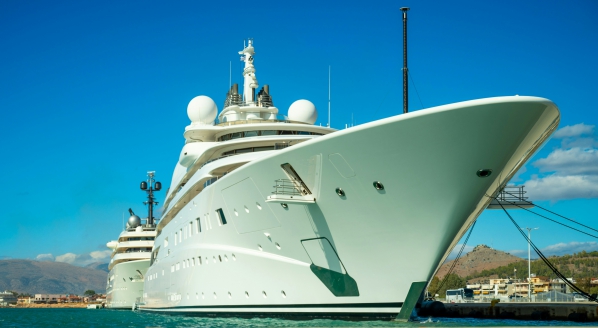
What it really costs to run a superyacht
Will Christie, Founder and CEO of Christie Yachts, debunks the myths and presents the true facts and figures
Owner
The EU reporting rules reshaping private yacht purchases
Why ownership structure and intended use must be settled before completion
Owner
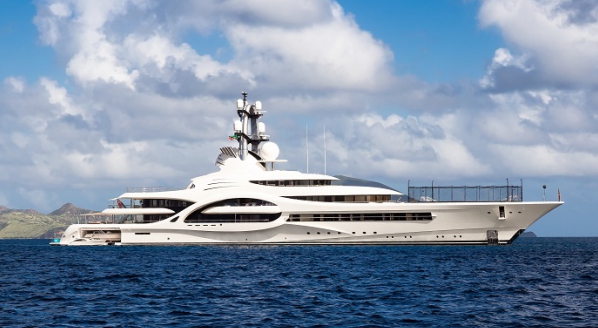
The superyacht as a cross-border institutional asset
Superyachts exist inside a complex network of jurisdictions and institutions – the importance of understanding the broader institutional picture
Owner

Specialty lending: the ballast in uncertain markets
Steven Hawkins, Head of Specialty Lending, J.P. Morgan International Private Bank, on the role financing can play in keeping the industry resilient
Opinion
Related news
Monaco is not a customs third country
3 weeks ago
What it really costs to run a superyacht
1 month ago
The superyacht as a cross-border institutional asset
2 months ago
Specialty lending: the ballast in uncertain markets
2 months ago
NEW: Sign up for
SuperyachtNewsweek!
Get the latest weekly news, in-depth reports, intelligence, and strategic insights, delivered directly from The Superyacht Group's editors and market analysts.
Stay at the forefront of the superyacht industry with SuperyachtNewsweek