The superyacht as a cross-border institutional asset
Superyachts exist inside a complex network of jurisdictions and institutions – the importance of understanding the broader institutional picture…

A superyacht is often treated as a maritime asset with a familiar set of questions around ownership, flag, management, insurance, crew and operating costs. That description is accurate, but incomplete – in practice, a large yacht sits inside a moving network of jurisdictions and institutions. Every change of port can bring a different combination of maritime authorities, customs, immigration, regulators, financial institutions, service providers and local intermediaries into the picture.
For owners and family offices, the practical challenge is that these relationships are usually managed in separate professional silos. Lawyers address ownership and registration, captains and managers handle operations, tax advisers consider residence and use, and banks and compliance teams focus on source of wealth, beneficial ownership and sanctions exposure. Each discipline may be functioning correctly while the broader institutional picture remains fragmented.
The recurring analytical gap is coordination. A yacht can move quickly between jurisdictions, while the people, companies and relationships behind it remain embedded in systems that move at a different pace. As the vessel becomes more internationally active, those connections deserve to be considered together.
The flag is the starting point
Ship registration establishes nationality and connects the vessel to a Flag state. Under the international framework described by the International Maritime Organization (IMO), the Flag state is expected to exercise jurisdiction and control over ships flying its flag in administrative, technical and social matters. That relationship influences certification, safety oversight and many of the standards under which the yacht operates.
Operating geography adds further layers. Where the relevant conventions apply, foreign ships can be inspected through port state control, while port calls also bring customs, immigration, maritime, security and other public authorities into the process. The IMO’s facilitation framework shows the breadth of information exchanged around international arrivals and departures, including vessel particulars and, where required, crew and passenger information.
A structure that works comfortably for one cruising pattern may create a different practical experience when the yacht begins spending significant time in another region.
The institutional environment around registration is also evolving. In April 2026, the IMO Legal Committee approved new guidelines aimed at improving transparency, verification and due diligence in ship registration, including more accurate ownership records. For a family office, these developments reinforce the value of considering flag, ownership and intended operating geography as parts of the same decision.
A structure that works comfortably for one cruising pattern may create a different practical experience when the yacht begins spending significant time in another region. The legal framework, administrative culture and enforcement environment all affect how the vessel is handled in practice.
Ownership structures sit inside a wider transparency environment
Superyachts are frequently held through corporate or other legal structures for legitimate reasons, including liability, financing, succession and administration. The institutional environment around those structures has become more demanding. Financial Action Task Force (FATF) standards call for competent authorities to have access to adequate, accurate and up-to-date beneficial ownership information, while financial institutions are expected to identify and take reasonable measures to verify the beneficial owners of legal-person customers.
Legal ownership and institutional perception can therefore diverge. A structure may be technically sound, yet banks, insurers, registries, counterparties or authorities may still examine who ultimately controls the asset, how funds move through the structure and whether connected persons create enhanced risk.
The distinction between private and commercial operation is another area where a single label
can conceal several consequences.
Politically exposed person (PEP) rules illustrate the point. FATF guidance treats PEP status as a risk factor requiring additional measures, without equating that status with criminal conduct. For an internationally active owner, a prominent public function, close associate or politically sensitive relationship can change how institutions evaluate an otherwise routine transaction. A relationship formed in one political culture may attract a different level of scrutiny when viewed by a bank, registry or authority elsewhere.
Institutional mapping helps owners and advisers anticipate these differences before they become operational issues.
Private and commercial use can produce different obligations
The distinction between private and commercial operation is another area where a single label can conceal several consequences. The exact treatment depends on the flag, the yacht’s size, its use and the jurisdictions involved. Commercial activity can bring additional requirements relating to certification, crew welfare and other regulatory obligations.
The Maritime Labour Convention is one example. Its general scope covers ships ordinarily engaged in commercial activities and International Labour Organization material confirms that people working aboard yachts can fall within the Convention where it applies. Private pleasure yachts outside commercial activity generally fall outside that framework, although national laws and Flag-state requirements can add their own obligations.
A decision to introduce charter activity can therefore affect more than scheduling and revenue. Crew arrangements, certification, insurance, management and compliance may all need to be considered as part of the change in operating status. Specialist maritime counsel and yacht managers remain central to that work, while the family office benefits from understanding how the change fits into the owner’s wider institutional profile.
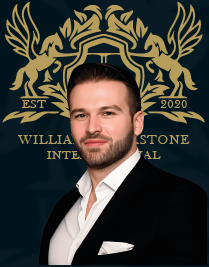
Peter Kovacs, Director of Strategy at William Blackstone Internacional, a Panama-based international advisory firm
providing diplomatic advisory and cross-border strategic counsel to ultra-high-net-worth individuals, families and organisations.
The network around the yacht becomes part of the owner’s footprint
A large yacht depends on a substantial human and commercial network. Captains, crew, management companies, agents, brokers, marinas, security providers, shipyards, banks and professional advisers all interact with the vessel. In many ports, local agents become the practical interface between the yacht and public authorities.
That network creates efficiency and representation at the same time. People acting for the yacht can shape how the vessel and its principal are perceived. Information passes through service providers. Crew and passenger details may be supplied to border authorities. Agents communicate with port and customs officials. Banks and suppliers assess counterparties before accepting business. The IMO’s current facilitation regime reflects how deeply port processes now depend on electronic exchange among ships and government authorities.
The operating network deserves the same strategic attention as the formal ownership structure
because institutional exposure often develops through relationships and intermediaries long before
it appears in a legal document.
For prominent owners, relationships around the yacht can carry significance beyond the immediate transaction. An intermediary may have political connections that are routine locally but attract enhanced scrutiny elsewhere. A service provider can become subject to sanctions or regulatory action. A guest, business associate or family relationship may alter the way an institution approaches due diligence. These situations acquire greater significance when several jurisdictions are viewing the same principal through different institutional lenses.
The operating network deserves the same strategic attention as the formal ownership structure because institutional exposure often develops through relationships and intermediaries long before it appears in a legal document.
Geopolitics can change an ordinary arrangement
Recent sanctions enforcement has made the connection between ownership, control and operational access unusually visible. Authorities have frozen, detained or restricted yachts connected to sanctioned persons, while service providers have had to assess whether maintenance, management, payments, crewing or docking can continue under applicable restrictions. U.S. Treasury actions provide concrete examples of yachts being treated as blocked property and of ordinary operating transactions becoming restricted once sanctions apply.
The broader lesson reaches beyond any one sanctions programme. A structure that was routine when established can become more difficult because the owner’s profile changes, a counterparty is designated, relations between countries deteriorate or financial institutions adjust their risk appetite. The yacht may retain physical mobility while its ownership chain, banking relationships, crew arrangements, insurance and service network become harder to alter at short notice.
Periodic institutional review gives the owner and family office a way to test whether the arrangement remains workable across the jurisdictions, institutions and counterparties on which the yacht depends. Legal compliance remains fundamental, and operational resilience adds a second practical question: can the structure continue to function smoothly when the surrounding environment changes?
Owners who understand the wider landscape are better placed to preserve operational flexibility, anticipate scrutiny and maintain institutional credibility.
One institutional picture
A coherent approach treats the yacht as a single institutional system. Ownership and control, flag and operating status, cruising geography, banking and insurance relationships, crew framework, local intermediaries and the principal’s wider profile all belong in that picture.
The family office can coordinate that picture while maritime lawyers, managers, captains, tax advisers, banks and other specialists retain responsibility for their respective disciplines. The value comes from giving those specialists enough context to recognise when an operational decision in one area creates consequences somewhere else.
Superyachts are among the most international private assets in existence. Their mobility brings them repeatedly into contact with different legal systems, authorities and institutional cultures. Owners who understand that wider landscape are better placed to preserve operational flexibility, anticipate scrutiny and maintain institutional credibility.
For sophisticated ownership, the key question is how the entire arrangement will function, and how it will be understood, across the jurisdictions through which the yacht moves.
As an open-source platform we offer an industry-wide invitation to anyone and everyone in our sector to share their knowledge, experience and opinions. If you have an interesting and valuable contribution to make, and would like to join our growing community of guest columnists, share your ideas with us at newsdesk@thesuperyachtgroup.com
NEW: Sign up for SuperyachtNewsweek!
Get the latest weekly news, in-depth reports, intelligence, and strategic insights, delivered directly from The Superyacht Group's editors and market analysts.
Stay at the forefront of the superyacht industry with SuperyachtNewsweek
Click here to become part of The Superyacht Group community, and join us in our mission to make this industry accessible to all, and prosperous for the long-term. We are offering access to the superyacht industry’s most comprehensive and longstanding archive of business-critical information, as well as a comprehensive, real-time superyacht fleet database, for just £10 per month, because we are One Industry with One Mission. Sign up here.
Related news

Monaco 2026 and the business of confidence
A delivery date in 2032, revised asking prices and an owner reshaping a shipyard group reveal the commitments behind this year’s show
Opinion

So you want to build a yacht?
Moving from serial charterer to first-time owner can seem a natural progression, but commissioning a large yacht demands a very different kind of experience
Owner
The Superyacht Report 230: Owners Focus – Out Now
From a guide to the do’s and don’ts for new yacht owners to who has the authority to act on behalf of an owner, the latest TSR is a must-read
Owner
To be authorised – or not …
Who really has the authority to act on behalf of an owner – the risks should stakeholders make assumptions about the powers held by the owner’s rep
Owner

The crew management conundrum
Deep Blue Software’s recently upgraded Crew Management Package joins up all of the admin that comes with hiring and managing a team on board
Crew
Related news
Monaco 2026 and the business of confidence
3 weeks ago
So you want to build a yacht?
3 weeks ago
To be authorised – or not …
4 weeks ago
The crew management conundrum
4 weeks ago
NEW: Sign up for
SuperyachtNewsweek!
Get the latest weekly news, in-depth reports, intelligence, and strategic insights, delivered directly from The Superyacht Group's editors and market analysts.
Stay at the forefront of the superyacht industry with SuperyachtNewsweek