The certificate and the price
How the Beijing Convention, in force for the EU from 15 December, could affect price when a superyacht is sold through judicial or administrative proceedings…
Three cases, three fault lines
When a superyacht is sold through judicial or administrative proceedings, the price can come as a shock.
AMADEA, valued in reports at $325 million, was sold by the US government for $187 million.
AXIOMA, with a reported valuation of $75 million, made $37.5 million at auction – despite 63 bids.
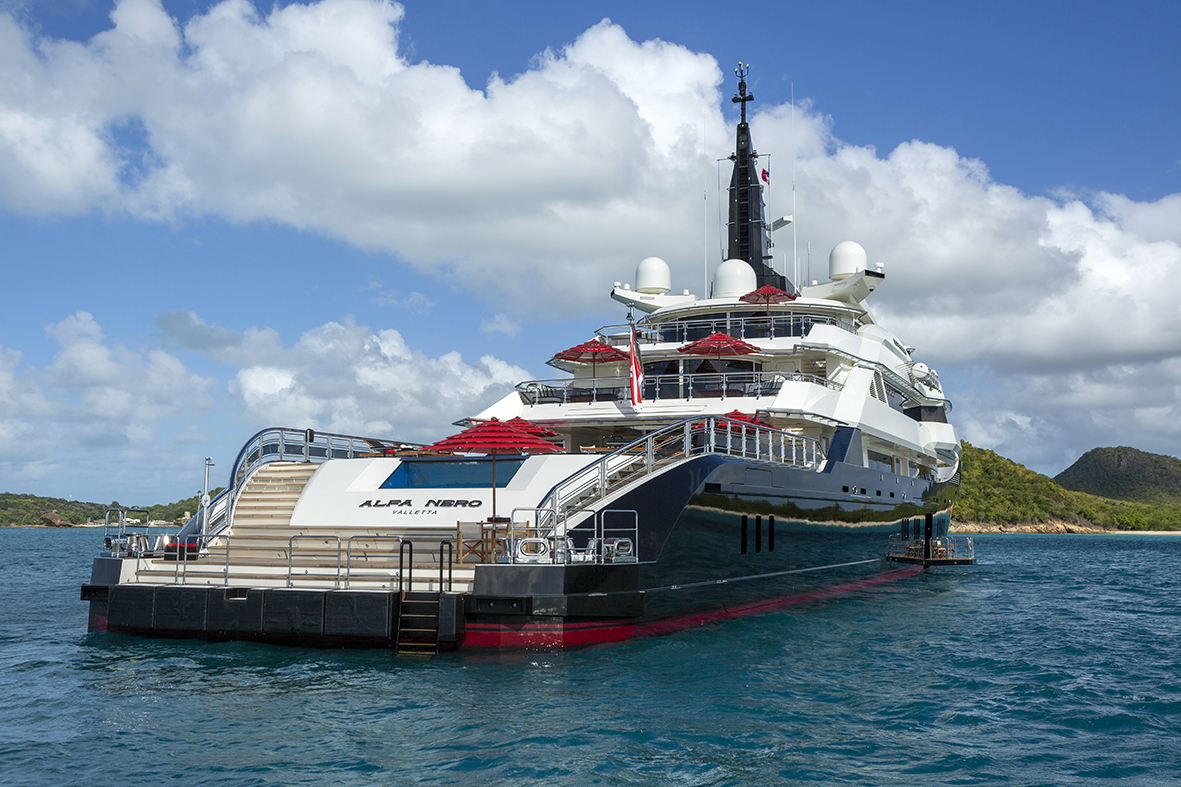
ALFA NERO, estimated at $105 million, saw a first sale at $67 million collapse before it finally went for $40 million.
Across the three, the discount to reported value ran from 42.5 per cent to 61.9 per cent, an average of a little over half. We present that as a range observed in these sales, not a law: each sale has its own legal circumstances, condition, marketing and market moment.
Each case also exposes a different fault line.
ALFA NERO shows the cost of insufficient disclosure to the buyer on legal and sanctions risks.
AXIOMA raises questions about marketing: 63 bids and a price at half the reported value.
AMADEA, sold through civil forfeiture, raises questions of sale method, transparency of the result and the vessel's ability to move internationally afterwards.
The Beijing Convention, in force since February 2026 and for the European Union from 15 December, addresses one part of this – the recognition of title abroad. It resolves none of the three fault lines by itself. What it may change is the price and that is the subject of this article.
The risk accepted, the title demanded
A judicial sale is conducted ‘as is, where is’. Under French law, Article 1649 of the Civil Code excludes the warranty against hidden defects in sales conducted under judicial authority, and the conditions of sale say the same in plain terms: the buyer accepts the vessel’s risks, whatever they are.
What the buyer demands in return is that ownership itself be beyond challenge. They are not buying a court’s decision; they are buying clear title and the road back to the ordinary market – the ability to re-register the vessel, insure it, operate it and one day resell it as a normal boat. The decision and the procedure – which may come from a court or from an administrative authority such as Customs – are what stand underneath that title.
It helps to keep three fears separate, because they behave differently in the price. Fears about title: a former owner’s claim, an arrest in the next port, a registry that refuses the transfer. Fears about the vessel: what a long immobilisation or a suspended class has done to her, against which the buyer has no warranty at all. And a third category specific to vessels with a sensitive past, which we call historical risk: a bank that will not process the funds, an insurer or shipyard reluctant to touch the name, a future buyer who hesitates in turn.
The three must not be mixed, in the file or in the price – and the last one, as we will see, is beyond the reach of any certificate.
On 15 December 2026, the Beijing Convention enters into force in respect of the European Union. It would be easy to conclude that every judicial sale conducted in an EU member state will benefit from the Convention’s regime. That is true only in member states that are themselves parties to it.
The Beijing Convention across borders
The UN Convention on the International Effects of Judicial Sales of Ships attacks the first category of fear. The mechanics deserve precision: the cleansing of prior rights comes from the law of the state where the sale takes place; the certificate of judicial sale attests that the Convention’s requirements were met and makes the effects of that sale recognisable in the other states parties.
For ships generally this matters. For superyachts – the most mobile assets there are, with former owners who litigate – it matters most of all.
Its limits deserve equal precision. The sale must be conducted in a state party, with the vessel physically present there. The states parties are still few: Barbados, El Salvador, Panama, and Spain – a party since February 2026 – joined on 15 December by the European Union, within its areas of competence only. Recognition is subject to a public policy exception (Article 10).
A former owner can still challenge the sale, but Article 9 reserves applications to set aside or suspend the sale to the courts of the state of sale and requires courts of other states parties to turn it away. Outside the states parties, none of this applies.
Picture a yacht sold by a Spanish court under the Convention, certificate in hand, which later calls at a port in Türkiye – not a party. A local court would weigh the former owner’s arrest application under its own law; the Spanish sale’s regularity would be a strong defence, not a guarantee, and the yacht could sit immobilised while it was argued. The certificate protects title in the states parties. Elsewhere, the map of ports a contested yacht can safely enter may shrink.
EU approval is not national ratification
On 15 December 2026, the Beijing Convention enters into force in respect of the European Union. It would be easy to conclude that every judicial sale conducted in an EU member state will benefit from the Convention’s regime. That is true only in member states that are themselves parties to it.
Under Article 18, the Union's approval is limited to matters falling within its competence. It covers certain aspects of the notification of judicial sales (Article 4), notably where the persons to be notified reside in another member state, and the rules determining which courts may hear applications to set aside or suspend a sale (Article 9) - both matters already governed by EU legislation.
It does not cover the Convention’s other mechanisms: the issuance of the certificate, the recognition of title free of prior rights in other states parties, the deletion of registered interests by registries and the refusal of new arrests based on prior rights all depend on each state’s own commitment. Article 3 confines the Convention to sales conducted in a state party. Spain is one. France has neither signed nor ratified it.
A judicial sale conducted in France therefore cannot give rise to the Convention's certificate and EU approval does not change that. This does not make a French sale less robust than a Spanish one: acts of the French authorities have their full effect under French law. But without the certificate, recognition of title abroad depends on the law of each jurisdiction concerned – and the quality of the sale's preparation and conduct makes all the difference.
Where no certificate is available, the remaining title risk depends on the legal basis, preparation and conduct of the sale, as well as the jurisdictions concerned. Ratification may therefore influence the price achieved and what creditors recover, but its effect remains to be measured.
What the difference costs
Here the lawyer’s question becomes a valuer’s question. In a valuation file prepared for a judicial sale, the discount to normal market value is broken into named parts, and the part for title – the risk that a person with a claim follows the vessel – is estimated separately, with its evidence stated.
Our working hypothesis is that title risk can account for a significant part of the discount, especially where litigation is likely. A certificate acts directly on that part and only that part: it converts the buyer’s largest unquantifiable fear into a document, so where the certificate is available, the title-risk component may reduce, although exposure remains in non-party states and under the public policy exception. It repairs nothing else – not the vessel's condition, not the thin file, not the historical risk that follows a sensitive name.
Where no certificate is available, the remaining title risk depends on the legal basis, preparation and conduct of the sale, as well as the jurisdictions concerned. Ratification may therefore influence the price achieved and what creditors recover, but its effect remains to be measured.
The Convention tested by its first sales
The Convention’s own text sharpens where and when this matters. The vessel must be physically present in a state party at the time of sale; a yacht immobilised in a non-party port is outside the regime from the start.
And the Convention applies only to sales ordered or approved after its entry into force in the state of sale, which means a future French ratification, taking effect 180 days after deposit, could reach proceedings already under way, provided the decision ordering the sale comes after that date.
One question we cannot resolve here is what premium the market will actually pay for the certificate. AXIOMA and ALFA NERO were sold without one, and both are back in the Mediterranean charter market: the ordinary market has shown it can absorb these vessels already.
The first certificates will show how registries, insurers and courts receive them; the effect on prices will take longer to read, because sales of large yachts are rare and no two are alike.
A second open question is whether sales arising from criminal proceedings fall within the Convention’s scope – they are not excluded as a matter of principle, and part of the answer may turn on the creditors’ rights over the proceeds. What is already certain is narrower, and it is enough: where a yacht is sold, and when, has become a component of what it will fetch.
The first judicial sale of a superyacht under the Convention will answer more than any article can.
Emmanuelle VOTAT is a judicial auctioneer specialising in the management and sale of yachts seized in criminal proceedings. She is the founder of a pioneering programme for judicial yacht asset management in France and has overseen landmark cases.
Andrew WILLIAMS is a marine surveyor with 38 years of experience in the marine industry, including 26 years in the superyacht sector. He publishes The Williams Superyacht Index, a quarterly price model for the brokered superyacht market.
NEW: Sign up for SuperyachtNewsweek!
Get the latest weekly news, in-depth reports, intelligence, and strategic insights, delivered directly from The Superyacht Group's editors and market analysts.
Stay at the forefront of the superyacht industry with SuperyachtNewsweek
Click here to become part of The Superyacht Group community, and join us in our mission to make this industry accessible to all, and prosperous for the long-term. We are offering access to the superyacht industry’s most comprehensive and longstanding archive of business-critical information, as well as a comprehensive, real-time superyacht fleet database, for just £10 per month, because we are One Industry with One Mission. Sign up here.
Related news
The EU reporting rules reshaping private yacht purchases
Why ownership structure and intended use must be settled before completion
Owner
Are Europe’s new “No-Russia clauses” reshaping the circulation of maritime assets?
The EU’s 20th sanctions package is primarily aimed at the shadow tanker fleet but its reasoning, Emmanuelle Votat argues, reaches much further
Opinion

Motoryacht Tango – out of system but still in service
Emmanuelle Votat reveals how a trophy has turned liability in the absence of a clearly defined exit strategy
Owner
Meridian A and the structural blind spot of European sanctions
As its Special Survey deadline approaches, Emmanuelle Votat argues that Meridian A reveals a structural gap in EU sanctions and how Italy’s Anti-Mafia Cod
Opinion
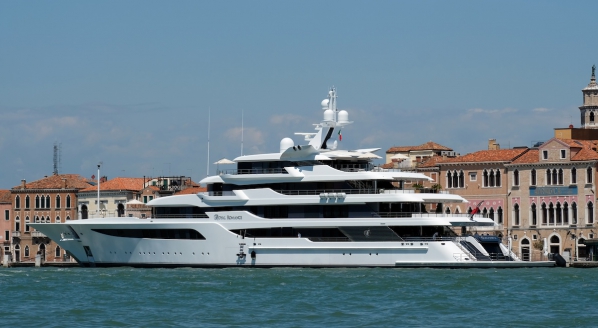
Royal Romance and the price of Europe’s sanctions success
Public auction may satisfy transparency requirements, but will it work for a sanctioned yacht? Emmanuelle Votat explores
Opinion
Related news
NEW: Sign up for
SuperyachtNewsweek!
Get the latest weekly news, in-depth reports, intelligence, and strategic insights, delivered directly from The Superyacht Group's editors and market analysts.
Stay at the forefront of the superyacht industry with SuperyachtNewsweek