Royal Romance and the price of Europe’s sanctions success
Public auction may satisfy transparency requirements, but will it work for a sanctioned yacht? Emmanuelle Votat explores…
Emmanuelle Votat is a judicial auctioneer specialising in the management and sale of yachts seized in criminal proceedings. She is the founder of a pioneering programme for judicial yacht asset management in France and has overseen landmark cases, including the sale of Stefania, which was confiscated in a major money laundering investigation.
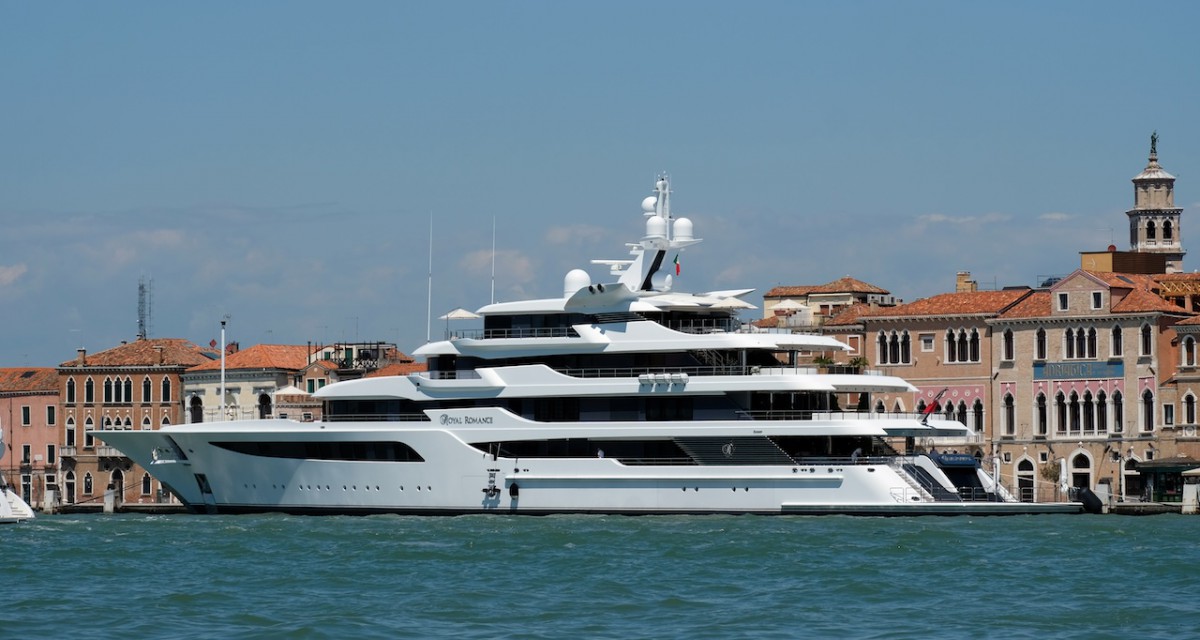
After several years of deadlock and two failed attempts, the 92-metre Feadship superyacht Royal Romance is finally preparing for sale. Ukraine’s Asset Recovery and Management Agency (ARMA) has confirmed that it is working on the vessel’s valuation and defining a sale model, pending a decision from a Croatian judge.
On the surface, the process appears to be moving forward. In reality, it remains structurally ill-suited, at this stage, to deliver a legally secure and operationally executable sale.
A sale still suspended by a fragile judicial balance
The Royal Romance case illustrates a configuration that has now become typical in sanctioned yacht matters: overlapping jurisdictions with no true central authority.
Ukraine, through criminal proceedings and the initial seizure decision; Croatia, through territorial jurisdiction and judicial control; and the European Union, through its sanctions regime; each produce autonomous legal effects without real coordination.
The turning point came in May 2022, when asset management was transferred to ARMA. Since then, the agency has held a mandate for both preservation and sale. However, this mandate remains conditional upon Croatian judicial approval, in a context where no final criminal confiscation has yet been issued.
This dependency has already led to two failures. The process initiated with Troostwijk Auctions in 2024 was abandoned due to a lack of operational structuring and timeline control. A second attempt, led the same year by Boathouse Auctions, validated by ARMA, was ultimately cancelled by the Croatian court due to the absence of a formally recognised criminal indictment.
Even today, ARMA refers to “increased procedural resistance” from representatives of the beneficial owner, relying on appeals, procedural incidents and delaying strategies typical of such cases. The case is legally advanced, but it remains fundamentally unsecured and therefore unsellable under acceptable conditions.
The persistent reflex of public auction
In this context, ARMA is considering a “transparent sales procedure through public mechanisms”. In practice, this points to a public auction model.
While this approach meets transparency requirements, it reveals a structural mismatch between the tool and the asset.
Royal Romance concentrates a set of constraints rarely seen together: a sanctioned asset, prolonged immobilisation in a foreign jurisdiction, the absence of a legally “clean” title at the time of sale, exposure to post-sale litigation, significant technical constraints (maintenance, class, crew, insurance) and annual holding costs estimated at around €20 million.
At this stage, one may legitimately question whether such an approach is suited to an asset of this nature.
In such a context, a public auction addresses only one variable: competition. It does not address the elements that determine the success of such a transaction, including the security of title transfer, the selection of buyers capable of meeting compliance and operational requirements, post-sale risk management, and the preservation of value within a narrow and highly specialised market.
Transparency alone is not sufficient. In complex sanctioned asset cases, it can become a factor of fragility when not paired with effective control.
A structural fragmentation of processes
The challenges observed in the Royal Romance case reflect a deeper fragmentation in the handling of multifaceted maritime assets.
The case currently unfolds across overlapping frameworks: criminal in Ukraine, judicial in Croatia, regulatory at the European Union level, and operational through ARMA. These frameworks are neither hierarchical nor synchronised, which significantly limits the likelihood of an efficient outcome.
The result is now evident: nearly two years of operational inertia, during which the asset’s value erodes, technical risks accumulate (corrosion, systems degradation, potential class issues), costs increase and the vessel progressively disconnects from its market.
Amore Mio: the other side of the problem
At the same time, ARMA is working to locate a second yacht linked to the same economic environment: Amore Mio. Available elements suggest a recent delivery in 2023, registration under the Palau flag, a Russian customs entry in July 2023, links to Renaissance JSC, and an estimated value of $9.6 million.
Unlike Royal Romance, this vessel does not suffer from excessive legal structuring, but from a lack of visibility.
Its inclusion in Interpol’s stolen vessels database marks a turning point, enabling coordinated international monitoring. ARMA has confirmed it engaged Interpol, Europol and the International Maritime Organization to establish the vessel's whereabouts and, as of the time of writing, its location remains unknown.
This case highlights another operational reality: assets can disappear within jurisdictional gaps and can only be tracked through specialised investigations capable of reconstructing their trajectories.
Sanctions circumvention is now organised. In response, a new category of actors is emerging, those capable of tracing, documenting and controlling these flows.
A full-scale stress test for European states
The Royal Romance case now goes far beyond a single vessel and instead represents a full-scale stress test of the current limits of European systems.
States have strengthened their ability to identify assets, cooperate internationally and impose freezing measures. However, the disposal phase remains largely under-equipped, and often underestimated. There is still no sales engineering capable of handling assets of this level of complexity.
The sale of Amadea demonstrated that such transactions are possible, but it has not yet established a replicable standard.
In the case of Royal Romance, the issue is no longer seizure. It is the transformation of the asset into value. And that transformation requires sophisticated legal engineering, adapted sales structuring (off-market processes, targeted tenders, hybrid models), alignment with international standards, and an environment capable of absorbing residual risk.
After four years of freeze, this is no longer about selling. It is about restoring marketability.
Europe is at a turning point
Beyond the Royal Romance case, the issue is now European.
Directive (EU) 2024/1260 sets a clear timeline: by November 2026, Member States must establish reinforced structures capable not only of freezing assets but also of managing and disposing of them.
The shift is underway. But it comes after several years of large-scale asset freezes, without the parallel development of appropriate disposal tools.
The result is now observable: a growing stock of immobilised assets, sometimes held for over four years, steadily losing value.
The framework exists, but it remains largely administrative. Assets such as yachts fall outside this logic. They require continuous technical management, a transnational legal approach, and sales models capable of integrating uncertainty and complexity.
Creating structures will not be enough. A true doctrine of sale must emerge.
The Royal Romance case is currently the most visible illustration of this gap. The process is moving forward, but cautiously. And in a market as demanding as yachting, error carries systemic consequences: a poorly executed sale today undermines the credibility of those that follow.
Europe is entering a new phase. A phase where seizing assets is no longer enough. And where credibility will be measured by the ability to convert them into value, effectively, legally and operationally.
Any views, thoughts and opinions expressed here are those of the author and are not intended to malign any particular individual or organisation and may not reflect the views, opinions, policies or positions of The Superyacht Group.
As an open-access platform, we offer an industry-wide invitation to anyone and everyone in our sector to share their knowledge, experience and opinions. So if you have an interesting and valuable contribution to make, and would like to join our growing community of guest columnists, share your ideas with us at newsdesk@thesuperyachtgroup.com
NEW: Sign up for SuperyachtNewsweek!
Get the latest weekly news, in-depth reports, intelligence, and strategic insights, delivered directly from The Superyacht Group's editors and market analysts.
Stay at the forefront of the superyacht industry with SuperyachtNewsweek
Click here to become part of The Superyacht Group community, and join us in our mission to make this industry accessible to all, and prosperous for the long-term. We are offering access to the superyacht industry’s most comprehensive and longstanding archive of business-critical information, as well as a comprehensive, real-time superyacht fleet database, for just £10 per month, because we are One Industry with One Mission. Sign up here.
Related news
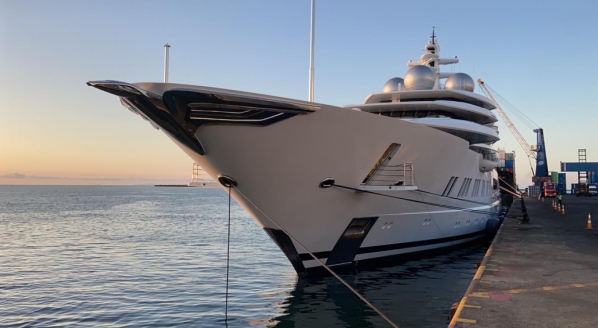
Sale of Amadea: a precedent that could shape Europe’s frozen yacht market
Seasoned superyacht auctioneer, Emmanuelle Votat dissects the challenges and opportunities emerging from the latest development in the sanctions saga
Opinion
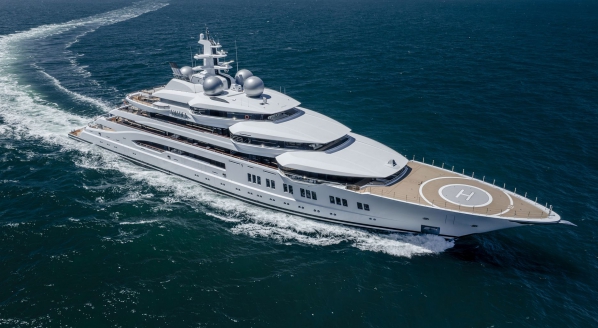
US government sells sanctioned Amadea
Authorities have confirmed the sale of the 106-metre Lürssen yacht at auction. But a pending appeal could still complicate the transfer…?
Fleet
.jpeg)
Phi’s appeal sinks at Supreme Court in watershed ruling
Following a landmark judgement, the stranded superyacht remains detained in a London lock, with its future cast into further doubt
Fleet
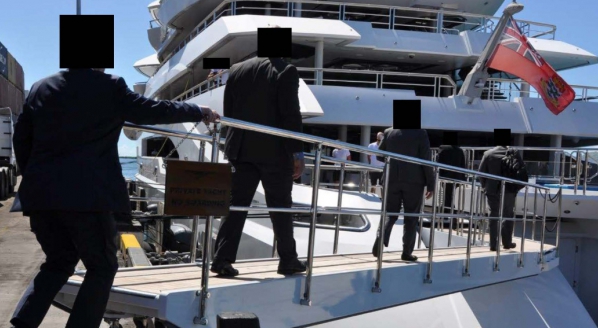
Turning legal limbo to public value
Emmanuelle Votat calls for a European framework to manage frozen and seized yachts ethically and transparently based on lessons from judicial practice in France
Opinion
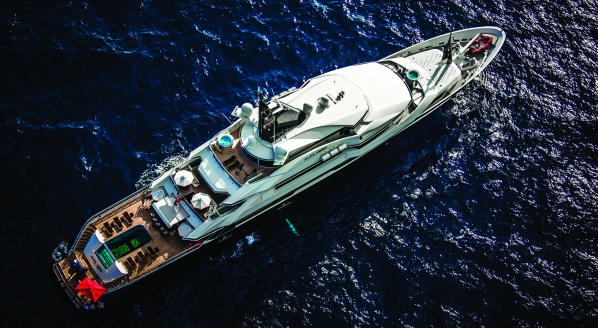
Can frozen yachts be thawed?
Sanctioned yachts have been locked in limbo for years, but could a new legal mechanism allow legitimate sales?
Owner
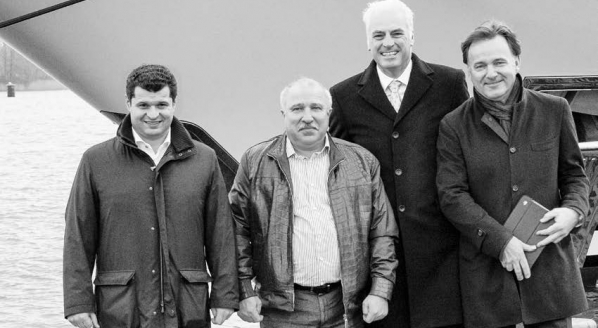
FBI “lied” in Amadea court case
Unsettling testimony from Amadea’s captain reveals US authorities manipulated evidence and pressured crew to make false statements in the forfeiture case
Fleet
Related news
US government sells sanctioned Amadea
12 months ago
Turning legal limbo to public value
1 year ago
Can frozen yachts be thawed?
1 year ago
FBI “lied” in Amadea court case
2 years ago
No win, no Phi
2 years ago
NEW: Sign up for
SuperyachtNewsweek!
Get the latest weekly news, in-depth reports, intelligence, and strategic insights, delivered directly from The Superyacht Group's editors and market analysts.
Stay at the forefront of the superyacht industry with SuperyachtNewsweek