Motoryacht Tango – out of system but still in service
Emmanuelle Votat reveals how a trophy has turned liability in the absence of a clearly defined exit strategy…
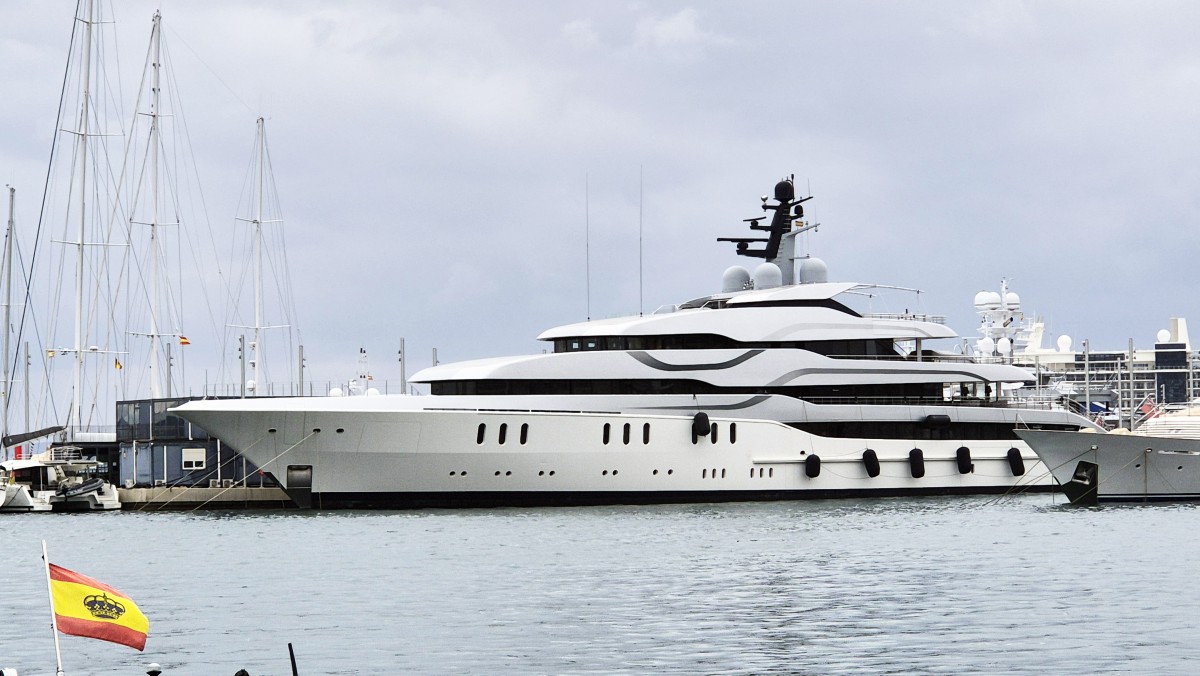
M/Y Tango, a 78-metre Feadship superyacht seized in Palma de Mallorca during a highly publicised FBI operation, remains one of the most striking and costly examples of a poorly anticipated seizure of a complex maritime asset. Seized in 2022 as a symbol of enforcement, Tango remains officially in service, yet key technical indicators suggest a growing disconnect between legal status and operational reality.
A US seizure executed in Spain
On 4 April 2022, Tango was seized as part of a joint operation between the FBI and Spanish authorities, at the request of the US Department of Justice (DoJ). The seizure was carried out pursuant to a warrant issued by a US federal court and forms part of a civil forfeiture proceeding. The yacht was targeted not only due to the status of its beneficial owner, Viktor Vekselberg – a Russian oligarch under US sanctions – but also in connection with alleged bank fraud, money laundering and sanctions evasion.
This proves the process works, enabling the effective capture of a complex asset within an international framework. Filmed as a financial war trophy, the operation was intended to demonstrate that sanctions had real teeth. It also triggered an immediate consequence: responsibility for the asset’s upkeep shifted.
Apparently still in service, according to Equasis
Data from Equasis now provides a direct and factual snapshot of Tango. The yacht remains registered under the Cook Islands flag, with an unchanged status of ‘in service/commission’ since 2011. Tango’s particulars were last updated on 2 July 2025 and its management structure remains in place, with operations handled from Palma and ownership recorded through Arinter Management Inc.
Taken in isolation, these elements describe an administratively active, identified and monitored asset, but this reading is incomplete. Equasis also indicates that the vessel’s classification with Lloyd’s Register has been withdrawn since 11 March 2022. The last renewal survey dates back to 23 April 2021, with the next one scheduled for 14 July 2026.
Tango is not simply a seized yacht that is expensive to maintain, it’s a yacht which, while still officially ‘in service’, is moving away from the system designed to certify its value.
In reality, a vessel without classification
The loss of class does not necessarily imply that the vessel has deteriorated, it may result from administrative or contractual decisions. This point is central: for a yacht of this scale, it fundamentally alters how the asset is understood. Without active class, compliance becomes harder to assess, insurability may be more constrained, and any return to operation or sale requires enhanced technical due diligence.
The P&I cover, reinstated in 2026, confirms that the vessel remains insurable. It also raises a more subtle question: under what conditions can an asset without active classification continue to be covered and at what cost?
Tango is therefore not simply a seized yacht that is expensive to maintain, it’s a yacht which, while still officially ‘in service’, is moving away from the system designed to certify its value.
A prolonged seizure with no clear exit
Since its seizure, Tango has remained immobile, moored in one of the most expensive marinas in the Mediterranean, Club de Mar. Nearly four years later, this symbol has become something else entirely: one of the most costly cases of asset immobilisation in recent US economic enforcement history.
This situation is not necessarily the result of a strict legal deadlock. Under US law, an early sale is possible. Courts may authorise an interlocutory sale, particularly where maintenance costs are high or the asset is likely to depreciate. However, the recent experience of M/Y Amadea shows that this option remains tightly constrained. In that case, a request for early sale was rejected in 2024, with maintenance costs deemed inherent to the nature of the asset. Only after significant developments regarding ownership was a sale ultimately authorised in March 2025.
The fact that Tango has not yet been sold does not mean that the yacht cannot be; it suggests instead that several factors make such a decision difficult. The question of beneficial ownership, structured through offshore entities, remains central. The legal proceedings are still ongoing. A sale would not automatically resolve all operational frictions, there is also the risk that, should the case fail, the value of the asset would need to be returned.
Finally, the political dimension reinforces caution. Tango is a US seizure executed outside US territory. It is a visible, emblematic and politically sensitive case of international cooperation. In principle, nothing prevents a sale but, in practice, everything works against it. The system allows early sale, although this rarely happens.
Tango’s maintenance, ordered as part of the seizure, is borne by US taxpayers and amounts to approximately €10 million per year.
From political symbol to federal liability
In civil forfeiture proceedings, responsibility for maintaining the asset lies with the seizing authority. In Tango’s case, this means the United States must bear the cost. Several sources suggest cumulative costs exceeding €40 million since 2022. These figures should be treated with caution, but their scale is consistent with the maintenance requirements of a yacht of this category, originally valued at around €85 million.
At the request of US authorities, the yacht was formally seized and classified under Spanish law as incautado [confiscated], rather than merely frozen. This classification resulted in an immediate transfer of financial responsibility to the requesting authority, the United States. Spanish maritime press, including Revista Mar, has been explicit: Tango’s maintenance, ordered as part of the seizure, is borne by US taxpayers and amounts to approximately €10 million per year.
Who ultimately bears the cost?
The question of final allocation remains open. If confiscation is granted, the proceeds of the sale will revert to the state and may, in theory, offset part or all of the costs incurred. This assumes, however, that the yacht’s value at the time of sale remains sufficient.
If the proceedings fail, or are partially overturned, the situation becomes more uncertain. In such a case, it cannot be excluded that part of the costs will ultimately remain borne by the public. In practice, there is no guarantee that the expenses incurred will be fully recovered.
A mismatch between legal time and maritime reality
The case of Tango highlights a structural misalignment. Legal timelines unfold over extended periods, shaped by complex proceedings and appeals. The technical life of a yacht, by contrast, is continuous and governed by cycles of maintenance, certification and validation. When these timelines diverge, uncertainty emerges, not necessarily in the form of immediate deterioration, but over time in the form of reduced technical clarity, diminished asset value and declining market confidence.
Nearly four years after its seizure, Tango continues to be funded with public money. It offers a clear lesson for authorities dealing with seized or sanctioned maritime assets
A technical and patrimonial paradox
Technically, Tango remains an exceptional yacht. Exceeding 2,000gt, powered by four MTU engines and capable of speeds above 21 knots, it fully meets the high standards of the Feadship market, with exterior design by Harrison Eidsgaard and a comprehensive specification including a counter-current pool, spa, beach club, outdoor cinema, owner’s deck, helipad and custom tenders. These characteristics continue to define Tango’s market positioning, but its value depends on what is not visible.
Symbolically, Tango retains strong significance. Among the first yachts targeted under the US seizure campaign, it remains exposed at the heart of one of Europe’s leading yachting hubs, a floating billboard of Western enforcement.
Financially, however, the yacht has become a precedent. A case study showing that a seizure not followed by a proactive, sale-oriented management strategy may cost more than leaving an asset frozen, without generating value or resolution.
A lesson for future maritime asset sales
Nearly four years after its seizure, Tango continues to be funded with public money. It offers a clear lesson for authorities dealing with seized or sanctioned maritime assets – a yacht is not an asset that can be stored indefinitely without strategy; it cannot simply be left at the back of a port.
Inaction is rarely neutral, it is often the most expensive option. Without a robust legal, technical and financial framework, the seizure of a superyacht may become counterproductive, both in terms of value preservation and the credibility of sanctions enforcement.
The real question is not whether such assets should be seized, but how they should be managed and sold within timelines that reflect maritime and market realities, while ensuring legal certainty and limiting the financial burden on the public.
Tango may ultimately stand as a defining precedent: a trophy turned liability in the absence of a clearly defined exit strategy.
NEW: Sign up for SuperyachtNewsweek!
Get the latest weekly news, in-depth reports, intelligence, and strategic insights, delivered directly from The Superyacht Group's editors and market analysts.
Stay at the forefront of the superyacht industry with SuperyachtNewsweek
Click here to become part of The Superyacht Group community, and join us in our mission to make this industry accessible to all, and prosperous for the long-term. We are offering access to the superyacht industry’s most comprehensive and longstanding archive of business-critical information, as well as a comprehensive, real-time superyacht fleet database, for just £10 per month, because we are One Industry with One Mission. Sign up here.
Related news
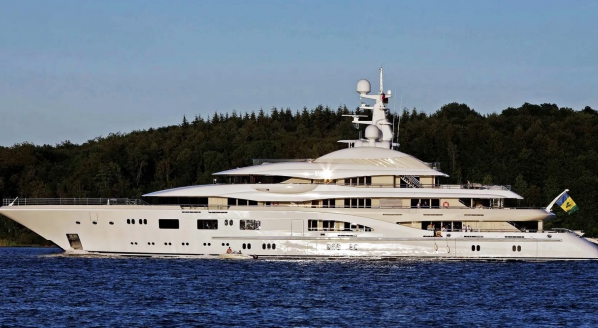
Meridian A and the structural blind spot of European sanctions
As its Special Survey deadline approaches, Emmanuelle Votat argues that Meridian A reveals a structural gap in EU sanctions and how Italy’s Anti-Mafia Cod
Opinion
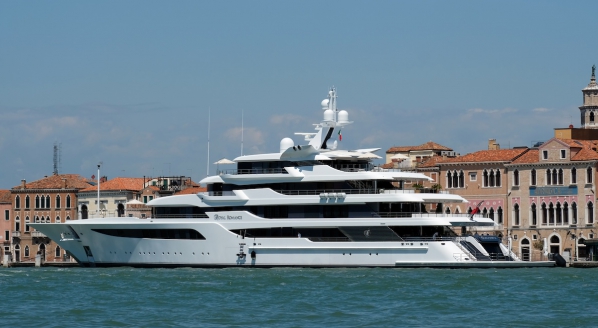
Royal Romance and the price of Europe’s sanctions success
Public auction may satisfy transparency requirements, but will it work for a sanctioned yacht? Emmanuelle Votat explores
Opinion
Alfa Nero discovery bid fails at Second Circuit
A US court has closed off an attempt to obtain Antiguan government financial records, but the question of where the money went remains unanswered
Business
Sale of Amadea: a precedent that could shape Europe’s frozen yacht market
Seasoned superyacht auctioneer, Emmanuelle Votat dissects the challenges and opportunities emerging from the latest development in the sanctions saga
Opinion
.jpeg)
Phi’s appeal sinks at Supreme Court in watershed ruling
Following a landmark judgement, the stranded superyacht remains detained in a London lock, with its future cast into further doubt
Fleet
Related news
Alfa Nero discovery bid fails at Second Circuit
6 months ago
NEW: Sign up for
SuperyachtNewsweek!
Get the latest weekly news, in-depth reports, intelligence, and strategic insights, delivered directly from The Superyacht Group's editors and market analysts.
Stay at the forefront of the superyacht industry with SuperyachtNewsweek