Who answers the charter inquiry that arrives at 11pm?
A charter broker’s phone rings in every time zone – how AI systems can help with those first conversations and handing off to the broker…
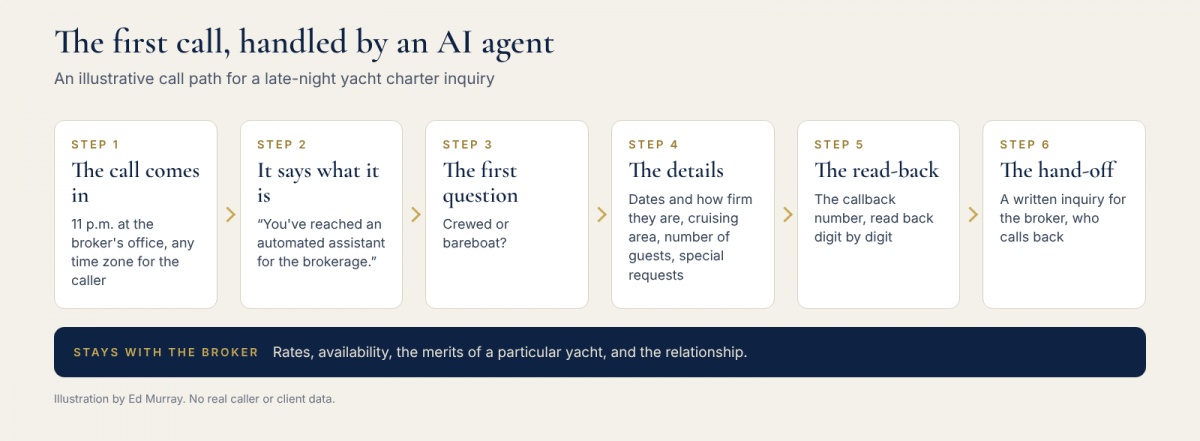
The first call about a charter often comes at an awkward hour. A family office in Singapore is planning for August. A guest's assistant in New York is working through a short list of brokers at the end of a long day. A captain recommends a broker over dinner, and the client rings them from the restaurant terrace. Brokers best meet this by being available and carrying their phone everywhere. Even so, every broker has moments when the call goes to voicemail.
AI voice agents can help most in those moments. I build them for a living, so I have a stake in the question, and I have spent a good amount of my time listening to test calls and scrutinising what an agent on a broker’s line should say. The technology can be very useful here, provided it is designed around the way charter actually works.
The most valuable thing an agent can do on a first call is ask the main question that shapes everything after it. For yacht charter, that is usually whether the client wants a crewed yacht or a bareboat charter. The answer decides the budget conversation, the licensing questions and the kind of yacht the broker will start looking at. After that come the practical details: the dates and how firm they are, the cruising area, the number of guests and cabins, and any particular requests the client raises. An agent that gathers these data points calmly, and accurately confirms the callback number before the call ends, gives the broker a complete inquiry to start working from.
The second job is honesty about what the caller is speaking to. A client who reaches an automated assistant should hear confirmation of that in its opening greeting. People decide how much to share, and how to phrase a request, once they know who (or what!) is listening; clients at this level, and the people who work for them, tend to be attuned to exactly that. Saying so at the start of the call respects the client’s choice. It also protects the broker’s reputation.
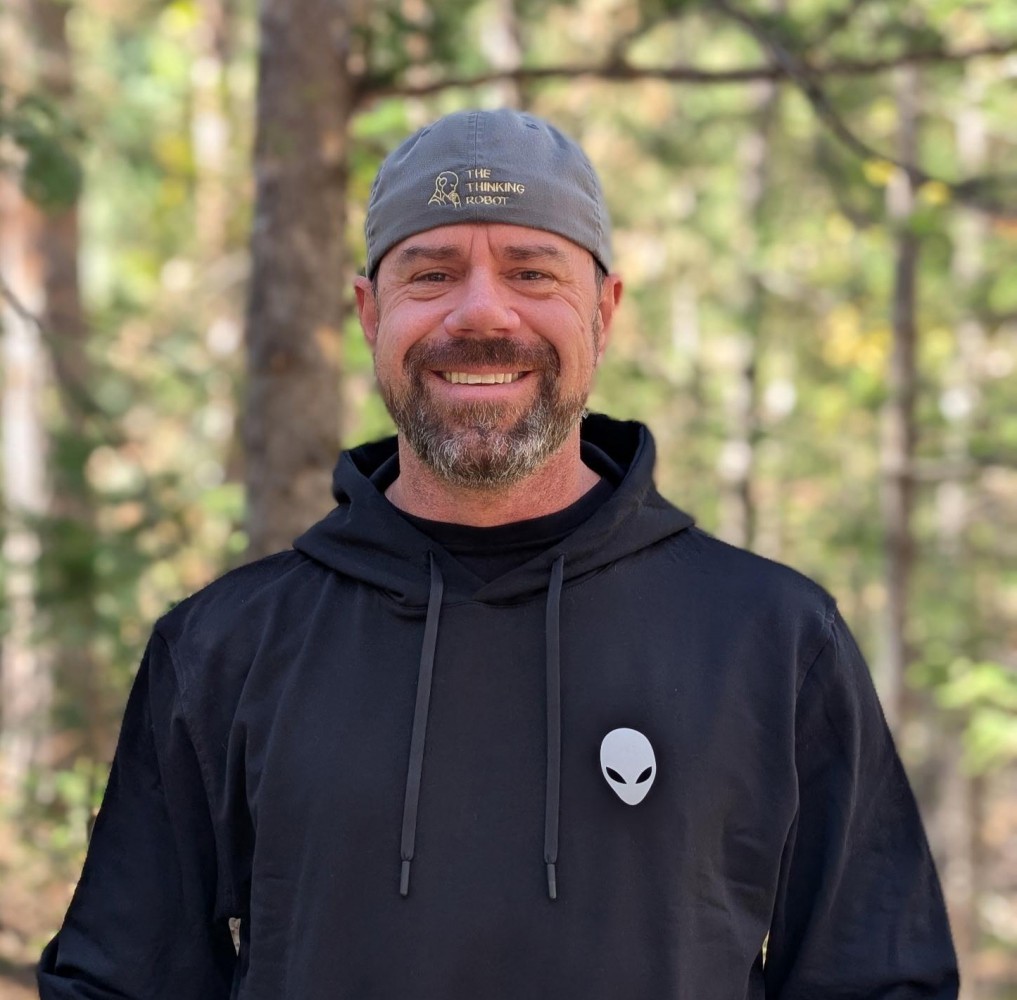
Ed Murray, founder, The Thinking Robot
An agent should only ask for what the broker needs to make the callback, and the recording and transcript of the call should belong to the brokerage and stay under its control.
Many aspects belong to the broker alone. Rates, availability and the merits of a particular yacht call for a professional who knows the fleet, the owners and the contracts. A machine that quotes a figure, or suggests that a yacht is free for certain dates, creates expectations the broker then has to manage. A well-designed agent acknowledges the question, notes it carefully and tells the caller that the broker will come back with an answer, framing the broker as the expert they seek.
Discretion matters as much as accuracy. Charter clients often prefer that their names, plans and guest lists travel no further than necessary. An agent should only ask for what the broker needs to make the callback, and the recording and transcript of the call should belong to the brokerage and stay under its control. Before signing up for any system, a broker should ask the provider where call data is stored, who can access it and whether it is used to train anyone’s models. The answers vary between providers and they deserve a clear reply in writing. Just as the technology is evolving, so are the laws around data retention, access, and disclosure.
Used this way, an AI agent becomes a capable first point of contact. It gives a late-night caller a real conversation and it gives the broker a clean record of what that caller requires. The relationship, the advice and the negotiation stay with the broker, which is where the real value of a good broker has always been.
I urge brokers to test a system before choosing it. Call it at the hour your clients call you, ask the questions they ask and listen closely. Does it tell you it is automated? Does it ask about crew before it asks about budget? Does it decline to quote? Does it read your number back correctly? A system that passes those checks is worth considering for further, more rigorous review. One that improvises answers about yachts and rates is a risk to the very business it is designed to support.
Charter will always be a relationship business built on trust, reputation and local knowledge. Technology that respects that and stays within clear limits can help brokers be there for clients in every time zone while the people who know the yachts remain at the heart of the deal.
I wish every broker a busy season, and every guest fair winds and happy sailing.
Ed Murray is the founder of The Thinking Robot, a Colorado company that builds bespoke AI intake agents for charter brokers and other select businesses where a missed call can be expensive.
As an open-source platform we offer an industry-wide invitation to anyone and everyone in our sector to share their knowledge, experience and opinions. If you have an interesting and valuable contribution to make, and would like to join our growing community of guest columnists, share your ideas with us at newsdesk@thesuperyachtgroup.com
NEW: Sign up for SuperyachtNewsweek!
Get the latest weekly news, in-depth reports, intelligence, and strategic insights, delivered directly from The Superyacht Group's editors and market analysts.
Stay at the forefront of the superyacht industry with SuperyachtNewsweek
Click here to become part of The Superyacht Group community, and join us in our mission to make this industry accessible to all, and prosperous for the long-term. We are offering access to the superyacht industry’s most comprehensive and longstanding archive of business-critical information, as well as a comprehensive, real-time superyacht fleet database, for just £10 per month, because we are One Industry with One Mission. Sign up here.
Related news

The yacht is now part of the owner’s online reputation
Tony McChrystal works with owners, family offices and senior executives on their online reputation and privacy. This is his take on reputation management
Opinion

The best applications of AI in luxury may be almost invisible
The strongest applications of AI in luxury improve preparation, judgement and trust without asking the client to adapt to technology
Opinion
How digitalisation is transforming the yachting sector
Beyond AI: New MB92 report explores the future of intelligent refit
Opinion

No fuel. No fun. Can we still afford to charter?
Alexander Griffiths of Tidal Communications attends MYBA to find out how operational costs are affecting the demand for charter
Owner

Disrupt or be disrupted
Hot off the press from METS, Prof. Dr Christoph Ph. Schließmann comments on the new paridigm facing the superyacht industry
Opinion
Related news
No fuel. No fun. Can we still afford to charter?
5 months ago
Disrupt or be disrupted
11 months ago
NEW: Sign up for
SuperyachtNewsweek!
Get the latest weekly news, in-depth reports, intelligence, and strategic insights, delivered directly from The Superyacht Group's editors and market analysts.
Stay at the forefront of the superyacht industry with SuperyachtNewsweek