No fuel. No fun. Can we still afford to charter?
Alexander Griffiths of Tidal Communications attends MYBA to find out how operational costs are affecting the demand for charter…
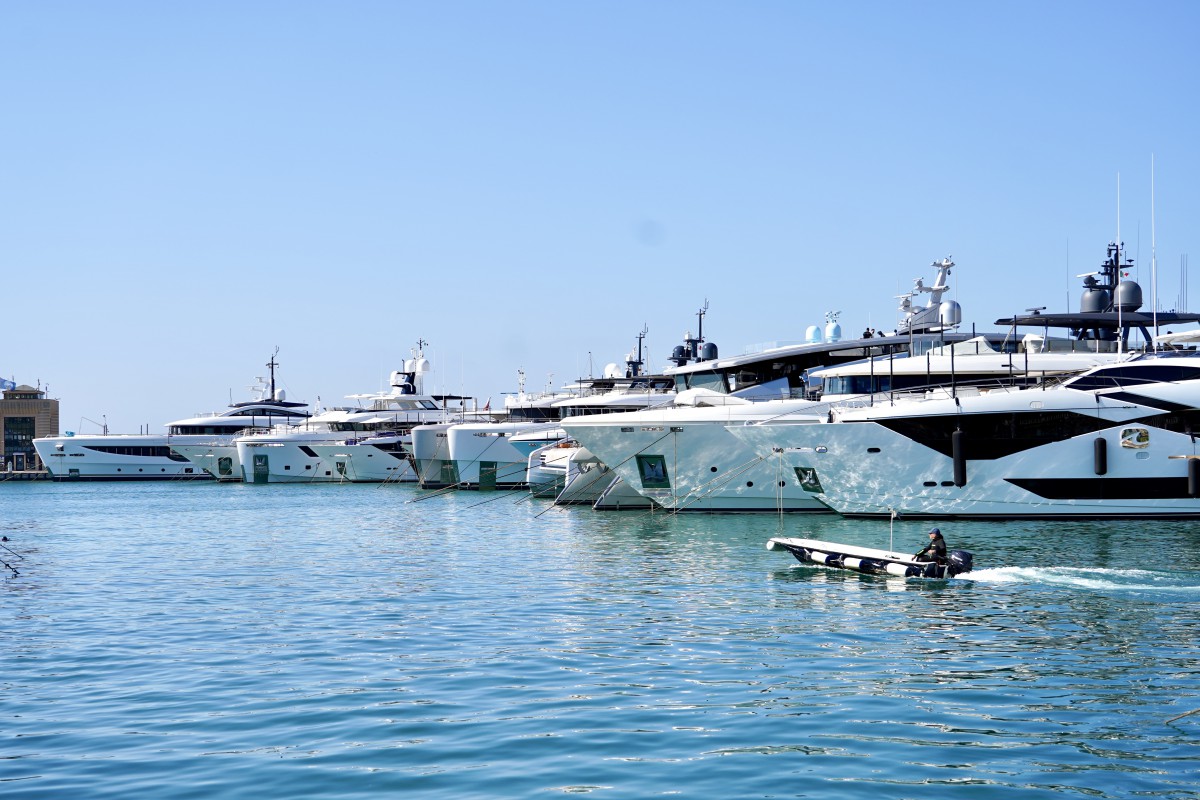
Well … yes, and here we go again. Boat season. The big one, anyway. With most of the charter fleet now repositioned in the Med and most of their respective charter managers in Sanremo for the MYBA Charter Show – the first major European charter event on the calendar – if I wanted to get a true read on how this season will play out, this was precisely where I needed to be.
And after being stung by a steep price hike for the no-longer-so-aptly-named budget flight and then paying through the nose at pretty much every turn, money – or the lack of it – was top of my mind. I wanted to know whether this ultimate tier of travel and hospitality was feeling the pinch or whether it was an experience exclusively reserved for pedestrian travellers like myself.
“The market was completely dead for about four weeks,” Harrison MacManus of Cecil Wright told me. “This was from mid-February to just after Easter. Global events cause insecurities and with insecurities comes hesitation. No one wants to commit months in advance. They wait till the last minute, and when they come to the negotiating table, they come aggressively.”
“You’re not wrong about the market slowdown. Since the conflict, all markets have been volatile and there's a real concern about fuel rations.”
I felt quite clever for a brief moment after joining the very simple dots of high costs ≠ lower demand, and skipped off for a celebratory Spritz. But my a-ha moment was soon shattered. I thought I’d stop by to poke my head around the recently refurbished Emocean. My first surprise was how beamy it was – wow! And my second was when Captain Alex mentioned the prep work underway for their forthcoming busy season – damn! The Spritz would have to wait. I had to understand why.
“Most of the bookings were made last season,” Frédéric Cretin of Camper & Nicholsons, Emocean’s charter manager, explained as we settled on the shaded foredeck. “People love the boat, they love the crew. She’s a young, high-volume yacht with contemporary options. But you’re not wrong about the market slowdown. Since the conflict, all markets have been volatile and there's a real concern about fuel rations.”
Jet fuel is the big one. With the ongoing conflict between the White House and Iran, and the latter pushing even deeper into a bruise with pain receptors that reach every single one of us – oil price – travel was not only getting more expensive, it was looking impossible. In the weeks leading up to MYBA, major airlines were pulling flights, reporting losses, and European ministers were announcing bleak PSAs of nearly empty fuel reserves. It was then not a question of costs, but a question of security. Even if you own a jet – if there’s no fuel, there’s no fuel – travel was seemingly going to be off the cards.
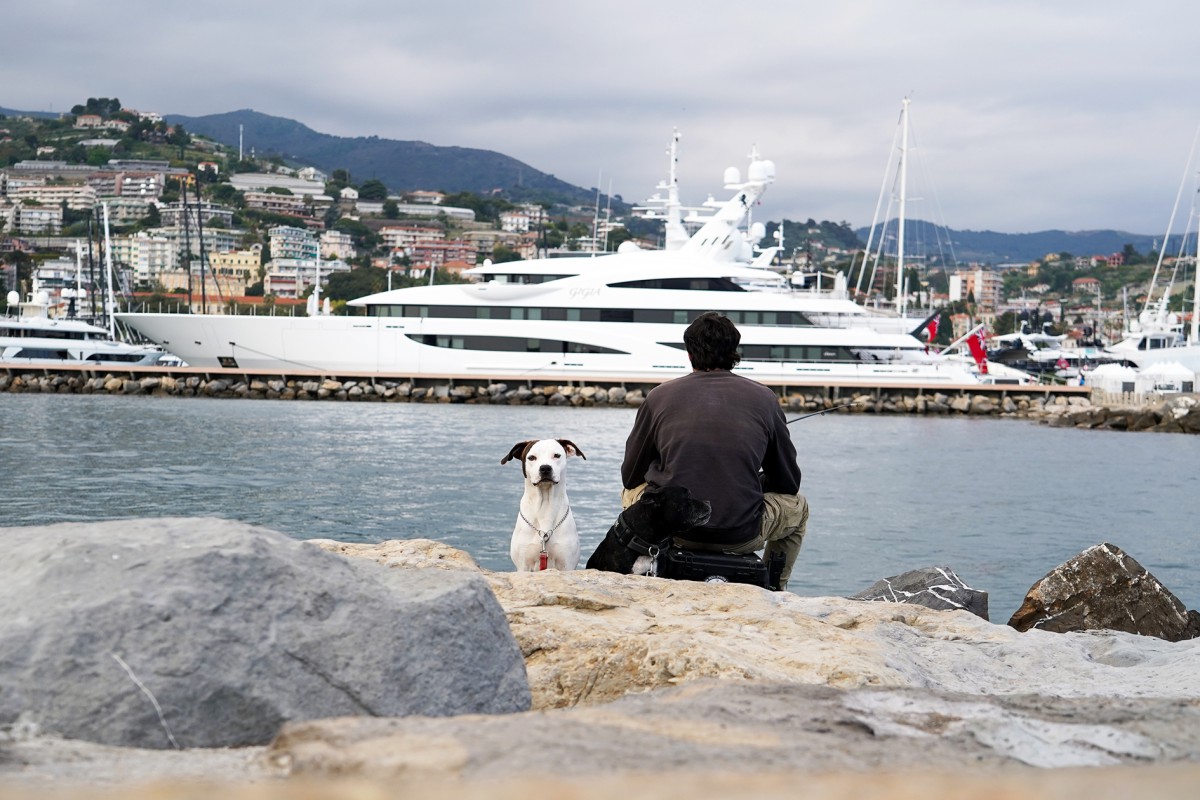
92-metre Gigia
I was feeling quite glum about the prospects and tendering across the marina hardly perked me up. What should have been a pleasant five-minute passage became somewhat depressing as my companion on the open-topped tender, a superyacht supplier, regaled me about how provisions could become nearly impossible to supply due to the current fuel climate – “but we have an electric fleet of lorries,” he smiled at me. Every cloud, I thought, musing about how he could potentially sweep up the market if nothing abates.
With what I learned thus far, it would hardly be presumptuous of me to expect a knee-jerk reaction from some owners to pull their yachts from the charter market, concerned about their assets running out of muscle power and becoming stranded. And after walking the full 92-metre length of Gigia en route to the bigger boats of the show, I thought I’d climb aboard to see whether I was right. “We actually had charter guests scheduled for disembarkation when the war broke out in Venezuela,” the chief engineer told me. “As the airport shut down in St Barts, we offered our guests a no-expense extension on their trip to weather out the momentarily no-fly blackout.”
“Less costs, [it’s] more about legislation ... we changed flag and became Monégasque. Now with Monaco, we can charter for 90 days without any personal tax levies.”
The crew went above and beyond. My Aperol-denying quest continued. I went on to have a quick-fire run of captain interviews about fuel, and here’s what I found out: some were talking of more selective itineraries – local, carefully planned routes for reduced fuel burn – while others, if they hadn’t already refuelled ahead of the season, were finding new bunkering locations. North Africa, with its proximity and attractive rates (approx. €1 p/litre), seemed a hit, but the captain of Coral Ocean looked a little bemused when I pressed the question to him. “Of course, we always find the most cost-effective fuel solutions, just as we would for any other provision, but let's not forget we’re sat on board a Lürssen,” he said, smiling. I looked around and must admit, it was bloody lovely. “Coral Ocean is completely optimised for efficiency. I was just comparing data with the captain of a similar-sized vessel, and we burn roughly 50 per cent less fuel than they do. Incredible.”
For those like me who are less savvy with the financial intricacies of charter bookings, my snap assumption that rising operational costs result in more expensive charter rates was soon dismissed. Fuel is a cost shouldered by the guest (makes sense) and is redacted post-charter from the Advance Provisioning Allowance (APA). And as one captain kindly explained to me, “We treat this budget as if it’s our own. We provision at the best rates we can, we build up our reserves in advance, when possible, and we stretch each cent as far as it can go.”
To talk numbers, roughly an additional 30 per cent of any given charter rate is locked away in a fund to cover all running expenses – and often the crew gratuity too. Whatever remains is reimbursed to the client. Pre-pandemic charter guests were setting less aside, but the heady mix of a fluctuating market and global insecurities quickly ran APAs dry, and the rate had to be corrected.
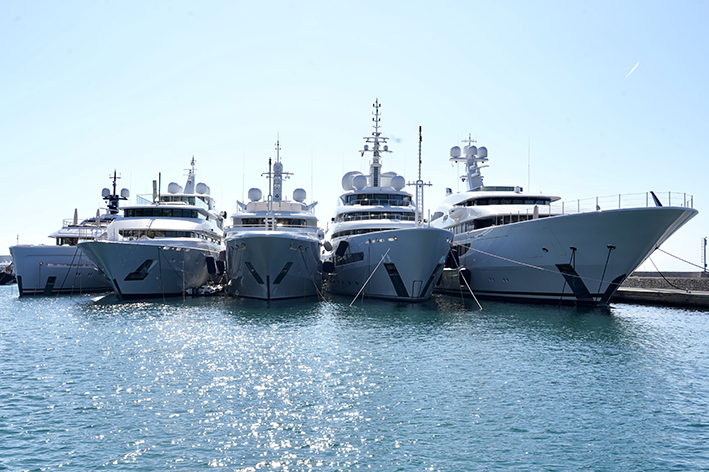
“Covid taught us a lot,” Marie Molls of IYC explained to me as two finely detailed porcelain cups brimming with fresh Italian coffee were placed on our table by the attentive crew of the golden-hulled 50-metre Raja2. “We all became more resilient, more flexible and quicker to find solutions – we had to. This market disruption is merely a blip compared with what we experienced then.”
The industry came out of the pandemic with renewed momentum. Shipyard orderbooks hit record
highs, while charter demand surged as a new wave of clients discovered the appeal of life at sea. Lisa Airasca of Fraser Yachts described an unprecedented influx of enquiries across generations and nationalities, many from first-time charterers seeking privacy and flexibility. At the height of this demand, availability was tight, with the most desirable yachts booking out well in advance. As new builds entered the market and more owners considered charter, supply gradually expanded, bringing the market closer to balance. “The yachts that captured this demand most successfully,” she noted, “were those that made guests feel at home,” reflecting a broader shift toward comfort, personalisation and experience-driven design.
I checked my watch with the bitter realisation that, unlike everyone else in Portosole Marina, I was tediously slow at finding the solution. Forget the cocktail … lunch was now scuppered. Frustrated that this commission was the only thing in the way of basking in the Italian sun, I saw hope on the horizon. Sails! Let’s forget this whole fuel palaver. Unfurl the canvas and do away with it. There’s the story … and hope for lunch. I jogged down the dock and waved at the beaming Radostina Trifonova of Denison.
In all my haste, it took me a minute to realise where I was standing. Swathes of teak, polished chrome and high-gloss woodwork surrounded me. It was a regal setting; it had to be a Perini … it was.
I had settled in a deep seat on the aft deck with Trifonova and Captain Ukic. Ice water was served. “So tell me,” I asked, admiring my settings once again on the 40-metre Ellen, “how is everything going?”
“Business is good, bookings are getting longer,” Trifonova explained. “We’ve had many inquiries for three-plus weeks – not only for Ellen, which is under our management, but for numerous yachts across our fleet.” That’s counterintuitive for my report on trends, I thought gloomily. Rats! So I turned to the captain and directly asked whether the owner was feeling the pinch of rising costs. “Less costs, more about legislation,” Ukic replied. “It wasn’t so long ago that we changed flag and became Monégasque. Under our old flag state, the family was paying VAT when they used the yacht privately. Now with Monaco, we can charter for 90 days without any personal tax levies.”
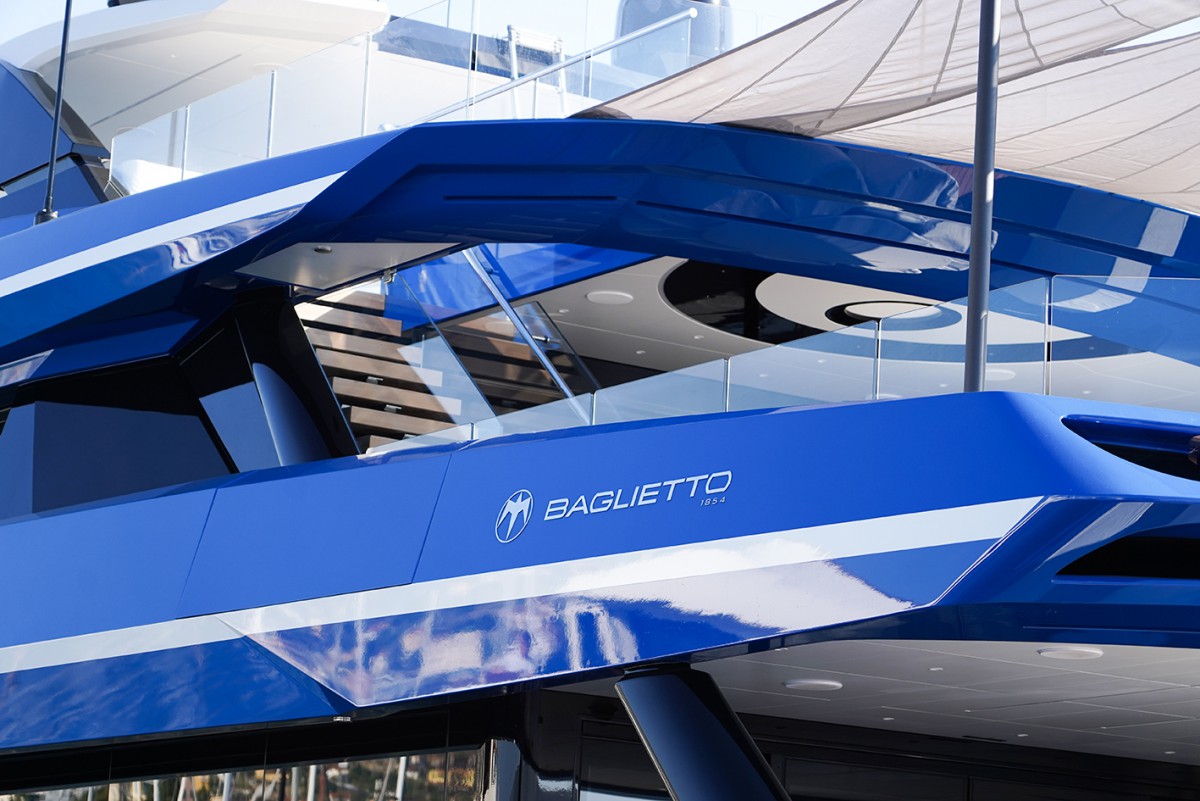
Interested to know whether other owners are considering alternative practices to optimise the finances of their prized assets, I flicked through the show marketing fodder and spotted two newcomers to the charter market: the 26-metre sailing cat Mirovia and the iconic My Tempest, both just completing extensive refits. I sat down with the two respective captains and they both assured me that neither owner is interested in the enterprise of charter. They both want to keep the crew sharp, offset a few costs and ultimately share the cool experience they both offer: Mirovia is chasing the purist sailing adventures, while My Tempest has brought the golden era of Bridget Bardot-esque St Tropez cruising to the modern client.
As I was pondering whether demand was there for the unique, I walked past the oddly-shaped and wildly popular This Is It and watched a throng of people eyeing up the oldest – and my personal favourite – yacht of the show, Over The Rainbow. I guess so, I mused! But if anyone was to know, it was Burgess. They're incredibly well-versed at shaping years-long itineraries for a whole range of expeditions, the purpose-driven charters of the converted 45.6-metre Scantilla Maris being just one example.
“Anything big built in the last couple of years is a magnet for charter guests. Experiencing the unexperienced naturally has its appeal.”
“People are still exploring and opening new horizons, taking their yachts with a seven-star service to destinations that don’t have that level of luxury onshore,” says Frederica Findlater of Burgess. “Last summer we had two big boats with busy charter programmes in Norway, but it is always a juggle of supply and demand.”
Companies at the scale of Burgess are well protected from the tug-of-war of supply and demand, seeing as they offer the full suite of services. As it is often common for owners to select the same brokerage house to both manage their yachts and their charter programmes, the service becomes holistic. It’s not cheap to relocate a yacht. And ultimately, these decisions – as with nearly all decisions – are financial. How much can these costs be insulated through charter?
They’re not the most common, but there has been a string of global adventurers. Hemisphere under Burgess successfully circumnavigated the globe three times with selective charter offerings in key destinations. TWW Yachts developed a great programme for La Datcha and is currently outlining an itinerary for the big Damen After You, while Fraser is sketching out a very cool, adventure-focused programme for the freshly refitted 73-metre ice-class explorer Planet Nine. The adventurous spirit of these commercially minded owners provides a testing ground for lesser served destinations.
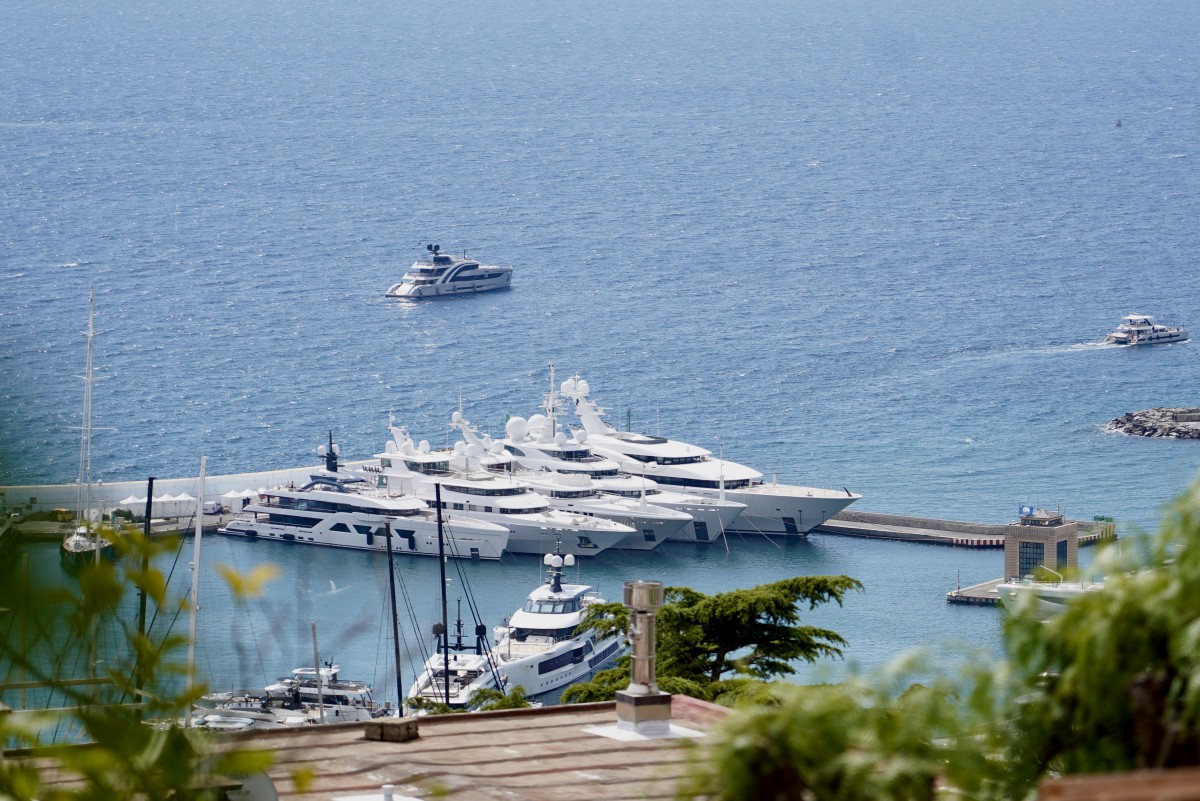
As the sun was setting, and my stomach was now noticeably audible, I found myself in quite a privileged perch aboard another Perini Navi with a wine glass in hand (finally!), and funnily enough, back in the company of Harrison MacManus. We got onto the topic of the 122-metre Kismet – the motoryacht of 2025 – which Cecil Wright exclusively represents. “She had loads of inquiries,” MacManus explained. “Look, anything big built in the last couple of years is a magnet for charter guests. Experiencing the unexperienced naturally has its appeal.”
I could see the show officials winding everything down and knew this was my last chance to find out whether this magnetism was just as strong for yachts so new to the market that they were making their global debut at this very show. It was time to see Alva.
The dock immediately melted away when I stepped on board. I was wrapped in a subtly textured, linen-white blanket of tranquillity. Everywhere I looked was inviting soft tones, and it soon made sense when I discovered the yacht was a beacon for the health and wellness inclined.
“Before anyone had even seen Alva, we were receiving inquiries,” said Caroline Antlett of Christie Yachts. “It’s a real testament to the reputation of the shipyard and the crew. However, we very much prioritise the quality of clients who will charter the yacht over the volume of bookings. It is important to the owner and Christie Yachts to put the right charter clients on board who are going to respect the yacht and crew.”
So it seems the game of charter chess remains an epic battle of financial management, expectation management and strategic placements around the world, against a backdrop of inflation, war and insecurity. And after sitting down with the managers handling the strategy and the captains helming the fleet, there wasn’t even a flicker of stress. I can confidently report that despite the very momentary
dry patch, charter demand remains strong, rates remain stable, and the captains and crew will move mountains to ensure operational costs are kept to a minimum.
Images by Alexander Griffiths, Tidal Communications
This article first appeared in The Superyacht Report: Captains Focus. With our open-source policy, it is available to all by following this link, so read and download the latest issue and any of our previous issues in our library.
NEW: Sign up for SuperyachtNewsweek!
Get the latest weekly news, in-depth reports, intelligence, and strategic insights, delivered directly from The Superyacht Group's editors and market analysts.
Stay at the forefront of the superyacht industry with SuperyachtNewsweek
Click here to become part of The Superyacht Group community, and join us in our mission to make this industry accessible to all, and prosperous for the long-term. We are offering access to the superyacht industry’s most comprehensive and longstanding archive of business-critical information, as well as a comprehensive, real-time superyacht fleet database, for just £10 per month, because we are One Industry with One Mission. Sign up here.
Related news
The Superyacht Report 229: Captains Focus - Out Now
513 whales in a day, a yacht arrested by US Marshals, Guy Booth on refusing to abandon Phi and so much more in TSR 229
Crew
Global study reveals the economic power of the superyacht industry
New study positions yacht builders as the industrial foundation of a €54 billion global superyacht economy
Business
Spain replaces ‘charter licence’ with self-declaration system
Self-declaration process streamlines the procedures around the chartering of yachts in Spanish waters
Business
First the concept, then the yacht!
Our regular legal contributor explains how the most expensive mistake in yachting is often made before the first contract is signed
Opinion
How data reveals the real impact of the new-build sector
The facts and figures behind the economic significance of new-build activity and its contribution to the global economy
Opinion
Related news
The Superyacht Report 229: Captains Focus - Out Now
4 months ago
First the concept, then the yacht!
6 months ago
NEW: Sign up for
SuperyachtNewsweek!
Get the latest weekly news, in-depth reports, intelligence, and strategic insights, delivered directly from The Superyacht Group's editors and market analysts.
Stay at the forefront of the superyacht industry with SuperyachtNewsweek