Expedition‑ready or marketing‑ready?
The operational reality behind the label – why capability is not the same as readiness…
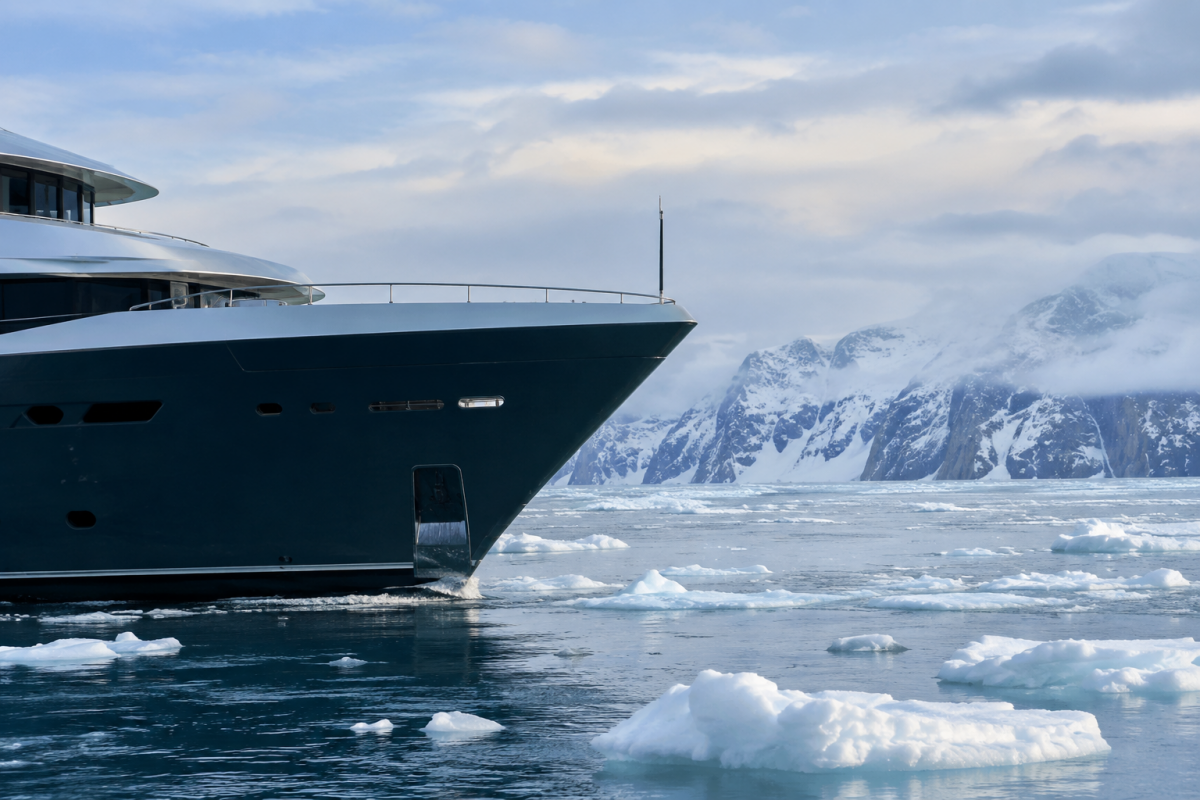
There is a particular kind of silence you only hear in high‑latitude waters. It’s not the calm of a Mediterranean morning or the stillness of a windless anchorage, it’s a deeper, heavier quiet – the kind that comes when the nearest human presence is hundreds of miles away, when the sea feels older, colder and less forgiving.
I remember standing on the bridge of a commercial vessel off Greenland, watching the radar paint fragments of ice that the eye could barely see. The weather had shifted twice in the last hour and the barometer was falling. The crew were alert, focused and prepared for the kind of day that demands respect rather than confidence.
That environment has nothing to do with marketing language, and yet, in the superyacht sector, “expedition‑ready” has become one of the most casually applied labels in modern yacht design. It appears in brochures, sales pitches and concept launches with increasing frequency. Owners want adventure and builders want to meet demand, while designers want to create vessels that look capable, even if capability is not the same as readiness.
The problem is simple: expedition‑ready has become a style, not a standard. And when a term that should represent operational discipline becomes a design aesthetic, the industry risks misleading owners, overestimating capability and underestimating the realities of remote‑region navigation.
The rise of the expedition trend
The desire for remote cruising is understandable. The world’s traditional yachting regions – the Med, the Caribbean, the U.S. East Coast – are beautiful, but familiar. Owners increasingly want experiences that feel rare, untouched and meaningful. Antarctica, Greenland, Svalbard, Patagonia, the Northwest Passage: these destinations offer a sense of scale and isolation that no luxury marina can replicate.
Builders have responded quickly. Over the past decade, the market has seen a surge in vessels marketed as “explorer yachts”, “expedition platforms” or “globally capable cruisers”. Steel hulls, extended ranges, rugged profiles and high freeboards have become fashionable. Some of these vessels are genuinely capable, but many are not.
The challenge is that capability is often defined by design features rather than operational reality. A yacht may have the range to reach Antarctica, but that does not mean it is ready to operate there. A yacht may have a steel hull, but that does not make it ice‑capable. A yacht may have impressive autonomy, but that does not mean the crew have the training or experience to use it safely.
Expedition cruising is not a design category, it is a discipline.
The marketing illusion
Marketing language in the superyacht sector has always leaned toward aspiration. That is not inherently a problem – yachting is aspirational by nature –but when aspiration begins to blur with operational claims, the risk increases.
Common phrases include: “Ice‑class inspired hull”, “Polar‑capable heating systems”, “Expedition‑grade engineering”, “Designed for remote exploration” or “Long‑range global capability”. These terms sound technical, but they often lack substance. “Inspired” does not mean certified, “capable” does not mean tested and “designed for” does not mean proven in.
A yacht can be visually rugged without being operationally prepared. It can have the aesthetic of an explorer without the systems, redundancy, crew competence, or safety culture required for true expedition operations. The danger is not that these vessels are poorly built; many are excellent. The danger is that the language surrounding them creates a false sense of readiness.
Owners may believe they are buying a vessel that can safely navigate remote regions. Crew may believe they are operating a vessel designed for harsh environments. Managers may believe they are supporting an expedition‑capable programme, but belief is not capability.
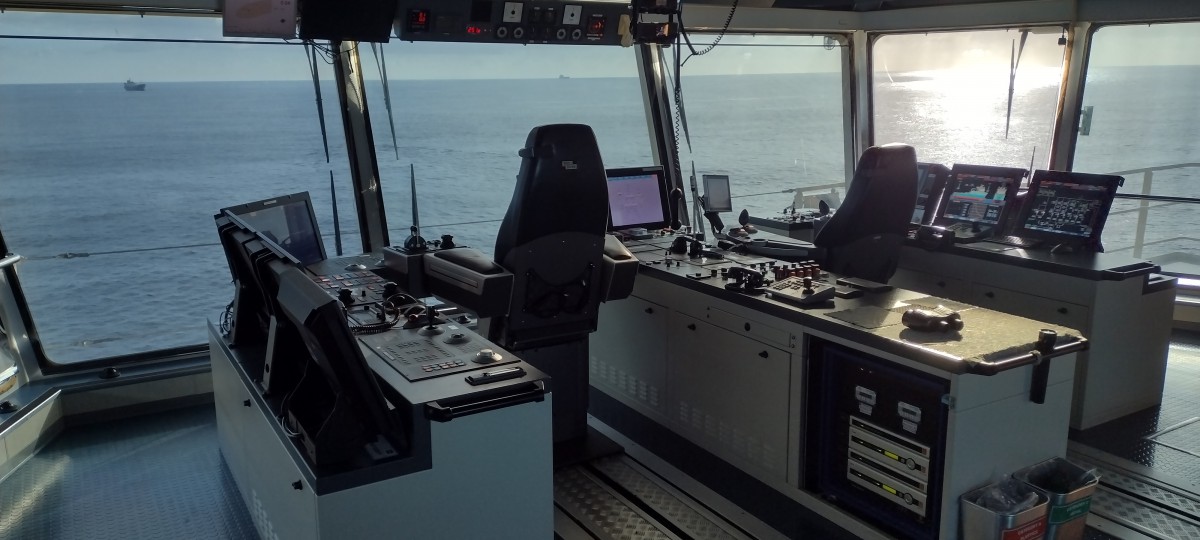
Ice intelligence can’t be learned overnight. Rather, it is a discipline built through experience,
training and exposure to real conditions.
Where the real gaps are
The operational gaps between marketing and reality fall into predictable categories. These gaps are not theoretical; they are practical, measurable and consequential.
Crew experience
Most yacht crews are highly competent within the environments they operate in; however, competence in the Mediterranean or Caribbean does not translate directly to competence in high‑latitude or remote‑region navigation. Ice, fog, rapidly shifting weather systems, limited SAR coverage and extreme isolation require a different mindset and skillset. Commercial mariners who have operated in these regions understand the difference immediately. Yacht crews often do not – and through no fault of their own. They simply have not been exposed to it.
Redundancy
Remote cruising demands multiple layers of redundancy across all critical systems: that is, propulsion, steering, power generation, communications, medical capability and navigation systems. Many yachts have partial redundancy, but not the depth required when help is days away. A single failure in a remote region can escalate quickly. Redundancy is a survival mechanism, not a luxury.
Weather and ice intelligence
High‑latitude navigation requires constant interpretation of: ice charts, satellite imagery, local reports, seasonal patterns, glacial movement and wind‑driven ice compression. Ice intelligence can’t be learned overnight. Rather, it is a discipline built through experience, training and exposure to real conditions.
Emergency response
In remote regions, the vessel is the first responder. There is no nearby port, no rapid SAR response and no convenient support network. Medical emergencies, mechanical failures and navigational incidents must be handled on board, often under pressure and without external assistance. This changes the entire risk profile.
Case examples: when assumptions meet reality
I have seen yachts attempt high‑latitude cruising with crews who had never operated outside temperate waters. The difference in mindset is immediate: commercial vessels approach remote operations with caution, planning and respect for the environment, while yachts often approach them with enthusiasm and confidence – until conditions shift. The ocean does not care about enthusiasm.
One vessel I encountered near Iceland had the range and hull form to reach Greenland, but not the crew experience or redundancy to operate safely once there. Another had impressive autonomy but lacked the medical capability required for remote cruising. A third had a beautifully designed bridge but no one on board who had ever interpreted an ice chart. Although these vessels were capable, they were not ready.
A yacht can be beautifully built, technically advanced and highly capable – and still not be ready for
true expedition operations.
What expedition‑ready actually means
Expedition readiness is not a design feature but a culture, and it looks like this:
• Training and drills that simulate real failure modes
• Medical capability beyond the standard yacht kit
• Operational planning that accounts for worst‑case scenarios
• Crew who understand the limits of the vessel and themselves
• A master empowered to say “no” when conditions demand it
• Redundancy that supports autonomy, not just convenience
• Experience that informs judgement, not just confidence
A yacht can be beautifully built, technically advanced and highly capable – and still not be ready for true expedition operations. Expedition readiness is earned through operational discipline, not advertised through design language.
The owner’s perspective: why honesty matters
Owners are not expected to be maritime experts. They rely on builders, designers, managers and crew to provide clarity. When marketing language overstates capability, owners may unknowingly take on risks they would never accept if they understood the operational reality.
Honesty benefits everyone and when owners make informed decisions, crew operate within their competence, managers plan realistic itineraries, builders maintain credibility, then the industry avoids preventable incidents.
Expedition cruising is one of the most rewarding experiences a yacht can offer, but it must be approached with respect, preparation and realism.
Conclusion
The superyacht sector is full of innovation, ambition and creativity. Explorer yachts represent some of the most interesting developments in modern yacht design. However, expedition‑ready must mean more than aesthetic ruggedness or marketing language. It must mean operational readiness, crew competence, redundancy, planning and discipline. Owners deserve clarity and crew deserve the right support. The industry deserves honesty – expedition capability is a responsibility and not a style.
As an open-source platform we offer an industry-wide invitation to anyone and everyone in our sector to share their knowledge, experience and opinions. If you have an interesting and valuable contribution to make, and would like to join our growing community of guest columnists, share your ideas with us at newsdesk@thesuperyachtgroup.com
NEW: Sign up for SuperyachtNewsweek!
Get the latest weekly news, in-depth reports, intelligence, and strategic insights, delivered directly from The Superyacht Group's editors and market analysts.
Stay at the forefront of the superyacht industry with SuperyachtNewsweek
Click here to become part of The Superyacht Group community, and join us in our mission to make this industry accessible to all, and prosperous for the long-term. We are offering access to the superyacht industry’s most comprehensive and longstanding archive of business-critical information, as well as a comprehensive, real-time superyacht fleet database, for just £10 per month, because we are One Industry with One Mission. Sign up here.
Related news
The drone threat
What can be done when there is persistent aerial observation? Protecting privacy in the superyacht environment
Opinion
A superyacht is still a ship
Why operational judgement matters more as yachts venture further – and some thoughts about what can be learned from the commercial sector
Opinion
When guest pressure exposes gaps in crew preparedness
The founder of Yacht Evolve 360°, Aggeliki Monastirioti, explores how professionally the yacht responds when plans change can have commercial consequences
Opinion
The 3% case
What the residual value gap between a certified expedition yacht and an explorer-styled look-alike actually costs
Opinion
Related news
The familiarisation gap
2 months ago
The drone threat
2 months ago
A superyacht is still a ship
2 months ago
The 3% case
3 months ago
NEW: Sign up for
SuperyachtNewsweek!
Get the latest weekly news, in-depth reports, intelligence, and strategic insights, delivered directly from The Superyacht Group's editors and market analysts.
Stay at the forefront of the superyacht industry with SuperyachtNewsweek