A superyacht is still a ship
Why operational judgement matters more as yachts venture further – and some thoughts about what can be learned from the commercial sector…
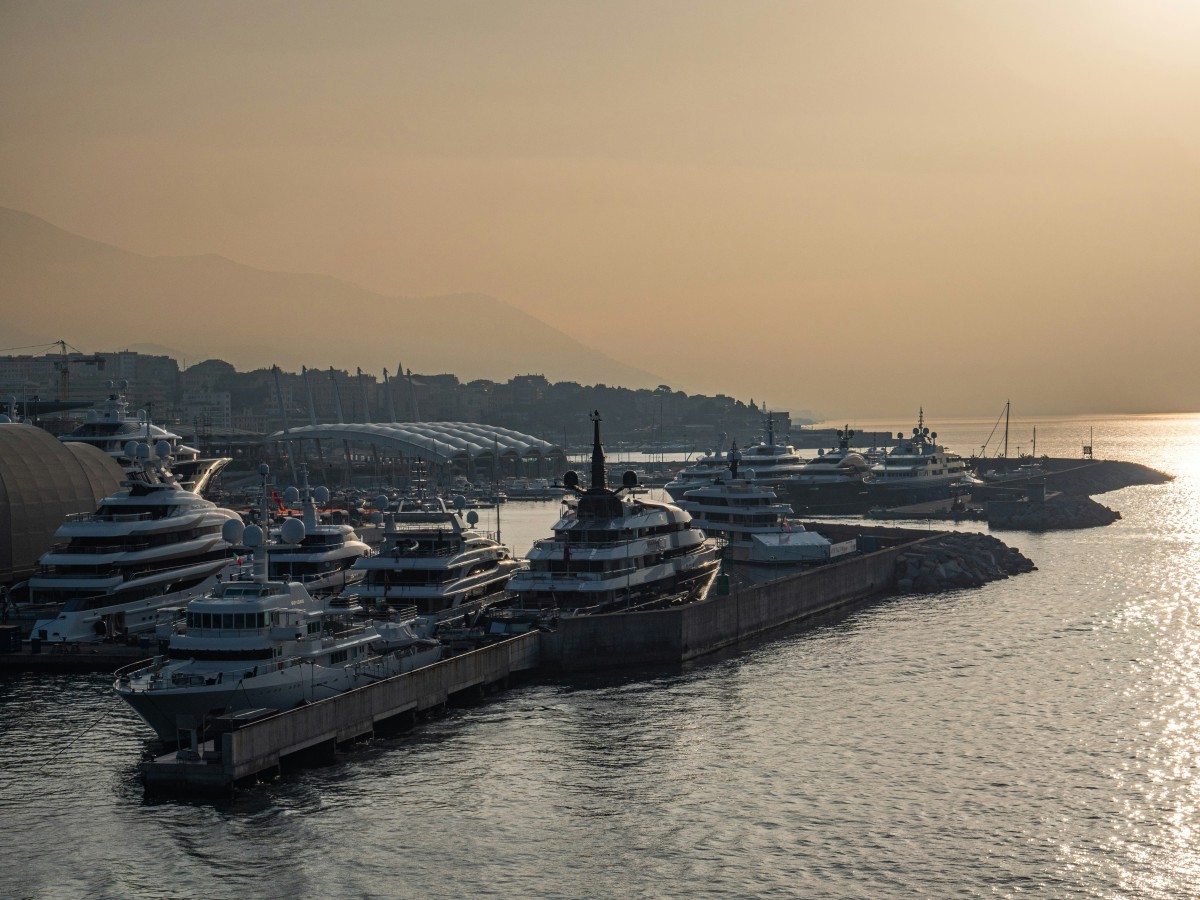
“A ship does not care how expensive it is.” After more than two decades at sea, that truth has never changed. Whether a vessel carries offshore equipment, commercial cargo or an owner’s helicopter and submarine, the fundamentals – people, experience, preparation, seamanship and judgement – remain the same when the weather turns or a system fails.
As the superyacht sector evolves, it is worth remembering something simple: a superyacht is still a ship. Although today’s yachts are extraordinary luxury assets, beneath the pools, tenders and technology lie a hull, machinery, navigation systems, lifesaving appliances and a crew responsible for taking the vessel safely from one place to another. As yachts become larger, more complex and more adventurous, that reality becomes increasingly important.
If a yacht spends its life between Monaco and Porto Cervo, its operational profile is predictable, but if an owner wants to explore Greenland or the Arctic, the question becomes, does the yacht have the right people for what the owner actually wants it to do?
Certification does not mean competence
In commercial and offshore shipping, certification is only the beginning. To become Master of an anchor handling tug supply vessel or platform supply vessel (PSV), the training, assessment and practical experience required are extensive. These vessels operate in demanding environments where there is very little room for error. However, a certificate is not experience.
I am a certified Master Mariner. On paper, my licence allows me to command a wide range of commercial vessels, but if someone offered me the command of a large LNG carrier tomorrow, I would not consider myself the obvious candidate. Why? Because I have never been the Master of an LNG carrier. The certificate exists, but the vessel‑specific experience does not.
If yachting wants to attract experienced commercial masters, chief engineers and officers, the employment model may need to evolve. The capability exists and the incentive must exist too.
Commercial shipping understands this distinction. Yachting should too, especially when owners increasingly want expedition capability. If a yacht is heading into Arctic waters, I would want to know far more than whether the Master holds the correct certificate. What has the bridge team actually done? What experience does the engineering team have? Has the crew operated this type of vessel in this type of environment? Is the yacht properly equipped, classed and insured for the intended voyage?
These questions are not obstacles, they are simply about aligning capability with ambition.
Adventurous yachts require experienced people
The superyacht sector is changing – more vessels are being built for long‑range cruising and remote destinations; they are no longer floating hotels anchored off Monaco. This creates an opportunity to attract experienced mariners from commercial shipping and offshore, but the industry must also consider what it offers those people.
In commercial shipping, rotations such as five weeks on/five weeks off are common. During my own career, I have declined Master positions on yachts because the rotation meant months on board followed by only a few weeks at home. For someone with a family and a life ashore, that is a significant consideration.
If yachting wants to attract experienced commercial masters, chief engineers and officers, the employment model may need to evolve. The capability exists and the incentive must exist too.
Technology does not replace judgement
Modern bridges are impressive. ECDIS, integrated systems, automation, dynamic positioning and sophisticated monitoring tools have transformed operations. However, better technology does not reduce the need for experience; if anything, it increases it.
You cannot install experience by adding another screen to the bridge. At some point, somebody has
to look out of the window, understand what the vessel is doing, understand what the weather is doing,
and make a decision. That is seamanship.
During simulator training, I have seen younger officers become fixated on the ECDIS screen when they should simply be looking out of the window. The same applies to dynamic positioning. DP is an extraordinary system – I have spent much of my career working with it – but when DP fails, someone still has to take control of the vessel. You cannot install experience by adding another screen to the bridge. At some point, somebody has to look out of the window, understand what the vessel is doing, understand what the weather is doing, and make a decision. That is seamanship.
When the Master says no
One of the most important lessons I learned as a young Master was that sometimes you have to say no.
I was Master of a PSV working in an offshore field. The weather was deteriorating, and the vessel manager released us to leave the field and seek shelter in the Shetland Islands. Several other PSVs were already heading towards Lerwick. I decided to stay. My assessment was that the worst weather would last around twelve hours. After that, we could continue working alongside the rig. Leaving meant heading directly into the deteriorating conditions, ploughing through large seas at reduced speed and then making the same journey back once the weather passed.
Initially, the office laughed at my decision. Later, I was told: “Smart move, Captain.” The saving wasn’t about the fuel, it was rather about the judgement. That is what command is about – not being difficult or trying to proving a point, but simply making the right professional decision when the information tells you it is the right thing to do.
Authority, clarity and the owner relationship
In commercial shipping, the Master has overall authority on board, and that authority is essential. But shore‑side teams have changed. Fleet managers and technical managers were once often former masters or chief engineers. Today, management teams rightly include people from many professional backgrounds; however, that can create a disconnect between office and vessel.
The principle should be the same in yachting: the Master must have the authority to say, “No. We are going to do it this way”. That does not mean ignoring the owner’s wishes. A good Master should understand exactly what the owner wants to achieve and determine how it can be achieved safely and professionally.
For yachts intended for serious long‑distance or expeditionary operations, there should be a clear conversation before departure: What does the owner expect? What does the Master expect? What authority does the Master have? What are the operational limits? What happens when the two sides disagree?
These questions should be discussed openly, before the problems occur.
A superyacht may be built for comfort, but it survives on competence, so as yachts venture further, experience is not optional, it’s the foundation
The future will demand more, not less
More yachts will go to places such as Greenland and the Arctic, and that is exciting. However, remote operations change the equation. A proper Master should be asking questions long before departure, such as: Is the vessel suitable? Is the crew experienced enough? Are the lifesaving appliances appropriate? Is the yacht correctly classed and insured? What happens if something fails?
And perhaps the most important question is, do we have the people on board who can deal with the situation if the technology, the plan or our assumptions fail, because eventually, something will. That is the reality of operating ships.
Bringing two sides of the table together
This is one of the reasons I established Oceanwise. I do not claim to know everything about yachts – of course I don’t. What I bring is more than two decades of hands‑on seagoing experience, combined with time ashore as an operations manager, fleet manager and board member. I’ve seen vessel operations from both sides of the table. That gives me an understanding of the relationship between owner, crew and shoreside organisation that I believe is useful.
I am not suggesting that commercial shipping should be copied into yachting. The industries are different, but there are lessons that can be shared.
Luxury defines the yacht, but it’s the seamanship that defines the voyage. And when the weather turns, when the screens go dark or when the plan no longer fits the reality, it is not the technology that carries the vessel through, it’s the people. A superyacht may be built for comfort, but it survives on competence, so as yachts venture further, experience is not optional, it’s the foundation – and it always will be.
As an open-source platform we offer an industry-wide invitation to anyone and everyone in our sector to share their knowledge, experience and opinions. If you have an interesting and valuable contribution to make, and would like to join our growing community of guest columnists, share your ideas with us at newsdesk@thesuperyachtgroup.com
NEW: Sign up for SuperyachtNewsweek!
Get the latest weekly news, in-depth reports, intelligence, and strategic insights, delivered directly from The Superyacht Group's editors and market analysts.
Stay at the forefront of the superyacht industry with SuperyachtNewsweek
Click here to become part of The Superyacht Group community, and join us in our mission to make this industry accessible to all, and prosperous for the long-term. We are offering access to the superyacht industry’s most comprehensive and longstanding archive of business-critical information, as well as a comprehensive, real-time superyacht fleet database, for just £10 per month, because we are One Industry with One Mission. Sign up here.
Related news

The best applications of AI in luxury may be almost invisible
The strongest applications of AI in luxury improve preparation, judgement and trust without asking the client to adapt to technology
Opinion
Where crew readiness is really tested
Captain Aggeliki Monastirioti explores the gap between formal qualifications and practical performance once crew step on board
Opinion


Between command and connection
A reflection on authority, connection and what the superyacht industry must confront to secure its future
Opinion
Related news
Where crew readiness is really tested
3 months ago
Midnight amongst the ice
3 months ago
Between command and connection
4 months ago
NEW: Sign up for
SuperyachtNewsweek!
Get the latest weekly news, in-depth reports, intelligence, and strategic insights, delivered directly from The Superyacht Group's editors and market analysts.
Stay at the forefront of the superyacht industry with SuperyachtNewsweek