
The drone threat
What can be done when there is persistent aerial observation? Protecting privacy in the superyacht environment…
By Shane Breen of Micron Air Services, with technical research and counter-drone system analysis contributed by Simon Rowland, Veritas International.
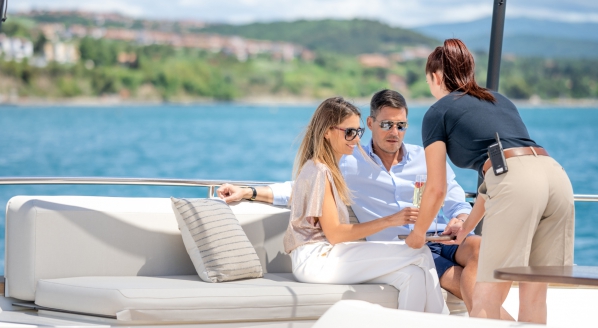
For many superyacht owners, privacy is one of the fundamental attractions of being on the water. A yacht offers separation from the public eye and, traditionally, a degree of control over who can get close to the owner, their family and their guests.
Drones are beginning to change that equation.
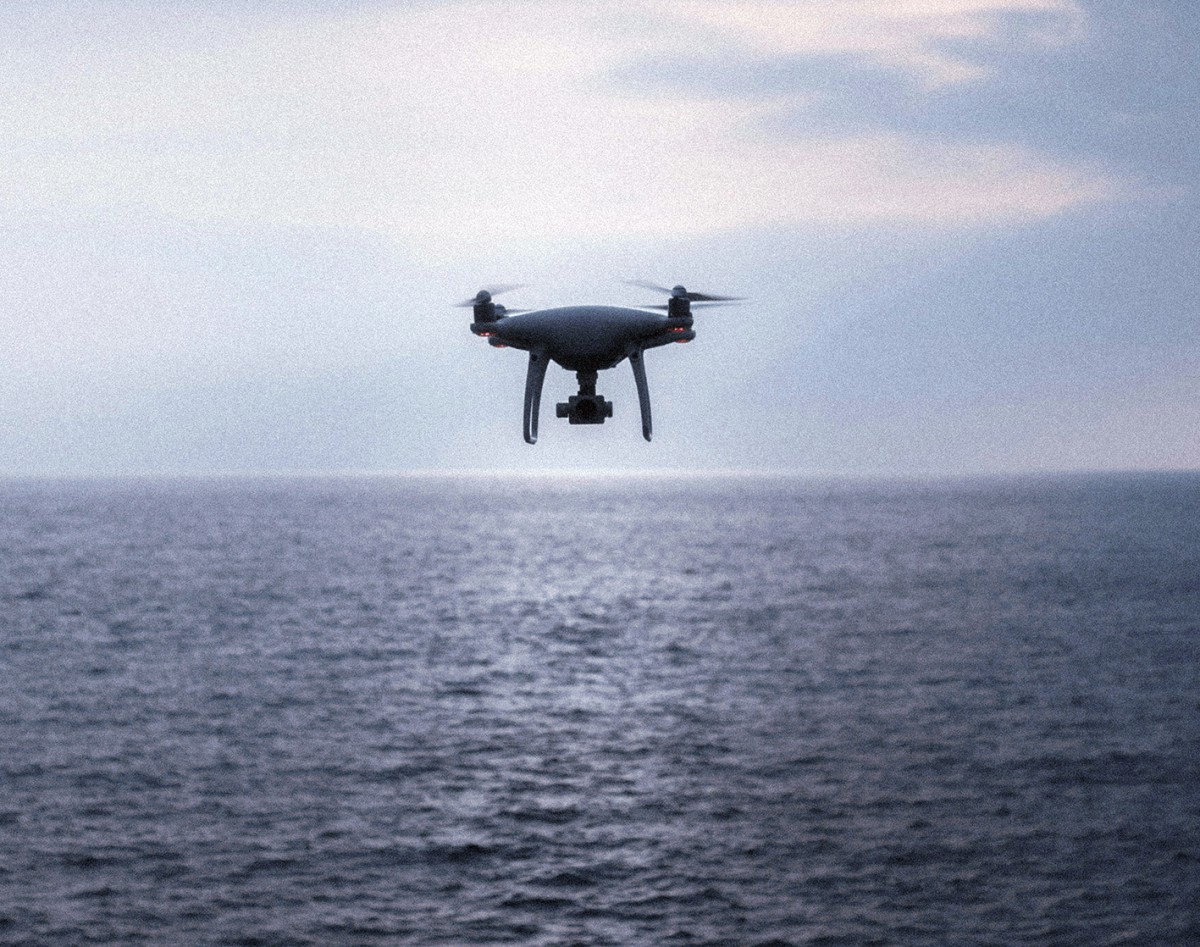
A relatively inexpensive commercial drone can approach a yacht at anchor, in harbour or while operating close to the coast and capture high-resolution imagery without ever physically approaching the vessel. What might initially appear to be an irritating photographer can potentially become something considerably more intrusive.
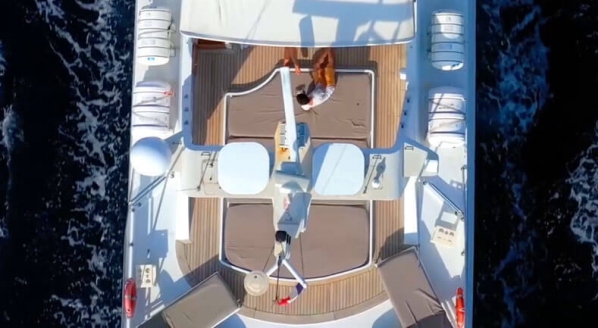
Persistent aerial observation can reveal far more than photographs of an owner or guests relaxing on deck. It can expose deck layouts, security arrangements, crew activity, routine and patterns of movement. When combined with information gathered from social media, vessel-tracking platforms and other publicly available sources, it can contribute to a surprisingly detailed intelligence picture of an owner’s movements and lifestyle.
For those responsible for protecting high-profile individuals, that changes the security problem.
Detection comes first
There is a tendency when discussing counter-drone technology to focus immediately on how to stop or defeat the drone. In the superyacht environment, that is arguably the wrong place to start. The first requirement is awareness.
Before deciding how to respond, the security team needs to know that a drone is present, identify it as accurately as possible and understand what it appears to be doing. Several technologies can contribute to this.
Radiofrequency (RF) detection can identify communications between certain drones and their controllers. Radar can provide another detection layer, while optical and thermal cameras allow the crew or security team to visually confirm the aircraft and monitor its behaviour.
Used together, these systems can provide significantly greater situational awareness than relying on somebody on deck simply noticing a drone overhead.
The presence of a drone does not automatically mean hostile intent. The security team’s ability to identify, assess and respond proportionately is therefore as important as the technology itself.
For a large yacht, the most effective approach is therefore likely to be layered: passive detection providing early warning, automated identification and tracking maintaining awareness of the aircraft, and optical or thermal systems allowing a human operator to establish what the drone is actually doing. That human element is particularly important.
A yacht may be operating amongst recreational vessels, commercial traffic, helicopters, coastal infrastructure and perfectly legitimate drone operators. The presence of a drone does not automatically mean hostile intent. The security team’s ability to identify, assess and respond proportionately is therefore as important as the technology itself.
What can actually be done about a drone?
Once a drone has been detected and assessed as a potential threat, the inevitable question is: what can we actually do about it? Technically, there are now several options.
Electronic countermeasures can interfere with the radio-frequency links used by a drone. Other technologies take a different approach, interacting with the drone’s communications protocols and potentially allowing an unauthorised aircraft to be redirected or landed rather than simply disrupting its signal.
At the more sophisticated end of the market are counter-UAS systems combining RF detection, radar, optical sensors, artificial intelligence and electronic countermeasures.
The capability is impressive, but there is an important distinction between what technology is capable of doing and what a yacht is legally permitted to do.
Any counter-drone capability therefore needs to be considered alongside the legal authority
governing its use.
RF jamming and other forms of electronic intervention are heavily regulated in many jurisdictions. They also have the potential to interfere with legitimate communications and navigation systems.
For an internationally operating superyacht, that presents a particular challenge. A vessel can move through multiple territorial waters and regulatory environments during a season, meaning a countermeasure that might be authorised in one operating environment may be prohibited in another.
Any counter-drone capability therefore needs to be considered alongside the legal authority governing its use.
What does a practical yacht system look like?
Research into the current counter-UAS market shows that there is no shortage of technology. Companies including DroneShield, D-Fend Solutions, Dedrone by Axon and Robin Radar offer systems capable of providing different combinations of detection, identification, tracking and, in some cases, electronic countermeasures.
There are also considerably more sophisticated defence-oriented systems available, but the most technologically powerful solution is not necessarily the most appropriate solution for a private yacht.
The superyacht environment has its own requirements. Equipment needs to cope with saltwater exposure, vibration, limited installation space and the challenges associated with operating in ports, anchorages and coastal environments. It must also integrate with existing security systems without unnecessarily changing the appearance or atmosphere of the vessel.
The objective is not to turn a superyacht into a warship, it’s to give the captain and security team
early warning, information and options.
For most high-value yachts, the answer is therefore unlikely to be a single ‘anti-drone device’. A more realistic solution is a layered counter-drone architecture.
A discreet mast-mounted sensor system could provide persistent 360-degree detection and automatically cue the yacht’s existing CCTV or thermal cameras when an aircraft is identified.
Portable detection equipment could provide an additional capability when the threat level increases – perhaps during a high-profile owner’s visit, while attending a major event or when operating in a particularly exposed anchorage.
Where legally authorised, an electronic countermeasure could then provide an additional response option. The objective is not to turn a superyacht into a warship, it’s to give the captain and security team early warning, information and options.
The wider digital threat
Drones should also not be considered in isolation. Modern superyachts are highly connected environments. Navigation, communications, entertainment, engineering and security systems increasingly operate through interconnected digital networks. At the same time, an enormous amount of information about individuals and vessels can potentially be gathered through social media, vessel-tracking platforms, publicly available information, data scraping and compromised personal devices.
Taken individually, some of that information may appear insignificant. Combined, it can create a detailed picture.
A person’s social-media activity might indicate that they have travelled to a particular location. Vessel information could potentially narrow down where the yacht is operating. A drone can then provide visual confirmation of who is aboard, what they are doing and how the vessel operates. This is why the modern security problem extends beyond simply protecting the physical yacht.
Effective protection increasingly requires drone detection, cyber resilience, digital-footprint management, crew awareness, information security and disciplined operating procedures working together.
The best security measures are often those that remain largely invisible until they are needed.
Counter-drone technology should follow the same principle.
Security without militarisation
There is another factor that is particularly important within the superyacht environment: discretion. Owners and guests may require extremely sophisticated levels of protection, but they generally do not want the yacht to look or feel like a military installation.
The best security measures are often those that remain largely invisible until they are needed. Counter-drone technology should follow the same principle.
Sensors can be discreetly integrated into the vessel, cameras can be connected to existing security systems and portable equipment can remain stored until the threat environment requires it. Most importantly, trained personnel can assess what is happening before deciding whether escalation is necessary.
Ultimately, the objective is not simply to defeat drones, it’s to detect unwanted surveillance early, understand the potential threat, protect sensitive information and provide the captain and security team with proportionate response options.
As commercial drones become cheaper, quieter and increasingly capable, observing a yacht from beyond its traditional security perimeter will become easier. For the superyacht industry, that means thinking differently about where the security perimeter begins and ends.
It no longer stops at the passerelle. Increasingly, it extends into the airspace and digital environment surrounding the vessel.
As an open-source platform we offer an industry-wide invitation to anyone and everyone in our sector to share their knowledge, experience and opinions. If you have an interesting and valuable contribution to make, and would like to join our growing community of guest columnists, share your ideas with us at newsdesk@thesuperyachtgroup.com
Profile links
Veritas International Consultants
NEW: Sign up for SuperyachtNewsweek!
Get the latest weekly news, in-depth reports, intelligence, and strategic insights, delivered directly from The Superyacht Group's editors and market analysts.
Stay at the forefront of the superyacht industry with SuperyachtNewsweek
Click here to become part of The Superyacht Group community, and join us in our mission to make this industry accessible to all, and prosperous for the long-term. We are offering access to the superyacht industry’s most comprehensive and longstanding archive of business-critical information, as well as a comprehensive, real-time superyacht fleet database, for just £10 per month, because we are One Industry with One Mission. Sign up here.
Related news

The best applications of AI in luxury may be almost invisible
The strongest applications of AI in luxury improve preparation, judgement and trust without asking the client to adapt to technology
Opinion
Compliance, governance and the value of certainty
Jo Assael, Yachts Commercial Director of IRI | The Marshall Islands Registry, explains how conformance is integral to asset credibility and value
Opinion
Beware of trespassers!
Benjamin Maltby, lawyer and General Secretary of The Owners Club, offers prospective new yacht owners a practical guide to the do’s and don’ts
Opinion
Transforming offshore connectivity for superyachts
How to achieve on-land connectivity, even in the remotest stretches of open ocean, by the Director of Global Commercial Programs and Solutions at Kymeta
Opinion
The silent threat on the water
Sarah Willis, founder of digital-privacy and online-reputation consultancy SABLR, spells out how AI is rewriting risk for superyacht owners
Owner
Related news
Compliance, governance and the value of certainty
2 months ago
Beware of trespassers!
2 months ago
Transforming offshore connectivity for superyachts
8 months ago
The silent threat on the water
11 months ago
NEW: Sign up for
SuperyachtNewsweek!
Get the latest weekly news, in-depth reports, intelligence, and strategic insights, delivered directly from The Superyacht Group's editors and market analysts.
Stay at the forefront of the superyacht industry with SuperyachtNewsweek