
Where crew readiness is really tested
Captain Aggeliki Monastirioti explores the gap between formal qualifications and practical performance once crew step on board…

Looking back on my career on board yachts, I have often observed that crewmembers hold more qualifications than ever before. In theory, many candidates appear ready and some even appear to be over-qualified for the role they are applying for. However, from my experience, the real question is not simply whether crew members are qualified but whether they are practically ready.
Crewmembers may understand the concept of discretion, but still fail to protect privacy in a sensitive conversation. They may know the importance of hierarchy, but communicate at the wrong time, to the wrong person or in the wrong tone. They may understand service standards in theory, but struggle to maintain them when the charter pace increases. They may have completed the relevant training, but hesitate when a calm, practical decision is needed in the ‘heat of moment’.
Yachts operate in conditions that are far from ideal. They operate in confined spaces, under time pressure, with high guest expectations, changing schedules, constricted privacy and constant coordination between departments. The environment tests judgement, timing, communication, attitude and awareness every day.
The first weeks on board often reveal whether crewmembers listen properly, whether they can receive correction without becoming defensive. They show whether they understand when to ask questions and when to observe first. Furthermore, they reveal whether they can become useful without adding pressure to the team and whether they can protect the guest experience while still familiarising themselves with the yacht.
Interior crewmembers need more than service skills – they need to acquire the skills of timing, discretion, observation, emotional control and consistency
From the aforementioned, it is evident there are discrepancies between completing a course and understanding how to behave during a demanding charter, between knowing the standard and delivering it repeatedly, quietly and correctly, as well as between presenting well in an interview and being reliable during a fast turnaround, a demanding guest request or a high-pressure service.
Those discrepancies affect every department in a diversity of ways. Interior crewmembers need more than service skills – they need to acquire the skills of timing, discretion, observation, emotional control and consistency. Deck crewmembers need more than technical skills – they need to acquire the skills of anticipation, safety discipline, presentation and calm communication. Galley teams need more than culinary skills – they need to acquire the skills of pressure control, coordination and respect for the rhythm of service. Finally, heads of departments need to acquire the skills of leading clearly, correcting fairly and maintaining standards without creating unnecessary tension.

Captain Aggeliki Monastirioti, founder, Yacht Evolve 360°
While on board, I often found myself engaging in useful discussions that include scenario-based questions:
• What would you do if a guest asked you something and you were unsure of the answer?
• How would you respond if your department was falling behind during service?
• What would you do if you noticed a mistake but were unsure whether to speak up?
• How do you handle correction when everyone is under pressure?
• What does discretion look like in a real on-board situation?
These questions often reveal a lot of readiness gaps as well as mentoring opportunities because preparedness should not be placed entirely on the shoulders of an individual crew member. Companies, management teams and heads of department also have a role to create the conditions in which practical readiness can develop. If the yacht’s expectations are unclear, if on-boarding is rushed, if feedback is inconsistent or if the unwritten rules are left for new crew to guess, then avoidable mistakes become more likely. We have to remember that a crew member cannot apply a standard that he/she does not fully understand.
Crew readiness should not be treated as a vague personality trait; it can be developed,
observed and strengthened.
Those essential skills are often described as ‘soft skills’. However, in yachting and in maritime industry in general, they are not soft, they are operational. They affect service delivery, guest confidence, safety culture, department coordination, crew retention and the reputation of the yacht. Crew readiness is not only a training issue, it is a culture issue, leadership issue and risk-management issue.
When practical readiness is weak, the effects may not appear immediately in the form of a major incident, but rather in small repeated failures. Over time, those small failures become expensive. They affect morale, they affect retention, they affect guest confidence, they affect the HOD’s workload and they affect the yacht’s reputation.
Crew readiness should not be treated as a vague personality trait; it can be developed, observed and strengthened. It sits between formal certification and real on-board performance and includes communication, discretion, hierarchy, anticipation, service awareness, operational discipline and behaviour under pressure.
For crew members, investing in these skills is not only about personal development, it is about becoming more reliable, more trusted and more employable. A crew member who can stay calm, communicate clearly, receive feedback properly and adjust quickly is far more valuable than someone who only looks strong on paper.
For companies, investing in these skills is not a luxury, it is part of protecting operational consistency. It can reduce avoidable friction, support smoother on-boarding, strengthen department cooperation and help create a more professional on-board culture.
This is the perspective that is sometimes missing from the conversation. The future of yacht crew development should not be limited to more qualifications on paper. It should focus on building the practical judgement, communication and behavioural standards that allow crewmembers to turn knowledge into reliable on-board performance.
As an open-source platform we offer an industry-wide invitation to anyone and everyone in our sector to share their knowledge, experience and opinions. So if you have an interesting and valuable contribution to make, and would like to join our growing community of guest columnists, share your ideas with us at newsdesk@thesuperyachtgroup.com
NEW: Sign up for SuperyachtNewsweek!
Get the latest weekly news, in-depth reports, intelligence, and strategic insights, delivered directly from The Superyacht Group's editors and market analysts.
Stay at the forefront of the superyacht industry with SuperyachtNewsweek
Click here to become part of The Superyacht Group community, and join us in our mission to make this industry accessible to all, and prosperous for the long-term. We are offering access to the superyacht industry’s most comprehensive and longstanding archive of business-critical information, as well as a comprehensive, real-time superyacht fleet database, for just £10 per month, because we are One Industry with One Mission. Sign up here.
Related news
.jpg)
Who gets to work in yachting – and who never gets the chance?
Chris Frisby, COO at UKSA, argues that yachting has a pipeline problem and its reluctance to take on green crew is breaking the system it depends on
Crew

Are we building for compliance or for crew?
What actually brings stability to a crew and why the answer has as much to do with how we house people as how we lead them
Opinion

Between command and connection
A reflection on authority, connection and what the superyacht industry must confront to secure its future
Opinion
Who is really in command?
Andrew Roch asks how the power held by management companies can affect captains’ leadership and their sense of disempowerment and psychological safety
Opinion
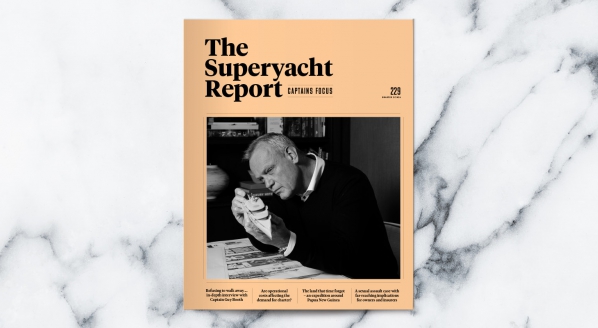
The Superyacht Report 229: Captains Focus - Out Now
513 whales in a day, a yacht arrested by US Marshals, Guy Booth on refusing to abandon Phi and so much more in TSR 229
Crew
Related news
Are we building for compliance or for crew?
4 months ago
Between command and connection
4 months ago
Who is really in command?
4 months ago
The Superyacht Report 229: Captains Focus - Out Now
4 months ago
NEW: Sign up for
SuperyachtNewsweek!
Get the latest weekly news, in-depth reports, intelligence, and strategic insights, delivered directly from The Superyacht Group's editors and market analysts.
Stay at the forefront of the superyacht industry with SuperyachtNewsweek