Who gets to work in yachting – and who never gets the chance?
Chris Frisby, COO at UKSA, argues that yachting has a pipeline problem and its reluctance to take on green crew is breaking the system it depends on…
We prioritise standards, training, presentation and professionalism in this market, and yet, when it comes to how people find their way into this industry, the reality is far less deliberate.
What we see is that most people working on yachts today arrived through familiarity. They grew up around boats, had a family connection, met the right person at the right time or could afford to take the financial risk of getting started. That model has worked for decades, but it leaves a much bigger question unanswered: what about the thousands of young people who never see yachting as an option at all?
If we are serious about the future of this industry, about the next generation of captains, officers and crew, we must start earlier, widen the door significantly and confront some uncomfortable truths about what happens once people step through it.
Engaging young people before they rule themselves out
For many young people, maritime simply doesn’t exist as a career option because they lack exposure, rather than lack interest or ability. If no one in your family works in yachting, if your school has no connection to the sea, if cost is a barrier before you even start, then the industry never enters the conversation.
At UKSA we see this clearly. That’s why engaging young people early is critical. Through our work with schools, youth groups and community organisations, we introduce children and teenagers to the water long before career decisions are made.
Our Maritime Futures programme, created in partnership with the King’s Trust, is a five-day residential experience designed specifically for young people who may not thrive in traditional academic settings. It shows them the breadth of maritime careers, builds confidence, resilience and teamwork, and critically helps them believe they belong.
Without early engagement, the best captains of the future may already be heading down the wrong path, not through lack of talent but through lack of opportunity.
Many of the young people who attend Maritime Futures are bright, capable and motivated, but disengaged from classroom learning. The maritime environment suits them. It’s practical, real and demands responsibility. Too often, these young people are written off by the system. In reality, they are exactly the sort of people the maritime industry needs.
Without early engagement, the best captains of the future may already be heading down the wrong path, not through lack of talent but through lack of opportunity.
Access still matters – cost is the gatekeeper
Even once interest is sparked, access remains a major barrier. Training costs are high and for young people without financial backing, they can be insurmountable. Yachting is full of stories that begin with “you just have to work hard”, but hard work alone doesn’t pay for qualifications, travel or time without income. We operate on the simple principle that those who can afford to pay should do so and those who can’t are supported.
Around a third of our students come from challenging or financially deprived backgrounds, and bursary funding is often the difference between participation and exclusion. This is all about removing barriers so standards can be met. When access is fair, talent rises. When access isn’t addressed, the industry limits itself to a narrow pool of people who can afford to take risks. For captains and owners, supporting bursaries is a direct investment in a more capable, diverse and sustainable workforce.

Chris Frisby, COO, UKSA
The question isn’t whether green crew are hard work, but whether an industry that refuses to train its own future workforce can realistically expect that workforce to appear fully formed. If no vessel wants to take the first step, the pipeline breaks.
The hardest step: getting the first job
Ask any green crew what the hardest part of the journey is and the answer is almost always “getting that first job”. Even with qualifications, determination and the right attitude, breaking into the industry is brutally difficult without additional skills, seasonal experience or the right introduction. The result is a familiar Catch‑22: you need experience to get the job, but you need the job to get experience.
Recently, we surveyed industry professionals about what training is needed for new crew. One response from a captain stood out because it was just so honest: "So this past weekend I asked my nine crew: ‘Why should we hire a new green person for our crew?’ They all looked at me and said, ‘Why would you do that to us?’ Then they pleaded with me not to think about it.”
This captain deserves credit. Not only for sharing the feedback openly, but also because he doesn’t agree with it. He actively wants to develop new crew, but the response exposes an industry culture that sees training new entrants as a burden rather than a responsibility.
What’s uncomfortable is that every experienced crew member was once green. Every captain had a first job, a first chance and someone who tolerated mistakes while they learned. The question isn’t whether green crew are hard work, but whether an industry that refuses to train its own future workforce can realistically expect that workforce to appear fully formed. If no vessel wants to take the first step, the pipeline breaks.
Structured pathways into employment, clearer entry routes and better collaboration between training providers and vessels would transform outcomes for young people who are qualified, motivated and stuck at the starting line. This is where on-board leadership and culture make a real difference. Taking a considered approach to developing people rather than simply coping with short term pressures, and properly understanding the training candidates bring with them, can make a measurable difference without compromising standards.
Young people entering the workforce today have different expectations ... The assumption that young crew should work relentlessly, say nothing and simply be grateful no longer holds.
Keeping young people once they’re in
Recruitment is only half the challenge; retention matters just as much. Young people entering the workforce today have different expectations. They care about progression, welfare, mental health and being heard, but this should be seen as awareness over a weakness. The assumption that young crew should work relentlessly, say nothing and simply be grateful no longer holds.
We’ve recognised this shift. Alongside technical training, we place strong emphasis on soft skills such as communication, resilience, realistic expectations of life at sea and personal accountability. We prepare students honestly for the realities of yachting, the highs and the hardships. But vessels also have a role to play too. Clear progression pathways, supportive leadership and open conversations encourage young crew to stay, develop and commit long term. If the industry wants loyalty, it has to offer more than opportunity and direction in tandem.
What captains and owners can do
I’m not here to talk about turning yachts into social projects; this is about recognising the influence vessels and owners already have. Owners increasingly want their leisure and spending to align with their values. Younger generations expect the things they enjoy to contribute positively. Linking yachting with philanthropy through visible, authentic partnerships with training charities creates an opportunity to do both.
There isn’t a lack of generosity in this market, but what it often lacks is coordination and confidence in talking openly about its challenges. If we want competent, committed crew five or ten years from now, we must accept that development is part of the job today. That means planning for entry-level roles, supporting training institutions and shifting the narrative from “why would we hire green crew?” to “how do we develop them well?”
Imagine an industry that proudly invested in people, opened doors wider and built its future consciously. The talent is out there, so it is on us to take the opportunity.
Profile links
NEW: Sign up for SuperyachtNewsweek!
Get the latest weekly news, in-depth reports, intelligence, and strategic insights, delivered directly from The Superyacht Group's editors and market analysts.
Stay at the forefront of the superyacht industry with SuperyachtNewsweek
Click here to become part of The Superyacht Group community, and join us in our mission to make this industry accessible to all, and prosperous for the long-term. We are offering access to the superyacht industry’s most comprehensive and longstanding archive of business-critical information, as well as a comprehensive, real-time superyacht fleet database, for just £10 per month, because we are One Industry with One Mission. Sign up here.
Related news

Maritime workforce not keeping pace with digital change, warns new global study
Lloyd’s Register Foundation report calls for urgent action on training, regulation and investment
Crew

Between command and connection
A reflection on authority, connection and what the superyacht industry must confront to secure its future
Opinion

Who is really in command?
Andrew Roch asks how the power held by management companies can affect captains’ leadership and their sense of disempowerment and psychological safety
Opinion
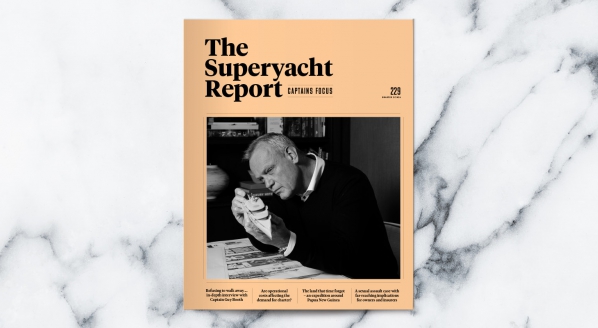
The Superyacht Report 229: Captains Focus - Out Now
513 whales in a day, a yacht arrested by US Marshals, Guy Booth on refusing to abandon Phi and so much more in TSR 229
Crew
.jpg)
Yachties with a cause – UKSA
Amy Sweeting, Director of Development and Impact, UKSA, on how the superyacht community can make a real difference to the lives of young people
Business
Related news
Between command and connection
4 months ago
Who is really in command?
4 months ago
The Superyacht Report 229: Captains Focus - Out Now
4 months ago
Yachties with a cause – UKSA
5 months ago
NEW: Sign up for
SuperyachtNewsweek!
Get the latest weekly news, in-depth reports, intelligence, and strategic insights, delivered directly from The Superyacht Group's editors and market analysts.
Stay at the forefront of the superyacht industry with SuperyachtNewsweek