
Are we building for compliance or for crew?
What actually brings stability to a crew and why the answer has as much to do with how we house people as how we lead them…

The last article I wrote described a problem; this one is about the way out of it. The response to that piece told me something I already suspected: a great many people in this industry recognise the picture of leadership hollowed out, authority drawn off the boat and crew who have learned to keep one eye permanently on the next job.
Naming it was the easy part; the harder and more useful question is what we actually do about it, because the retention crisis everyone keeps describing as a mystery is not a mystery at all. It is the predictable result of how we have built things – and it can be rebuilt.
I want to be clear about where I am putting the emphasis. It would be easy to offer another thousand words on what management companies get wrong but blaming the structure above the boat does nothing for the deckhand who is gone by the end of her first season. Stability is not handed down from an office, it is built, plank by plank, on the vessel itself, from the crew up.
Start with the number that should worry all of us – far too many crew now leave a boat within three, six or nine months of joining it. We have somehow decided this is normal, a feature of the lifestyle, the cost of doing business in a young and transient workforce. It is none of those things, it’s a signal, and the signal is that the early experience of joining a yacht has been allowed to become an experience of arriving nowhere in particular, doing the work and quietly working out when to leave.
People rarely leave in month one. They decide to leave in month one and act on it in month six.
The decision to go is almost always made early, long before the resignation. It is made in the first few weeks, in the gap between what someone was promised and what they actually find. They were told there would be progression and there is no visible path; they were told they would be developed and no one has the time, the brief or the authority to develop them. The lifestyle is demanding enough when there is a reason to endure it. Without one, the maths is simple, and the most capable people, the ones with options, do it first.
The encouraging part is that a growing number of fleets have already worked this out and are quietly proving that none of what follows is fanciful. They treat the crew life cycle as something to invest in rather than survive. They pay maternity and paternity properly, on the understanding that a career at sea and a family ashore should not be mutually exclusive. They cover travel fairly rather than treating a flight home as a favour. They give training to everyone, not just to the few judged most likely to stay, and they do not claw it back or hold it against a crew member who later moves on. These are not lavish outfits run by sentimentalists, they have simply done the sums and understand that the cost of keeping good people is far lower than the cost of replacing them on a loop, and they have built their conditions around that conclusion.
So the question of stability becomes a question of what we put into those first months, and into the structure and the surroundings that hold them. There are four things that decide it and only the first is about leadership.
The first is the one I wrote about last time and I will not labour it again beyond saying that it is the foundation everything else rests on. A captain who is genuinely empowered to lead can offer a head of department something solid. A head of department who feels secure can offer the same to the crew beneath them. Take the authority out of the top and there is nothing solid for anyone to stand on, however good the intentions further down. Empowerment is the load-bearing wall of the whole operation and stability is impossible without it.
The second is a real career, not the promise of one. The industry has become very good at recruiting people and very poor at keeping them, and the gap between those two things is development. A crew member needs to see, from early on, what the next rung looks like and what it will take to reach it. That means structured training rather than the accidental, learn-it-on-the-job apprenticeship most people still receive, and it means heads of department who understand that part of their job is to build their successor rather than guard their own position. Crew who are growing do not leave; however, crew who are static always do, eventually, because standing still on a yacht is expensive in every way that matters to a young professional.
The third is honest pay and, more pressingly, honest time off. The problem is not pay across the board. Crew on some of the larger boats are well looked after and pointing to those salaries is the easiest way to wave the whole question away. The real failure is at the two ends – entry-level wages have barely moved in 20 years while comparable shore jobs, which ask for far less sacrifice, have steadily improved, and senior pay on many boats has stagnated in the same way. The squeeze sits at the bottom and at the top, and that is exactly where the recruitment bottleneck shows up. But the sharper failure is leave and the days of 30, 45 and 60 days a year need to end.
Yachting has to mature and accept that it carries a responsibility to attract crew, to retain them
and to build careers that last, and you cannot do any of that while treating exhaustion
as a badge of commitment.
Consider what those numbers actually describe. A crew member works back-to-back 16-hour days for 120 days without a break and is rewarded with an annual 45 days off. That does not amount to a single day off per week. A shore job with a standard 30 days of holiday plus weekends gives a person something closer to 135 days away from work a year and nobody considers that indulgent.
And that comparison is the generous one, because it treats the job as if it has stood still, but it hasn’t. Over the past 20 years the boats have worked more weeks a year, guests have come to expect more, and the systems behind every part of the operation have grown more complex and more demanding to run. The work has intensified on almost every measure yet leave has not moved with it. Every increase in demand has been absorbed by cutting into the crew’s recovery rather than by adding manning or rethinking the roster, so the ratio of work to rest has not simply stayed poor, it has actively got worse. That is what being treated as the expendable part of the operation looks like in practice. When the demands rise, crew are the one variable everyone expects to flex.
We are asking people to live a harder life than that, in a more confined space, and to do it on a fraction of the rest. Yachting has to mature and accept that it carries a responsibility to attract crew, to retain them and to build careers that last, and you cannot do any of that while treating exhaustion as a badge of commitment.
The fourth thing is the one we discuss least and feel most, and it may matter more than the other three combined, because it is the only part of the job a crew member cannot leave at the end of a shift. On a yacht you do not go home. The yacht is their workplace, and it is also their bedroom, bathroom, kitchen, gym, bar, library and the long walk that everyone ashore uses to put a day behind them is their commute. All of it is compressed into a few square metres below the waterline and we have barely begun to take seriously what that does to a person over a season.
Picture an ordinary morning – you wake beside someone who is snoring, because they came off a different watch at five and have been asleep for two hours while you start your day. You go to the heads, which sit a hand’s width from where your cabin-mate is sleeping, with nothing but a thin door between the two. You try to shower in a compartment that folds the shower, the toilet and the basin into the same small box, so your towel, your clothes and the loo roll are damp before you have properly woken up. There is no part of this you can do in private and no part of it you can do somewhere else. Then you go to breakfast and eat it with the same dozen or 30 people you work with, take orders from, give orders to and will sleep beside again tonight, with nowhere on the entire vessel to simply be alone for ten minutes. And then your day starts.
If a technology company housed its staff in a single building, refused to let them leave the front door and asked them to live and work 120 days straight, we would call those conditions intolerable and that company would be shut down by the state for promoting slavery. We have normalised exactly that at sea.
Much of this is a design choice, made years before any crew member ever joins. A yacht built to sleep 12 guests now routinely carries 10 to 20 distinct guest areas – bars, spas, cinemas, beach clubs, tiki bars, paddle courts, basketball courts, wine cellars, tasking rooms, snow rooms, each more technically complex and more demanding to run than the last – while the people who run every one of them are housed in cabins barely wide enough to turn around in, and made to work from pantries, galleys and stores that are treated as the dead space left over once the important rooms have been drawn.
The priorities are visible in the plans. An owner does not need a 300-square-metre stateroom; 200 would still be palatial. Give the other hundred to the people who actually make the yacht work. Spend it on cabins built for human beings, on storage that functions, on a crew gym, on a quiet room where someone can call home or sit for ten minutes out of everyone else’s company.
None of this should rest on an owner’s generosity, and that is the part the industry keeps getting wrong. Being MLC-compliant and being genuinely humane are not the same thing. The minimum standard is set low enough that a yard can meet it and still build crew quarters no one would willingly live in, which means the standard itself is part of the problem, along with the people who design to it. Too much of the fleet is drawn to sell rather than to function, with no real thought for how the boat will run once it is full of people. I recently walked through a new build at a major yard where the crew mess for 30 was the size you would expect for 12, and the yard’s own project manager said, more or less, that the crew would not be happy with it. That boat is still two years from delivery. If it is obvious now, the question is why nobody is fixing it while there is still time.
Raising the standard is the right answer, but it is a slow one. It only bites on new builds and major refits, so even if the rules changed tomorrow the existing fleet would feel almost none of it for years. That is not a reason to leave it alone. It is the reason owners and yards who can see the problem should be exceeding the minimum now, voluntarily, while the regulation catches up, rather than waiting to be told.
None of that subtracts from the guest experience. More often than not it is the thing that protects it, because the service a guest feels is produced entirely by people whose own conditions the guest never sees.
This is also where retention and safety turn out to be the same subject. A boat where people feel disposable, and where they cannot find a moment’s privacy or rest, is a boat where information stops flowing upward, because a crew member who is depleted and on edge does not raise the developing problem or admit the early mistake.
The same conditions that drive good people off a vessel also quietly degrade how safely it runs. We treat retention as a human-resources matter and safety as an operational one. They are the same matter, observed from different ends of the boat, and a vessel that solves one is usually well on the way to solving the other.
A crew member who cannot find ten minutes alone in 120 will not be retained by a pay rise.
They are being worn out faster than any salary can replace.
None of this is exotic and almost none of it requires permission from anyone above the boat. It requires captains and heads of department who understand that their real product is not a clean interior or a flawless passage but a crew that wants to come back next season.
It requires owners willing to value the continuity a settled crew buys, and designers and builders willing to treat the people who live aboard as a core part of the brief rather than an afterthought. And it requires the industry to stop describing the retention crisis as weather, something that simply happens to us, and to start treating it as the consequence of decisions we are making, in the wage, in the roster and on the drawing board, and could make differently.
The boats that already work this way are not a secret. They are the ones whose crew lists barely change, whose reputation travels ahead of them, and who never struggle to fill a vacancy because the people who have left them still speak well of them.
They are not luckier than everyone else. They have simply understood that stability is not something you find. It is something you build, from the crew up and from the keel out, and it begins long before anyone on board has thought about whether to stay.
As an open-source platform we offer an industry-wide invitation to anyone and everyone in our sector to share their knowledge, experience and opinions. So if you have an interesting and valuable contribution to make, and would like to join our growing community of guest columnists, share your ideas with us at newsdesk@thesuperyachtgroup.com
Profile links
Yacht Crew Recruitment & Training
NEW: Sign up for SuperyachtNewsweek!
Get the latest weekly news, in-depth reports, intelligence, and strategic insights, delivered directly from The Superyacht Group's editors and market analysts.
Stay at the forefront of the superyacht industry with SuperyachtNewsweek
Click here to become part of The Superyacht Group community, and join us in our mission to make this industry accessible to all, and prosperous for the long-term. We are offering access to the superyacht industry’s most comprehensive and longstanding archive of business-critical information, as well as a comprehensive, real-time superyacht fleet database, for just £10 per month, because we are One Industry with One Mission. Sign up here.
Related news

Maritime workforce not keeping pace with digital change, warns new global study
Lloyd’s Register Foundation report calls for urgent action on training, regulation and investment
Crew

Between command and connection
A reflection on authority, connection and what the superyacht industry must confront to secure its future
Opinion

Who is really in command?
Andrew Roch asks how the power held by management companies can affect captains’ leadership and their sense of disempowerment and psychological safety
Opinion
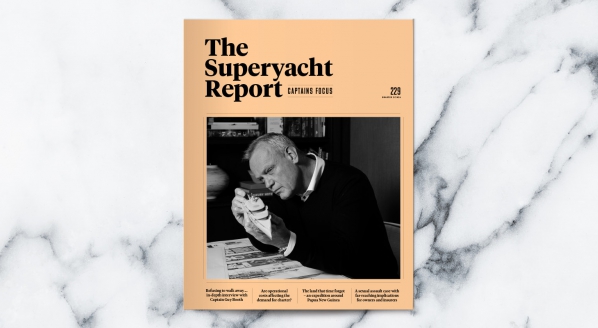
The Superyacht Report 229: Captains Focus - Out Now
513 whales in a day, a yacht arrested by US Marshals, Guy Booth on refusing to abandon Phi and so much more in TSR 229
Crew
CHIRP Report: Fatigue – safe crewing on paper, risk in reality
Meeting compliance standards may not eradicate the risks – an important guide to effective fatigue management
Crew
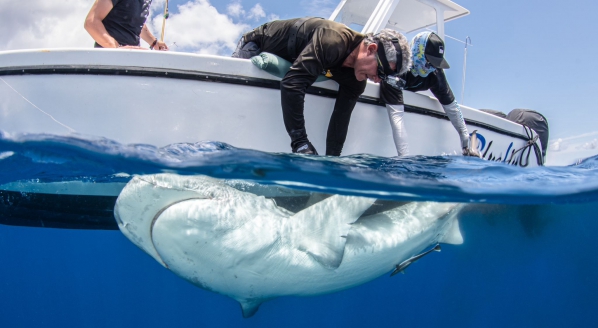
Yachties with a cause – YachtAid Global
Steve Jackman, Communications and Marketing, YachtAid Global, outlines their role in facilitating the interface between coastal communities and philanthropic ya
Owner
Related news
Between command and connection
4 months ago
Who is really in command?
4 months ago
The Superyacht Report 229: Captains Focus - Out Now
4 months ago
Yachties with a cause – YachtAid Global
5 months ago
NEW: Sign up for
SuperyachtNewsweek!
Get the latest weekly news, in-depth reports, intelligence, and strategic insights, delivered directly from The Superyacht Group's editors and market analysts.
Stay at the forefront of the superyacht industry with SuperyachtNewsweek