Who is really in command?
Andrew Roch asks how the power held by management companies can affect captains’ leadership and their sense of disempowerment and psychological safety…
In the 1980s and 1990s the captain ran the boat. The owner appointed them, trusted them and then stepped back. Decisions about crew, operations, budgets, scheduling, who was hired and who was fired belonged to the person standing on the bridge. The relationship between owner and captain was direct, often personal and the authority that came with it was real. A captain at that level carried the full weight of the vessel because they had been handed the full authority to run it.
The arrangement was not flawless and it depended heavily on the quality of the individual, but it produced something the industry is now quietly missing: leadership that was genuinely empowered to lead and that answered directly to the person who owned the asset.
The shift began in the late ’90s and gathered pace through the early 2000s with the rise of the large-yacht management company. These businesses grew, for the most part, out of brokerage, out of new builds, out of the sheer number of increasingly vast yachts entering the global market.
What began as administrative support did not stay that way for long and over the past twenty-five years, management has steadily stepped into running nearly every facet of the yachts operational and financial management.
They were businesses built to buy, sell and charter boats and management was, in effect, an add-on, a way of keeping that big client close after the big deal was done and of turning a one-off transaction into a recurring relationship that would drive revenue for years to come. There was a logic to it that is easy to understand; yachts started to grow in both size, volume and in crew numbers, and owners wanted a single point of contact, with technical oversight, and regulatory compliance handled by people who did it every day.
What began as administrative support did not stay that way for long and over the past twenty-five years, management has steadily stepped into running nearly every facet of the yachts operational and financial management. What started as support for the vessel’s leadership has, on too many boats, become a substitute for it. Decisions that once sat squarely with the skipper: operating budgets, supplier relationships, scheduling, crew composition, systems, structure and dozens of other tasks, have since migrated out of the captains’ hands, off the vessel and into the management’s office.
On a growing number of yachts, the captain and the crew themselves are now selected by the management company. The captain is handed a team rather than entrusted to build one. The line between supporting a captain and replacing their judgement has been crossed so gradually, and so reasonably at each individual step that very few people noticed the moment it was gone.
The result in 2026 is that on many yachts the captain has been stripped back to the most basic version of the role. They navigate, they operate, they manage the crew in front of them as best they can, as far as they are empowered to do so. However, the decisions that actually shape the vessel – who is hired, who is retained, how money is spent, what the operation prioritises and what is protected – are increasingly made somewhere they cannot see, by people who have never stood a single watch on that boat and never will.
The authority the role implies and the authority the role carries have come apart almost completely and the captain is left holding a position that has been quietly emptied of its substance. The sharpest expression of this is also the most brutal. A management company can decide that a captain is to be fired, frame the decision as the owner’s wish whether it truly is or not, and ask that captain to leave the vessel with an hour’s notice.
At the same moment, a replacement captain selected as much for loyalty to the management company as for any fit with the vessel, or its owner, can be walking up the passarelle as the outgoing captain walks down it. No process, no conversation, no accountability. And no relationship to appeal to, because the relationship that once would have protected the captain, the direct one between owner and master, has been brokered out of existence.
“I knew I had spoken out too strongly in support of crew – and I also knew, as I worked through the night to make the charter a success, that my employment was being determined in Monaco over red wine and steak by mangers who had never and would never lead at sea and feel the weight of command.”
Fleet captain
It is difficult to overstate what this does to a human being and to the operation they are supposed to be responsible for. A captain who can be removed within the hour, for reasons they cannot contest and may never even be told, is not in command of the vessel in any meaningful sense. They are minding a boat they could lose at any moment on terms set by people they may never meet. The question this raises is not an abstract one about organisational charts, it is operational and it is about safety. How is a vessel supposed to run safely when the leadership at the very top has been disempowered, disengaged and quietly informed that the decisions that matter are no longer theirs to make?
And the accountability never leaves. This is the cruelty of the arrangement. The captain remains the name on the paperwork, the person the flag state, the insurer and the law look to first when something goes wrong. Responsibility has stayed exactly where it always was, fixed to the master of the vessel, while the authority that is meant to accompany it has been steadily drawn away. Asking someone to carry the full weight of an outcome they are no longer allowed to control is not merely unfair, it is the most reliable way there is to wear good people down until they leave, or worse, until they stop caring enough to leave.
This is made even more critical because disempowerment does not stay at the top, it travels downward through the crew and it travels fast. A captain who has learned that their own authority is provisional cannot offer their heads of department anything more solid than what they have themselves. The HODs absorb the same lesson and pass it down again. Within a single year, the message has reached every cabin and now no one’s position is truly secure, no one’s judgement is final, and the structure can shift beneath your feet without warning, explanation or recourse.
People do not leave good boats, they leave boats where they have been made to feel disposable.
This is precisely the condition in which psychological safety dies. If any crew member can be removed at any time, for reasons that have nothing to do with the quality of their work, then speaking up, flagging a developing problem or admitting a mistake all become risks that a sensible person simply cannot afford to take, so they stop taking them. They keep their heads down, they keep their concerns to themselves and they keep one eye permanently fixed on the next job, the one that might offer the security this one has shown it cannot. The vessel keeps running on the surface, while the honest flow of information that actually keeps it safe quietly dries up.
This is also the mechanism behind the crew retention crisis the industry keeps discussing as though it were a mystery. People do not leave good boats, they leave boats where they have been made to feel disposable.
When leadership at every level is looking over its shoulder, the most capable crew, precisely the ones with options elsewhere, are the first to go, and they keep going until a vessel is crewed by whoever happens to be left. The loss of empowerment at the top and the haemorrhage of crew at the bottom are not two separate problems. They are the same problem, observed from opposite ends of the boat.
However, none of this is universal and it would be both unfair and inaccurate to suggest that it is.
There are management companies that understand exactly where their role ends and the captain’s begins, and who hold that line with real discipline. There are owners who still back their captains completely and captains who are trusted with authority that genuinely matches their accountability. Plenty of vessels and whole fleets are run with judgement, restraint and a real respect for the chain of command, and they tend to show it in their stability and their retention.
A vessel whose leadership has been hollowed out is never as controlled as it looks, it's only as controlled as the people on board have quietly decided it is safe to appear.
The point is not that the system is uniformly broken, it is that, time and time again, we are seeing and hearing of vessels where it has broken in exactly this way, and where the damage to people and to safety follows exactly this pattern.
The conclusion is uncomfortable, but it is also simple – leadership must go hand-in-hand with empowerment for leaders to be effective. When you take the decision-making away from the people who remain responsible for the outcome, you do not merely inconvenience them, you remove the foundation that everything else on the vessel is standing on.
The captain cannot manufacture a stability they have not been given. The heads of department cannot extend a security they do not hold and the crew cannot be expected to trust a structure that has already shown them, plainly, that it does not operate fairly.
Safety on a vessel depends, in the end, on people being willing to say what they see. Strip the authority out of the top of the structure and that willingness erodes all the way down it. A vessel whose leadership has been hollowed out is never as controlled as it looks, it's only as controlled as the people on board have quietly decided it is safe to appear.
The gap between those two vessels, the one on the surface and the real one underneath, costs nothing on a calm day, but when it matters, it tends to matter very fast and the consequences are devastating.
As an open-source platform we offer an industry-wide invitation to anyone and everyone in our sector to share their knowledge, experience and opinions. So if you have an interesting and valuable contribution to make, and would like to join our growing community of guest columnists, share your ideas with us at newsdesk@thesuperyachtgroup.com
Profile links
Yacht Crew Recruitment & Training
NEW: Sign up for SuperyachtNewsweek!
Get the latest weekly news, in-depth reports, intelligence, and strategic insights, delivered directly from The Superyacht Group's editors and market analysts.
Stay at the forefront of the superyacht industry with SuperyachtNewsweek
Click here to become part of The Superyacht Group community, and join us in our mission to make this industry accessible to all, and prosperous for the long-term. We are offering access to the superyacht industry’s most comprehensive and longstanding archive of business-critical information, as well as a comprehensive, real-time superyacht fleet database, for just £10 per month, because we are One Industry with One Mission. Sign up here.
Related news
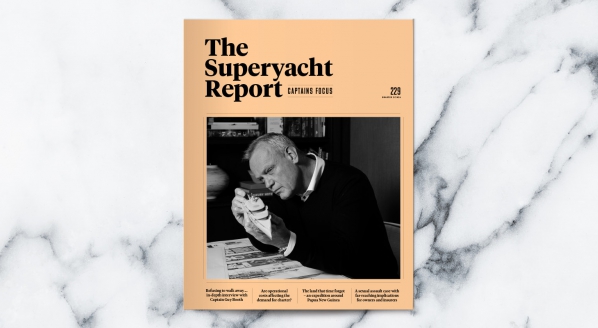
The Superyacht Report 229: Captains Focus - Out Now
513 whales in a day, a yacht arrested by US Marshals, Guy Booth on refusing to abandon Phi and so much more in TSR 229
Crew
CHIRP Report: Fatigue – safe crewing on paper, risk in reality
Meeting compliance standards may not eradicate the risks – an important guide to effective fatigue management
Crew
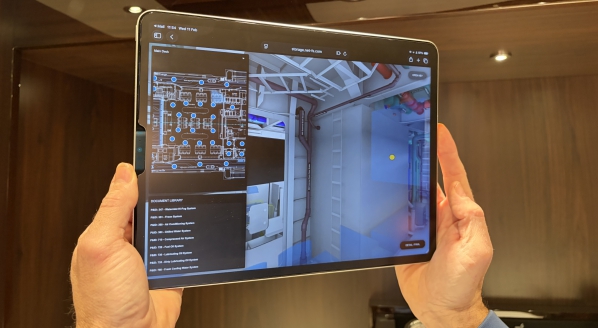
The asset you can’t see: why technical knowledge is the next frontier of superyacht value
Jonathan Lee, CEO of Sentini Marine, argues that the industry’s most overlooked asset is the operational knowledge embedded in the vessel itself
Opinion
The invisible curriculum
Andrew Roch, founder and CEO of Yacht Crew Recruitment & Training, on leadership, mentorship and how great captains are really made
Crew
Trust and serendipity - Anders Kurtén talks Fraser
Moving from shipyard to brokerage isn’t quite the cosmic career jump some might think
Business
Related news
The Superyacht Report 229: Captains Focus - Out Now
4 months ago
The invisible curriculum
6 months ago
Trust and serendipity - Anders Kurtén talks Fraser
7 months ago
NEW: Sign up for
SuperyachtNewsweek!
Get the latest weekly news, in-depth reports, intelligence, and strategic insights, delivered directly from The Superyacht Group's editors and market analysts.
Stay at the forefront of the superyacht industry with SuperyachtNewsweek