What if we stopped adding?
The organisational economics of simplicity at sea…
There is a peculiar thing we do when something becomes difficult: we add something to it, whether it be a new procedure, another person copied into the email, a piece of technology, a consultant or a dashboard nobody particularly wanted but which, six months later, everyone is dutifully feeding with information. Somewhere along the way there will probably be a workshop.
We are very accomplished adders. And superyachting, perhaps more than most industries, has had the wonderful and occasionally dangerous privilege of being able to ask, ‘Could we’? and quite often receive the answer: Yes.
Could we make it bigger, quieter, faster, more intelligent, more connected, and more personalised? Could the glass do this, could the deck become that, could the owner control everything from here, could we create an experience nobody has created before?
Yes. Magnificently, yes.
Which is why the question that came out of Bergen, Norway, at this year’s Innorvation experience – What if we made everything simpler and less complex? – is considerably more provocative than it first appears, because perhaps the difficult question for an industry capable of almost anything is no longer ‘What can we add’? Perhaps it is ‘What deserves to remain’?
The cupboard nobody wants to open
Economists have a rather unromantic habit of asking what things really cost – not only what was paid for them, but what they continue to consume once they exist. Complexity is particularly mischievous in this respect; it arrives with one price and lives with another.
A sophisticated system must be understood, operated and maintained. A process requires somebody to perform it, while a reporting line needs information to travel through it. Every additional interface creates another small possibility for misunderstanding and every unnecessary decision steals a little attention from a necessary one.
None of this is dramatic enough to make anybody run down the pontoon waving their arms. That is precisely the problem.
Complexity accumulates politely. A captain becomes the answer to questions that should have been answered elsewhere. A crew member invents a workaround for something that makes no sense and, because the workaround works, it survives. An owner preference travels through several perfectly competent people and arrives at the other end subtly transformed. A report continues to be produced because nobody remembers who first asked for it, but stopping it somehow feels more dangerous than continuing.
Nothing is broken. Everyone is busy (of course!), and those two sentences can coexist for a surprisingly long time. Similarly, on a yacht, where exceptional people and considerable resources can compensate for imperfect organisation, they can coexist almost indefinitely.
For a long time, more was relatively easy to understand: more space, more craftsmanship, more privacy, more possibility, more service. But mature luxury eventually encounters a strange threshold where abundance stops being the difficult achievement. Selection fulfils that role instead.
Then there are the basics
“Back to basics” suffers from terrible branding. It sounds like something one does after innovation has failed, preferably involving a flipchart and an earnest discussion about communication. Yet the basics are rather formidable things. Who decides? Who needs to know? What does the owner actually care about? When does somebody act independently and when do they ask? What happens when the expected becomes unexpected? How much information is enough?
These are not glamorous questions, but neither is the foundation of a house. We tend to become interested in foundations only when something above them starts moving. Perhaps that is why industries with enormous concentrations of expertise can occasionally overlook very ordinary things. Expertise naturally travels towards the difficult, the novel and the specialised. Careers are not usually built by announcing that three steps can become one.
There is also very little theatre in subtraction – nobody unveils the process that no longer exists, no glossy photograph commemorates the meeting that no longer needs to happen. And it would be an unusual press release indeed: NEW FOR 2027: WE REMOVED SOMETHING.
I would read it, though!
Luxury has always had a complicated relationship with more
For a long time, more was relatively easy to understand: more space, more craftsmanship, more privacy, more possibility, more service. But mature luxury eventually encounters a strange threshold where abundance stops being the difficult achievement. Selection fulfils that role instead.
The finest restaurant does not put every ingredient it owns onto the plate. A great tailor knows that another detail can ruin a jacket. An editor removes the paragraph she rather likes because the story is better without it.
Why should a yacht or the organisation around one be exempt from the same discipline? This is where simplicity becomes much more interesting than minimalism. Minimalism is visible, but simplicity often isn’t.
A beautifully simple operation may have required enormous intelligence to produce. The guest sees ease; somebody else has removed the thousand small negotiations that would otherwise have reached them.
Perhaps the danger begins when the machinery surrounding the experience becomes more demanding than the experience itself.
That, to me, is a far more compelling definition of efficiency than simply doing things faster, and it is closely related to integrity because integrity asks an awkward question of everything we have become accustomed to carrying: Are you here because you create value or because nobody has questioned your presence recently?
This may refer to a feature, process, a hierarchy, a service, an expert or even an industry habit. It’s a useful question because complexity has another curious characteristic: once established, it begins defending itself.
The rowing boat problem
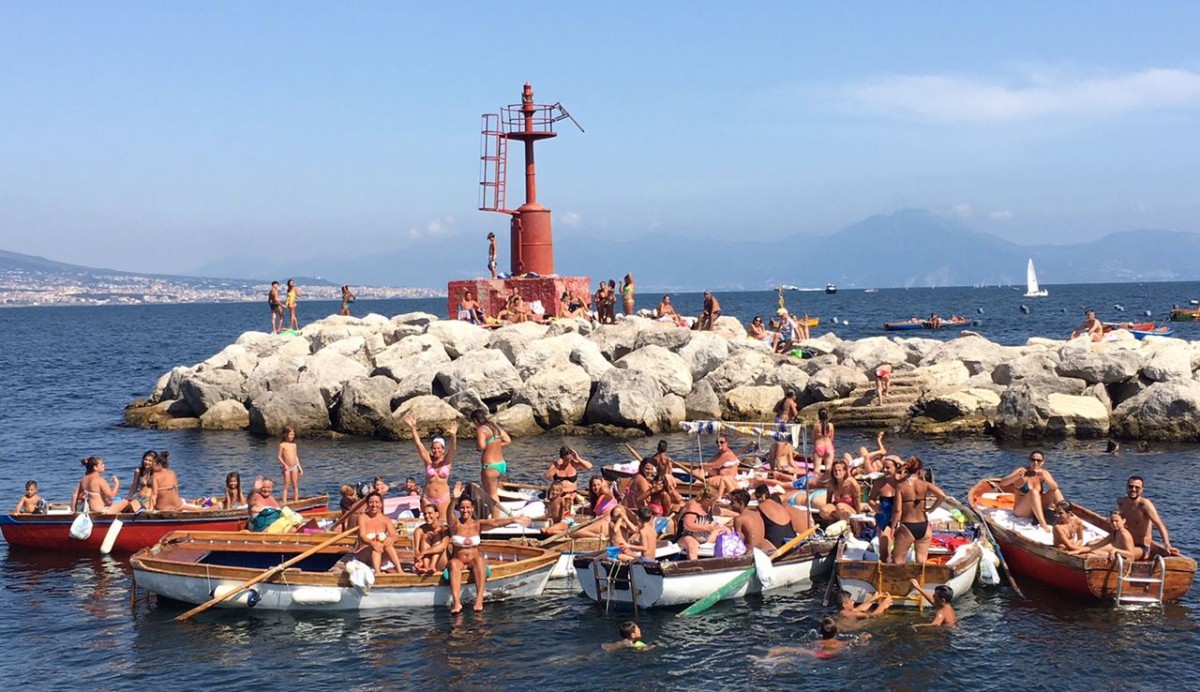
Which brings us to a photo from Naples. There is something almost impolite about those happy people in little rented rowing boats. They have none of the things an industry has spent decades becoming extraordinarily good at creating, and yet there they are, apparently having a marvellous time.
Of course this does not mean that a rowing boat is secretly a better superyacht. Nor is it an argument against size, technology, extraordinary design or any of the things that make this industry fascinating. It simply exposes a small economic inconvenience: enjoyment does not rise obediently with complexity. There is no reliable graph on which every additional euro, meter, feature, screen, process or person produces a corresponding increase in delight.
If only there were, yachting would be much easier and the photograph therefore brings us back to something embarrassingly basic: What is all of this for? Not the yacht as an asset, an engineering achievement or a design object, all of which matter, but the yacht at the moment somebody actually uses it – to leave land, to be with people or escape them, to wake somewhere impossible, to swim before breakfast, to disappear for a while or just to sit on the water and feel that being there is considerably better than being somewhere else. An entire sophisticated industry exists to make those very unsophisticated pleasures possible.
Perhaps the danger begins when the machinery surrounding the experience becomes more demanding than the experience itself.
What if we stopped adding?
I don’t mean everywhere, nor recklessly and certainly not where complexity protects safety or makes genuinely extraordinary things possible, but selectively, intelligently, almost mischievously.
What if, before introducing the next thing, we asked whether something else could disappear? What if efficiency were measured partly by how little unnecessary attention an operation consumes? What if sophistication meant not the greatest number of possibilities, but the clearest understanding of which possibilities matter? What if an expert’s finest piece of work were occasionally to make herself unnecessary?
And what if “back to basics” were not a retreat from the future at all, but a rather elegant way of designing it? There is a line often crossed in luxury where adding becomes easier than choosing. Perhaps superyachting is interesting enough, mature enough and confident enough to cross it in the other direction.
We already know how to make extraordinary things; the next trick may be knowing when to stop. After all, somewhere off Naples, someone in a little rowing boat has already started without us.
As an open-source platform we offer an industry-wide invitation to anyone and everyone in our sector to share their knowledge, experience and opinions. If you have an interesting and valuable contribution to make, and would like to join our growing community of guest columnists, share your ideas with us at newsdesk@thesuperyachtgroup.com
NEW: Sign up for SuperyachtNewsweek!
Get the latest weekly news, in-depth reports, intelligence, and strategic insights, delivered directly from The Superyacht Group's editors and market analysts.
Stay at the forefront of the superyacht industry with SuperyachtNewsweek
Click here to become part of The Superyacht Group community, and join us in our mission to make this industry accessible to all, and prosperous for the long-term. We are offering access to the superyacht industry’s most comprehensive and longstanding archive of business-critical information, as well as a comprehensive, real-time superyacht fleet database, for just £10 per month, because we are One Industry with One Mission. Sign up here.
Related news
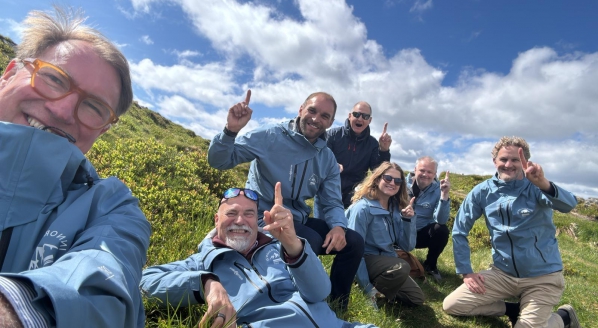
INNORVATION’26 – the Movie
A true tale of the odyssey of a select group of superyacht VIPs grappling with the question ‘What If’ under the blue skies of Bergen
Business
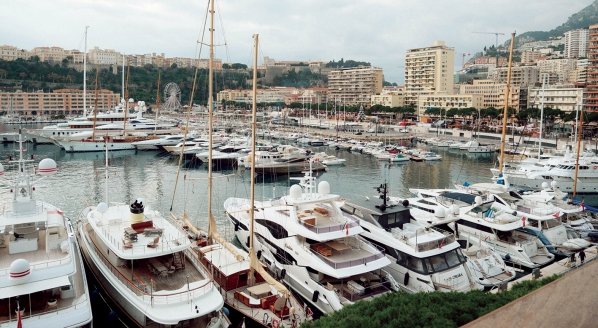
The biggest market in yachting is also the most broken
Why the sub-40-metre segment has the most potential buyers, the least margin – and what nobody is doing about it
Opinion

Are we building for compliance or for crew?
What actually brings stability to a crew and why the answer has as much to do with how we house people as how we lead them
Opinion
No fuel. No fun. Can we still afford to charter?
Alexander Griffiths of Tidal Communications attends MYBA to find out how operational costs are affecting the demand for charter
Owner
Global study reveals the economic power of the superyacht industry
New study positions yacht builders as the industrial foundation of a €54 billion global superyacht economy
Business
Related news
INNORVATION’26 – the Movie
2 months ago
Are we building for compliance or for crew?
3 months ago
No fuel. No fun. Can we still afford to charter?
4 months ago
NEW: Sign up for
SuperyachtNewsweek!
Get the latest weekly news, in-depth reports, intelligence, and strategic insights, delivered directly from The Superyacht Group's editors and market analysts.
Stay at the forefront of the superyacht industry with SuperyachtNewsweek