
The biggest market in yachting is also the most broken
Why the sub-40-metre segment has the most potential buyers, the least margin – and what nobody is doing about it…
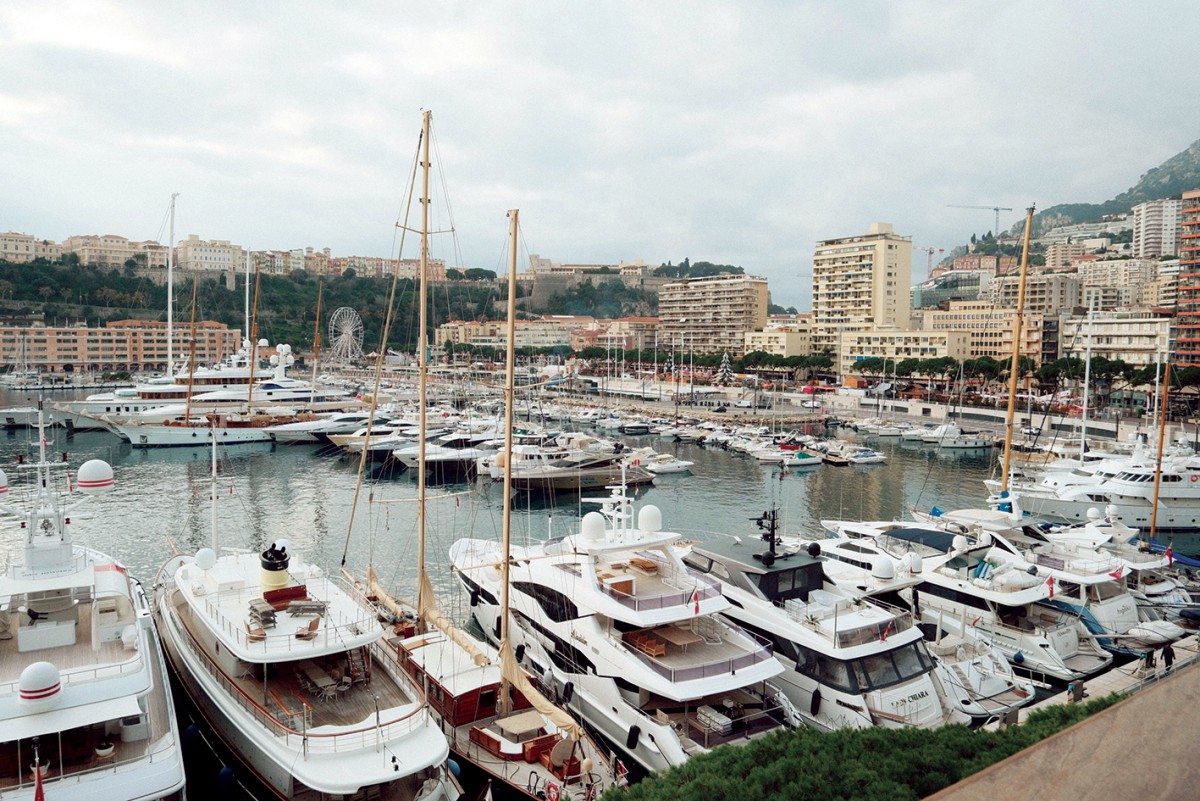
The global superyacht fleet now stands at 6,239 vessels over 30 metres. The construction book holds 685 projects. The average build length has reached an all-time high of 48.5 metres. The 60 to 90-metre segment has grown by more than 35 per cent since 2020, while the 80-metre-plus segment had a record sales year in 2025. At the top end of this market, everything is working.
But the sub-40-metre segment, which still represents 63 per cent of the operating fleet, tells a different story. Its share of the construction book has fallen to 40 per cent. Projects in this size range declined in 2025 and the structural pressures bearing down on it are not cyclical, they are architectural. Rather than being a market in temporary difficulty, the market has been building the wrong product, for the wrong buyer, through the wrong model, for years – and the pressure is now coming from every direction.
Squeezed from above
A decade ago, no catamaran builder appeared in the top tier of the global superyacht order book. Today, Sunreef Yachts ranks sixth, the only multihull builder in that ranking, with 41 projects totalling over 1,100 metres in build. The Sunreef 100 alone has logged 16 sold units.
The buyer who five years ago might have considered a 35-metre monohull is today looking at a 24-metre catamaran that offers more living space, dual-season capability and a fraction of the operational complexity. Buyer attention and broker energy are following that trend, upward and away from the segment that once anchored the mid-market.
When the segment above you grows faster, in volume, in capability and in buyer appeal, you are not just facing competition, you are also facing structural displacement.
The trap from within
The sub-40-metre segment is, on paper, the most competitive in yachting. Dozens of European builders, and a growing number from Turkey and Asia, compete in this space. Most of them produce essentially the same product with similar layouts, similar specifications and similar aesthetics. The only real differentiation is price, and when price is the only differentiation, the only commercial response to competitive pressure is to discount.
The consequences compound predictably: margins compress, marketing budgets inflate as builders try to create the impression of differentiation that the product itself cannot deliver, R&D investment stalls because there is no margin to fund it and dependency on charter fleet operators, who buy in volume but demand further discounts, increases. Furthermore, the used market, which is abundant and well-priced in this segment, puts permanent downward pressure on new-build valuations.
One major builder in this segment reported a consolidated loss of €12.9 million in a year when revenues grew by 23 per cent and prices rose by 30 per cent. This shows there is a problem with the structural economics rather than the volume .
This segment is failing structurally and continuing to respond with the same logic that created the problem, rather than through a collection of companies failing individually.
The capital problem nobody names
Institutional capital is entering yachting: private equity, infrastructure funds and major investors are buying marinas, refit yards and brokerage houses. The consolidation is real and it is accelerating, but instead of the capital flowing into the sub-40-metre manufacturing segment, it is flowing to the top, where assets are larger, margins more defensible and returns more predictable.
The mid-market manufacturer is left competing in a price war without the capital to restructure, differentiate or innovate. For some, this creates an opening: the right investor, at the right moment, with genuine industry understanding, can provide the runway to rebuild commercial architecture before the erosion becomes irreversible. For others, those who wait too long or take capital on the wrong terms, it becomes the final chapter. The risk and the opportunity are the same moment.
The buyer the industry ignores
Here is the paradox at the heart of this market. According to the Capgemini World Wealth Report 2025, there are approximately 21 million individuals worldwide with investable assets between one and five million dollars. They represent roughly 90 per cent of the global HNWI population and hold 40 to 43 per cent of total HNWI wealth. This is the segment that maps most naturally onto the sub-40-metre-yacht market in terms of purchasing power.
However, the yachting industry barely speaks to them, not because they lack the means nor because they lack the desire, but because the product on offer does not match how they think about money, time and access. This buyer wants a different structure, not a smaller yacht. They want two or three weeks of exceptional yachting per year, without the year-round weight of ownership: the crew, the maintenance, the berth, the insurance, the management company, the VAT complexity, the survey cycle. They want the experience without the infrastructure.
Charter partially solves this, but charter in the sub-40-metre segment is increasingly commoditised – a growing pool of largely identical vessels competing on price, mediated by platforms that further erode both margins and differentiation. The experience is transactional so the relationship becomes disposable and therefore loyalty is zero.
The model the industry offers this buyer is either too much – full ownership – or too little – anonymous charter. The space between them is almost entirely empty.
The utilisation problem no one fixes
A yacht used six to eight weeks per year is not a business, it quickly becomes an expensive storage arrangement with occasional intervals of joy. The charter model was the industry's answer to this inefficiency, but as more vessels enter the charter pool in this segment, supply is growing faster than the demand that can absorb it at sustainable prices. The major operators set the price floor and independent owners follow, so the asset, which cost millions to build, crew and maintain, earns a fraction of what the economics require to justify the investment.
This is a design problem rather than a market problem. The asset was conceived for one model of use, but the world has since moved to a different model – and the industry has responded by building more of the same asset.
Furthermore, the infrastructure around that design is tightening and marina capacity globally is not keeping pace with fleet growth. In prime markets, the shortage is acute, with seven boats competing for every available slip in some South Florida markets and Mediterranean berths for larger vessels are now leasing at rates that rival luxury real estate. The owner of a sub-40-metre yacht pays for 52 weeks of infrastructure to use it for six.
What a different structure looks like
The solution lies in a better architecture around the boat; a better boat is not the answer. A curated fleet of 80 to 90-foot catamarans, the size range where space, comfort, dual-season viability and economics converge, structured as a membership model rather than a charter product, operated across Mediterranean summers and Caribbean or Gulf winters, changes the fundamental economics of the segment.
The member pays an entry fee and an annual contribution. They commit to two, three or four weeks per year. They arrive, they enjoy, they leave. There is no crew management, maintenance coordination, berth negotiation or survey anxiety. The experience is curated and so the relationship becomes long-term.
The NextGen buyer and the Silent Trillion wealth holder, 21 million individuals with one to five million in investable assets, next-generation inheritors, globally mobile entrepreneurs, are not waiting for a better brochure, they are waiting for a structure that fits how they live.
For the operator, the economics invert where predictable recurring revenue replaces volatile spot bookings and utilisation rates climb from eight weeks towards 25 or more. The fleet builds a community rather than a transaction record and the client, who came for two weeks of yachting, becomes a relationship that evolves over years, towards a larger vessel, towards full ownership and towards referrals into the network.
This model exists in private aviation. It also exists in luxury residence clubs. The insight is not new, but the application to yachting's mid-market is almost entirely absent. The NextGen buyer and the Silent Trillion wealth holder, 21 million individuals with one to five million in investable assets, next-generation inheritors, globally mobile entrepreneurs, are not waiting for a better brochure, they are waiting for a structure that fits how they live.
The question worth asking now
There is a misalignment in the sub-40-metre, the market is not dying – the buyers are there, the desire is there and the capital, at scale, is there. What is missing is the commercial architecture to connect them: the membership structures, the fleet logic, the access models, the distribution that reaches buyers who have never thought of themselves as yacht owners because nobody has offered them a reason to.
For manufacturers navigating this segment, the question is not how to compete more aggressively on price –that race ends in one place – the question is whether the commercial leadership exists, internally or externally, to build the structures that this market is waiting for.
For investors and family offices looking at yachting as an asset class, the sub-40-metre segment isn‘t about a broken market, it‘s about a market with 21 million potential buyers and no product that fits them. That gap is not a problem, it‘s an opportunity and it will not stay empty indefinitely.
Sources: Boat International Global Order Book 2026 · State of Yachting 2026 · Capgemini World Wealth Report 2025 · Knight Frank Wealth Report 2026 · Superyacht Intelligence 2026 · University of Florida Warrington College of Business Marina Study · Werner Puntschart, Structural Pressure in the Global Yacht Industry 2026–2032 (June 2026)
Werner Puntschart is a Strategic Advisor and Interim Executive specialising in yachting and premium assets. He spent four years as Chief Sales Officer of Silent Yachts, where he built the entire commercial organisation from zero and led over €170M in total sales across 39 yachts. He now works independently through Werner Puntschart E.U., advising shipyards, investors and operators on commercial architecture, revenue strategy and structural transition. He is a certified captain on both sail and motoryachts and is based in Klagenfurt, Austria.
As an open-source platform we offer an industry-wide invitation to anyone and everyone in our sector to share their knowledge, experience and opinions. So if you have an interesting and valuable contribution to make, and would like to join our growing community of guest columnists, share your ideas with us at newsdesk@thesuperyachtgroup.com
NEW: Sign up for SuperyachtNewsweek!
Get the latest weekly news, in-depth reports, intelligence, and strategic insights, delivered directly from The Superyacht Group's editors and market analysts.
Stay at the forefront of the superyacht industry with SuperyachtNewsweek
Click here to become part of The Superyacht Group community, and join us in our mission to make this industry accessible to all, and prosperous for the long-term. We are offering access to the superyacht industry’s most comprehensive and longstanding archive of business-critical information, as well as a comprehensive, real-time superyacht fleet database, for just £10 per month, because we are One Industry with One Mission. Sign up here.
Related news
What a judge already told us about yacht valuation
Why length is a poor proxy for value on any individual hull – a judicial specification for how to value a yacht
Owner

Are we building for compliance or for crew?
What actually brings stability to a crew and why the answer has as much to do with how we house people as how we lead them
Opinion
No fuel. No fun. Can we still afford to charter?
Alexander Griffiths of Tidal Communications attends MYBA to find out how operational costs are affecting the demand for charter
Owner
Global study reveals the economic power of the superyacht industry
New study positions yacht builders as the industrial foundation of a €54 billion global superyacht economy
Business

How data reveals the real impact of the new-build sector
The facts and figures behind the economic significance of new-build activity and its contribution to the global economy
Opinion
Related news
What a judge already told us about yacht valuation
3 months ago
Are we building for compliance or for crew?
3 months ago
No fuel. No fun. Can we still afford to charter?
4 months ago
NEW: Sign up for
SuperyachtNewsweek!
Get the latest weekly news, in-depth reports, intelligence, and strategic insights, delivered directly from The Superyacht Group's editors and market analysts.
Stay at the forefront of the superyacht industry with SuperyachtNewsweek