Is the superyacht industry looking in the wrong place for expedition yacht expertise?
Are owners missing out by restricting their advisory pool to traditional luxury yacht circles?
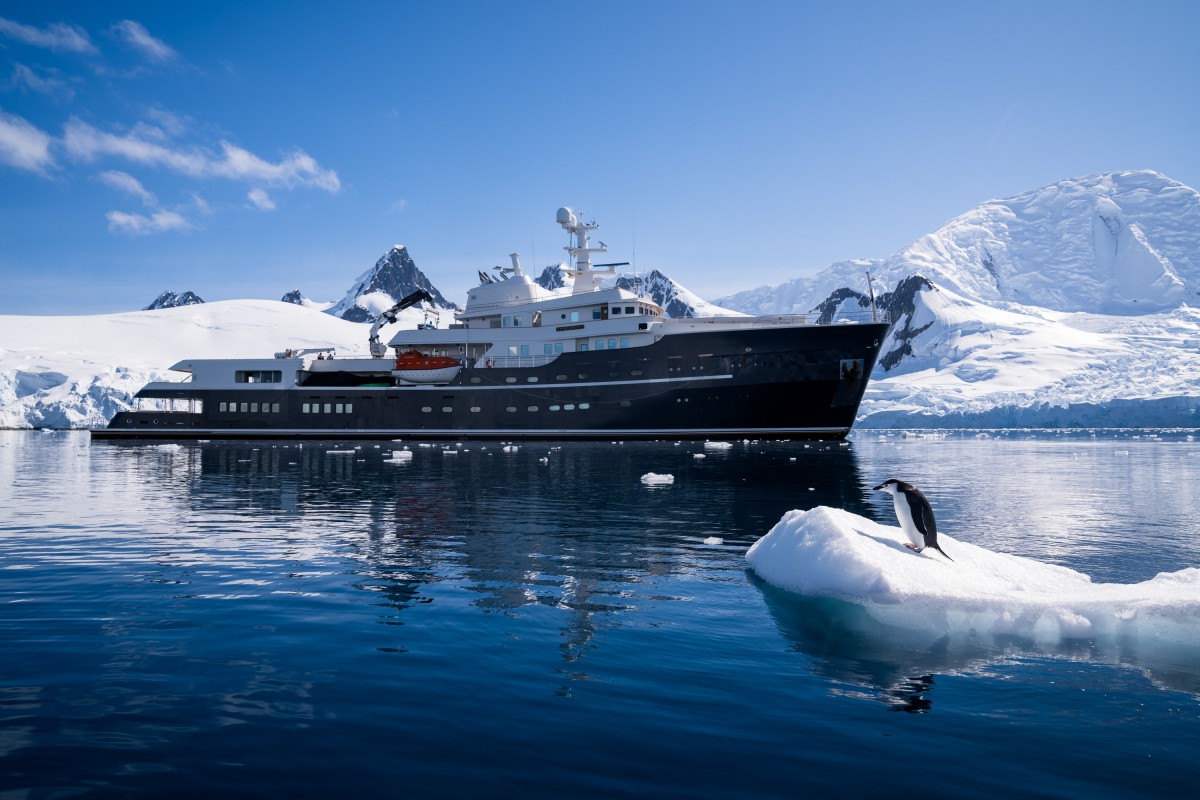
Representative image courtesy of Pelorus Yachting
The modern expedition yacht is changing. Owners increasingly seek vessels capable of operating in Greenland, Antarctica and other remote regions far beyond the traditional cruising grounds of the Mediterranean and Caribbean. They want greater range, greater autonomy and greater capability. With every new generation, expedition yachts are becoming larger, more complex and more ambitious.Yet while the vessels themselves continue to evolve, the source of expertise used to design, build and evaluate them often remains remarkably unchanged.
This raises an important question. As expedition yachts become increasingly sophisticated maritime assets, are owners drawing upon the widest possible pool of expertise when making critical decisions? Or is the industry overlooking valuable knowledge that already exists within the commercial maritime sector?
Having spent more than two decades at sea in command positions, followed by senior roles in fleet management, safety management and executive leadership, I have had the opportunity to observe both worlds closely. From that perspective, I increasingly see a convergence taking place between traditional yachting and professional maritime operations. And I believe yacht owners should take notice.
When a yacht resembles a ship
Traditionally, superyachts and commercial vessels occupied very different corners of the maritime world – one focused primarily on luxury and lifestyle, the other on operational performance, reliability and functionality. Today, many expedition yachts sit somewhere between the two.
A beautiful yacht remains a beautiful yacht, but a true expedition vessel must also perform when conditions become demanding, support is distant and failure is not a convenient option.
A modern expedition yacht designed for operations in Greenland, Antarctica or the Northwest Passage faces challenges remarkably similar to those encountered by advanced commercial vessels. Issues such as redundant propulsion, specialised ice-class structures, energy management, heat recovery, maintainability and crew efficiency become just as important as aesthetics and guest comfort.
The further a vessel operates from established infrastructure, the less forgiving technical shortcomings become. In these environments, operational reality quickly separates genuine capability from marketing language. A beautiful yacht remains a beautiful yacht, but a true expedition vessel must also perform when conditions become demanding, support is distant and failure is not a convenient option.
The changing nature of expedition yacht ownership
Most yacht owners are highly accomplished individuals. They have built businesses, completed acquisitions, managed complex investments and taken calculated risks throughout their professional lives. Yet very few possess extensive maritime backgrounds. As a result, owners often rely heavily on external advice when evaluating shipyards, project proposals, technical concepts and construction contracts.
That reliance is entirely natural. The challenge is that expedition yacht projects are becoming increasingly specialised, while many of the associated risks remain difficult for owners to identify. The consequences of early project decisions can remain with an owner for decades – the choice of shipyard, the contract structure, the vessel’s operational philosophy and the technical solutions selected during design. Each of these decisions influences not only construction costs, but also reliability, maintenance requirements, operational flexibility, resale value and long-term ownership satisfaction.
In my experience, many of the most significant risks aren’t discovered during construction, they emerge years later, when operational reality begins testing assumptions made during the concept stage.
The assumption that every large expedition yacht must automatically begin and end within traditional yacht-building circles deserves closer examination.
The commercial maritime sector’s untapped value
For generations, commercial shipyards have been building vessels designed to operate under demanding conditions. Particularly in Northern Europe and Norway, shipyards have developed extensive expertise delivering highly specialised vessels that must perform reliably in harsh environments, remote locations and tightly regulated operating conditions. These yards routinely build offshore support vessels, fisheries vessels, research vessels, coastguard vessels and other technically advanced ships expected to operate globally and consistently.
Their priorities are often different from those traditionally associated with yacht construction. The emphasis tends to be placed on engineering integration, maintainability, operational efficiency, crew functionality and lifecycle performance. As expedition yachts continue to increase in size and capability, those strengths become increasingly relevant.
This is not an argument against traditional yacht builders, far from it. The yacht sector remains unparalleled when it comes to luxury, craftsmanship, owner experience and lifestyle integration. However, the assumption that every large expedition yacht must automatically begin and end within traditional yacht-building circles deserves closer examination.
As projects become larger and more technically sophisticated, owners may benefit from considering what commercial shipyards and commercial maritime expertise can bring to the table.
Expertise and experience are not always the same thing
One of the realities of modern yacht ownership is that owners rarely suffer from a shortage of advice; if anything, they are surrounded by it. Throughout a project, owners may receive guidance from designers, brokers, consultants, project managers, captains, shipyards and technical specialists. Many provide exceptional value, so the challenge isn’t finding advice, the challenge is assessing it.
Over the years, I have often observed a significant difference between industry reputation and operational experience. Both matter, but they are not always the same thing. In commercial shipping, credibility is often built through operational accountability. Decisions are tested by real-world consequences. Systems either perform as intended or they do not. Designs either support operations or they create challenges. Projects either deliver practical value or shortcomings eventually become apparent.
Yachting is no different, yet owners are sometimes presented with concepts that look impressive, sound convincing and receive broad support within the industry, while certain operational realities receive less attention.
As expedition yachts become larger and more ambitious, owners may benefit from access to this wider pool of experience, not because it replaces yacht expertise, but because it complements it.
Questions such as:
• How will this function after five years of operation?
• How easily can crew maintain it?
• What happens when a critical system fails far from support infrastructure?
• What are the long-term operational and financial consequences of this decision?
• Will real-world performance match the promises made during development?
These questions are rarely the most exciting part of any project. They are, however, often among the most important. Throughout my career, I have seen proposals that appeared highly attractive from a marketing perspective but raised immediate concerns when viewed through the lens of vessel operation and practical maritime experience.
Equally, I have seen unconventional approaches initially dismissed because they sat outside traditional yachting norms, despite offering genuine operational advantages. The lesson is simple – experience and expertise should be evaluated on merit, not solely on tradition.
Looking beyond traditional yachting circles
Perhaps the most overlooked asset within commercial shipping and offshore operations is the network of expertise developed around those industries. Over more than twenty years at sea and ashore, I have worked alongside shipowners, classification specialists, naval architects, offshore project managers, shipyard executives and technical professionals responsible for some of the most capable vessels operating today. Many never work on yachts, yet the challenges they solve every day are becoming increasingly relevant to expedition yacht projects. Their expertise encompasses project execution, vessel operations, classification requirements, shipbuilding contracts, technical risk management, major conversions and operations in some of the harshest environments on earth.
As expedition yachts become larger and more ambitious, owners may benefit from access to this wider pool of experience, not because it replaces yacht expertise, but because it complements it.
The real question is whether owners of increasingly capable expedition yachts can afford to overlook decades of operational knowledge developed elsewhere in the maritime industry.
Learning from two worlds
This discussion should not be framed as a choice between yacht expertise and commercial maritime expertise. The most successful expedition yacht projects are unlikely to emerge from one discipline alone. Instead, they will increasingly require a combination of both.
The yacht industry contributes exceptional understanding of owner expectations, luxury standards and on-board experience. The commercial maritime sector contributes decades of knowledge relating to vessel operations, engineering, classification, project execution and operational reliability. The greatest opportunities may lie where these disciplines intersect.
Conclusion
The expedition yacht sector continues to push boundaries. Vessels are travelling further, operating longer in remote regions and undertaking missions that would once have been considered firmly within the domain of commercial shipping.
As this evolution continues, owners may benefit from asking a simple but important question: Are we drawing expertise from the widest possible pool of experience? The question isn’t whether traditional yacht expertise remains essential, it undoubtedly does. The real question is whether owners of increasingly capable expedition yachts can afford to overlook decades of operational knowledge developed elsewhere in the maritime industry. Bringing commercial maritime expertise into a project during the concept, feasibility and contract specification stages, long before steel is cut, may be one of the most effective ways of reducing long-term technical and operational risk.
The future of expedition yachting is unlikely to be shaped solely by tradition; it will be shaped by those willing to combine the best ideas, the best people and the best practices from across the wider maritime industry.
The most successful owners may not be those who choose between yacht expertise and commercial maritime expertise. They may be those who recognise the value of bringing both together before the first design is drawn, the first contract is signed and the first piece of steel is cut.
NEW: Sign up for SuperyachtNewsweek!
Get the latest weekly news, in-depth reports, intelligence, and strategic insights, delivered directly from The Superyacht Group's editors and market analysts.
Stay at the forefront of the superyacht industry with SuperyachtNewsweek
Click here to become part of The Superyacht Group community, and join us in our mission to make this industry accessible to all, and prosperous for the long-term. We are offering access to the superyacht industry’s most comprehensive and longstanding archive of business-critical information, as well as a comprehensive, real-time superyacht fleet database, for just £10 per month, because we are One Industry with One Mission. Sign up here.
Related news
The yacht is now part of the owner’s online reputation
Tony McChrystal works with owners, family offices and senior executives on their online reputation and privacy. This is his take on reputation management
Opinion
What it really costs to run a superyacht
Will Christie, Founder and CEO of Christie Yachts, debunks the myths and presents the true facts and figures
Owner
The right to vanish
Benjamin Maltby, lawyer and General Secretary of The Owners Club, offers a practical guidance on owners’ right not to be tracked through AIS
Owner

So you want to build a yacht?
Moving from serial charterer to first-time owner can seem a natural progression, but commissioning a large yacht demands a very different kind of experience
Owner
The Superyacht Report 230: Owners Focus – Out Now
From a guide to the do’s and don’ts for new yacht owners to who has the authority to act on behalf of an owner, the latest TSR is a must-read
Owner
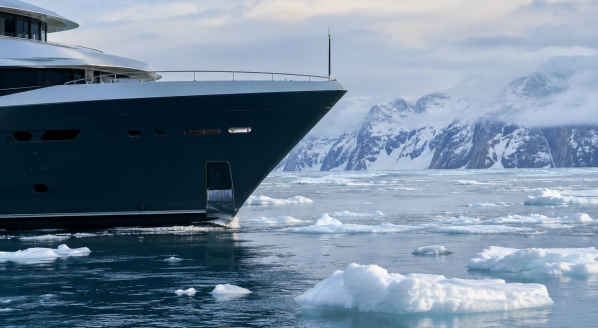
Expedition-ready or marketing-ready?
The operational reality behind the label – why capability is not the same as readiness
Crew
Related news
What it really costs to run a superyacht
4 weeks ago
The right to vanish
1 month ago
So you want to build a yacht?
1 month ago
The Superyacht Report 230: Owners Focus – Out Now
2 months ago
Expedition-ready or marketing-ready?
2 months ago
NEW: Sign up for
SuperyachtNewsweek!
Get the latest weekly news, in-depth reports, intelligence, and strategic insights, delivered directly from The Superyacht Group's editors and market analysts.
Stay at the forefront of the superyacht industry with SuperyachtNewsweek