
Command on the hard
A single word, “refit”, describes projects that differ from one another by a factor of 50 and are rarely resourced properly …
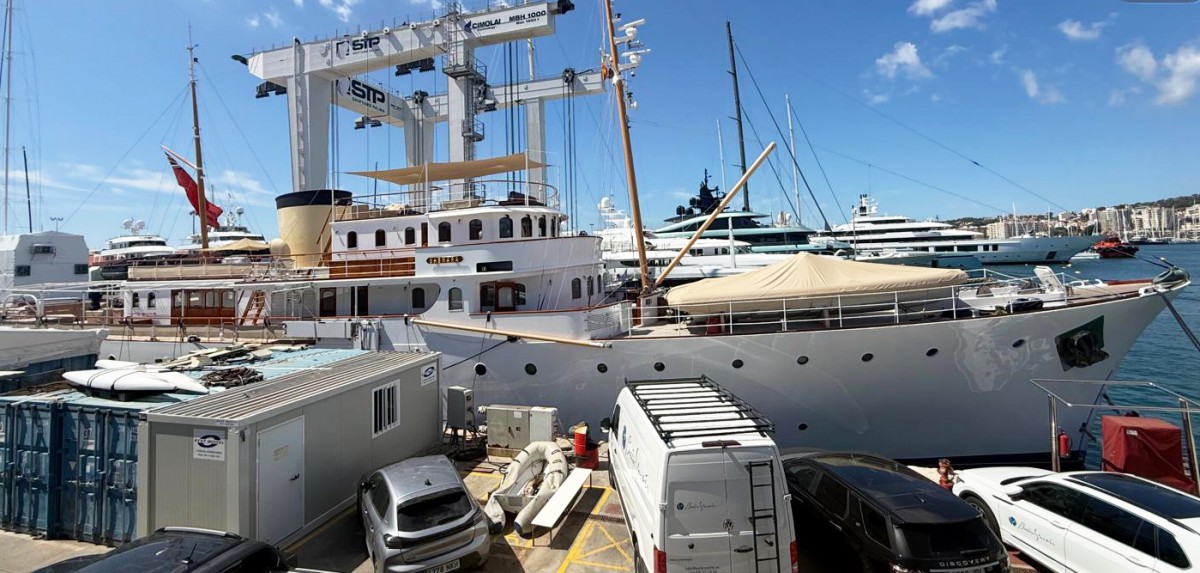
Command at sea rests with the captain, and departmental responsibilities flow down the chain through the heads of department. The authority that makes this model workable struggles to translate once contact has been made with many shipyards.
We use a single word, “refit”, to describe projects that differ from one another by a factor of 50 and we rarely resource any of them properly for the job they actually are.
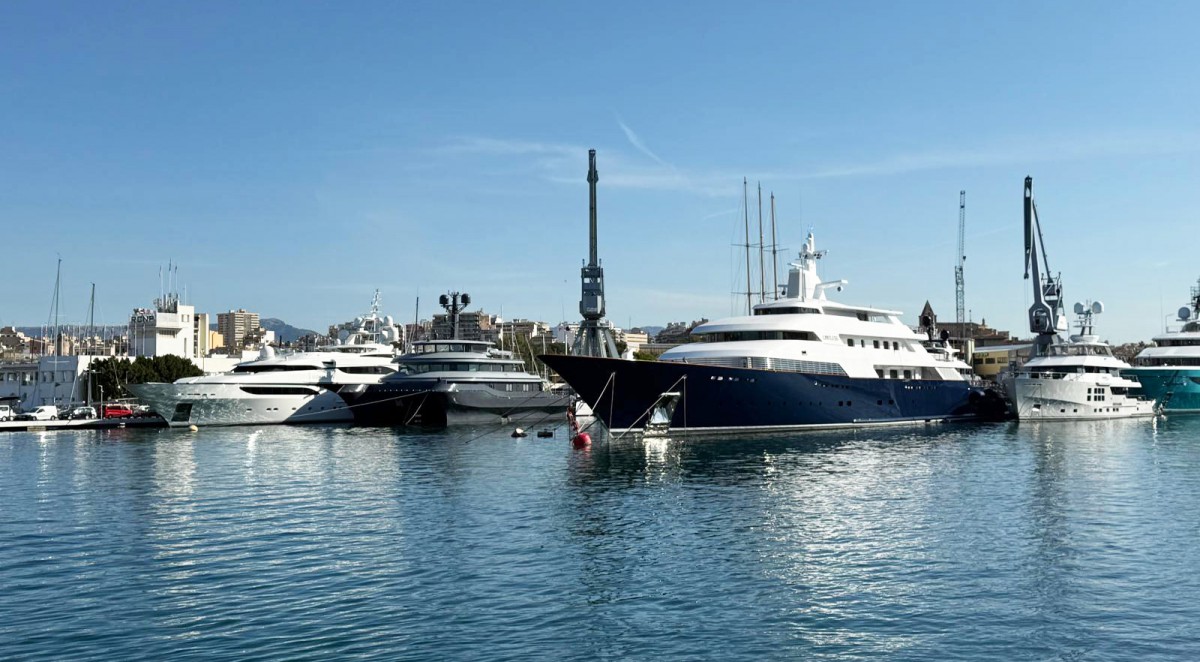
As I write this I am at my desk at STP in Palma, looking out at the 80 yachts on the hard and along the docks. It is mid-August, the quiet before the autumn storm, and by October there will be 120 hulls here and around 2,000 crew and contractors moving between them.
Below my office is the Dock Bar, full from dawn until dusk with the people who do this work, and not a day passes without a story being shared. What strikes me, season after season, is how much of whether a project succeeds comes down to the things nobody costed at the outset: leadership, mentorship and training, whether that happens on the dock, on the hard or in a classroom.
The trouble starts with the vocabulary. We say “refit”. Underneath that single word sit a fortnight alongside clearing warranty snags, a 10-year class survey with its own regulatory clock, a seasonal paint refresh with new soft furnishings, a change of owner refit where a new family’s expectations arrive with the new flag and the hull gets opened up and it becomes messy, and a full rebuild, which is a new build in camouflage.
All of them are run by the same people under the same assumptions. The distances between them are enormous – a 40-metre refit might be eight weeks and €250,000. An 80-metre refit might be 16 months and €15 million. One noun, two orders of magnitude.
The noun is what gets budgeted and staffed. Mention refit in a meeting with the management company or the family office and most in the room hear the eight-week version.
The noun is what gets budgeted and staffed. Mention refit in a meeting with the management company or the family office and most in the room hear the eight-week version. The technical scope eventually gets written down in detail, because the yard insists on it. The leadership requirement never does, because the word has already told everybody there isn’t one.
There is a requirement, and it begins with what a shipyard quietly removes. Command at sea rests on three things that are rarely examined because they are rarely absent: a hierarchy everyone accepts, backed by regulation and, on larger vessels, by the ISM system; a shared purpose in the form of a passage or a charter, which orders the day without anyone having to argue for it; and physical control of the working and living space on board.
A yard period removes all three at once and leaves the responsibility exactly where it was. The yard’s project team runs the site, contractors answer to their own bosses and their own schedules and the class surveyor answers to nobody on board. The captain’s authority extends to their own crew, and even that thins once the team move ashore, work nine to five and take on tasks that nobody mentioned when they joined this industry.
What replaces positional authority is influence, and this is a different skill with a different failure mode. At sea, a captain who is not being listened to has a discipline problem with a clear route to resolution. In a shipyard there are limited routes. The subcontractor who has fitted a valve where it cannot be reached does not report to them. Escalating hardens positions; leaving it alone means the problem is now built in.
The expensive damage is the accumulated cost of a person with responsibility and no authority deciding, hundreds of times over, whether this particular thing is worth a fight. Nothing in an MCA or STCW pathway addresses that. We have quietly filed it under personality, and it shows up most clearly on the jobs nobody expected to be difficult.
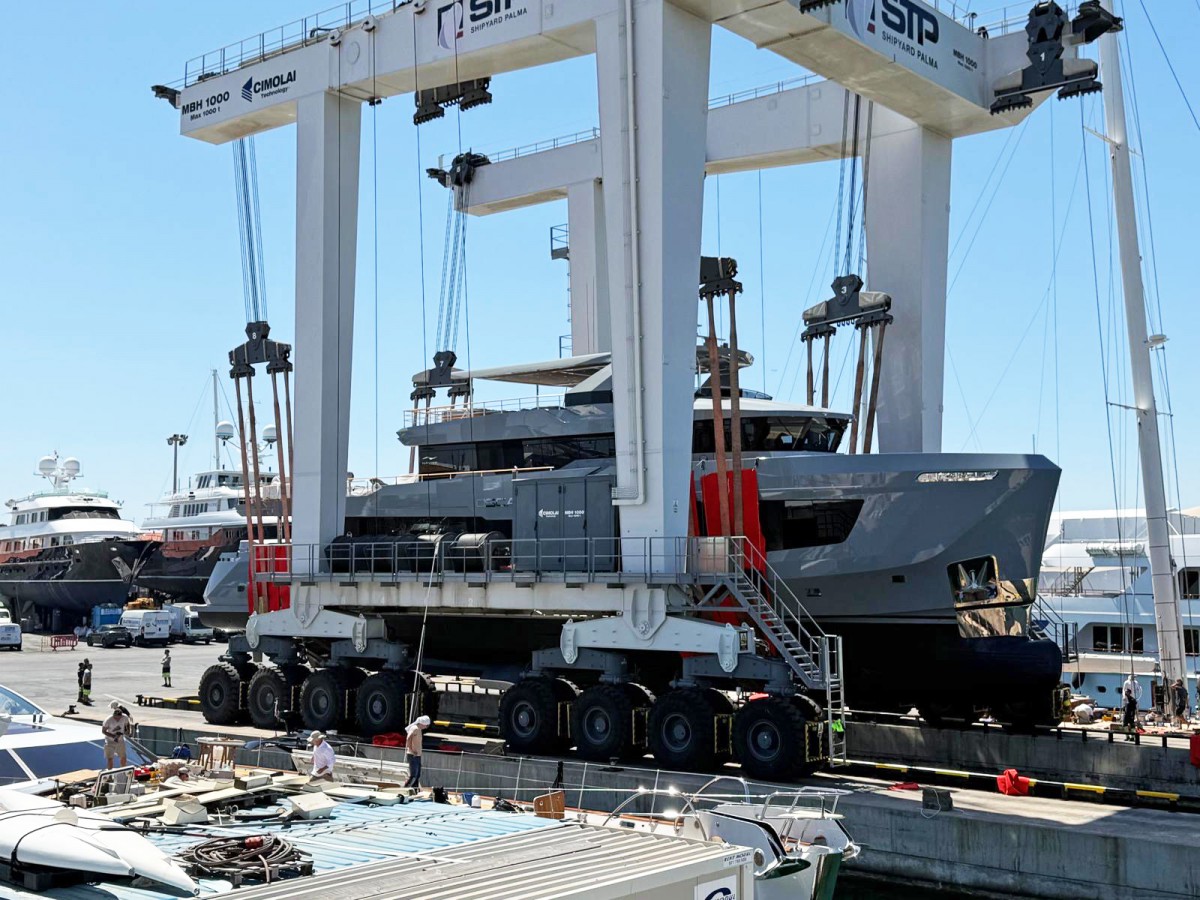
Halfway through, a head of department rotates out and their opposite number rotates in with a different view. Settled decisions are quietly reopened, a signed-off finish is suddenly not to someone’s taste, and the costs compound. The €250,000 refit is now €500,000.
A yacht comes in for what is booked as a light refit: €250,000, eight weeks, nothing structural. Then reality asserts itself. The captain and heads of department are not managing one contractor or two. They are the single point of contact for 15, 30, sometimes more, each a separate business, none aligned with the others, each one with its own idea of what finished looks like.
Then add in rotation – halfway through, a head of department rotates out and their opposite number rotates in with a different view. Settled decisions are quietly reopened, a signed-off finish is suddenly not to someone’s taste, and the costs compound. The €250,000 refit is now €500,000. The season slips, the owner is frustrated, the accountant is furious, and all of it lands on the people who were never given the authority to prevent most of it and will carry the blame for all of it.
Crew are not incapable of this work; we simply ask the wrong thing of them. A refit is a project and projects need professional management. Excellent companies exist that do exactly this, and yet most refits are still run by the yacht’s senior team on top of their day jobs.
None of this stops at the captain – the chief engineer reviewing machinery installations, the chief officer tracking exterior works, the chief stewardess signing off finishes and storage. Each is holding a professional line with contractors who do not report to them, on decisions that will govern their department for a decade. They are usually the first to see a problem and the least equipped to raise it, being a step removed from the meetings where it would land.
And almost none of it happens at home. It happens at STP, at MB92 in Barcelona and La Ciotat, at Pendennis, Lusben, Amico, Lürssen and Oceanco. English is the language of the contract and rarely the language of the shop floor. A chief engineer negotiates a warranty position through a translator. A chief stewardess explains a lacquer finish to a joiner with a phone and a photograph. The vocabulary is precise, a near miss in translation costs a rebuilt bulkhead, and nobody is trained for that either.
Then there is the part that never appears on a spreadsheet: the crew you let go do not come back.
They take a berth on a boat that keeps its people, and they tell other crew why.
Then there is the crew, who arrive depleted from a hard season into a period where the routine that structures life at sea has evaporated. Junior crew in particular lose what made the job tolerable, which was movement and novelty. They left home to go to sea and find themselves in a shared flat 20 minutes from what is in essence a security-controlled industrial estate. Attrition follows, and it costs well beyond recruitment fees. Yards themselves report crew turnover as one of the main obstacles to delivering on time, because each new arrival brings a slightly different understanding of what was agreed. Crew continuity is a commercial issue for the project, and the person who most determines it is the captain.
Which is what makes the next part so difficult to watch. The boat is going in for six months, so the sous chef and the junior deck and interior crew are let go to save money. That decision is taken in a meeting by people who heard their version of the word, and the captain is left to lead a yard period with a crew chosen by a spreadsheet.
The arithmetic does not survive contact with that spreadsheet either. There is notice to pay, repatriation to fund and accrued leave to settle. Then agency fees on the way back in, medicals, visas, administration and on-board orientation before the replacement crew member properly contributes at the level of the person released. The saving is a few months of junior salary. The true bill arrives during sea trials or the first owner’s trip, which is the worst possible moment to be running in a crew who have never seen or worked on the boat.
Then there is the part that never appears on a spreadsheet: the crew you let go do not come back. They take a berth on a boat that keeps its people, and they tell other crew why. And the junior released to save six months’ wages is precisely the person who would otherwise have spent those months watching a hull opened up, machinery lifted out and a vessel signed back into service. There is no other classroom for that.
There is a serious counter-position here, and it deserves weight rather than a passing nod. Some experienced people would say the answer is to stop asking captains to do this at all. The skills needed to run a vessel at sea and to lead a shore-based construction project are genuinely different, the owner’s representative model exists precisely because the roles should be separated and training captains to be better at yard leadership merely entrenches a bad structure.
The objection has real force. Separating the project management function is reasonable, often overdue, and increasingly hard to avoid on the larger projects. It also runs into the fact that the crew still need leading and the person responsible for the vessel afterwards is usually best placed to do it. Hand the project to a professional and you have solved the project; you have not solved the year.
Which leaves the question of what that year could be. The answer costs almost nothing and asks only that somebody decides on it before the boat comes out of the water. A six-month yard period is the only stretch of the year with predictable hours, no guests and several hundred specialists on site who know things your crew do not.
All of us need to be honest about the word, so that a six-month “refit” is not resourced as though
it were a fortnight alongside.
In practice that means delegation into acting roles for the duration – the bosun as acting chief officer, the second engineer owning a subsystem end to end, the second stewardess running the inventory and the storage plan. It means every junior assigned to a head of department as a mentor, with objectives written down rather than assumed. A chief engineer walking a deckhand through a generator removal is worth more than most courses and costs nothing but the intention to do it. And it means formal training landing where it is useful, because the working vocabulary of a project is almost entirely absent from the certification pathway – scope, specification, change control, critical path scheduling, contracts, class compliance, snagging, commissioning and handover. The failure modes are just as teachable, and they recur so reliably you could set a watch by them.
The rest is a matter of who pays attention. Owners, family offices and management companies need to budget for crew development during a yard period, because at present it competes with the worklist and loses. And all of us need to be honest about the word, so that a six-month “refit” is not resourced as though it were a fortnight alongside. A vessel can be delivered on specification, on budget and on time, and still arrive with a crew who spent that time managed by someone given the title and none of the tools, alongside three juniors who were sent home to save a rounding error.
I will watch a few hundred of these projects begin this autumn from my window here in Palma. The ones that go well will not be the ones with the largest budgets or the shortest worklists, they will be the ones where somebody understood, from the day the boat was booked to be hauled out of the water, that this is not command in its normal sense, so it cannot be run as though it were.
It needs a structured refit crew plan: mentorship, objectives, KPIs, a budget with movement in it, time scheduled for crew to rest, learn and play, and a delivery date somebody actually believes in.
The Crew Academy’s fully accredited IAMI GUEST diplomas in Refit Management and New Build Management prepare captains and heads of department to lead refit, survey and construction projects. Details at www.yachtcrew.uk
We will shortly be commissioning content for our Q4 edition, focusing on Refit, so if you have something worthwhile and informative to add to the debate, then contact us here.
As an open-source platform we offer an industry-wide invitation to anyone and everyone in our sector to share their knowledge, experience and opinions. If you have an interesting and valuable contribution to make, and would like to join our growing community of guest columnists, share your ideas with us at newsdesk@thesuperyachtgroup.com
Profile links
Yacht Crew Recruitment & Training
NEW: Sign up for SuperyachtNewsweek!
Get the latest weekly news, in-depth reports, intelligence, and strategic insights, delivered directly from The Superyacht Group's editors and market analysts.
Stay at the forefront of the superyacht industry with SuperyachtNewsweek
Click here to become part of The Superyacht Group community, and join us in our mission to make this industry accessible to all, and prosperous for the long-term. We are offering access to the superyacht industry’s most comprehensive and longstanding archive of business-critical information, as well as a comprehensive, real-time superyacht fleet database, for just £10 per month, because we are One Industry with One Mission. Sign up here.
Related news

Compliance, governance and the value of certainty
Jo Assael, Yachts Commercial Director of IRI | The Marshall Islands Registry, explains how conformance is integral to asset credibility and value
Opinion

How digitalisation is transforming the yachting sector
Beyond AI: New MB92 report explores the future of intelligent refit
Opinion

Where crew readiness is really tested
Captain Aggeliki Monastirioti explores the gap between formal qualifications and practical performance once crew step on board
Opinion

Are we building for compliance or for crew?
What actually brings stability to a crew and why the answer has as much to do with how we house people as how we lead them
Opinion

Maritime workforce not keeping pace with digital change, warns new global study
Lloyd’s Register Foundation report calls for urgent action on training, regulation and investment
Crew

Between command and connection
A reflection on authority, connection and what the superyacht industry must confront to secure its future
Opinion
Related news
Compliance, governance and the value of certainty
2 months ago
Where crew readiness is really tested
3 months ago
Are we building for compliance or for crew?
3 months ago
Between command and connection
4 months ago
NEW: Sign up for
SuperyachtNewsweek!
Get the latest weekly news, in-depth reports, intelligence, and strategic insights, delivered directly from The Superyacht Group's editors and market analysts.
Stay at the forefront of the superyacht industry with SuperyachtNewsweek