The 300 steps
A call to arms on how we recruit, on-board and retain the incredible people who run our yachts…
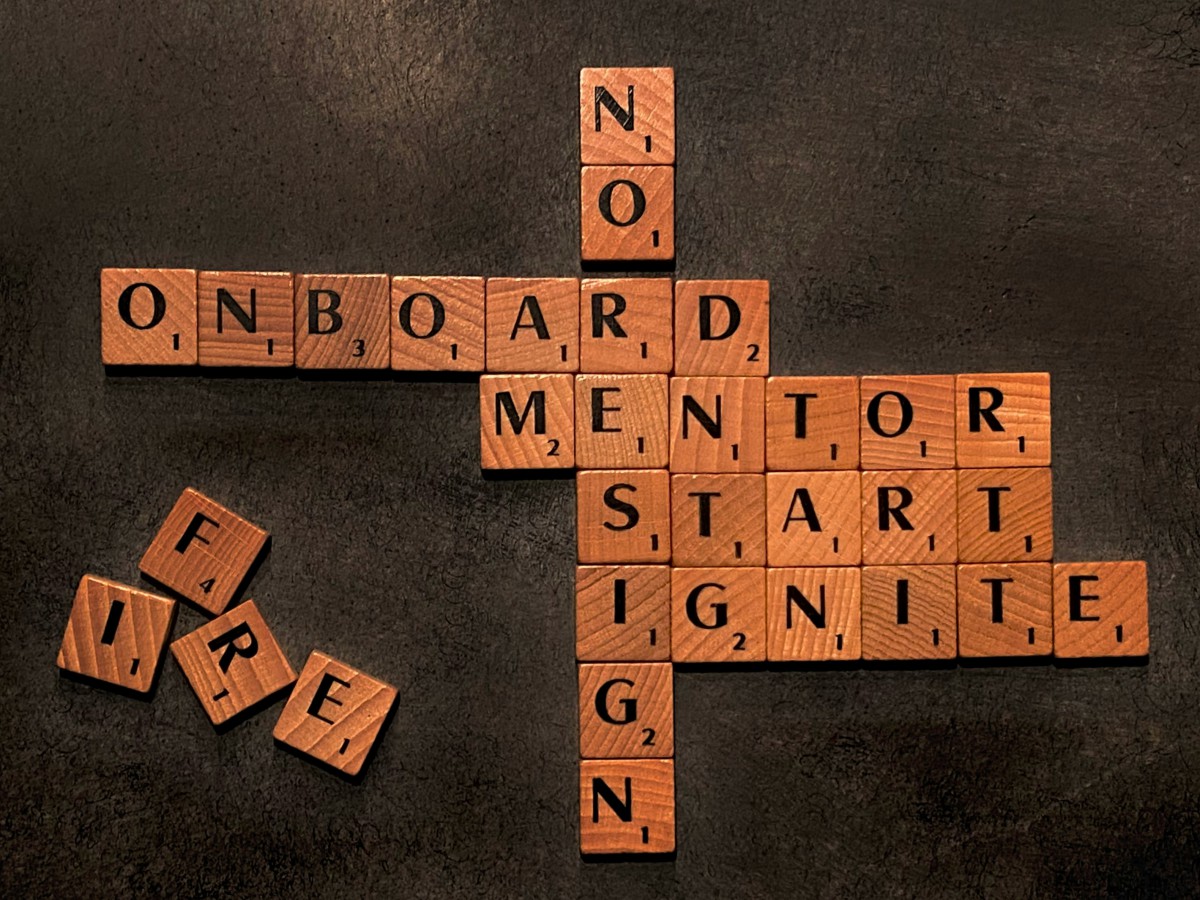
As another Mediterranean season winds down, I have been trying to put my finger on why 2026 felt so hard for so many crew. The answer is not the weather, the charter calendar or the owners, it is the way they are recruited, the way they are on-boarded and the way they are let go.
The industry has a broken recruitment system and the evidence is everywhere. Crew are treated as disposable, season after season, leaving a wake of good people behind who should never have left the industry. We expect those same people to be experts in leadership, management, finance, compliance, employment law, mental health, bullying and harassment, GDPR, privacy and security, yet outside the mandatory tickets we train them in almost none of it. Everything is done in a rush. Nobody stops to think about the culture on board, the ethos of the vessel or the team that a new crew member is about to join.
I have lost count of the recruitment adverts I have read (and I include some from my own team across yachting and private households) “Chief Stew. Rotation. €6,000. Dual season”. What does that tell anyone? Nothing about the person being sought, nothing about the team and nothing about the culture. What is the ethos of the vessel? What is the owner like? Who are the crew, what nationalities and how long have they stayed? What does the itinerary really look like? Candidates deserve the truth, not the half-truths and convenient omissions that get someone on board in April and off again by August.
Step seven of our HR & Recruitment framework asks for exactly this: an advertisement that carries the full job description alongside the yacht’s culture, the team dynamics, the owner’s preferences, the cruising grounds and the seasons. It is hardly a radical idea but it is simply rarely done.
The cost of getting it wrong is enormous and most of it does not appear on an invoice. Plenty of what I teach on this subject has been borrowed by others over the years and they are welcome to it. But if you want to understand what sits underneath it, come and sit in one of my HR, recruitment and retention classes and listen to the stories. They are stories of poor leadership, of toxic individuals and of the casual disposal of junior crew, mid-tier crew, heads of department, captains and senior leaders alike. Having heard them, it’s hard to escape the conclusion that each of us has a moral obligation to stop talking around the problem and start fixing it.
People like to say the younger generation is ‘woke’. I don’t think so. I think they decided that they should not have to put up with the bullying, the harassment, the petty hierarchies and casual cruelties that have been accepted as part of the job, for too long.
We should value our newcomers and our juniors far more than we do. This year alone I have mentored six juniors. I have walked the docks with them and introduced them to bosuns, captains, chefs, chief stews and pursers. It takes time and effort, and it is worth every hour, because the job is to get those new crew, brimming with enthusiasm and potential, onto the right boats, into the right teams, under the right leaders and mentors. They need to be nurtured. A bad experience in their first season might spell the end of a career, rather than the start of something great. A newbie is someone in their first two years in yachting because until you have four seasons under your belt then you know very little about yachts, yachting and all the subtle nuances that make this industry so very special.
People like to say the younger generation is ‘woke’. I don’t think so. I think they decided that they should not have to put up with the bullying, the harassment, the petty hierarchies and casual cruelties that have been accepted as part of the job, for too long. One of my own children is hoping to join yachting next year and I have a moral obligation to make yachting a safe, fun and professional place for him, and those like him, to work in.
In the past week alone, I have dealt with a string of complaints describing conduct that would not be tolerated in any other industry. We should not tolerate it in this one. Yachting leads the way in so many fields: from luxury hospitality to engineering and technology. Why not in how we treat our people?
The simplest change, and the hardest, is to take more time. Time to define the role, time to define the team, time to set down the ethos, values and standards of the people who run these extraordinary vessels. The first eleven of our 300 hundred steps happen before a single candidate is interviewed: defining the need, writing a proper job description, agreeing selection criteria with the head of department, aligning the budget and checking the package against comparable yachts.
Then we need due process. Every candidate deserves an equal opportunity to show what they can do and that does not happen on a five-minute WhatsApp call at six in the morning. A proper interview has a panel, a scorecard, prepared questions, a quiet space or properly tested technology, and enough time for the candidate to ask questions of their own. Recruiting the best people takes longer than most yachts are prepared to allow. It always will.
Having found the right person, we then lose a remarkable number of them between acceptance and arrival. The contract turns up a week late, a month late, sometimes after the crew member has already joined. That is more than discourteous. Under MLC 2006 a seafarer should have the chance to review and sign their employment agreement before they start work, and a yacht that cannot produce one on day one is telling its newest crew member exactly how much they matter.
These individuals are there to take care of your guests, to become a part of your team; make them feel part of it from day one.
Then there is the arrival itself. Too many crew join late on a Sunday night, in the rain, somewhere in Italy, to a dark boat and an unlit passerelle with nobody there to meet them. We would never welcome a charter guest or an owner that way, so why do we accept it for the people who will look after them? The on-boarding section of the framework runs from step 63 to step 107 for a reason: the welcome guide, the cabin and yacht tour, the introductions, the on-boarding buddy, the essential documentation, the first-day feedback, the HOD check-in and the 30-day review. Roll out the red carpet. These individuals are there to take care of your guests, to become a part of your team; make them feel part of it from day one.
And once crew are on board, do not trap them in a toxic workplace. Let them thrive. Mentor them, buddy them up, give them peer reviews and surveys, hold stay interviews rather than waiting for the exit interview, and give them a genuine way to tell you what is going wrong before they walk down the passerelle for the last time.
I have just finished teaching a two-hour lecture on the HR module for our Yacht Owner’s Representative Programme (YORP), explaining the marketplace to people who will soon be responsible for crewing yachts on an owner’s behalf.
The point I always land on is that yachts compete with one another for the best people, and that competition is about to become a great deal harder, but no one understands that they have to compete aggressively to stand out from the rest.
Picture an empty warehouse with four white, blank walls. On the wall in front of you, pin the general arrangement drawings for every one of the more than 900 yachts currently in build, and highlight in red every bunk that will need a human being in it. Add the rotational crew those yachts will require. You are looking at a wall of 20,000 red bunks.
Turn around. On the wall behind you, pin the GAs of the 7,000 or so yachts of 25 metres and above already in operation. Highlight every bunk in green, and double up for rotation. Here is the uncomfortable truth: currently the only way to fill the red wall is to take from the green.
Now turn to your left. That wall is orange, and it belongs to our newcomers, the young people coming into yachting. Our job is to direct them onto those new builds and into the places left empty on the green wall, and to give them a real chance when they get there.
Turn to your right. That wall is blue. It belongs to the experienced crew who have been left on the sidelines due to age despite years of knowledge and expertise. We should be valuing them, bringing them into the operational management of vessels, into family offices and management companies, and letting them pass on what they know.
Spin around slowly and you see red, green, orange and blue. That is yachting. We cannot afford to leave any colours behind.
If every recruitment agency were paid only once a placement had lasted two years, I believe 80 per cent of them would be out of business.
If we do not fix this collectively, the number of single-person recruitment agencies will simply keep growing, with every former stew and deckhand setting one up. The problem is not that they exist, it’s that an under-qualified recruiter cannot assess an under-qualified candidate. They cannot spot the warning signs in a reference, probe the gaps in a CV, or tell a head of department that the person they want is the wrong fit for the team. Bad placements follow, tenures are short, and the same cycle starts again. The 22-year-old on Instagram recruiting a rotational captain for a 60-metre yacht is not the cause of this. We are, for accepting it.
Recruitment should be led by trained professionals, by former heads of department who understand the roles they are filling, working to a brief you have properly defined and finding you the best people rather than the quickest fee. I will say something that will not make me popular in my own sector; if every recruitment agency were paid only once a placement had lasted two years, I believe 80 per cent of them would be out of business.
It is time to step up. Let us follow the process, all 300 steps of it, from defining the need through to the exit interview and the lessons we take from it. Let us take the time to recruit properly, on-board professionally and retain the people we have worked so hard to find. And let us value every one of them: the newcomers, the mid-tier crew, the heads of department, the senior crew and the respected elder generation who built this industry in the first place.
The yachts are being built and the bunks are waiting. Whether we fill them with people who stay or people who leave is entirely down to us.
Andrew Roch is the founder of YCRT, a superyacht professional services organisation built around three pillars: recruitment, training and crew wellbeing. Through The Crew Academy, YCRT delivers IAMI and GUEST accredited leadership programmes for captains and senior teams, the Yacht Owner’s Representative Programme, and the New Build and Refit Management Diplomas. The 300 Steps framework underpins The Crew Academy’s HR, recruitment and retention training. This is the fifth article in the Leading from the Top series on leadership in the superyacht industry.
Profile links
Yacht Crew Recruitment & Training
NEW: Sign up for SuperyachtNewsweek!
Get the latest weekly news, in-depth reports, intelligence, and strategic insights, delivered directly from The Superyacht Group's editors and market analysts.
Stay at the forefront of the superyacht industry with SuperyachtNewsweek
Click here to become part of The Superyacht Group community, and join us in our mission to make this industry accessible to all, and prosperous for the long-term. We are offering access to the superyacht industry’s most comprehensive and longstanding archive of business-critical information, as well as a comprehensive, real-time superyacht fleet database, for just £10 per month, because we are One Industry with One Mission. Sign up here.
Related news

What happens on board after the guests go to bed?
A perspective from the crew side of the superyacht industry on professionalism, silence, welfare and the culture created on board
Opinion
What yacht crew are telling ISWAN
The YachtCrewHelp 2025 Annual Review brings together insights from confidential conversations with yacht crew and their families throughout 2025
Crew

The yacht people ask for by name
What reputation do you want your yacht to have five years from now?
Owner


Where crew readiness is really tested
Captain Aggeliki Monastirioti explores the gap between formal qualifications and practical performance once crew step on board
Opinion
Related news
What yacht crew are telling ISWAN
2 weeks ago
The yacht people ask for by name
1 month ago
The familiarisation gap
1 month ago
Where crew readiness is really tested
3 months ago
NEW: Sign up for
SuperyachtNewsweek!
Get the latest weekly news, in-depth reports, intelligence, and strategic insights, delivered directly from The Superyacht Group's editors and market analysts.
Stay at the forefront of the superyacht industry with SuperyachtNewsweek