What happens on board after the guests go to bed?
A perspective from the crew side of the superyacht industry on professionalism, silence, welfare and the culture created on board…

Author disclosure: The Crew Atelier is a crew advisory business supporting current and aspiring yacht crew. This commentary reflects my own perspective, informed by professional experience and conversations with crew. It is not intended to represent the views of every yacht owner, captain, manager or crew member, nor to make findings about any individual vessel or person.
A good crew member becomes very good at making sure the guests never see what happens behind the scenes. They see the champagne arriving at the right temperature, the spotless deck, the perfectly turned-down cabin and the smiling stewardess who seems to have been waiting for exactly that request. They do not see the person who has been awake since before sunrise, the crew member who received difficult news from home or the junior quietly wondering whether another mistake will appear in their next reference.
That is part of professionalism in yachting. Guests are not there to carry our problems. The job is to deliver an experience and good crew take enormous pride in doing that well. But there is a side effect to becoming very good at your job: people can become very good at hiding when they are not OK.
There are many owners and captains who understand this. I have met people who know their crew as people, not simply as positions on a crew list. They notice when someone is struggling, step in when behaviour is not acceptable and fight hard for the people working for them. Those people are part of the reason so many of us love this industry.
The difficult part is that the person being complained about may still be the person in charge
the following morning.
However, there is another reality and pretending it does not exist does not make it disappear. Crew can be shouted at, humiliated, deliberately undermined or threatened with references. Junior crew can become easy targets because they have the least power. Behaviour that would be unacceptable elsewhere can be rationalised as pressure, high standards or simply ‘the way yachting is’. A safety concern can be brushed aside because the person raising it is inexperienced. A complaint can be acknowledged without anything actually changing.
The difficult part is that the person being complained about may still be the person in charge the following morning. If the captain is the problem, who do you call? If the complaint involves someone senior to you, where do you go? What happens if you are still living and working alongside the person involved, or the yacht is offshore?
These are not theoretical questions for everyone.
ISWAN’s YachtCrewHelp 2025 annual review recorded 473 helpline cases. New contacts increased by 75.8 per cent year on year, contacts concerning mental health and wellbeing increased by 55.2 per cent, and contacts relating to abuse, bullying, harassment, discrimination and violence increased by 29.4 per cent. Among crew contacting YachtCrewHelp about those issues, bullying was raised in 61.4 per cent of cases.
These figures do not tell us how common abuse or poor treatment is across the entire superyacht industry. A helpline sees people who have reached a point where they need support. But they do tell us that crew are seeking independent help for these issues in significant numbers.
ISWAN has also published cases involving physical and verbal abuse, sexual assault, bullying and employment disputes. In one case, a stewardess contacted YachtCrewHelp after being abused by a captain and prevented from leaving the yacht. Support was arranged with a local seafarers’ centre so she could get to safety.
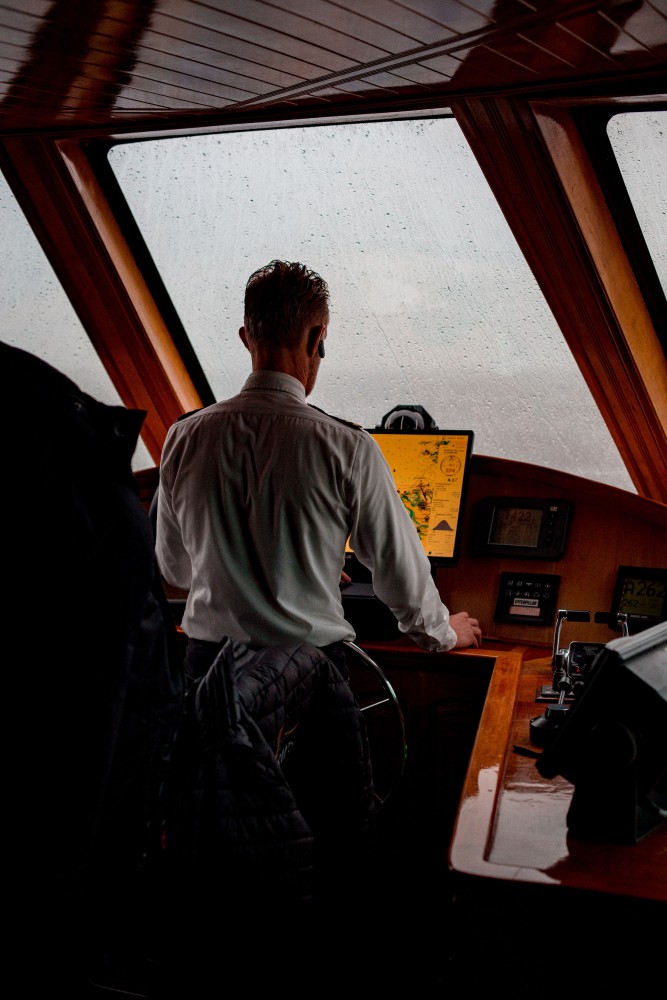
A safety culture is not created by a manual in the crew mess, it’s created by what happens
when somebody actually speaks.
There is another part of this conversation that deserves more attention: what happens after something serious has happened?
On land, you can leave the office. On a yacht, the workplace is also your home. You may share a mess, corridor or crew area with the people involved. The vessel may continue to another anchorage the next morning. Guests still need breakfast. The itinerary does not necessarily stop because something has gone badly wrong between crew.
That is why professionalism cannot be confused with silence. High standards are not the problem – yachting depends on them. Discipline is not the problem either. People need to be held accountable when they are careless, unsafe or repeatedly failing to do their jobs. The question is how that accountability is delivered.
Is someone being trained and given the opportunity to improve, or are they simply becoming frightened of the person giving the instruction? Is a mistake being dealt with properly or used as an excuse to humiliate someone? Is a junior crew member learning why something matters, or learning that the safest option is to keep quiet?
That last question matters to safety. If a junior deckhand sees something that does not look right but knows the last person who questioned an instruction was shouted at, they may decide not to speak. An engineer may notice a problem but worry about being blamed for delays. A stewardess may know a colleague is struggling but fear getting involved.
A safety culture is not created by a manual in the crew mess, it’s created by what happens when somebody actually speaks. Owners have a role too. If you own a yacht, you may never see the worst version of the on-board culture unless you deliberately create a way for people to tell you about it.
A captain can be highly professional when the owner is on board and a very different manager when the owner is away. A junior crew member may experience a situation very differently from the way it is presented upwards. Sometimes an owner hears about a problem only after someone has resigned or gone home.
Ask your crew whether they feel safe raising a concern. Ask whether they know who they can contact if the problem involves their captain. Ask whether they believe they could report something serious without losing their job as a consequence.
The tragic death of 20-year-old South African stewardess Paige Bell in July 2025 also brought the vulnerability of young crew into sharp focus. Bell was found dead aboard the 43-metre yacht Far From It in Harbour Island, Bahamas, and a fellow crew member was charged with murder. The criminal investigation remains ongoing, and it would be wrong to use an unresolved case to make assumptions about what happened. What it does remind us of is the physical reality of working at sea: crew can be young, far from home and living in close quarters with people they did not choose.
We can love yachting and still expect better from it. The yacht is the owner’s; the people are not.
Someone who has experienced something serious should not have to choose between staying
silent and sacrificing their career.
The engines, tenders, generators, navigation equipment and safety systems all have procedures around them because everyone understands what can happen when something important is left to chance. Crew welfare deserves the same seriousness. There should be a clear answer when someone asks who they can call, a process for serious concerns, protection against retaliation and somewhere independent to turn when the person causing the problem is also the person holding the authority.
Culture is rarely created by what is written in a policy; it’s created by what happens when a junior voice is raised, when a mistake is made, when a complaint arrives or when an owner hears something they would rather not hear.
A crew member who knows they can say, “Captain, I think this is unsafe”, without being punished is more likely to speak when it matters. A stewardess who can say, “I’m not OK” and know that someone will listen is less likely to feel completely alone. Someone who has experienced something serious should not have to choose between staying silent and sacrificing their career.
Professionalism is an admirable quality, but professionalism should never be mistaken for permission to ignore someone’s suffering.
If you are reading this from a crew cabin somewhere tonight, you do not have to know exactly what happens next. If you are struggling, tell someone. If you are being bullied or harassed, you do not have to convince yourself it is simply part of the job. If something has happened to you, it is not your fault. If you are afraid to speak within the yacht’s hierarchy, find someone outside it. Start with one conversation, one message or one phone call.
You may be very good at carrying on, bu you should not have to carry it all alone.
Right of reply: This commentary reflects the author’s perspective and is intended to contribute to constructive discussion within the superyacht industry. Individuals or organisations referenced in relation to a position or issue are welcome to provide clarification, context or a response.
As an open-source platform we offer an industry-wide invitation to anyone and everyone in our sector to share their knowledge, experience and opinions. If you have an interesting and valuable contribution to make, and would like to join our growing community of guest columnists, share your ideas with us at newsdesk@thesuperyachtgroup.com
NEW: Sign up for SuperyachtNewsweek!
Get the latest weekly news, in-depth reports, intelligence, and strategic insights, delivered directly from The Superyacht Group's editors and market analysts.
Stay at the forefront of the superyacht industry with SuperyachtNewsweek
Click here to become part of The Superyacht Group community, and join us in our mission to make this industry accessible to all, and prosperous for the long-term. We are offering access to the superyacht industry’s most comprehensive and longstanding archive of business-critical information, as well as a comprehensive, real-time superyacht fleet database, for just £10 per month, because we are One Industry with One Mission. Sign up here.
Related news

CHIRP Report: Report of serious safety concern
When recreational swimming from a drifting vessel posed foreseeable hazards, particularly during entry and exit from the water
Crew
What yacht crew are telling ISWAN
The YachtCrewHelp 2025 Annual Review brings together insights from confidential conversations with yacht crew and their families throughout 2025
Crew
The new MCA yacht unlimited CoC is here
The MCA introduces a new pathway to the industry’s largest vessels based entirely on qualifying yacht service and management training
Crew
The crew management conundrum
Deep Blue Software’s recently upgraded Crew Management Package joins up all of the admin that comes with hiring and managing a team on board
Crew

The rotation problem
Why does yachting struggle to attract commercial masters? An argument for the industry to align its employment model with the realities of professional maritime
Opinion
Related news
What yacht crew are telling ISWAN
1 week ago
The new MCA yacht unlimited CoC is here
1 week ago
The crew management conundrum
3 weeks ago
The rotation problem
1 month ago
NEW: Sign up for
SuperyachtNewsweek!
Get the latest weekly news, in-depth reports, intelligence, and strategic insights, delivered directly from The Superyacht Group's editors and market analysts.
Stay at the forefront of the superyacht industry with SuperyachtNewsweek