CHIRP Report: A failure of safety management and leadership
Advice from the independent, confidential reporting service after crew raised a range of worrying safety issues and inadequate employment arrangements…
The following case study is from CHIRP Maritime’s Superyacht Feedback. It is the first superyacht-specific programme and publication dedicated to improving safety in the maritime industry through vital knowledge sharing, anonymous reporting, analysis and feedback via the Superyacht Maritime Advisory Board.
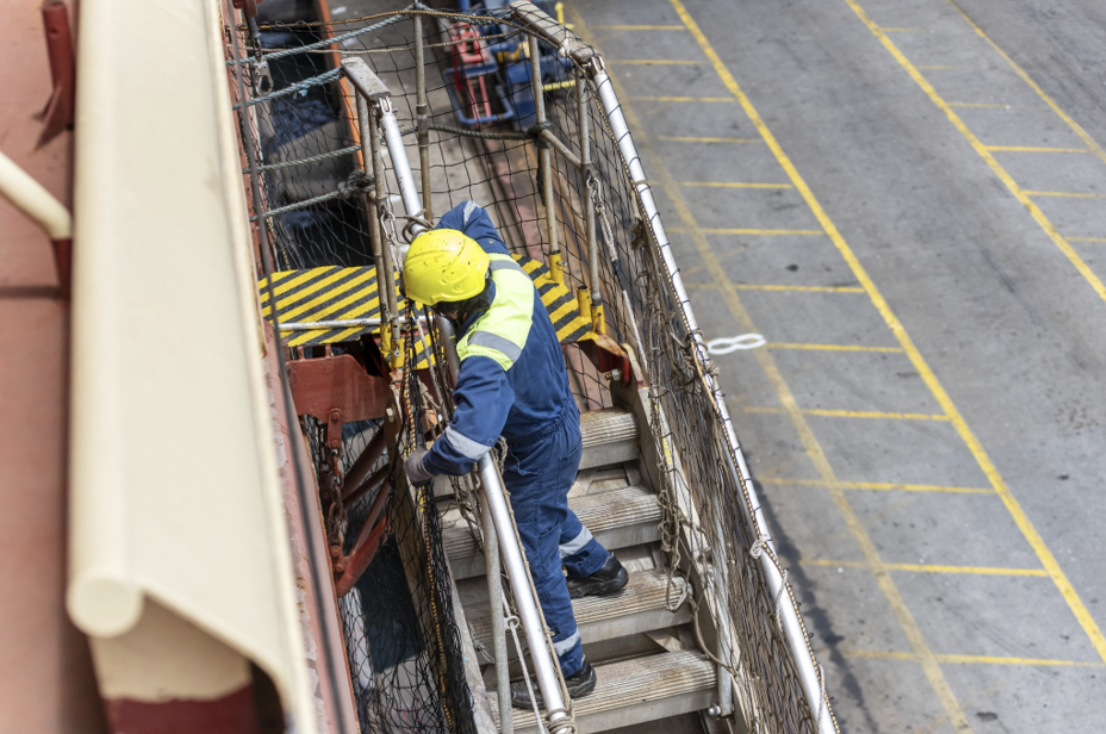
Initial report
The crew reported that no training, drills or safety briefings were conducted for charter guests, owner or crew. The following issues were reported to CHIRP.
An engine-room smoke/fire incident occurred. No muster was conducted, no safety equipment was deployed and the crew were reportedly told not to worry. When a crew member requested a lifejacket during the emergency, the request was refused.
On another occasion, a tender operating at speed struck rocks. The incident was not reported and no safety equipment, including lifejackets, was carried on board. Minor marks were observed on the hull, but no injuries occurred.
The crew also reported that their employment contracts lacked basic provisions, such as medical cover or contributions. Some contracts contained incorrect job titles and job descriptions.
CHIRP comment
The reported response to the engine-room smoke/fire incident raises serious concerns about emergency preparedness. Reassurance is not a substitute for mustering, assessing the emergency and providing appropriate equipment. Crew must know their duties and be able to raise concerns without fear of reprisal.
Crew should not accept absent or substandard training as normal. Familiarisation, drills and briefings must prepare them for their duties. They should be supported in reporting gaps, but the operator remains responsible for effective training.
The unreported tender grounding, with no lifejackets or other safety equipment carried, further highlights weaknesses in risk control and incident reporting. The absence of injury does not diminish the potential consequences.
The contract concerns also warrant investigation. Where the Maritime Labour Convention (MLC) applies, Standard A2.1 requires employment agreements to specify the seafarer’s role and health and social security benefits; Regulation 4.1 addresses access to prompt, adequate medical care, in principle at no cost to the seafarer.
No Designated Person Ashore (DPA) is mentioned, although this does not establish that none existed. Crew need a clear shore-side escalation route: through the DPA where the ISM Code applies or another designated contact.
CHIRP has contacted the Flag State and seeks a further substantive response confirming the applicable requirements, investigation findings, and corrective action to address the reported safety and welfare concerns, including how implementation will be verified.
Safety management is not demonstrated by the absence of an accident, but by the actions taken to prevent one.
Key issues relating to this report
Factors relating to this report
Capability – The reported absence of training, drills and briefings raises concerns about whether crew were adequately prepared for their duties. The learning is to provide and verify effective training and clear incident-reporting procedures; the applicable reporting requirements require confirmation.
Culture – is a significant systemic factor. The reported absence of routine safety activities, the failure to report the tender impact and the reported approach to the emergency suggest that safety requirements were not consistently embedded, reinforced, or prioritised in routine on-board operations.
Alerting – is relevant because a crew member reportedly requested a lifejacket during the emergency, but the request was refused. This is particularly important from a human-element perspective, as people must be able to alert others to potential safety problems and have their input valued.
The key human-element lesson is that safety arrangements only become effective when people are trained, briefed, equipped, listened to and supported in speaking up, and when management verifies that these behaviours are actually embedded on board.
Key takeaways
Regulators: Investigate whether the vessel’s safety-management arrangements were effective in practice, including emergency preparedness, training and drills, safety equipment, incident reporting, communication and the crew’s ability to raise concerns. Confirm the applicable employment agreement and medical care requirements, the shore-side escalation arrangements and how corrective action will be verified in a further substantive Flag State response.
Management: Establish and verify effective training, drills, briefings, emergency equipment and incident-reporting arrangements. Crew need a clear shore-side escalation route, employment and medical care arrangements that meet applicable requirements. Verification must establish that these safeguards work in practice, not merely that documentation exists.
Crew: Do not accept absent or substandard safety training as normal. Ask for familiarisation, practical instruction and drills that prepare you for your emergency duties. Raise training gaps and equipment concerns, and use the designated shore-side reporting route if they remain unresolved on board. Providing effective training, equipment and a reporting route that protects those raising concerns is the operator’s responsibility.
To register to CHIRP or submit your feedback, please click here.
NEW: Sign up for SuperyachtNewsweek!
Get the latest weekly news, in-depth reports, intelligence, and strategic insights, delivered directly from The Superyacht Group's editors and market analysts.
Stay at the forefront of the superyacht industry with SuperyachtNewsweek
Click here to become part of The Superyacht Group community, and join us in our mission to make this industry accessible to all, and prosperous for the long-term. We are offering access to the superyacht industry’s most comprehensive and longstanding archive of business-critical information, as well as a comprehensive, real-time superyacht fleet database, for just £10 per month, because we are One Industry with One Mission. Sign up here.
Related news
It’s time engineers had a voice
Whitewater Recruitment founder Nick Wilson discusses the findings of the company’s inaugural Chief Engineer Salary Survey
Opinion

Beyond technical competence
How cognitive fitness could improve communication on superyachts
Opinion
Keeping a good sole stew – and why it matters
Amy Moorcroft on a role that quietly holds a lot of smaller yachts together, and its importance to owners, managers, captains and guests alike
Opinion
What yacht crew are telling ISWAN
The YachtCrewHelp 2025 Annual Review brings together insights from confidential conversations with yacht crew and their families throughout 2025
Crew

The rotation problem
Why does yachting struggle to attract commercial masters? An argument for the industry to align its employment model with the realities of professional maritime
Opinion
Related news
It’s time engineers had a voice
3 days ago
Beyond technical competence
1 week ago
What yacht crew are telling ISWAN
2 months ago
The rotation problem
2 months ago
NEW: Sign up for
SuperyachtNewsweek!
Get the latest weekly news, in-depth reports, intelligence, and strategic insights, delivered directly from The Superyacht Group's editors and market analysts.
Stay at the forefront of the superyacht industry with SuperyachtNewsweek