It’s time engineers had a voice
Whitewater Recruitment founder Nick Wilson discusses the findings of the company’s inaugural Chief Engineer Salary Survey…
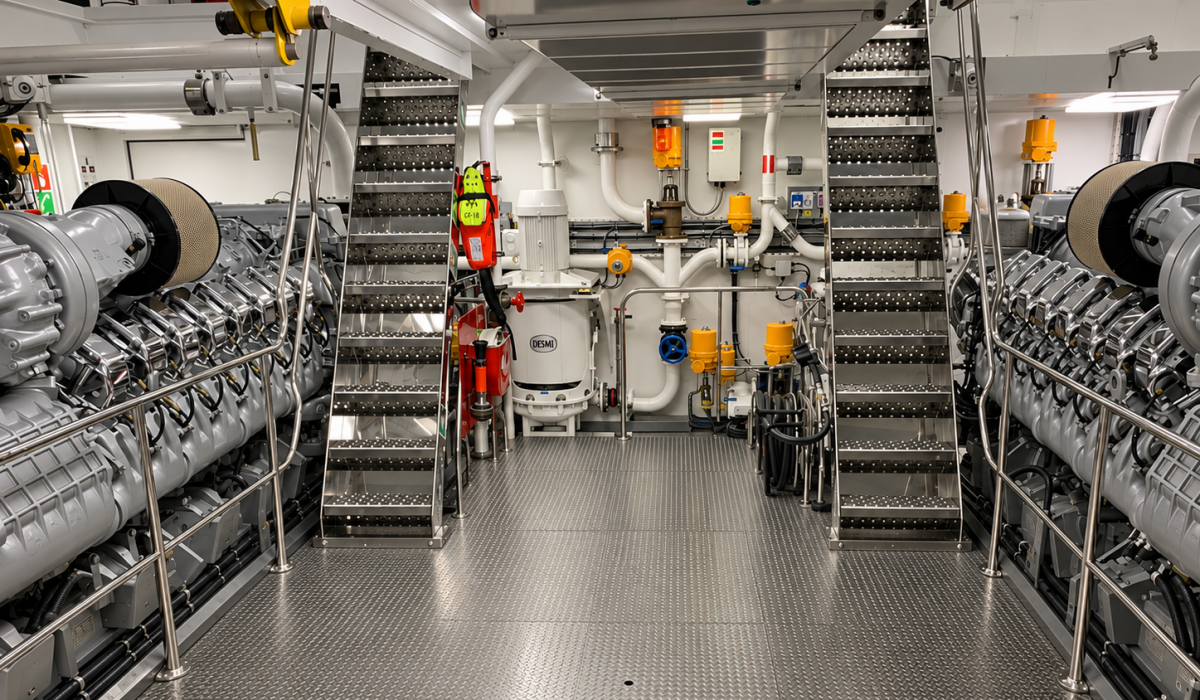
A profession under increasing pressure
For years, yacht engineering departments have quietly carried an enormous amount of responsibility. Chief engineers are responsible for keeping some of the world’s most sophisticated privately owned vessels operational. They oversee complex machinery, electrical systems, planned maintenance, regulatory compliance, safety and engineering personnel, often while operating under considerable time pressure. Yet despite these responsibilities, there remains a feeling among many engineers that their contribution is not always fully recognised.
Our newly published Chief Engineer Salary Survey 2026 aims to bring greater attention to this issue. With responses collected from 113 chief engineers, the research examines salaries, workload, rotation, employment benefits, retention and the responsibilities associated with modern yacht engineering. The findings raise several important questions about whether the industry is doing enough to recognise and retain its experienced engineering professionals.
Among the rotational chief engineers surveyed:
• 66.7% report working more than 60 hours per week on board.
• 41.2% report working 71 hours or more per week.
• 42.2% believe their salary does not adequately reflect their workload and responsibilities.
• Just 17.6% report being fully disconnected from their vessel during leave.
• 57.8% report having no dedicated AVIT/ETO on board.
• 60.8% are either actively searching for another position or open to the right opportunity.
While these figures represent the experiences of those who participated rather than the entire industry, they offer a revealing insight into the challenges facing senior yacht engineers. For me, the findings are particularly personal.
66.7% report working more than 60 hours per week on board.
From the engine room to recruitment
I began my maritime career in 2006, progressing through the engineering ranks to achieve his Chief Engineer Unlimited Certificate of Competency. Over 20 years at sea, I worked across commercial shipping and the superyacht industry, eventually serving as chief engineer aboard large motor yachts.
In early 2025, following the arrival of my daughter, I decided to come ashore to spend more time with his family. Entering the recruitment industry was never part of his original plan. I genuinely never imagined I would end up owning a recruitment agency. If someone had suggested it to me a few years earlier, I would have laughed. But when I came ashore, I ended up taking a temporary position with an established recruitment company. It gave me an opportunity to see how the industry operated from the other side.
I quickly realised there were things I would do very differently. Having been the person sitting on board receiving endless recruitment calls, I understood how frustrating that could be. When you’re in the middle of a breakdown, maintenance or managing a busy department, the last thing you need is another recruiter calling to see if you have any vacancies. I knew there was a better way of working.
That experience ultimately led me to establish Whitewater Recruitment alongside my sister, Maria Collins. The ambition was straightforward: build the sort of recruitment company that experienced yacht professionals would actually want to work with.
“The juice is no longer worth the squeeze”
For me, however, recruitment has become about considerably more than filling vacancies. One of my strongest concerns is the number of experienced engineers choosing to leave yachting altogether. I spent most of my adult life working at sea. I absolutely loved much of it and I wouldn’t change the experiences I’ve had, but there comes a point where you start questioning whether the sacrifices are still worthwhile. When you’re younger, the money, travel and lifestyle can be incredibly appealing. But as you get older, start a family and have more responsibilities at home, your priorities naturally change. Suddenly, missing birthdays, Christmases, family occasions and months of your children’s lives becomes much harder to justify. And when you combine those sacrifices with increasing workloads, greater technical responsibility and salaries that don’t always appear to have kept pace, you can understand why people start looking elsewhere.
When a really good chief engineer leaves, you’re not just losing another crew member, you’re losing years of vessel-specific knowledge.
To put it simply, for many engineers, the juice is no longer worth the squeeze. I know that feeling myself, and I speak to other engineers who feel exactly the same. It’s a real shame because we’re losing people with years, sometimes decades, of valuable experience.
I believe the potential loss of experienced personnel should concern the wider yachting industry. A chief engineer who has spent several years on board a particular vessel develops knowledge that cannot simply be replaced with another qualification or an impressive CV. They understand the vessel’s machinery, maintenance history, technical weaknesses, operating characteristics, contractors and suppliers. That experience contributes directly to reliability, safety and operational efficiency.
When a really good chief engineer leaves, you’re not just losing another crew member, you’re losing years of vessel-specific knowledge. I think that is something the industry needs to place a much greater value on. Sometimes increasing someone’s salary or improving their working conditions is considerably cheaper than the disruption and expense of continually replacing experienced people.
Giving the engineering department a voice
One of my motivations for commissioning the survey was a belief that engineering professionals have not always had a strong enough collective voice within the industry. Throughout my career, I’ve sometimes felt that the engineering department has been expected to quietly get on with things – keep everything running, solve the problems, meet the deadlines and don’t make too much noise.
That’s what engineers do – we solve problems, but I don’t think we’ve always been particularly good at speaking up for ourselves. Other departments are often more visible because of their direct involvement with the guests and the day-to-day running of the yacht. The engineering department is different. Much of our best work happens behind the scenes, and when we’re doing our jobs properly, nobody necessarily notices. But just because we’re not always visible doesn’t mean our contribution is any less important.
There are some fantastic employers in this industry, but there are also areas where I believe we can do better – and I don’t think we should be afraid to have those conversations.
I believe engineering salaries should reflect far more than vessel length alone. Our survey highlights considerable differences in remuneration between vessels of similar sizes, reinforcing the importance of assessing gross tonnage, technical complexity, department size, operational demands and the responsibilities carried by the individual.
It also raises questions about the growing workload associated with modern yacht technology. Electrical systems, automation, integrated networks, AVIT infrastructure and increasingly sophisticated engineering installations have transformed the technical demands of many vessels. Yet those additional responsibilities are not always accompanied by corresponding increases in engineering personnel or remuneration.
I’m not suggesting that every yacht underpays its engineers or that every captain or management company fails to recognise them. There are some fantastic employers in this industry, but there are also areas where I believe we can do better – and I don’t think we should be afraid to have those conversations.
I am particularly determined that we should be prepared to raise difficult subjects when necessary. I’m quite happy to put my head above the parapet if it means helping the engineering department – I’ve been there, I know what the job involves and I know the sacrifices people make. I don’t want to spend the rest of my career sitting in an office pretending those issues don’t exist simply because speaking about them might upset somebody. If we want positive change, somebody has to be willing to start the conversation.
I feel the engineering department has gone without a strong enough voice for far too long and if I can use my position now to help change that, then I absolutely will.
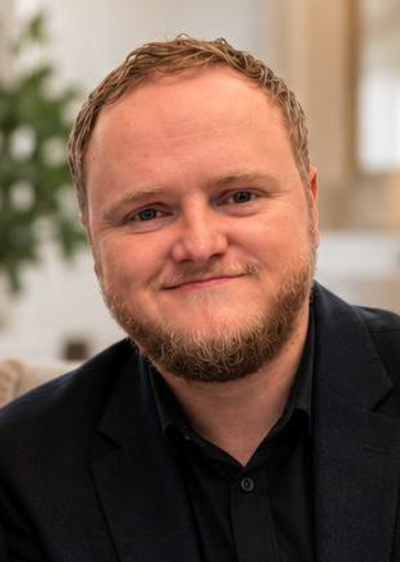
Nick Wilson
More than just recruitment
The publication of the Chief Engineer Salary Survey forms part of our wider commitment to supporting the engineering profession. By gathering first-hand information from those working within the industry, the company hopes to encourage more transparent discussions around salaries, working conditions, responsibility and long-term retention.
Every yacht is different, and every position needs to be considered on its own merits. But we should be recognising the true responsibilities of the role, having proper salary reviews and ensuring people are rewarded for their experience, performance and loyalty.
I’m keen to emphasise that the intention is not to criticise yacht owners or management companies, nor to dictate what individual vessels should pay. Instead, the goal is to provide useful information that allows employers and engineers to make better-informed decisions.
This isn’t about telling every captain or owner that they need to pay their chief engineer another €2,000 a month. Every yacht is different, and every position needs to be considered on its own merits. But we should be recognising the true responsibilities of the role, having proper salary reviews and ensuring people are rewarded for their experience, performance and loyalty. And we need to be asking ourselves why so many experienced engineers are considering leaving the industry. If we don’t address some of those issues, we risk losing an enormous amount of knowledge and experience."
We intend to develop its research further, using feedback from the engineering community to inform future surveys and industry discussions. For me, this is the beginning of a longer-term commitment.
I owe an enormous amount to the maritime industry. It gave me a career, opportunities and experiences that I will always be grateful for. Now that I’m ashore and in a position where I can potentially make a difference, I want to give something back.
I can’t promise to change the industry overnight, but I can promise that I’ll keep listening, keep asking questions and keep speaking up when I believe something needs to be said. I will always be an engineer at heart. And as long as I’m in a position to help the engineering department, I intend to do exactly that.
Profile links
NEW: Sign up for SuperyachtNewsweek!
Get the latest weekly news, in-depth reports, intelligence, and strategic insights, delivered directly from The Superyacht Group's editors and market analysts.
Stay at the forefront of the superyacht industry with SuperyachtNewsweek
Click here to become part of The Superyacht Group community, and join us in our mission to make this industry accessible to all, and prosperous for the long-term. We are offering access to the superyacht industry’s most comprehensive and longstanding archive of business-critical information, as well as a comprehensive, real-time superyacht fleet database, for just £10 per month, because we are One Industry with One Mission. Sign up here.
Related news
Keeping a good sole stew – and why it matters
Amy Moorcroft on a role that quietly holds a lot of smaller yachts together, and its importance to owners, managers, captains and guests alike
Opinion

Is cognitive fitness the next frontier in superyacht excellence?
As superyachts become increasingly sophisticated, are we investing enough in the cognitive capabilities of the people responsible for operating them?
Opinion
Where does superyacht talent go when crew step ashore?
New Yotspot member data suggests almost a quarter of yacht crew would consider shore-based or estate work. Here is where they want to go...
Crew

Why crews still build their own spreadsheets
Looking at the spreadsheets crews keep alongside their software has taught me a fair amount about what yacht software gets wrong
Opinion

The 300 steps
A call to arms on how we recruit, on-board and retain the incredible people who run our yachts
Crew
NEW: Sign up for
SuperyachtNewsweek!
Get the latest weekly news, in-depth reports, intelligence, and strategic insights, delivered directly from The Superyacht Group's editors and market analysts.
Stay at the forefront of the superyacht industry with SuperyachtNewsweek