What owners bring to crew
The best-run vessels in this industry share one thing in common – Karine Rayson explains what the owners who get it right are actually doing differently…
I am hearing more owners ask for a family feel on board, and that ambition sits close to crew retention. Rotation has real advantages, but does it directly shape crew morale, on-board culture and a sense of belonging? Does it solve turnover on its own? Not necessarily and here’s why.
Culture is an organic microcosm of evolving behaviours, all interconnected. If one part is out of balance, it ripples through everything else. I’ll explain it plainly. Nobody sits down and designs the culture. It grows from how people actually treat each other day to day, and it keeps shifting with every crew change, every guest trip, every decision leadership and management makes or avoids. Culture behaves more like a living organism. It either stays healthy or it gets sick, depending on what it’s fed.
Rotation can buy crew rest, but it doesn’t buy them belonging on its own, and belonging is what retention is actually built from. That’s the harder work and it starts at the top.
Owners, as the ultimate decision makers, are the ones with the influence to set that microcosm up well, so crew have the opportunity to do their best work in a psychologically safe environment, free of the psychosocial hazards that build up in closed systems left unattended. The bigger question is whether owners are actually privy to what’s happening on their own vessel from a people and culture perspective.
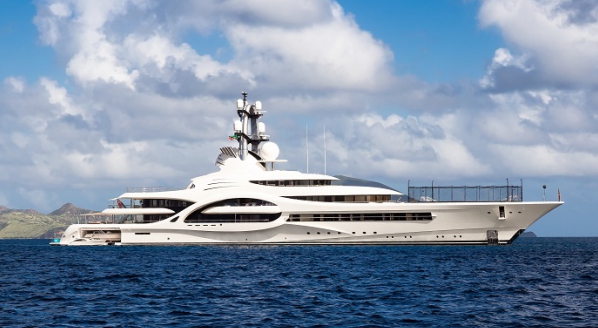
In a conversation with Captain Chris Durham, he described the culture on board M/Y Savannah
as starting with the owner. It was not something handed down as a set of policies. Instead, he empowered the leadership team with his vision and tools to execute. Josephine De Luca, who began working with the owner as a stewardess and ultimately became executive officer, told me the owner used to say the most important thing that comes out of a mine is the miner. On board, they translated that directly. The most important thing on a yacht is the crew.
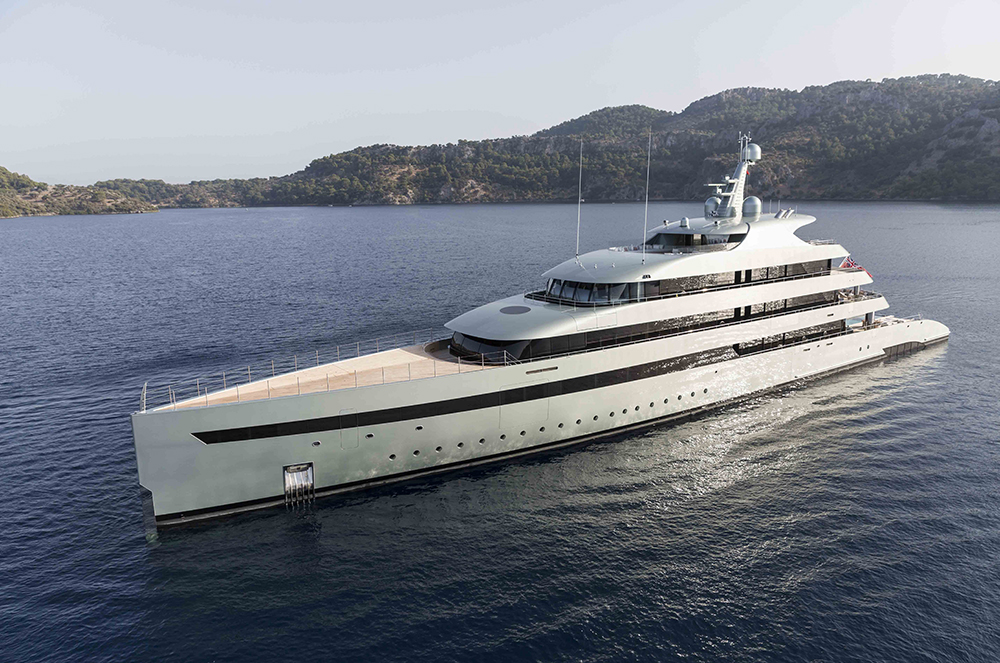
M/Y Savannah
Image credit: © Feadship
These weren’t empty sentiments. The owner understood that creating a strong crew culture meant recognising capability and giving people responsibility that matched it. He felt that the title ‘purser’ no longer reflected the scope of what she actually did. He didn’t just expand the job description, he changed the structure. The financial responsibilities became a separate financial officer role, while De Luca was elevated to executive officer, a genuine partnership with the captain to run the vessel as a business and a programme.
On-board culture doesn’t exist in isolation, it’s interconnected – an extension of every culture the vessel and its crew have already inherited before the yacht ever leaves the dock: how the shipyard operates, what the management company prioritises and the tone set from the owner’s office. A vessel absorbs all of it. What’s missing across most of this industry is a genuine culture conversation between every party involved, so the shipyard, the management company, the owner’s rep and the owner are actually aligned on the values the vessel is meant to run on, rather than each operating in isolation.
The impact of that culture on Savannah showed clearly in the retention numbers. The vessel achieved a 77 per cent retention rate at four years and above, across a ten-year programme. Thirteen crew stayed longer than five years, some since build. Even through a prolonged sale process, crew retention remained above 70 per cent. Set that against an industry-wide survey of over 800 crew, which found close to half leave their role within the first year, rising to almost seven in ten among junior crew. De Luca put it simply: what you put into the crew, you get back tenfold. She framed it as commercial logic – value crew the way any serious business values its talent.
That responsibility runs wider than most owners realise. A well looked after vessel spans everything from technical compliance and class certification to maintenance schedules, insurance, financial administration, leadership development and crew welfare; in other words, the full suite most yacht management companies are built to cover on an owner’s behalf. However, it’s important to note that a vessel can be flawlessly compliant on paper, meeting every safety and technical standard required, and still be an unsafe place to work because compliance measures the vessel, not the people running it. What’s usually missing is a funded commitment to human potential: the growth and development of the meta-skills, communication, leadership, emotional intelligence – these all determine whether a crew actually functions well together.
On-board culture doesn’t exist in isolation, it’s interconnected – an extension of every culture the vessel and its crew have already inherited before the yacht ever leaves the dock: how the shipyard operates, what the management company prioritises and the tone set from the owner’s office.
I have worked with owners who engaged our Uplevel Program purely because they wanted crew retention. It works the same way a technical survey does: an independent, structured read on how a vessel’s culture, leadership and engagement are actually functioning. It doesn’t stop at diagnosis. We also work directly with crew and leadership to bring the human operation back to full function, the same way a technical team restores a system that isn’t performing to spec, and we make clear what that dysfunction is costing and provide the solutions to fix it.
If culture starts at the top, the question becomes what owners can do with that responsibility. The first step is being fully informed of what that influence actually looks like from a crew perspective. Owners should be across the intricacies involved in building a resilient, loyal crew and a positive working culture that lasts, not just for the balance sheet sitting underneath it.
As an industry, I am concerned our good intentions are backfiring on us. We feel we’re safeguarding the owner by only sharing information we deem a priority and sadly the subject of crew doesn’t appear on that priority list for a lot of owners, particularly during the sale or purchase of a vessel.
I have sat with more than one captain mid-build who was navigating a relationship with a new-build owner’s rep, a great guy doing his best, but without deep industry knowledge behind him. There’s a common assumption in this industry that crewing gets under-costed at the build or purchase stage by whoever is selling the vision. Josephine De Luca reflected on a common trend: during a new build, an owner is often advised that a chief stewardess or purser can join a month before launch, because it looks more cost effective on paper. It’s given without full visibility of what happens six weeks later, when the interior isn’t ready and the crew left to cover the shortfall are the ones who pay for it.
This is exactly the shortfall Yacht Owner’s Representative Program (YORP) was built to close. Backed by SYBAss and accredited under IAMI GUEST, it exists because for years there was no formal qualification for a role making seven and eight-figure decisions on an owner’s behalf.

Karine Rayson, founder, The Crew Coach.
Completion now leads to a place on the Owner’s Representative Register, so an owner can select someone genuinely qualified for the role, applying the same due diligence they’d expect of any advisor managing a seven or eight-figure decision on their behalf. That question of genuine qualification is exactly what Jack MacNally, co-founder of an independent yacht management consultancy, has spent two years asking directly: who is actually working for the owner?
He and his business partner built a nine-question independence test owners can apply to anyone advising them, including their own representative, because undisclosed incentives in this industry are common and rarely flagged. The same principle should extend to crew. An owner’s rep who knows the industry inside and out understands that staying connected to crew, not just the build schedule, is part of the job.
The second area is the management layer. Owners typically engage management companies for operational and administrative support, and the support is invaluable. What I see frequently, and what much of the industry would probably agree with, is that yacht management has reached a high standard in technical compliance. Crew management sits in a different category. It’s a specialised discipline in its own right, one that benefits from the same formal training any HR function ashore would expect of its people. This is a premium service industry and the standard of leadership needs to reflect that. It isn’t adjacent to culture, it is culture.
One reputable management company has reported that their HR manager looks after 2,000 crew. At 2,000, response times slow, cases queue for weeks rather than days and rapport becomes close to impossible to build.
That standard shows up in practical decisions too. Training budgets that favour deck and engineering over interior send a message about whose development matters, whether it’s intended or not. Paid leave to study is an investment, not a perk, and time off the vessel should mean exactly that: time with family and genuine rest, not admin and not catching up on courses the vessel never budgeted for during the season.
If I were an owner, having every aspect of vessel management sit in-house under one company would concern me. Where inappropriate behaviour, or worse, occurs on board, research consistently shows crew are reluctant to use standard reporting procedures. Every crew member should have access to a neutral third party to handle workplace grievances, one that sits outside management entirely.
Jack MacNally put it bluntly: senior management too often sit in an ivory tower, sending decrees down from on high, when the real value comes from being present on board and known to the crew, including the junior ranks. In any organisation, relationship building is fundamental to open communication and positive working relationships. The real question is whether that relationship is even feasible at scale. One reputable management company has reported that their HR manager looks after 2,000 crew. For comparison, standard HR practice recommends one HR professional for every 50 to 100 employees, and even the most automated, hands-off HR functions rarely stretch past 150.
At 2,000, response times slow, cases queue for weeks rather than days and the rapport MacNally is describing – someone crew actually know and trust – becomes close to impossible to build. At roughly 20 to 40 times the recommended ratio, the risk isn’t only to crew waiting for a response. It’s to the single HR manager expected to catch every warning sign, resolve every grievance and prevent every crisis, alone, with a caseload no one person could realistically carry.

Gabe Newell is the clearest public example of the influence owners can have on culture and retention. On his new build – Leviathan – the names of the 2,000 craftspeople who built the vessel are etched permanently into the main stairway.
When the only route to report runs through the chain of command, and the problem sits inside that chain, there is no route at all. This is exactly the failure point Caroline Blatter and I set out to address when we co-founded the Crew Culture Think Tank under the Superyacht Alliance. We’re building an evidence base, drawn directly from crew, on why existing reporting mechanisms, so necessary in principle, so often fail in practice within our industry. Our aim is a credible, independent case for reform, built to a standard that can eventually be put in front of the IMO, not another well-meaning conversation that goes nowhere after the next Superyacht Forum panel.
The reporting problem is one part of the picture. The cultural argument for owner involvement is just as strong, and it’s already being proven on the water. Gabe Newell is the clearest public example of the influence owners can have on culture and retention. On his new build – Leviathan – crew were brought into the design process from day one, materials were chosen specifically to reduce their maintenance burden and free up time for higher-value work, and the names of the 2,000 craftspeople who built the vessel are etched permanently into the main stairway.
My recommendation is that as an industry we need to build a continuum of care model with four stages: prevention and early identification, active support once a concern is raised, formal intervention if risk escalates, and proper follow-up once the acute moment passes, rather than a case simply closing the moment it’s no longer urgent. Models like this already work in far higher-risk environments than a yacht – in healthcare, in the justice system, in structured rehabilitation settings. If a continuum of care model can hold there, it can hold on a vessel. Applied here, it means the emotional climate on board isn’t left to chance, or only discovered in a crisis. It’s built the same deliberate way as every other part of vessel culture: from the top.
Workplace culture isn’t a mission statement or a values poster in the crew mess, it’s the sum of everyday behaviour: how decisions get made, who gets consulted, what gets rewarded, what gets ignored and what crew learn, often without anyone saying it directly, about what actually matters on board.
All of it traces back to the same source. An owner sets the tone whether they mean to or not, and everything downstream – the captain’s leadership style, the management company’s priorities, how grievances are handled, all take their cue from there.
The owners who appear to get this right show a genuine interest in the crew. Evidence is showing that an owner who takes crew seriously as central to the operation is the one who ends up with a vessel that performs. Ownership philosophy can genuinely shape culture, performance, and the relationship between owner, captain, crew and management.
This article first appeared in The Superyacht Report: Owners Focus. With our open-source policy, it is available to all by following this link, so read and download the latest issue and any of our previous issues in our library.
NEW: Sign up for SuperyachtNewsweek!
Get the latest weekly news, in-depth reports, intelligence, and strategic insights, delivered directly from The Superyacht Group's editors and market analysts.
Stay at the forefront of the superyacht industry with SuperyachtNewsweek
Click here to become part of The Superyacht Group community, and join us in our mission to make this industry accessible to all, and prosperous for the long-term. We are offering access to the superyacht industry’s most comprehensive and longstanding archive of business-critical information, as well as a comprehensive, real-time superyacht fleet database, for just £10 per month, because we are One Industry with One Mission. Sign up here.
Related news

What happens on board after the guests go to bed?
A perspective from the crew side of the superyacht industry on professionalism, silence, welfare and the culture created on board
Opinion
What it really costs to run a superyacht
Will Christie, Founder and CEO of Christie Yachts, debunks the myths and presents the true facts and figures
Owner
The right to vanish
Benjamin Maltby, lawyer and General Secretary of The Owners Club, offers a practical guidance on owners’ right not to be tracked through AIS
Owner
The superyacht as a cross-border institutional asset
Superyachts exist inside a complex network of jurisdictions and institutions – the importance of understanding the broader institutional picture
Owner
The Superyacht Report 230: Owners Focus – Out Now
From a guide to the do’s and don’ts for new yacht owners to who has the authority to act on behalf of an owner, the latest TSR is a must-read
Owner
NEW: Sign up for
SuperyachtNewsweek!
Get the latest weekly news, in-depth reports, intelligence, and strategic insights, delivered directly from The Superyacht Group's editors and market analysts.
Stay at the forefront of the superyacht industry with SuperyachtNewsweek