Whalesong at Navidad Bank
What do 500 humpback whales look like from the deck of a superyacht? How EYOS, Yachts For Science and a 57-metre Feadship filled a 45-year gap in the scientific record, and what the fleet should make of it.…
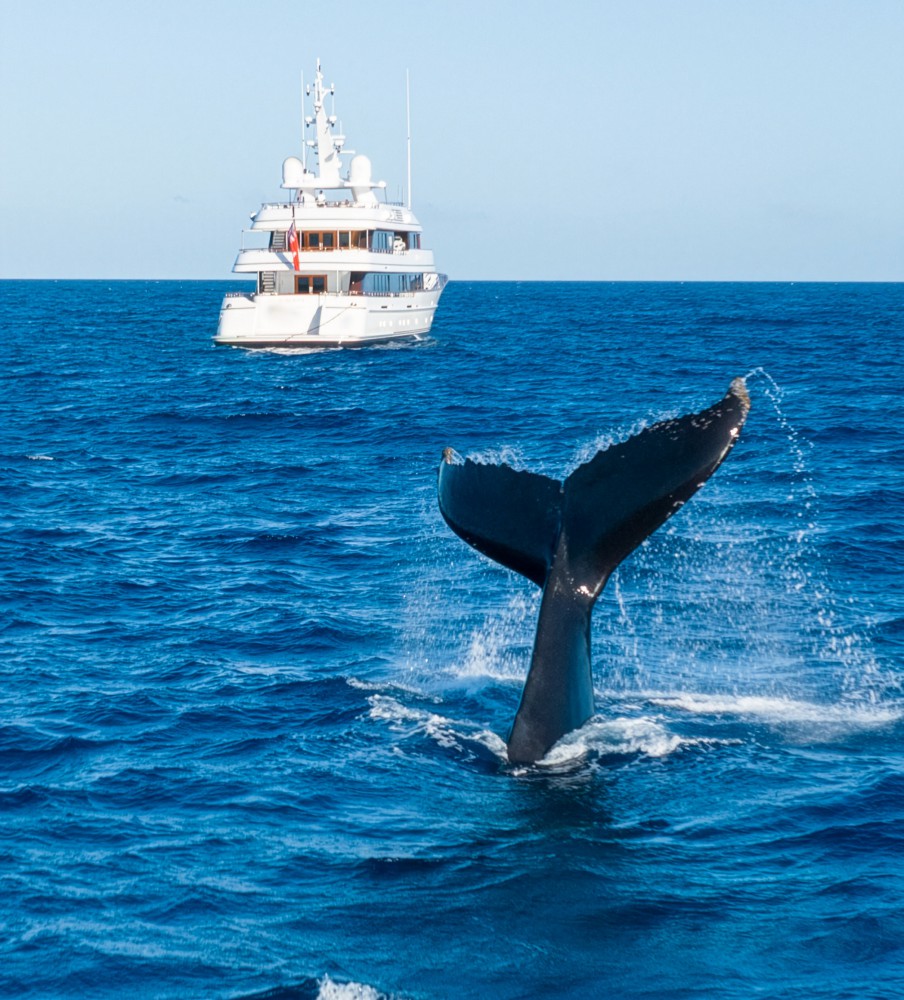
Image credit: EYOS Expeditions | Stein Retzlaff Mosaic Studios
There is an unmistakable sound to a humpback whale coming up for air – a percussive blast of pressure as it breaches the surface to exhale, followed by the pitchy wheeze of the inhale as it draws the salty sea air back into its lungs. Sometimes you are lucky enough to hear a cacophony of raspy breaths when sailing amongst a pod, hearing the dulcet tones of the whale song beneath you. But as those aboard the 57-metre Solace expedition looked across the waters of the Navidad Bank, Dominican Republic, the team on board was treated to a performance of orchestral proportions. As the sun set on an April evening, 513 humpback whales had been sighted in a single day, one of the highest sightings recorded in history and one of the most important breeding grounds to date.
It’s a real marker of progress for global conservation – humpback numbers in the Atlantic are showing a colossal rebound in numbers, returning from the brink of extinction following the industrial whaling era. And the expedition, their findings and, hopefully, the legislation and support that they will result in, all come from a week on a Feadship.
The expedition was part of a scientific survey as Solace sailed to Navidad Bank, a shallow submerged coral bank located about 100 kilometres off the coast of the Dominican Republic and one of the most critical nurseries for Atlantic humpbacks. Despite this, the last published estimate of humpback whale density at Navidad Bank dates back to the late 1970s, long before today’s precision tools made offshore science faster, safer and more accurate.
“Navidad Bank, together with Silver Bank and Samaná Bay, is one of the Caribbean’s most important breeding and mating grounds for the North Atlantic humpback whale,” explains Jonathan Delance, chief conservation officer, Dominican Republic Ministry of Environment and Natural Resources.
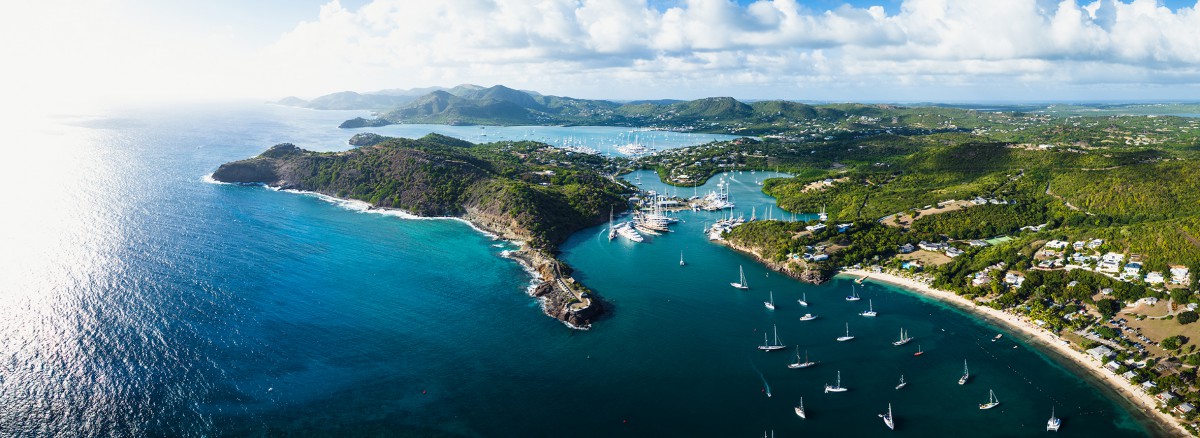
“Unlike the other two sites, however, its remoteness and often demanding sea conditions make research and conservation far more difficult to mount. Silver Bank benefits from a natural ‘harbour’ on its northwest side: a reef belt that softens the ocean’s energy and creates a safer setting for responsible vessels to bring guests to experience snorkelling with humpback whales. Samaná Bay, close to ports and services, has become the Caribbean’s premier whale-watching destination, making long-term research and management significantly easier.”
Under the direction of EYOS Expeditions in partnership with Yachts For Science, on board was a multi-disciplinary team drawn from the Caribbean Cetacean Society, Fundación Puntacana and FUNDEMAR, working under the Dominican Republic’s Ministry of Environment and Natural Resources. The vessel ran constant-speed navigation to allow long-range acoustic monitoring of whale vocalisations, while observers worked from elevated sightlines with stabilised optics, calling every animal into defined sectors under strict anti-duplication protocols.
“It’s the integration – the crew and scientists working as one system.
That’s what makes this truly effective.”
Over the past decade, EYOS has led and facilitated 35 record-setting voyages to some of the most remote places on Earth, working alongside scientists, explorers and Polar experts. The team has been the first to reach the deepest point in each of the five oceans and has travelled further south than any vessel in history. Even for Jimmy White, EYOS’s manager of technical, science and conservation projects, this was a monumental moment that would reach far beyond personal awe. For those of us who weren’t there, it’s an unfathomably large number to comprehend. It’s a privilege to get a sighting at the best of times, let alone one of the largest recorded numbers in a single day.
“You rarely have that ‘this is big, this matters’ moment, but you know it when it happens. It’s not dramatic, but more a subtle realisation that what you’re seeing hasn’t been properly documented before and this was one of those moments. The scale made it undeniable,” he explains. “Within the first few hours, we knew that this was something undeniably different. The sightings didn’t just kept building. At a certain point, we weren’t asking if it was a good day; we were asking how we were going to keep up with it. That’s when it clicked, that this wasn’t normal, this was exceptional.
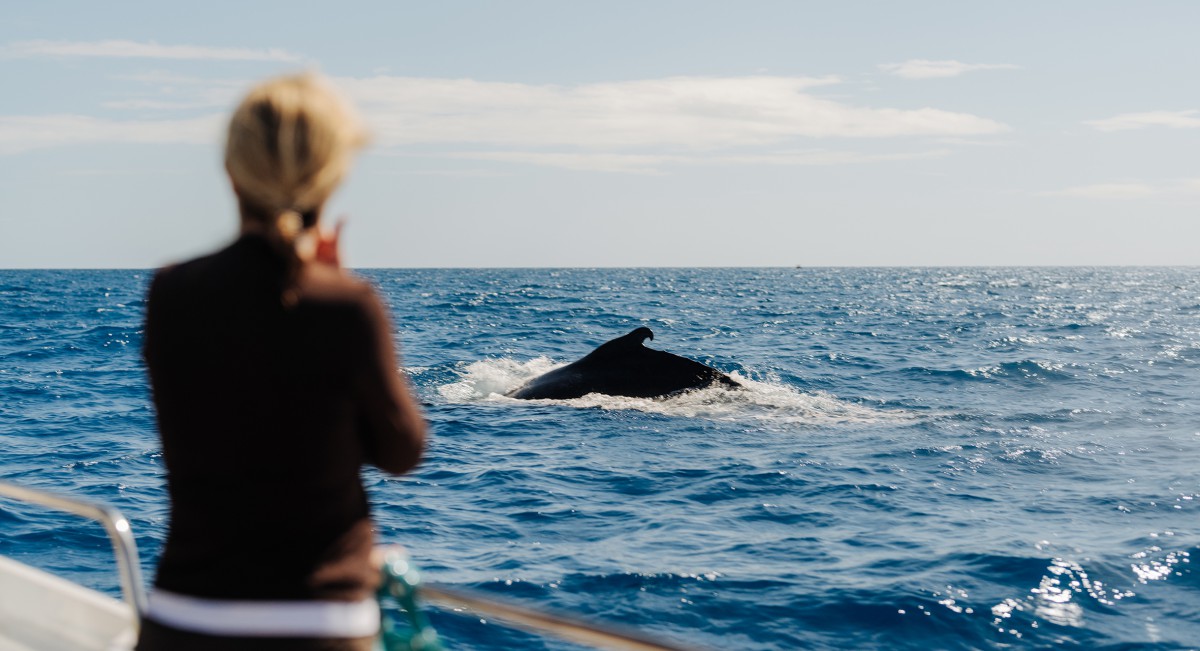
“It’s everywhere you look: blows on the horizon, breaches, constant movement. You hear it as much as you see it – the exhale of whales carries across the water. But on deck, it’s controlled intensity. Every sighting is called, logged and verified. The count is rigorous with trained observers, defined sectors and strict protocols to avoid duplication. Even with that structure, we were operating at the edge of what’s possible to record accurately. That density is so rare.”
Delance adds that even amid the deep concentration the team on board were in, the feeling was pure elation. “I’ll never forget the look on the team’s faces, their smiles, when we shared the first day’s numbers. We’d even made a friendly wager about what we thought we’d achieve; our ‘optimistic’ guesses still fell short. That kind of surprise was deeply satisfying. It lifted morale immediately and helped quiet the worries we’d been carrying after days of rough weather kept us in port.”
What the findings change now operates on several levels, the first being that the data updates and solidifies the foundation for protecting Navidad Bank as a cornerstone habitat for the recovery of the North Atlantic humpback. The second is more evidential, as decades of conservation work in Dominican waters, much of it slow, unglamorous and chronically under-resourced, are now demonstrably delivering measurable results for marine mammals and the Navidad Bank survey is the proof. The third is political, however, and it’s arguably where the biggest challenge lies. The findings reinforce the Dominican Republic’s leadership position on ocean conservation and strengthen the case for allocating greater resources and sustained effort to the Silver and Navidad Banks Marine Mammal Sanctuary.
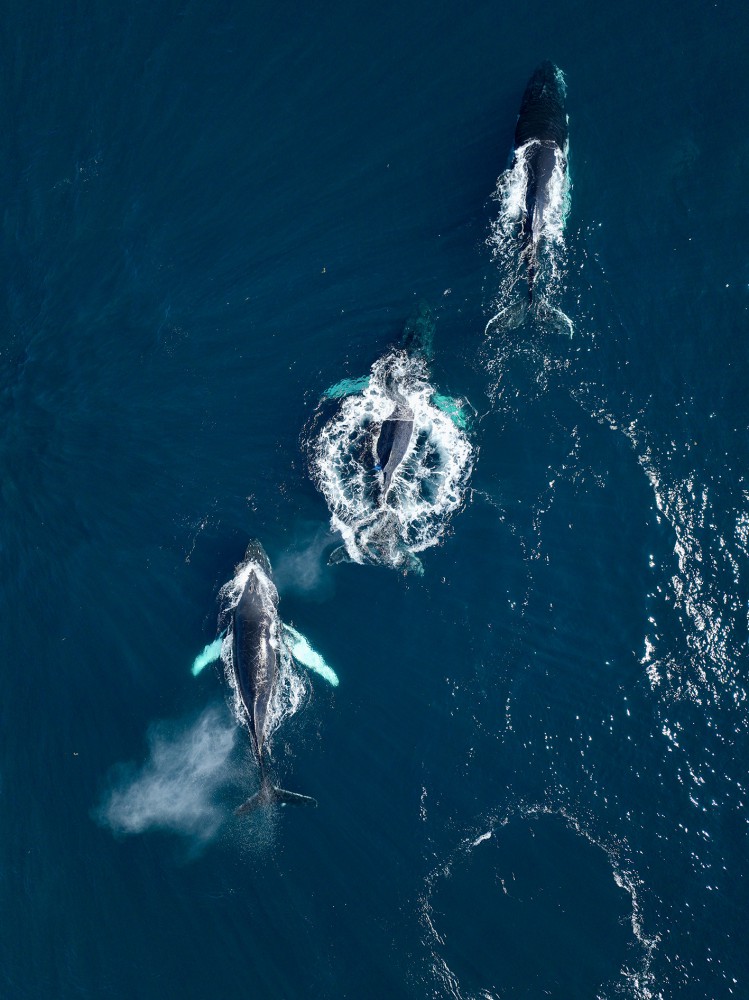
Image credit: Caribbean Cetacean Society (CCS)
The immediate institutional test sits with the International Whaling Commission (IWC), where colleagues from the Ministry of Environment and the Caribbean Cetacean Society are presenting the preliminary findings at the Scientific Committee meeting in Slovenia, and Delance is careful about what he is asking the IWC to do. The request, he says, is that the commission take the results into account as it shapes recommendations and priorities that strengthen humpback conservation, particularly in the Dominican Republic (DR), where the breeding grounds are a national natural asset.
He is equally candid that IWC action depends on capacity and consensus among member states and observers, which is a polite way of acknowledging that multilateral bodies tend to move quickly. “Even so, credible new science has a way of moving the conversation,” Delance adds. “It attracts further research, brings international attention to the Dominican Republic, migration routes for the species and, critically, helps channel training and capacity-building to empower local scientists and improve long-term cetacean conservation.”
There are still huge gaps in what we understand about the ocean, but the tools to close them now exist, with ample opportunity for yachting to be part of the world it operates in.
I ask Delance if a single expedition has ever genuinely changed conservation outcomes before in practice. In the context of the DR, the first thing that springs to his mind is Beata Expedition 2024. The vessel itself wasn’t well-prepared in terms of oceanic research capabilities, but a tourism catamaran with all the necessary equipment and capacity to conduct the largest oceanic expedition in the Beata region. That effort resulted in the establishment of the second-largest MPA in DR and the first one to include deep-sea floor ecosystems as part of its conservation objective.
But in the near term, he has already had “overwhelmingly positive” reactions from his peers in the DR. “People are already encouraging us to go deeper and move quickly towards a full scientific publication. A handful of scientists who have advised the project have also taken an initial look at the results, helping us confirm the signal and refine any details,” he says.
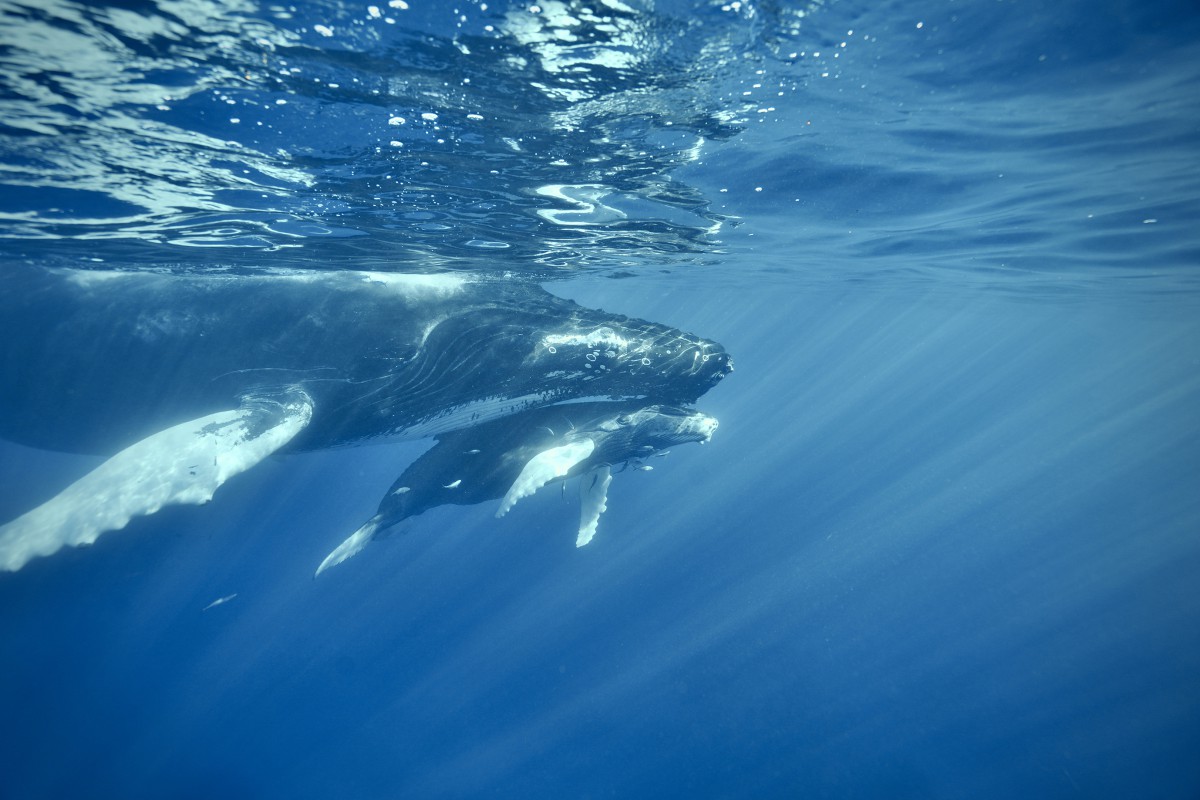
Image credit: Caribbean Cetacean Society (CCS)
“By the time this goes out, colleagues from the Ministry of Environment and the Caribbean Cetacean Society will have presented the preliminary findings at the IWC meeting in Slovenia. The peer-reviewed report will take longer, as it should, but the early reception has been distinctly encouraging.”
To look at this from a yachting perspective, the finding ought to register as a demonstration of what the fleet can do when it chooses to. EYOS secured the vessel, Yachts For Science provided the team – it’s a holistic approach and one that’s bringing in tangible results the likes of Sir David Attenborough would beam at. Solace’s systems allowed for observation and data capture, stabilised optics, elevated sightlines and streamlined logging systems. Dedicated research vessels are shared platforms with multiple disciplines competing for time, space and resources, which inevitably dilutes output.
There is no real barrier to entry for what is useful in these circumstances. An owner may
assume the scientific value of their vessel will be negligible, but the ripple effects can reach far
beyond a single expedition
The model that makes it work is a relatively simple proposition, too. Yachts have the capability and access paired with range, endurance, tenders and highly skilled crew. The fleet has vessels already operating in the most remote parts of the ocean, both in transit and at destination. This distinction gives researchers access to areas often beyond national programmes and the difference is flexibility. Where research vessels follow fixed schedules and routes, yachts can roam, return and expand effort over time. At their core, all yachts are expedition platforms, albeit just underutilised from a scientific perspective.
“But it’s the integration – the crew and scientists working as one system. That’s what makes this truly effective,” adds White. “A yacht with a single, focused science objective removes that friction. It allows for depth, not compromise, and that’s where real discovery happens. Yachts are not a replacement for research vessels; they are a force multiplier.”
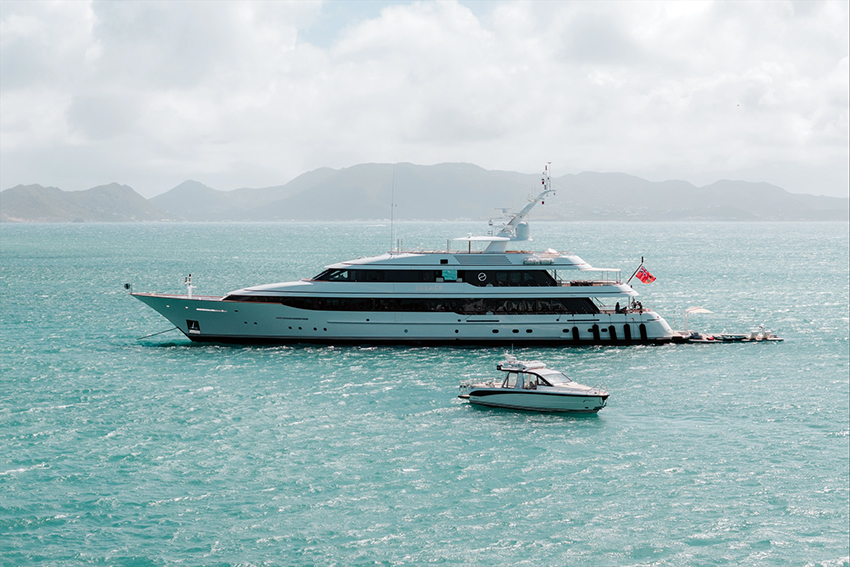
There is no real barrier to entry for what is useful in these circumstances. An owner may assume the scientific value of their vessel will be negligible, but the ripple effects can reach far beyond a single expedition, benefiting the host country, coastal communities, national scientific capacity and the biodiversity those communities depend on. Solace is a case in point.
For White, the appeal of the work is partly the science and partly the choreography of getting it done. “In the Dominican Republic, our science team spoke three different languages, none had worked on a yacht before, and for the crew, it was their first scientific expedition. Every conversation needed translation, every process had to be built from scratch.” From those first days figuring it out, he says, to the moment it all clicks and then to actual discovery, that is the part that stays with him.
There are still huge gaps in what we understand about the ocean, but the tools to close them now exist, with ample opportunity for yachting to be part of the world it operates in. The Navidad Bank expedition could read as a singular event, the product of one well-equipped Feadship and one willing owner, or as the demonstration of a model that can be replicated. Perhaps the answer should be the latter.
The vessel was between charters, with an owner willing to put its decks to work. That was the threshold. “The discovery was driven by Solace’s availability,” White says, “and that’s often how real discoveries happen. It’s easy to go to known places at known times and collect expected data. What we saw reinforces that when you operate outside those windows, you start to challenge assumptions and that’s where the interesting science is.”
This article first appeared in The Superyacht Report: Captains Focus. With our open-source policy, it is available to all by following this link, so read and download the latest issue and any of our previous issues in our library.
NEW: Sign up for SuperyachtNewsweek!
Get the latest weekly news, in-depth reports, intelligence, and strategic insights, delivered directly from The Superyacht Group's editors and market analysts.
Stay at the forefront of the superyacht industry with SuperyachtNewsweek
Click here to become part of The Superyacht Group community, and join us in our mission to make this industry accessible to all, and prosperous for the long-term. We are offering access to the superyacht industry’s most comprehensive and longstanding archive of business-critical information, as well as a comprehensive, real-time superyacht fleet database, for just £10 per month, because we are One Industry with One Mission. Sign up here.
Related news
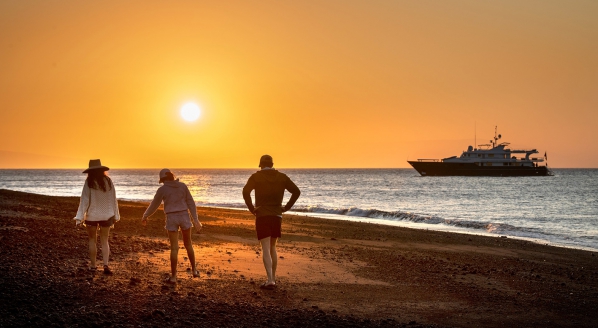
Destination unknown
Gayle Patterson, director of yachting at Pelorus Yachting, discusses humpback whales, shark tagging in the Galapagos and where experiential charter demand is he
Owner
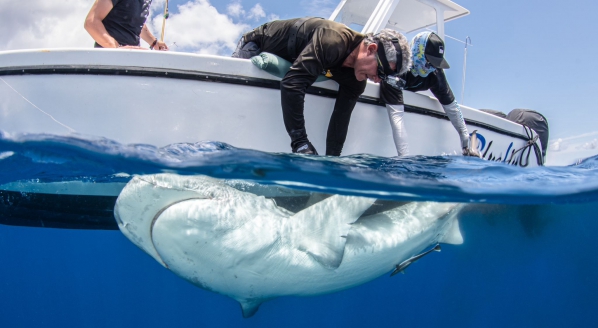
Yachties with a cause – YachtAid Global
Steve Jackman, Communications and Marketing, YachtAid Global, outlines their role in facilitating the interface between coastal communities and philanthropic ya
Owner

Shipyard CEOs on the state of the market – an interview with Feadship
Market-leading shipyard executives offer a collective diagnosis and a clear barometer of the current new-build landscape
Opinion
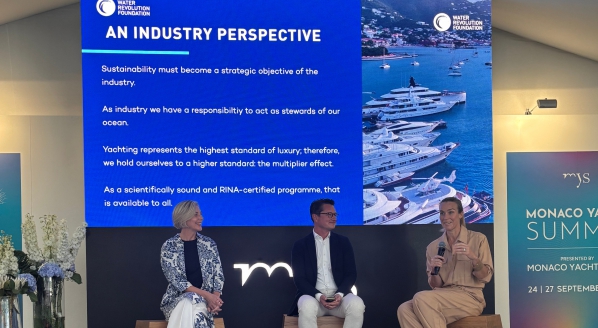
Water Revolution Foundation launches Ocean Assist Programme
Following its debut at the UN Ocean Conference (UNOC3), Water Revolution Foundation has now officially launched Ocean Assist at Monaco
Technology
Pressure to adopt biofuels mounts as regulation bites
Lloyd’s Register’s latest Fuel for Thought report positions HVO as the most practical near-term alternative to conventional marine fuels
Crew
NEW: Sign up for
SuperyachtNewsweek!
Get the latest weekly news, in-depth reports, intelligence, and strategic insights, delivered directly from The Superyacht Group's editors and market analysts.
Stay at the forefront of the superyacht industry with SuperyachtNewsweek