Destination unknown
Gayle Patterson, director of yachting at Pelorus Yachting, discusses humpback whales, shark tagging in the Galapagos and where experiential charter demand is heading…
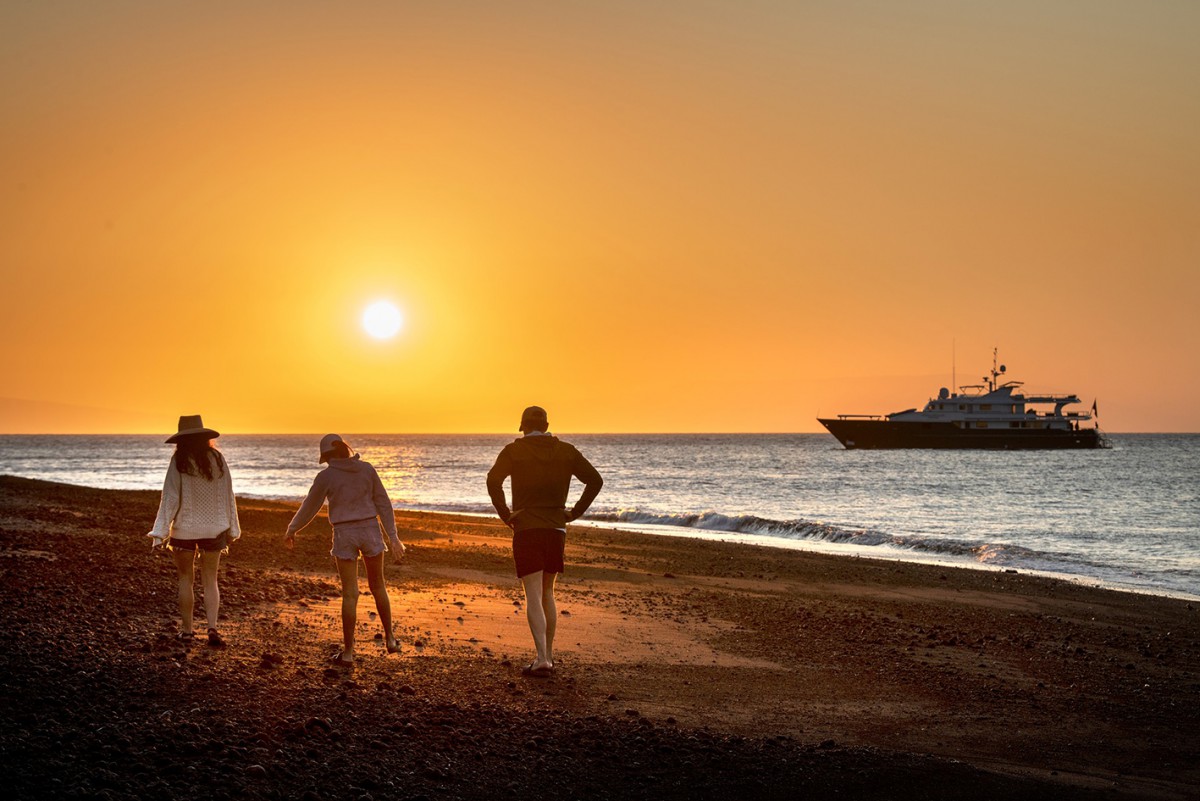
“Owners want a connection with the sea.” We hear it all the time. Walk the docks and the proof, you’d think, is in the acreage of glass, the beach club square-metreage and the height of the infinity pool above the waterline. But connection to the deep blue means infinitely more than proximity and aesthetics, s a growing cohort of guests want to know where the yacht is going, what is happening in the water once it gets there and whether anyone on board will be doing more than watching it through a window.
We’re seeing this in the destinations some charterers are chasing, swapping a glass of rosé on the aft along the Côte d’Azur for destinations far and unknown in the waters of the poles, Indonesia, French Polynesia, the Galápagos and the Maldives. All are regions Pelorus Yachting says are running hottest in its enquiry book, a list that reads more like a map of the planet’s most diverse ecosystems.
It’s a holistic approach to closing the gap between experiential charter of the most opulent proportions and providing a genuinely purposeful connection to the world we reside.
I sat down with Gayle Patterson, director of yachting at Pelorus Yachting, to understand what is driving this change and where this growing sector of the market is heading.
“I think Covid, to a certain extent, was when people suddenly thought ‘I want to tick off a lot of bucket-list destinations’. There are a few destinations in the world that have really opened to exploration yachting. For example, the Indonesian fleet has almost tripled in the last decade. Some destinations have suddenly opened up; we’re also seeing a younger generation of charterers who very much don’t just want to go and sit and drink wine. They want to be active and to continue their healthy lifestyle. Wellness is a big factor and that ties into the conservation, the idea of giving back and being part of something.
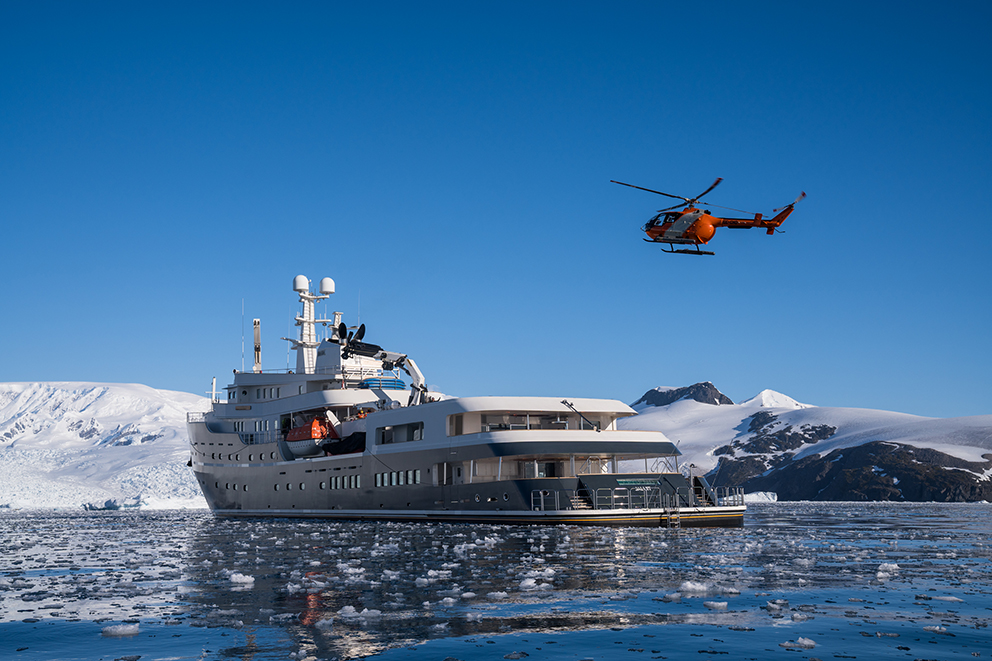
“Destinations that we have a lot of interest for are Antarctica, the Arctic, Indonesia and French Polynesia. They’re the regions that are really coming up in force. We don’t always have the yachts available there, unfortunately, particularly for Antarctica, but they’re certainly destinations that are very much now implanted on the charter map of the world. The wider industry is offering these destinations, infrastructure is growing and new yachts are coming onto the market.”
Much of the demand is multi-generational, where families are driving a sizeable share of these bookings and the educational pull of putting children alongside working scientists is a formative factor of what lands on the calendar in the first place. The cohort behind those bookings is one that built away from the Mediterranean season. “A lot of our clients are very open-minded. It might be clients who have come to us because they’re fed up with traditional yachting and want to do something different. They've come to us because they’re young and adventurous,” adds Patterson.
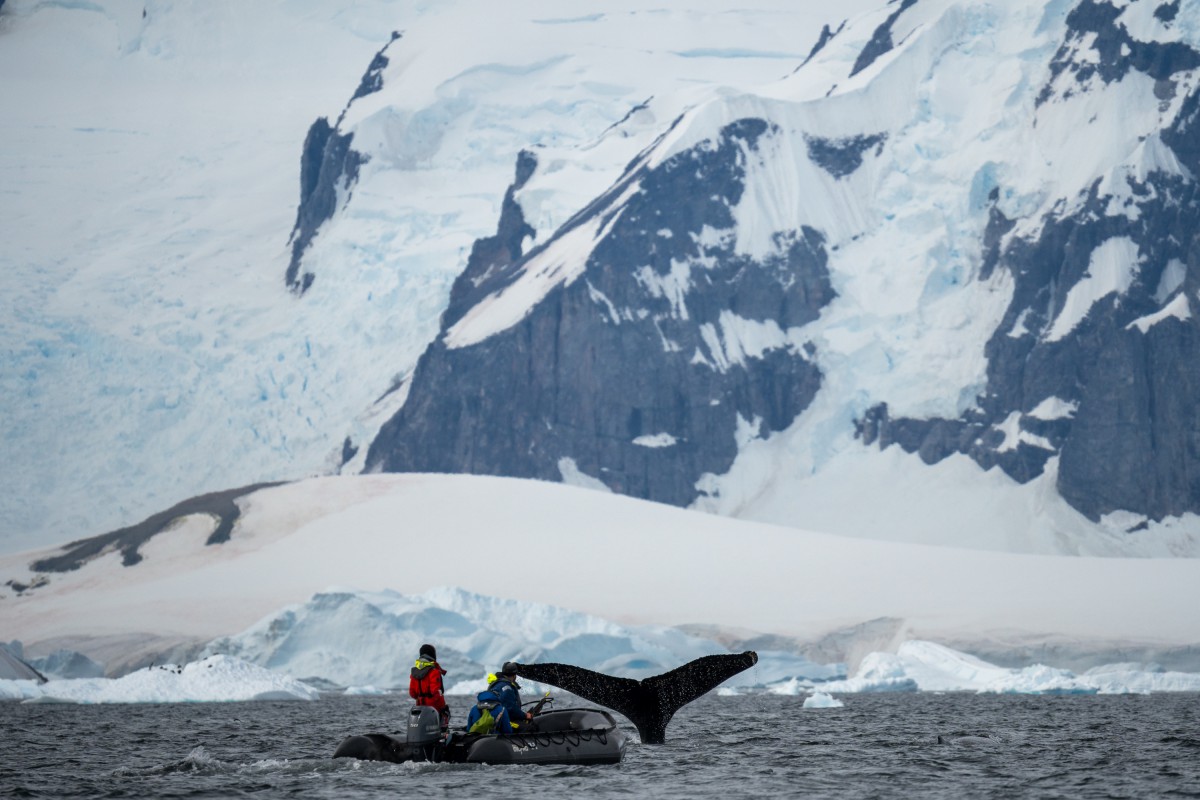
The headline example from the past Pelorus Yachting season was in the Antarctic. A family booked a charter built around a dual heli-ski operation, then asked for scientists on board, paying for them out of their own pocket. The team that came with the charter ran a whale-tagging programme alongside the skiing.
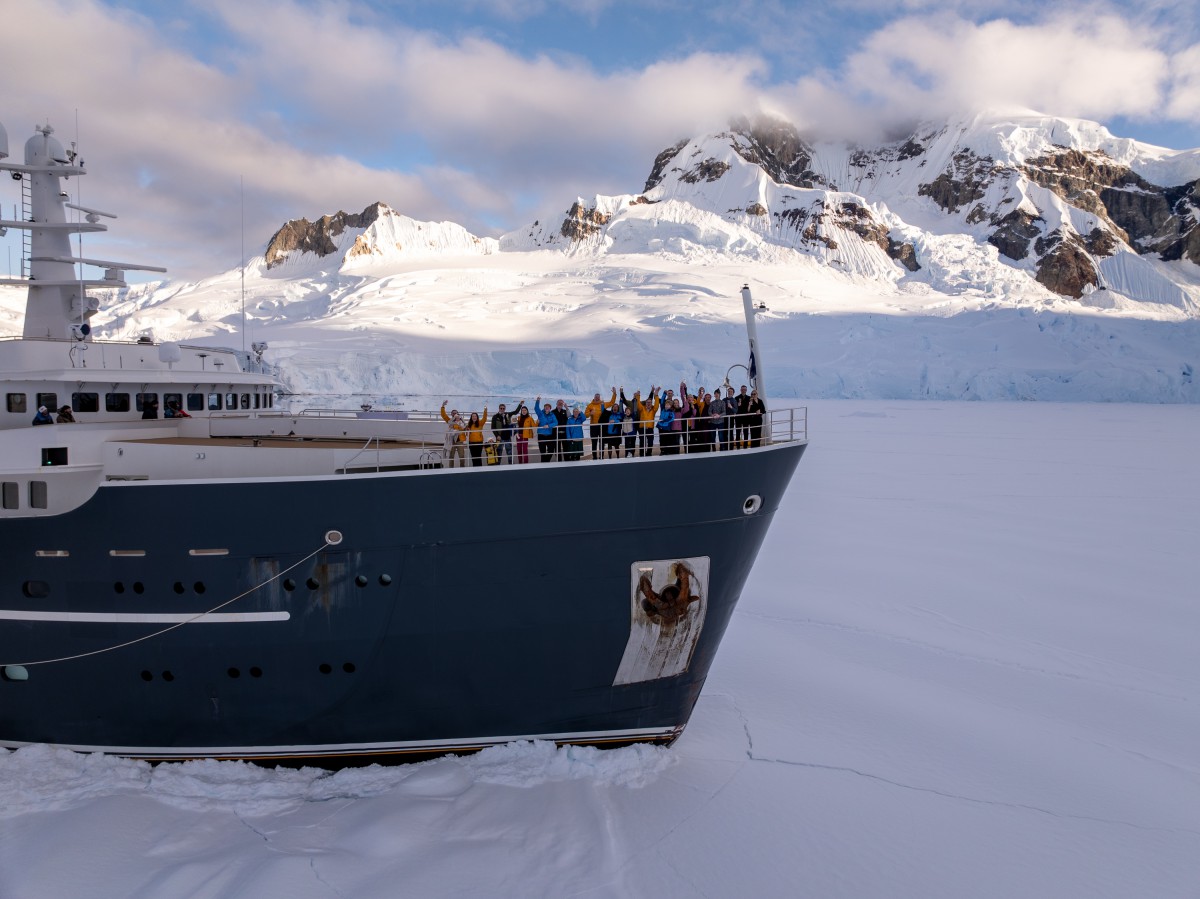
“We had a support staff of over 20. The client actually paid for scientists to come on board and they were geo-tagging the whales, which led to a heart rate monitor being attached to a whale shortly after the charter. For the client to have contributed to that with his family and his children, it was a defining moment of the trip. It wasn’t necessarily the purpose, but for him, it was something totally unique and one of the best experiences. Getting hands-on and seeing what people do, but actually being able to say they’ve done that, is completely unique. You’re helping with the bigger picture, helping long-term conservation, rather than just being in the moment.”
The behavioural pattern of one client carrying the appetite from whales to tropical reefs
is the mechanism by which that capital actually starts to move and garner tangible results
for the scientific community.
It’s a pretty radical feat that a first-of-its-kind cetacean physiology data point, which used to belong in a research vessel’s log, now has found a place in a superyacht charter debrief and the family that funded it disembarks, having watched their children sit alongside the scientists who made it happen. It’s a holistic approach to closing the gap between experiential charter of the most opulent proportions and providing a genuinely purposeful connection to the world we reside.
The momentous occasion completely changed what the client wanted from his next charter too. Patterson explains the client returned to Pelorus Yachting a few months later, this time for the Maldives and arriving with a query of what the team can actually do when they get there, rather than a standard itinerary. “His first question was, ‘How can I get involved? What can I do in terms of marine conservation in the Maldives?’ While he might not want to carry on looking after the whales, it certainly triggered and developed a greater awareness to then continue broader conservation efforts. Then it’s global, rather than very specific. These clients do have rather large budgets that are life-changing, or career-changing sometimes, for the scientists and for the scientific projects that we support, because suddenly having a huge influx in donations or support and awareness can really change the outcome and speed up a lot of the results.”
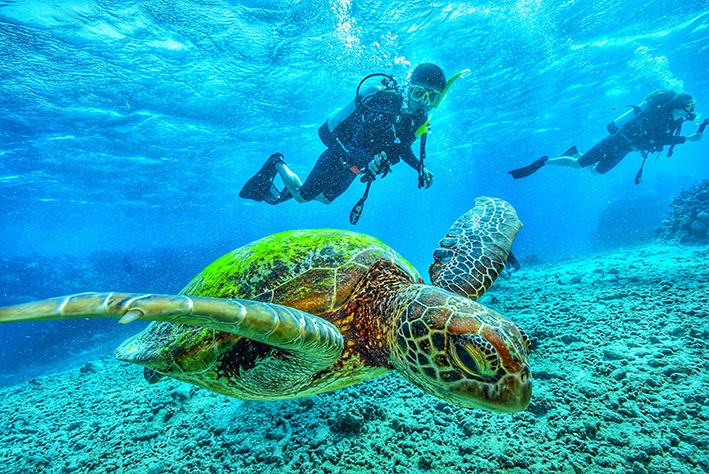
This is where the conversation really lies for bringing superyachting and science together where a fortnight of high-net-worth funding can underwrite a programme that would otherwise spend months, if not longer, chasing the same money. The behavioural pattern of one client carrying the appetite from whales to tropical reefs is the mechanism by which that capital actually starts to move and garner tangible results for the scientific community. The Galápagos is where this model is being run next with actual conviction, with a programme that is now coming together, took six to eight months to assemble, from identifying the right scientists to lining up dates, yachts and local partners. Patterson explains that the company does not plug into a single big NGO but instead constructs these charters around local scientists and local organisations, vetted over months and channelled through the Pelorus Foundation rather than dropped into a general fund.
“We don’t necessarily just work with one organisation,” she says. “We do a lot of research diligently in terms of who is on the ground, who they work for, what they’re looking at. It’s not just one company. We have the Pelorus Foundation as well and they have great local contacts on the ground to make sure that we are choosing the best. You want to make sure you’ve got the most impact, rather than sending money to a big organisation.”
“We hand-select the scientists to make sure that they’re also able to share
their expertise and all of their knowledge with the clients. It really is an education piece ...
There’s a harmony amongst the charter and the team.”
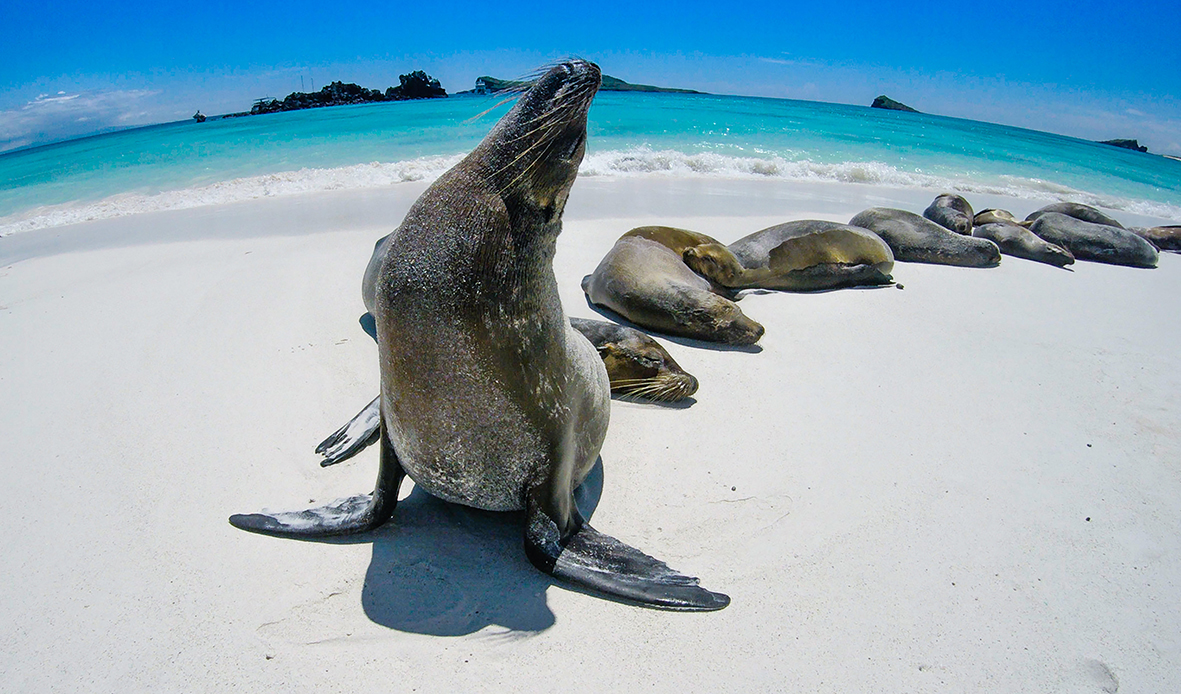
The programme works are run from Hermes from Ecuadorian shipyard Factoria Naval Morla S.A. Famorsa, and entails photographic identification and acoustic tracking of hammerhead pups around Mosquera, a separate research thread following mobula and manta migrations through the archipelago and hands-on tortoise monitoring in the Santa Cruz highlands. Guests are brought into the project at whatever capacity they want, where some opt to simply take the briefings and watch the data come back in the evening, but others go out on the tenders with the scientists.
We work closely with the captain and the crew to make sure that it doesn’t impact their day-to-day work negatively, but also integrate them into the project as well.
The model only works because of who Pelorus Yachting puts on board, since field science, by its nature, can be repetitive, slow and often deeply unglamorous and a client paying serious money for a charter of it will lose patience fast if the scientists cannot also share their methods and findings. But Patterson explains that this is all factored into the plan in the first place. “We hand-select the scientists to make sure that they’re also able to share their expertise and all of their knowledge with the clients. It really is an education piece. The scientists aren’t so focused on what they’re doing that they’re also integrating clients, sharing their knowledge and getting the clients excited around that. There’s a harmony amongst the charter and the team.”
The crew end of the equation matters as much, where yachting’s standard trade-off is that a tip-line job in extraordinary places is still an occupation of service of extremely high standards. Conservation work softens that, partly because the crew gets to be in the room when the science happens and partly because they end up doing some of it.
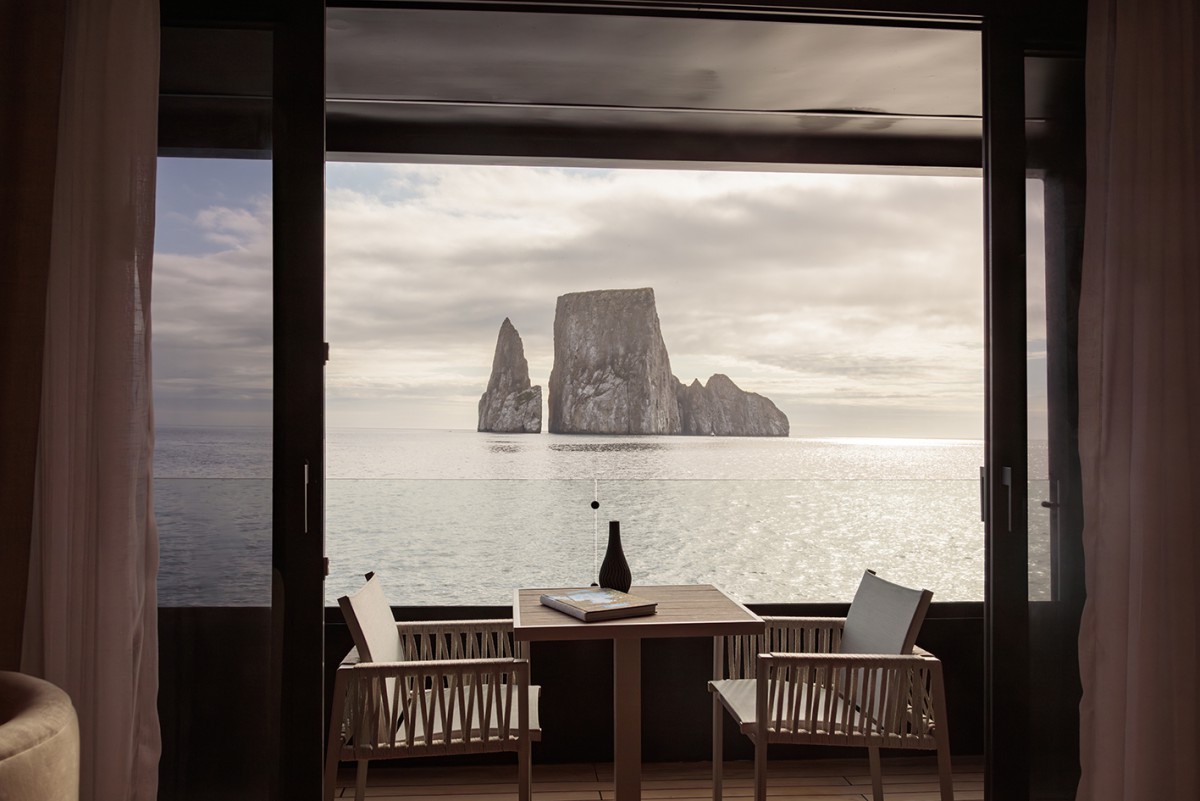
On board Hermes, where guests are brought into the research projects at whatever capacity they want.
“Generally, it’s been very well received. The crew who are cruising in these unusual destinations are really keen to learn more about the destination in which they’re cruising. We work closely with the captain and the crew to make sure that it doesn’t impact their day-to-day work negatively, but also integrate them into the project as well, making sure that the tender drivers come from the crew, not just from the expedition staff and making sure that the crew are also getting involved in the project. The more people you’ve got engaged, the more excited the clients become as well. The scientists also feel supported from all sides.”
The kit matters too. Captain Arctic, the 70-metre solar-and-wind expedition yacht due for delivery later this year, has been built by French Polar outfit Selar at Chantier Naval de l’Ocean Indien in Mauritius and will be chartered through Pelorus Yachting. It runs on five 35-metre rigid solar sails carrying close to 2,000 square metres of photovoltaic panels, with electric propulsion that doubles as hydro-generation under sail. Bureau Veritas has also certified a 90 per cent reduction in CO2 against comparable vessels. The yacht will cruise Norway, Svalbard and Greenland, captained by Sophie Galvagnon, Selar’s co-founder, who has spent over 17 years working in the Arctic as a captain and ice pilot.
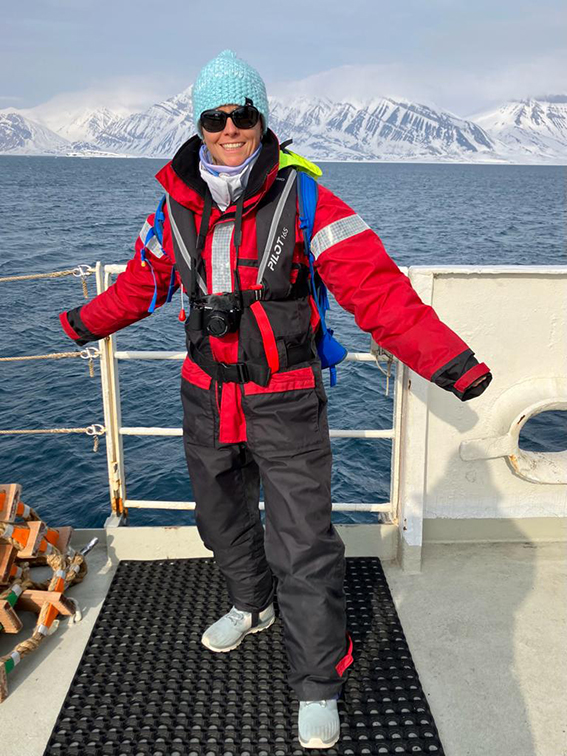 Patterson in Svalbard
“That’s the destination I’m really excited about now – the Arctic,” says Patterson. “I think Svalbard is a really cool and special destination. The new generation of yachts that will be cruising in these very fragile ecosystems, that’s the future of yachting. That’s what I’m super excited about.”
A purpose-built low-impact platform entering the charter fleet for the high-latitude season is a litmus test for where this segment of the market is heading. The Antarctic charter that produced the heart-rate monitor was, in the end, a week’s adventure holiday turned conservation project, and these requests are only becoming more frequent.
For some, there is still nothing better than the long lunch off Antibes. But for others, adventure waits in waters the fleet has not yet reached and the rest of the industry is starting to follow. Builders are pushing the boundaries of operational efficiency for the region’s clients now want to reach, operators are building working relationships with the scientific communities on the round and clients are pushing for charters in destinations unknown.
“The new generation of yachts will be cruising in these very fragile ecosystems,” Patterson adds. “This is the future of yachting.”
This article first appeared in The Superyacht Report: Captains Focus. With our open-source policy, it is available to all by following this link, so read and download the latest issue and any of our previous issues in our library.
NEW: Sign up for SuperyachtNewsweek!
Get the latest weekly news, in-depth reports, intelligence, and strategic insights, delivered directly from The Superyacht Group's editors and market analysts.
Stay at the forefront of the superyacht industry with SuperyachtNewsweek
Click here to become part of The Superyacht Group community, and join us in our mission to make this industry accessible to all, and prosperous for the long-term. We are offering access to the superyacht industry’s most comprehensive and longstanding archive of business-critical information, as well as a comprehensive, real-time superyacht fleet database, for just £10 per month, because we are One Industry with One Mission. Sign up here.
Related news
The Superyacht Report 229: Captains Focus - Out Now
513 whales in a day, a yacht arrested by US Marshals, Guy Booth on refusing to abandon Phi and so much more in TSR 229
Crew
.jpg)
New association for naval architects, exterior and interior designers launches
Superyacht Design and Naval Architecture Association (SYDNA) established to advance design and naval architecture in the superyacht sector
Crew
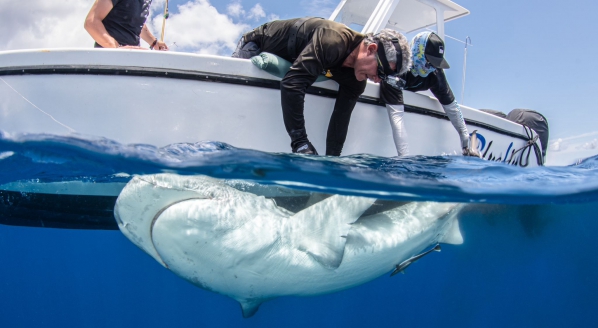
Yachties with a cause – YachtAid Global
Steve Jackman, Communications and Marketing, YachtAid Global, outlines their role in facilitating the interface between coastal communities and philanthropic ya
Owner
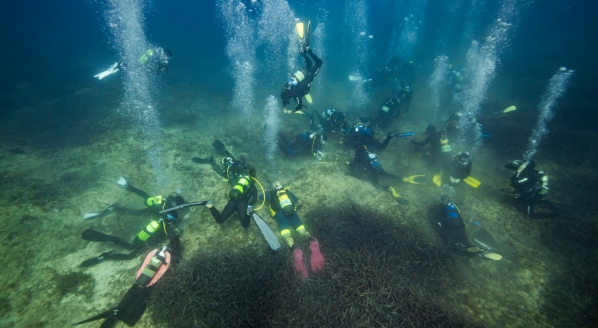
Marina Ibiza Posidonia Meadow
Marina Ibiza begins planting 1,500 Posidonia plants to help with the regeneration of Talamanca Bay
Owner
A new chapter for Water Revolution Foundation – and for our industry
Setting out a vision for raising the standards of environmental performance with clear metrics, credible standards and alignment across all stakeholders
Opinion
Related news
The Superyacht Report 229: Captains Focus - Out Now
4 months ago
Yachties with a cause – YachtAid Global
4 months ago
Marina Ibiza Posidonia Meadow
5 months ago
NEW: Sign up for
SuperyachtNewsweek!
Get the latest weekly news, in-depth reports, intelligence, and strategic insights, delivered directly from The Superyacht Group's editors and market analysts.
Stay at the forefront of the superyacht industry with SuperyachtNewsweek