Why crews still build their own spreadsheets
Looking at the spreadsheets crews keep alongside their software has taught me a fair amount about what yacht software gets wrong…

My co-founder is a captain. When he came back from a three-month voyage, he spent the next two weeks putting the trip's accounts back together from a bag of paper receipts and a spreadsheet he had started late one night. Most of that time was spent on trying to remember which fuel stops had been charged to the owner and which had been paid from the charterer’s APA. The receipts showed what had been spent, but working out who should pay for each stop meant piecing it together weeks after the event.
That fortnight is how we ended up building yacht operations software, and it has made me look differently at the spreadsheets crews keep running next to the systems their owners pay for. When I look at one of those sheets now, the first thing I want to know is why the crew needed it.
On 24 September SuperyachtNews asked why some operators build their own tools instead of buying established systems. I can only answer from the software side, with a handful of trial users behind me, so treat what follows as one builder’s view.
Signal is where it usually starts. The useful moment to log a fuel stop is at the fuel dock, with the receipt still in your hand, and the useful moment to note a defect is while you are looking at it. If the app needs a connection before it will save anything, the entry gets put off until the boat is back in range, and by then the detail has often gone. A notebook has no such problem and neither does a spreadsheet on the chart table laptop. With our own trial users, entering an expense offline and letting it sync later is the part I have seen them use in the way I hoped, small as that sample is. In any demonstration of offline working, I would want to see the entry survive the app being closed and arrive in the office afterwards, because an icon saying the app is offline proves very little.
Maintenance has a different problem. Engine manufacturers set many service intervals in running hours, and a busy charter season can bring an engine to its next service months before the date in the planner. A boat that sits on the hard all winter does the opposite. If the system will only schedule a service against a date, the engineer ends up keeping the hours on a separate sheet, and from then on the boat has two maintenance records that can drift apart. A job gets signed off in one place while the hour history lives in the other. Anyone planning the next busy period then has to reconcile them by hand to find out what is actually due. I would want any system to show me the last meter reading, the date it was taken and how it worked out the next service from it.
The difficulty is that the roster records what was planned, while the rest record has to show what actually happened when someone was called out at two in the morning or a guest departure ran three hours late. If the two are kept apart, the record may end up being copied from the plan.
Crew rest records can go the same way. On the hours-of-rest basis, Standard A2.3 of the Maritime Labour Convention 2006 requires at least ten hours of rest in any 24-hour period and 77 hours in any seven-day period. That rest may be split into no more than two periods, one of them at least six hours long, with no more than 14 hours between periods, and individual records have to be kept. Flag states can authorise exceptions, and whether the Convention applies at all depends on how a yacht is registered and operated, so the rules a particular vessel works to may differ from these figures.
The difficulty is that the roster records what was planned, while the rest record has to show what actually happened when someone was called out at two in the morning or a guest departure ran three hours late. If the two are kept apart, the record may end up being copied from the plan. Certificates bring their own expiry dates for crew and for the vessel, and when all of this sits in a module the crew seldom opens during a normal week, whoever carries the responsibility will often build a spreadsheet just to see everything on one screen. Given what a missed renewal or an inaccurate rest record can cost at an inspection, I think that is a reasonable thing to do.
The trouble often starts when the person who built the sheet leaves. A spreadsheet that only one person understands is hard to hand over, and harder still when the office keeps its own copy. I would still look at the sheet before anything else and ask the crew why they chose to record those details themselves. Those of us who build software should read these sheets closely, untidy columns included.
If you are choosing a system, I would make the demonstration look like a day on board. Ask the vendor to put a phone into aeroplane mode, enter an expense with a photo of the receipt, close the app and open it again. Then turn the connection back on and check that the entry appears in the office view once, with the photo attached. The vendor should also be able to take a meter reading and show you a job falling due on hours, on a date, or on whichever arrives first. I would also change a shift on the roster and check that the rest already recorded for that crew member stays exactly as it was entered.
Before signing anything, ask for an export of one vessel’s records while you are still in the meeting, including the receipts and the meter readings behind the maintenance history. A captain who moves on, or an owner who changes management company, will need those records in a form someone else can use, and the demonstration is the easiest time to find out whether that is possible.
Ayberk Kaya is the founder of HelmOps, yacht operations software built in Izmir.
Why not join the debate – we’re inviting Captains, Senior Crew, Yacht Managers, Owners’ Representatives and anyone with operational experience with superyacht management software to share their candid experiences, opinions and views to understand how the industry feels about the superyacht management software it uses (or doesn’t use). The survey takes around five minutes and all responses are confidential. Click here to take part.
NEW: Sign up for SuperyachtNewsweek!
Get the latest weekly news, in-depth reports, intelligence, and strategic insights, delivered directly from The Superyacht Group's editors and market analysts.
Stay at the forefront of the superyacht industry with SuperyachtNewsweek
Click here to become part of The Superyacht Group community, and join us in our mission to make this industry accessible to all, and prosperous for the long-term. We are offering access to the superyacht industry’s most comprehensive and longstanding archive of business-critical information, as well as a comprehensive, real-time superyacht fleet database, for just £10 per month, because we are One Industry with One Mission. Sign up here.
Related news

What owners bring to crew
The best-run vessels in this industry share one thing in common – Karine Rayson explains what the owners who get it right are actually doing differently
Owner

Guidance for non-Schengen nationals
Guidance from the PYA to avoid being caught off guard by the new Schengen Entry/Exit System instituted earlier this year
Crew

What do you think of Superyacht Management Software?
We want to hear from the market, the operators, the users and the managers to understand what you really think
Crew

The crew management conundrum
Deep Blue Software’s recently upgraded Crew Management Package joins up all of the admin that comes with hiring and managing a team on board
Crew
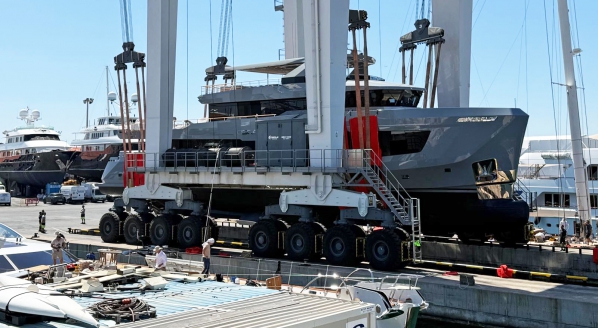
Command on the hard
A single word, “refit”, describes projects that differ from one another by a factor of 50 and are rarely resourced properly
Opinion
Related news
What owners bring to crew
2 days ago
Guidance for non-Schengen nationals
1 week ago
The crew management conundrum
4 weeks ago
Command on the hard
2 months ago
NEW: Sign up for
SuperyachtNewsweek!
Get the latest weekly news, in-depth reports, intelligence, and strategic insights, delivered directly from The Superyacht Group's editors and market analysts.
Stay at the forefront of the superyacht industry with SuperyachtNewsweek