The invisible curriculum
Andrew Roch, founder and CEO of Yacht Crew Recruitment & Training, on leadership, mentorship and how great captains are really made…
Ask most captains what made them the leader they are today and they won’t point to a qualification, they'll point to a teacher, trainer, leader, mentor or coach. Someone who set the standard, someone direct enough to tell them what they were getting wrong, before it became a habit. Someone who saw potential and took the time and trouble to develop it. That’s how leadership has always been transmitted, through people; informally, interpersonally and largely invisibly. That has never been more true than it is today and it has never been harder to get right.
This is the first in a series of articles on leadership in the superyacht industry, not leadership in the abstract, but as it is actually practised – on board, under pressure, in the difficult spaces between authority and trust. Each article will examine a different aspect of how we develop, support and sustain the people who lead our vessels. This one starts where leadership itself begins: where and how it is learned.
If we asked a hundred captains how they arrived at command, we would hear a hundred different stories. I know this because we recently put that question to six captains on our Command Programme during a lecture session. The stories they told were so varied and so revealing, they would make a podcast series in themselves, and I have been thinking about them ever since.
One was a tugboat driver, one a solo fisherman, one came up through the deck to officer route in commercial shipping. One fell into an interior role by accident in their late teens and moved to deck and then to the bridge and never left, and two worked their way from deckhand to command over one or two decades of seasons. What they shared was the experience of learning to lead, almost entirely through other people. That invisible curriculum has produced many exceptional captains, but it also has its limitations.
Today’s superyacht captain is, in many respects, the CEO of a vessel that looks nothing like the one that role was originally defined around.
The established route to command – progression through the certification ladder: accumulated sea time, demonstrable technical competency and the step into command – certainly produces highly capable mariners. That will not change and nor should it. Regulatory competence and seamanship are the foundations of the profession and they will always matter. What the certification pathway was not designed to produce is a captain who is prepared for the full organisational weight of modern command.
To understand why, it helps to look at how much the vessel itself has changed. A 50-metre yacht, built in the 1980s typically ran a crew of 13 to 15. The same platform today often operates with nine, despite carrying roughly 40 per cent more internal volume and significantly more complex systems. The expectations placed on those nine crew members have multiplied accordingly. A deckhand who once focused on seamanship and maintenance is now expected to cover tender operations, water sports, guest interaction, safety, logistics and technology. An interior team that was once stewards and stewardesses is now expected to move between the roles of spa therapist, hairdresser, barista, mixologist, silver service professional, butler, housekeeper, personal assistant, event organiser and on family yachts, nanny – often in the same day.
Today’s superyacht captain is, in many respects, the CEO of a vessel that looks nothing like the one that role was originally defined around. Command now encompasses crew leadership and development, HR, recruitment, retention, mental health, owner liaison, operational budgeting and, increasingly, active involvement in refit and new-build programmes. For many captains, these are where the majority of the working week is spent.
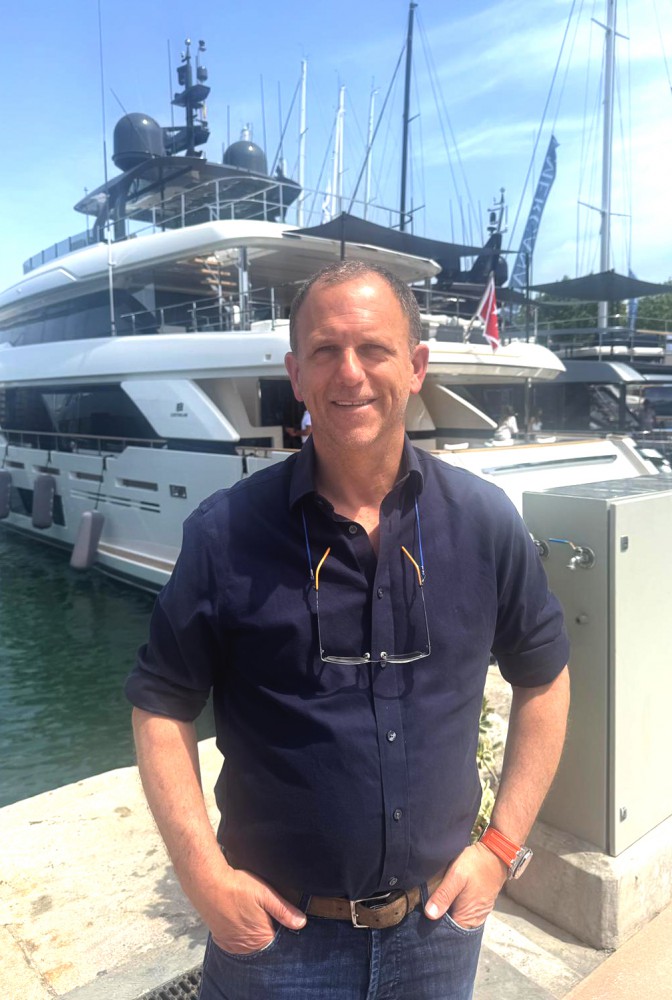
Andrew Roch, founder and CEO, Yacht Crew Recruitment & Training
The industry has not ignored this entirely, the introduction of HELM training under the STCW framework was an important step and an acknowledgement that technical proficiency alone does not guarantee safe or effective operations. HELM examines communication, decision-making and situational awareness within the bridge team environment. It is valuable, but it was designed for operational safety and does not address the broader reality of leading and managing a crew over the course of a season: the interpersonal complexity, the performance conversations, the psychological safety and long-term cohesion that determines whether experienced crew stay or leave. That gap is where the invisible curriculum is most exposed.
Mentorship in yachting is, for the most part, unstructured. It happens, often generously, sometimes transformatively, but largely by chance; a junior officer happens to work under a captain who takes their development seriously; a chief stewardess gets pulled into difficult conversations early and learns from them; or a deckhand finds a lead bosun with the time and willingness to explain not just the task, but also the thinking behind it. When it works, it is one of the most powerful forms of professional development there is; the problem is that it depends entirely on who you happen to work for. Without a formal emphasis, the quality of leadership education in this industry has always been largely a matter of luck.
One of the industry’s most persistent challenges is crew retention. It is shaped more by leadership than almost any other factor.
That is not sustainable at a time when the vessels are larger, the teams are more stretched and the operational expectations have never been higher, nor is it fair to the next generation of crew who are trying to develop a professional leadership identity in an environment that rarely gives them explicit feedback or structured support.
One of the industry’s most persistent challenges is crew retention. It is shaped more by leadership than almost any other factor. Crew stay where expectations are clear, communication is honest and their development is taken seriously, but they won't hang around if those things are absent. Most captains who struggle with this were never taught any differently. That is the real cost: the experienced people who leave the industry cannot easily be replaced.
Leadership development programmes built specifically for captains and senior crew are starting to emerge, giving the informal traditions of mentorship some structure. This training is designed to help individuals in positions of responsibility understand their own leadership style, and its impact on the people around them. They work best when they are grounded in the realities of yachting. Training should be built around the specific dynamics of a yacht: the closed environment, the hierarchy, the intensity of the season, the particular vulnerabilities of crew who live and work in the same space.
Conversations about crew wellbeing, psychological safety and team development are no longer fringe topics in yachting, they are finding their way into serious professional discussion, and that is incredibly important because behind every well-run yacht is a captain who knows how to lead, and no SOPs can substitute for that, no matter how perfect.
Every captain in that lecture could name the person who made them. Some could also name the one who didn't: the skipper who set a poor example, the senior officer who never explained anything, the season they spent figuring it out alone and the mistakes they will never forget. Good crew have been leaving this industry for years because of poor leadership. That is not a retention problem, it’s a training problem. The industry is starting to take it seriously and the next generation deserves more than luck.
Profile links
Yacht Crew Recruitment & Training
NEW: Sign up for SuperyachtNewsweek!
Get the latest weekly news, in-depth reports, intelligence, and strategic insights, delivered directly from The Superyacht Group's editors and market analysts.
Stay at the forefront of the superyacht industry with SuperyachtNewsweek
Click here to become part of The Superyacht Group community, and join us in our mission to make this industry accessible to all, and prosperous for the long-term. We are offering access to the superyacht industry’s most comprehensive and longstanding archive of business-critical information, as well as a comprehensive, real-time superyacht fleet database, for just £10 per month, because we are One Industry with One Mission. Sign up here.
Related news
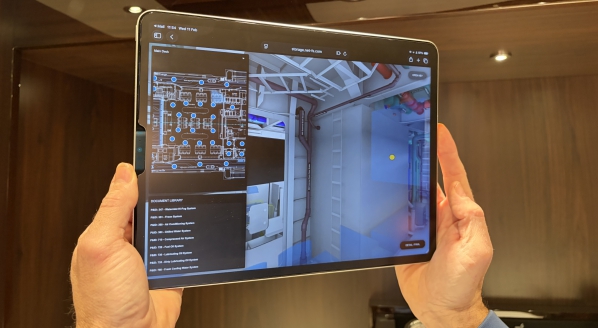
The asset you can’t see: why technical knowledge is the next frontier of superyacht value
Jonathan Lee, CEO of Sentini Marine, argues that the industry’s most overlooked asset is the operational knowledge embedded in the vessel itself
Opinion
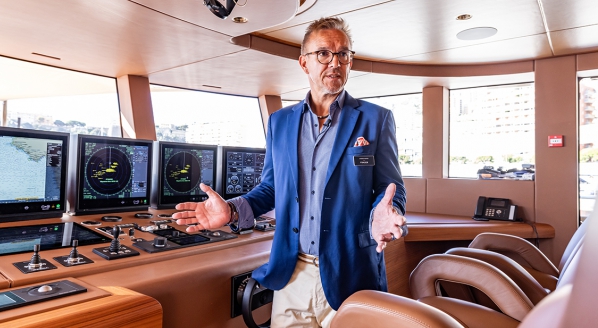
Trust and serendipity - Anders Kurtén talks Fraser
Moving from shipyard to brokerage isn’t quite the cosmic career jump some might think
Business
Superyacht OpEx Survey: Captains and First Officers have your say
How much do superyachts really spend – and where does that money go?
Crew
.png)
British Marine to launch the BM Academy
The trade association for the UK leisure, superyacht and small commercial marine industry announces new digital training platform
Crew

Acting, leadership and the future of command
What acting classes taught me about yachting – by Captain Carsten Franik
Opinion
Related news
Trust and serendipity - Anders Kurtén talks Fraser
7 months ago
British Marine to launch the BM Academy
8 months ago
Acting, leadership and the future of command
10 months ago
NEW: Sign up for
SuperyachtNewsweek!
Get the latest weekly news, in-depth reports, intelligence, and strategic insights, delivered directly from The Superyacht Group's editors and market analysts.
Stay at the forefront of the superyacht industry with SuperyachtNewsweek