
Transforming offshore connectivity for superyachts
How to achieve on-land connectivity, even in the remotest stretches of open ocean, by the Director of Global Commercial Programs and Solutions at Kymeta…
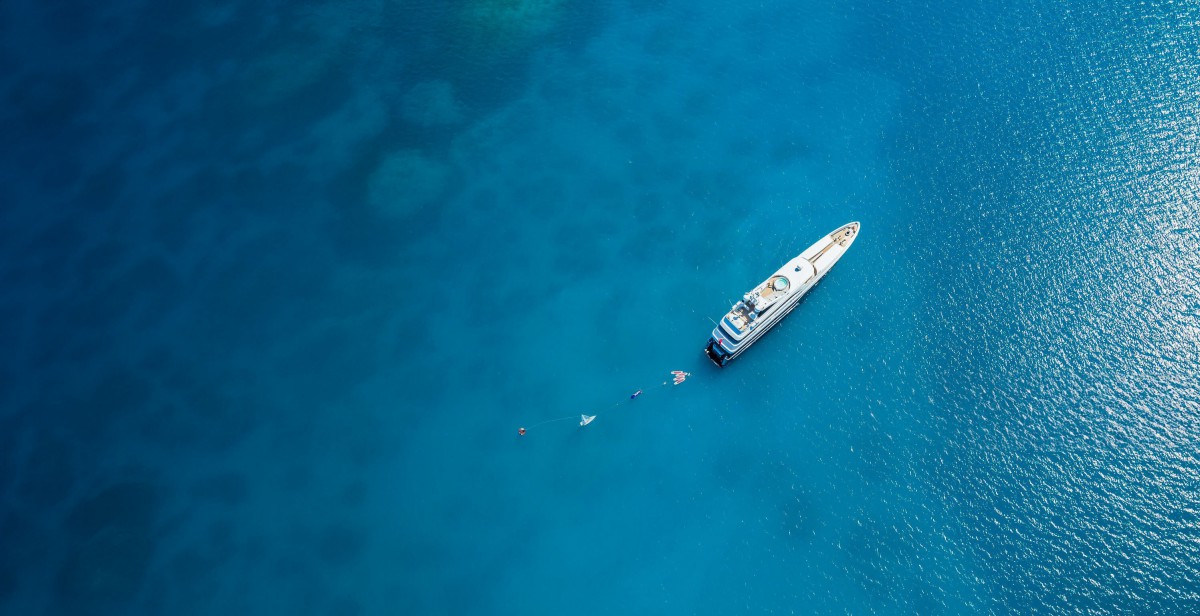
As superyachts venture further and wider across the globe, reliable connectivity is no longer regarded as a luxury but an expectation, even in rough seas. In today’s always-on digital landscape, maintaining robust communications is essential so that individuals can enjoy the same digital freedom on the high seas as they have onshore.
It was not too long ago that this expectation was inconceivable for superyachts. Decades ago, communications at sea relied on shortwave radio frequencies that bounced signals off the Earth’s atmosphere. While pioneering for its time, shortwave radio offered very limited bandwidth and range as well as being highly vulnerable to atmospheric conditions that frequently disrupted transmissions.
The introduction of satellite communications (SATCOM) technology in the 1990s marked a major shift in long-range maritime communication for vessels operating beyond the reach of terrestrial systems. For the first time, vessels could contact rescue centres or shore authorities from almost anywhere in the ocean, supporting distress calls and emergency coordination. SATCOM became a core part of the Global Maritime Distress and Safety System (GMDSS), which improved survival rates for vessels in distress.
However, despite its groundbreaking capabilities, first-generation SATCOM came with significant shortcomings, from complex stabilisation systems to low data speeds, bringing a raft of adoption challenges. In contrast, today’s flat-panel satellite terminals offer reliable, stable connectivity for a fraction of the size, weight, power and cost demanded by legacy terminals.
Unlike modern flat-panel antennas, early SATCOM systems relied on large, heavy parabolic antennas housed in domes, weighing several hundred kilograms, and using motors and gyroscopes to mechanically track satellites. This meant each installation required precise calibration to ensure the dish could continuously adjust its angle relative to the moving vessel and the satellite in orbit. These dishes required complex stabilisation systems to track satellites and in rough seas or during tight manoeuvres signals often degraded or dropped completely.
Modern satellite technology has revolutionised the superyacht industry, overcoming previous limitations to global cruising and establishing new standards for life at sea.
Ultimately, many vessels lacked the structural infrastructure required to support the stabilisation units and cabling needed for its installation due to its complex configuration.
Early SATCOM technology also suffered from high operational costs, latency and low data speeds, making anything beyond basic voice communication nearly impossible. Back then, SATCOM was therefore primarily used for essential communication and emergencies rather than everyday on-board connectivity.
Cellular networks later expanded internet access for vessels operating closer to shore, providing lower latency and a more stable connection. Yet superyachts still faced unique challenges. Unlike stationary vessels or those within coastal range, superyachts would lose connection once they were too far out of cellular range. Their on-board structures, such as steel and aluminium hulls, superstructures and metallised glass, can also weaken or block 5G signals. Consequently, superyachts seeking a stable and continuous connection while at sea require advanced satellite connectivity.
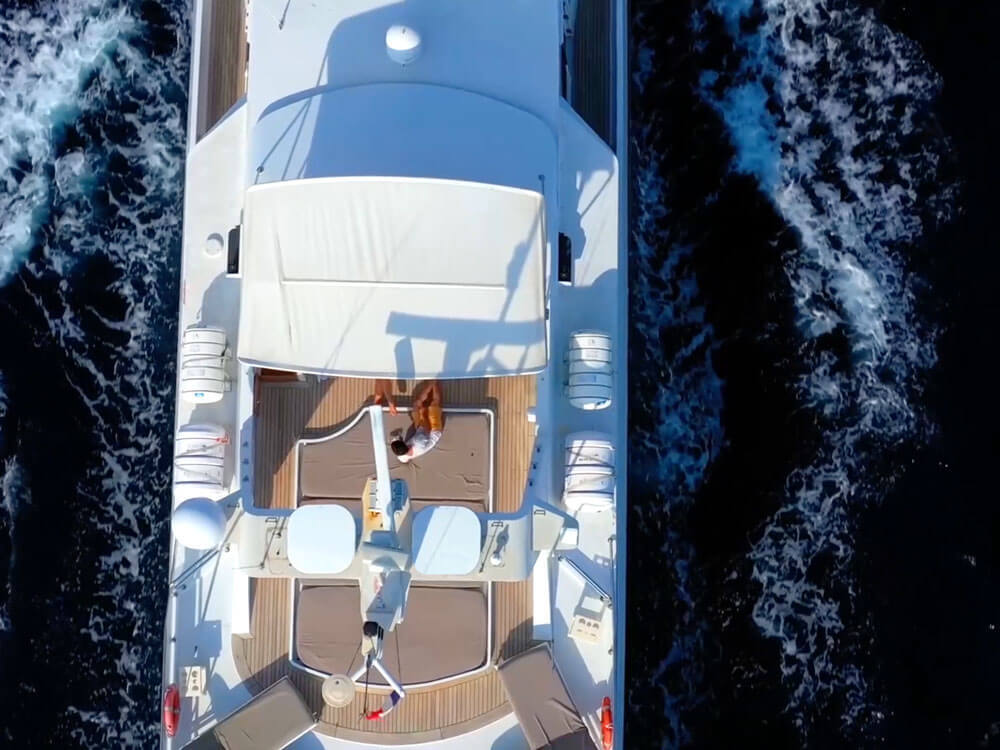
This is where next-generation SATCOM solutions combining Low Earth Orbit (LEO) and Geostationary (GEO) networks, and enhanced by advanced flat-panel satellite terminals, have transformed offshore connectivity for superyachts. The lightweight, electronically steered antennas enable vessels to effortlessly track fast-moving satellites across orbits for low-latency broadband and wide, stable coverage without manual intervention. The ability to seamlessly switch between satellites or orbits not only maintains stable data flow but also supports essential functions such as real-time navigation, weather forecasting, remote diagnostics and secure shore communication.
Today’s flat-panel satellite terminals integrate multi-orbit SATCOM into a single connectivity capability, enabling superyachts to seamlessly leverage both LEO and GEO networks. This allows vessels to maintain consistent, uninterrupted connectivity even during sharp manoeuvres or challenging sea conditions, while dynamically optimising latency, coverage and resilience. As a result, on-board systems can reliably support real-time navigation, weather forecasting, remote diagnostics and secure shore communication, alongside the growing expectations of guests and crew for high-quality video calls, media streaming and always-on digital services.
Modern satellite technology has revolutionised the superyacht industry, overcoming previous limitations to global cruising and establishing new standards for life at sea. By integrating flat-panel terminals to enable effortlessly both LEO and GEO networks and replacing traditional satellite domes, superyachts now enjoy reliable, high-speed connectivity even in the most challenging conditions and remote locations.
This breakthrough in maritime SATCOM enhances guest experience while improving operational reliability, safety and on-board digital capabilities. As a result, superyachts are now closer to providing a home away from home than they ever have been.
As an open-source platform we offer an industry-wide invitation to anyone and everyone in our sector to share their knowledge, experience and opinions. So if you have an interesting and valuable contribution to make, and would like to join our growing community of guest columnists, share your ideas with us at newsdesk@thesuperyachtgroup.com
NEW: Sign up for SuperyachtNewsweek!
Get the latest weekly news, in-depth reports, intelligence, and strategic insights, delivered directly from The Superyacht Group's editors and market analysts.
Stay at the forefront of the superyacht industry with SuperyachtNewsweek
Click here to become part of The Superyacht Group community, and join us in our mission to make this industry accessible to all, and prosperous for the long-term. We are offering access to the superyacht industry’s most comprehensive and longstanding archive of business-critical information, as well as a comprehensive, real-time superyacht fleet database, for just £10 per month, because we are One Industry with One Mission. Sign up here.
Related news
Upgrading yacht glazing
Viraver Technology quantify the benefits of making energy efficiency a core value of refit projects
Technology
Bringing smart streaming to superyachts
Rami Moussawi, Senior Product Manager at ST Engineering iDirect, on a new approach to help alleviate the strain on network connections at sea
Crew
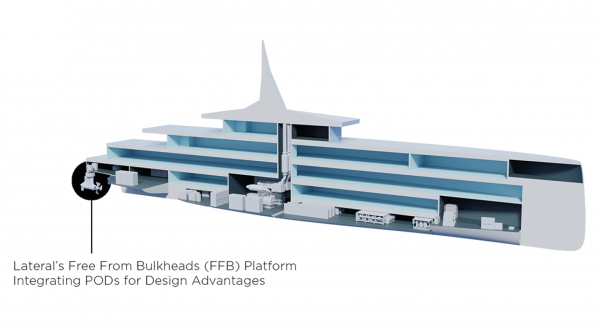
The power of the POD
Senior naval architects at Lateral investigate whether traditional shaft lines are becoming obsolete
Technology

Aye-AI Captain!
The integration of artificial intelligence into yachting is becoming a reality – and its potential across all departments is vast and transformative
Technology

Maritime communications and autonomous networks
An opinion piece on the impact of telcos’ move to hybrid connectivity
Technology
Related news
Upgrading yacht glazing
9 months ago
Bringing smart streaming to superyachts
1 year ago
The power of the POD
2 years ago
Aye-AI Captain!
2 years ago
Maritime communications and autonomous networks
2 years ago
NEW: Sign up for
SuperyachtNewsweek!
Get the latest weekly news, in-depth reports, intelligence, and strategic insights, delivered directly from The Superyacht Group's editors and market analysts.
Stay at the forefront of the superyacht industry with SuperyachtNewsweek