Shipyard CEOs on the state of the market – an interview with Massimo Perotti
Market-leading shipyard executives offer a collective diagnosis and a clear barometer of the current new-build landscape…
There is no shortage of people willing to tell you where the market is heading. Brokers, project managers, owners’ reps, consultants and journalists all have a view, but the perspective that tends to be least heard in public and arguably the one that matters most belongs to the people who actually run the yards. So we asked nine of the market-leading shipyard executives the important questions to get a true understanding of where the market is and where it is heading. Their answers amount to a collective diagnosis and a clear barometer of the current new-build landscape.
The yards represented here span the full competitive range of the European market, from Royal Huisman, Damen Yachting and Feadship in the Netherlands to Palumbo, Sanlorenzo, Azimut Benetti and Ferretti in Italy, from Abeking and Rasmussen in Germany to Bilgin in Türkiye. Of course, they don’t agree on everything, but the convergence on certain themes is inescapably evident.
It is a near-united front on how they build. The past two to three years have brought a genuine step change in how these yards organise and deliver: facility redesigns, digital tools, closer integration between engineering and production and a concerted push to eliminate the late-stage revisions that have historically plagued new builds feature in almost every response. Obviously, skilled labour is the constraint that no investment in facilities can fully resolve. Finding the right people, training, keeping and ensuring the craft knowledge that makes these yachts exceptional is passed to the next generation is the essential thread that runs beneath everything else these leaders say. Supply chains have stabilised but remain brittle for specialist components. And in cost management, the ability to maintain quality without haemorrhaging margin is repeatedly cited as the factor most likely to define who thrives.
Yes, order books are strong, but the nature of what is being ordered has shifted. Owners are more considered, more experience-driven and increasingly motivated by how they spend their time on board. Purpose, sustainability and genuine adventure are genuine design drivers here. And when probed on the future, not one of these leaders talks about explosive growth. What they describe instead is a market that will be defined by the quality of what is delivered, the credibility of the yards delivering it and the ability to remain relevant to a generation of owners whose expectations extend well beyond the vessel itself.
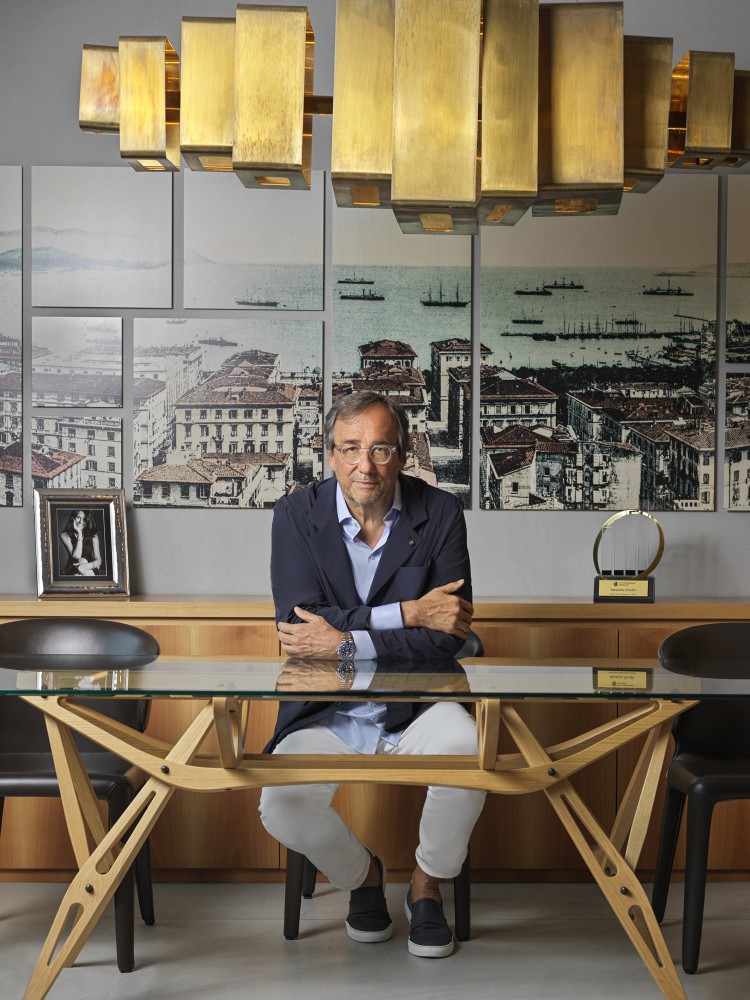
What follows is an interview by News Editor Conor Feasey with Massimo Perotti, the Chairman and Chief Executive Officer at Sanlorenzo, taken from The Superyacht Report: New Build Focus. Interviews with a further eight shipyard CEOs will be published over the coming days.
What changes have you made across your yards over the past two or three years that have genuinely helped the construction process and what has improved as a result? What is working well?
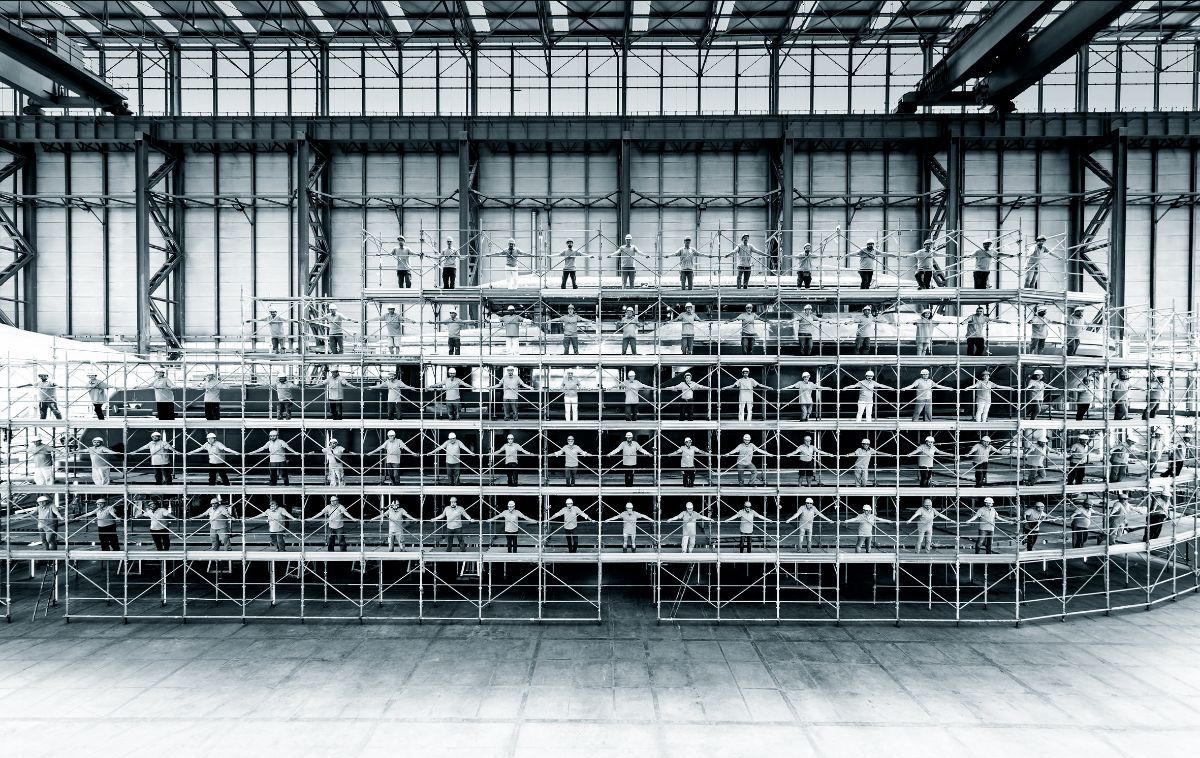
Over the past three years, we have focused on reinforcing industrial discipline while accelerating our technological capabilities. We have deliberately maintained production at around 70 yachts per year – a conscious commitment to scarcity that protects quality, brand equity and, ultimately, long-term value for our owners.
At the same time, we have significantly raised the bar on innovation. In 2024, we delivered 50Steel Almax, the world’s first superyacht equipped with a green methanol fuel-cell system. Through Bluegame, we introduced the hydrogen-powered BGH, and in 2025 we partnered with MAN to develop the first bi-fuel green methanol engine for a 50-metre yacht.
Operationally, we have continued to invest across our six Italian shipyards, including new photovoltaic systems that reduce CO2 emissions by more than 600 tonnes annually.
The acquisition of Nautor Swan has also been strategically important – allowing us to enter the sailing segment while creating operational synergies that are already improving efficiency and sustainability across the Group.
I believe the next ten years will not be defined by volume, rather by the quality of innovation. Sustainability will move from differentiation to expectation. A new generation of owner is emerging: more conscious, more informed and expecting transparency, responsibility and technological credibility.
Where is the pressure really building today? What has not worked as well as expected and where do you see the greatest risk to the market?
In a market shaped by short-term and often unpredictable external factors, Sanlorenzo continues to differentiate itself through positioning, innovation and scarcity. We anticipate the needs of a new generation of owners who are increasingly motivated by wellbeing, longevity and the scarcity of quality time.
The strength of our order book reflects the close, almost club-like relationship we cultivate with our clients – individuals who recognise themselves in our philosophy.
We continue to see strong resilience in the segment above 30 metres. In contrast, in smaller categories, our scarcity-driven model helps us avoid the cyclical volatility experienced by higher-volume manufacturers.
The broader risk for the industry lies elsewhere. Today, technological innovation is moving faster than the infrastructure required to support it. We already have bi-fuel capabilities and advanced systems in place, but their adoption depends on ecosystem readiness – fuel availability, regulatory alignment and global infrastructure. This is where the industry must act collectively if we are to deliver a genuinely sustainable future.
Looking at different specs, designs and size segments, where are you seeing strength in demand, and where are you seeing a softening? What is driving it?
Demand remains strongest in the segment above 30 metres. However, the success of our new concept SHE clearly demonstrates that clients are not simply seeking size – they are seeking originality, sustainability and architectural intelligence.
Our 74Steel flagship, and the continued strength of the Steel line, underline Sanlorenzo’s growing authority in the sub-2,000gt superyacht segment – a space where we intend to consolidate leadership, rather than expand beyond.
The acquisition of Nautor Swan further strengthens our position across complementary segments, particularly in sailing.
Softness is more visible in standardised products below 24 metres, where price sensitivity is naturally higher and clients are more exposed to macroeconomic pressures.
Finally, on a more personal note, how do you see the market developing over the next decade? What does the future look like in reality?
As I enter my third decade leading Sanlorenzo, I have witnessed significant transformation, but I believe the next ten years will not be defined by volume, rather by the quality of innovation. Sustainability will move from differentiation to expectation.
A new generation of owner is emerging: more conscious, more informed and expecting transparency, responsibility and technological credibility. This is why we have invested early in fuel-cell systems, bi-fuel engines, hydrogen and sailing.
But the future is not about building more yachts, it is about building better yachts – with greater discipline, stronger architectural identity and a lower environmental impact.
Geographically, I see continued growth in the Americas, while Asia-Pacific will play an increasingly strategic role, particularly through our direct presence in the region with Simpson Marine.
However, growth will remain measured. Our model has always been based on control, not acceleration.
Profile links
NEW: Sign up for SuperyachtNewsweek!
Get the latest weekly news, in-depth reports, intelligence, and strategic insights, delivered directly from The Superyacht Group's editors and market analysts.
Stay at the forefront of the superyacht industry with SuperyachtNewsweek
Click here to become part of The Superyacht Group community, and join us in our mission to make this industry accessible to all, and prosperous for the long-term. We are offering access to the superyacht industry’s most comprehensive and longstanding archive of business-critical information, as well as a comprehensive, real-time superyacht fleet database, for just £10 per month, because we are One Industry with One Mission. Sign up here.
Related news
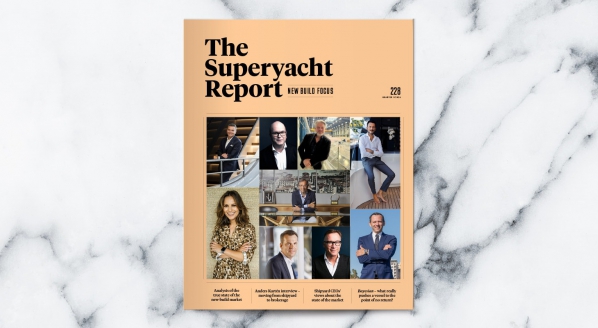
The Superyacht Report 228: New Build Focus - Out Now
Shipyard performance data, CEO forecasts, Bayesian findings and a case for building with purpose all feature in the latest TSR
Opinion
Disrupt or be disrupted
Hot off the press from METS, Prof. Dr Christoph Ph. Schließmann comments on the new paridigm facing the superyacht industry
Opinion
A mistress of the sea
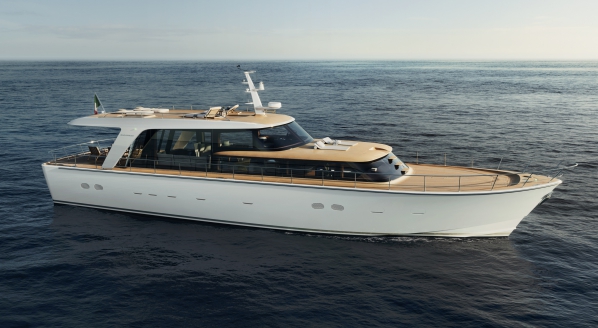
Chairman Martin H. Redmayne reveals his latest infatuation: SHE, the brand-new concept evolving from Sanlorenzo’s Heritage
Fleet
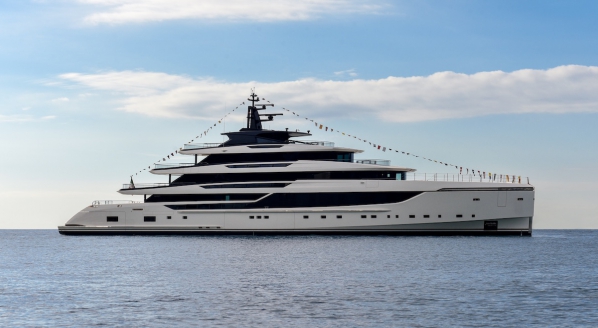
Sanlorenzo unveils 74Steel flagship as demand for larger yachts rises
With the first hull nearing launch, the Italian shipyard has already sold three yachts in its new flagship series, with another 1,900gt unit under negotiation
Fleet
Related news
The Superyacht Report 228: New Build Focus - Out Now
8 months ago
Disrupt or be disrupted
11 months ago
A mistress of the sea
1 year ago
NEW: Sign up for
SuperyachtNewsweek!
Get the latest weekly news, in-depth reports, intelligence, and strategic insights, delivered directly from The Superyacht Group's editors and market analysts.
Stay at the forefront of the superyacht industry with SuperyachtNewsweek