Frozen superyachts: Why Europe’s new rules won’t break the deadlock
Emmanuelle Votat explores why neither Sailing Yacht A or Amore Vero has been sold, nearly five years after being frozen, when early-sale tools already exist…
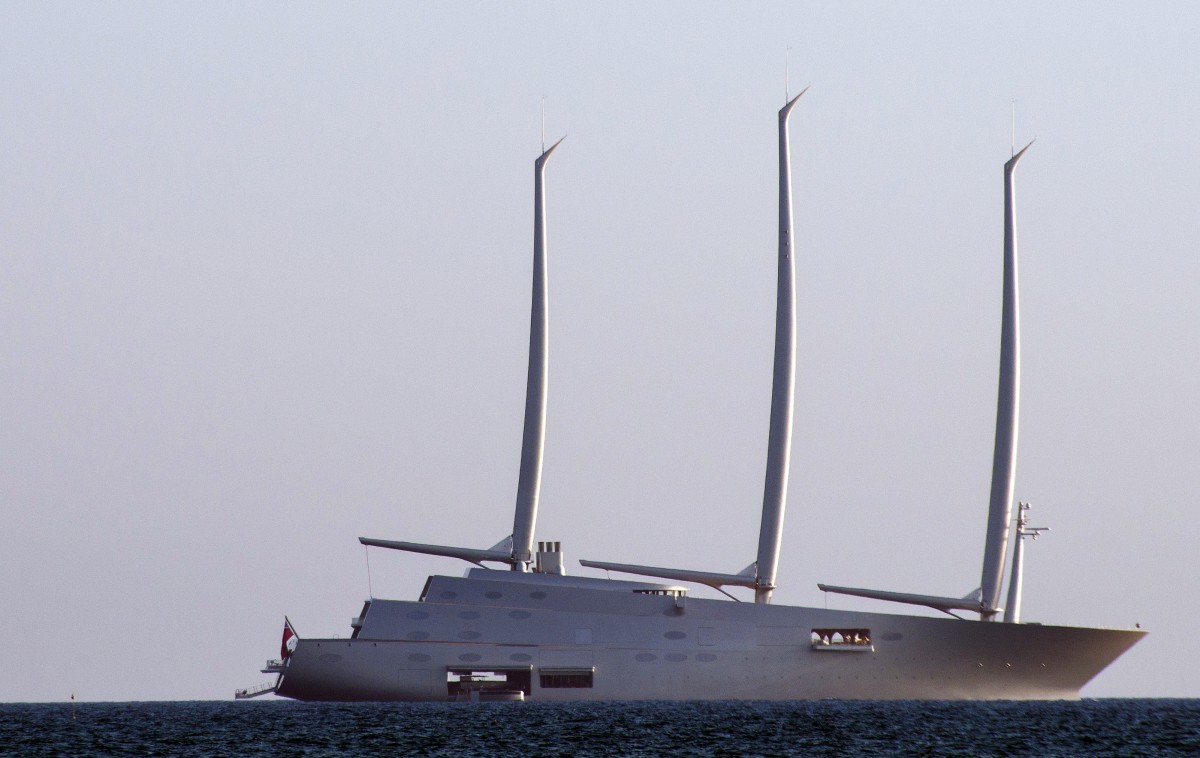
By 23 November, EU Member States must have transposed Directive 2024/1260 on asset recovery and confiscation into national law. Long awaited, the directive strengthens provisions for the early sale of seized assets. Yet for many superyachts frozen across Europe, its impact will remain limited. What matters is the nature of the measures keeping them immobilised, the difficulty of proving who owns them and the coordination between the authorities responsible for them.
Two yachts on the move, going nowhere
Sailing Yacht A is due to leave the Gulf of Trieste today (17 November) for Ancona, under escort by the Guardia di Finanza. It is expected to remain there for around six months for an initial phase of works, before undergoing a more extensive overhaul at another Adriatic port. Several Italian media outlets have linked the transfer to an agreement between the Italian state, the yacht’s owner and an unnamed Dubai-based management company.
The mayor of Trieste, whose gulf has sheltered the yacht since March 2022, has repeatedly criticised the cost of detention, which he estimated at around €27,000 a day. Corriere Adriatico puts the total cost to Italian taxpayers for management and maintenance at more than €40 million.
A yacht you can’t just switch off
Part of that expense is reportedly due to the need to keep the yacht’s air conditioning running, particularly to protect an art collection said to include works by Claude Monet, according to a 2023 investigation by the Italian television programme Le Iene.
According to Equasis records consulted in November 2026, a safety management certificate issued by Dromon Bureau of Shipping is shown as withdrawn since 8 February, following a failure to request a periodic audit. This does not establish that the yacht has lost class or is unfit to navigate. It does, however, raise questions about the regulatory and documentary compliance of a yacht immobilised for almost five years.
Frozen in Antibes, not free
On 2 November, Amore Vero (owned by Kazimo Trade & Invest Ltd, a company reported to be linked to Igor Sechin) also changed ports, confirmed by independent AIS data. Held at the La Ciotat shipyards since 3 March 2022, the yacht moved to Port Vauban in Antibes under French Customs supervision. According to Le Figaro, the yacht’s lawyers secured the transfer for what was officially a strictly economic reason: a berth, water and electricity cost less there than a place in a shipyard. The yacht remains subject to customs measures and sanctions.
The cost may seem a minor detail, but it is revealing. In Amore Vero’s case, the costs of preservation are reportedly borne by the owner, whose representatives are seeking to reduce them. For Sailing Yacht A, it is the Italian state that is advancing the management and maintenance costs. Will it be reimbursed?
Neither move signals a release or a sale. But both remind us that a legal freeze stops neither a yacht’s technical clock nor the bills required to keep her in condition.
Across Europe, the same question arises for frozen yachts: what should be done with an asset that is expensive to maintain, ties up public authorities indefinitely and loses value far faster than it would on the normal market? And then comes the next question: who, exactly, pays the price of waiting?
A directive that invents nothing
Directive (EU) 2024/1260 did not invent sales before judgement – several Member States have allowed them for years – but it now establishes a more demanding common minimum standard across the Union.
Article 21 places an obligation on Member States: they must ensure that property subject to a freezing order can be transferred or sold before a final confiscation order, in one or more of the circumstances set out in the directive. The first concerns property that depreciates rapidly. For a superyacht immobilised for almost five years, I think we are well within that category.
Member States must also ensure that the interests of the person concerned are taken into account. They are therefore required to provide for the mechanism, but they are not obliged to use it.
Recital 43 describes four situations: property that is perishable or rapidly depreciating, maintenance costs disproportionate to the value expected at the time of confiscation, property that is too difficult to manage, and property that can easily be replaced. Here again, the characteristics of large yachts are familiar: rapid depreciation without proper maintenance, costly upkeep and scarce specialist expertise.
Green everywhere, except here
Yet none of these situations addresses environmental risk. Not every frozen yacht is maintained like Amore Vero or Sailing Yacht A. Some have been ageing alongside for almost five years. They can leak fluids, oils and paint into harbour waters.
The urgency of a sale is therefore not only for criminal or economic reasons, it can also be environmental.
In Montenegro, outside the EU and therefore beyond the directive’s scope, Luminosity, one of the world’s largest frozen yachts, is a perfect example. A study published by the University of Basel in November 2025 also points to this legal gap. Luminosity is not an abandoned vessel, but it has been left without maintenance for more than four years, even though it carries a complex lithium battery system that requires constant monitoring by qualified technicians.
On this point, Europe, so demanding on environmental matters elsewhere, has missed something important. As for the rest, can we really conclude that the directive resolves the fate of the most visible frozen assets?
Frozen or seized: the line that changes everything
The reality is less clear-cut. The directive concerns assets frozen in the context of criminal proceedings and applies without prejudice to measures taken in civil or administrative proceedings. One might therefore conclude that it does not concern sanctioned yachts immobilised since 2022 through the direct application of Regulation (EU) No 269/2014.
But more than four and a half years later, several of these yachts are also subject to criminal proceedings, and the directive now covers assets linked to the new offence of violating restrictive measures, introduced by Directive (EU) 2024/1226.
For several yachts, it is criminal proceedings that are keeping their propellers still, alongside the freeze or instead of it.
Amore Vero was seized by French Customs in March 2022 for an attempted circumvention of sanctions, and an investigation remains ongoing at the Marseille prosecutor's office.
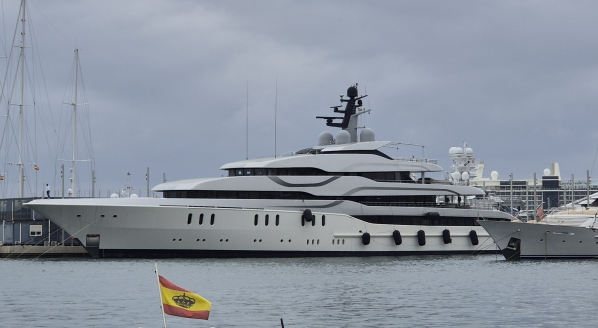
Tango was never frozen under EU sanctions. It was detained in Palma under an order issued by a Spanish judge at the request of the US authorities, who allege bank fraud, money laundering and sanctions violations.
Royal Romance, detained in Croatia, was entrusted to ARMA, Ukraine's Asset Recovery and Management Agency. It is subject to Ukrainian criminal proceedings for money laundering, which must be recognised by the Croatian court before any sale can take place.
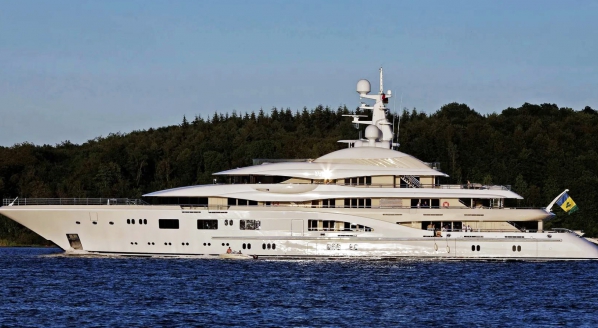
By contrast, Sailing Yacht A and the other large yachts immobilised in Italy are, to our knowledge, subject only to administrative freezing measures. Meridian A, in Barcelona, is subject both to a freeze and to a civil seizure obtained by the MB92 shipyard, with no known criminal proceedings.
The tools exist, so why no sales?
Where criminal measures exist, the tools for early sale predate the directive.
In France, Article 389 of the Customs Code and Articles 41-5 and 99-2 of the Code of Criminal Procedure, through AGRASC, allow seized property to be sold before judgement. In Spain, criminal procedure law has provided since 2015 for the early realisation of seized assets, entrusted to ORGA. In Italy, the Anti-Mafia Code already allowed courts to sell property that could not be preserved without risk of deterioration, a mechanism recently modernised by Decree 186/2026.
Yet these tools have hardly ever been used for frozen yachts. Why?
Three locks on the sale
A foreign authority. The first obstacle is dependence on a foreign authority. For Tango, detained in Spain at the request of the United States, Spanish law prohibits any early sale without prior authorisation from the foreign judicial authority. In practice, the decision therefore rests with Washington. For Royal Romance, no sale is possible until the Croatian court has recognised the Ukrainian decision.
The EU freeze. The second obstacle is the overlap with EU freezing measures. Regulation 269/2014 expressly includes the sale of a frozen asset among the prohibited uses of frozen economic resources. Even where authorised by a criminal court, a sale must therefore ensure that the proceeds remain frozen and that nothing benefits the sanctioned person. Every party involved in the transaction (bank, broker, insurer, flag registry and buyer) must be satisfied on that point. Otherwise, they will refuse to participate.
Proof of ownership. The third obstacle is proving ownership. Most of these yachts belong to companies or trusts whose links to the sanctioned person are disputed. The Court of Justice of the European Union has nevertheless given the authorities a valuable tool. In its judgement of 21 May 2026, delivered in a case involving Sailing Yacht A, among others, it ruled that assets held in a trust may be regarded as belonging to or controlled by a sanctioned person, even where trust law prevents that person from disposing of them. Among the indicators it identified were “unnecessarily complex structures”. However, those structures and their significance still have to be demonstrated. The Frankfurt decision, delivered three weeks later, shows just how difficult that can be.
On 11 June 2026, the Frankfurt Administrative Court ruled that a German shipyard was not required to treat the yacht it had held since 2022 as a frozen economic resource. The judgement is anonymised, but press reports suggest the yacht is Dilbar. The owning company does not appear on the EU sanctions list. Alisher Usmanov’s sister, identified in 2022 as the yacht’s sole beneficial owner, was removed from that list in March 2025. According to the court, the evidence before it did not establish the structure of the trust. The judgement is not final, as the court granted leave to appeal. On 22 September 2026, Alisher Usmanov himself was removed from the EU sanctions list by Implementing Regulation 2026/2160.
For shipyards holding these yachts without being paid, the decision opens at least one possibility: obtaining a judicial ruling that the asset is no longer frozen.
For confiscation, or for a sale before judgement, the standard is higher still: the criminal court must establish ownership under the rules of evidence of national criminal law. A judge will therefore hesitate to sell an asset whose ownership remains disputed.
A yacht’s ownership does not change depending on the proceedings. What changes is how that ownership must be established. Faced with the same opaque structure, uncertainty may be enough to justify a freeze, just as it may be enough to overturn one, and it makes a sale almost impossible.
The right to sell is not the case for selling
These findings raise two questions. The first is legal: does an authority have the power to order a sale, on what grounds and under which procedure? The directive provides an answer, but only for yachts subject to criminal proceedings.
The second concerns the asset itself: would a sale be justified and under what conditions would it preserve value? The directive sets out the circumstances, but does not explain how they should be demonstrated.
Amore Vero: seized, still not sold
Amore Vero is not simply a frozen yacht. On 3 March 2022, French Customs seized the vessel at the La Ciotat shipyards as it was preparing to leave urgently, before completing its works. Bruno Le Maire, then Minister of the Economy, stated that this attempted departure breached European sanctions and French law, justifying a seizure rather than a simple freeze. The owning company’s legal challenges failed, and in January 2024 the Conseil d'État confirmed that the customs seizure report formed part of criminal proceedings concerning the attempted circumvention of restrictive measures.
Yet for a means of transport seized by Customs, the French Customs Code has long allowed a sale at auction before judgement, subject to authorisation by the liberty and custody judge or the investigating judge, following a valuation.
The Code of Criminal Procedure provides a parallel route through AGRASC. In law, these mechanisms therefore appear applicable to Amore Vero, with the sale proceeds held on deposit and remaining frozen.
Why has the yacht not been sold, more than four and a half years after her seizure? Because the legal possibility alone is not enough. When the same yacht is subject to several proceedings, both customs and judicial, each authority must agree on the timing of a sale, and one may consider that the asset must remain as it is for the purposes of its investigation.
Each step also opens another front for the opposing party’s lawyers, in a case where ownership remains disputed. And, meanwhile, time passes and value falls. The obstacle is not always the absence of a legal mechanism. It may also lie in the difficulty of coordinating those who could use it.
Preserving value, but for whom?
Ultimately, Amore Vero says it all. The yacht could be sold, but it isn’t, and no law requires anyone to explain why. That is the directive's real limitation: it requires Member States to provide for a sale, not to decide on one or even to justify a decision against it.
Waiting comes at a price. In Trieste, Italian taxpayers pay. In Antibes, it is the owner. In both cases, those who decide to wait do not bear the cost. And at the end of the proceedings, someone will recover an older yacht, more expensive to bring back into condition, with certificates that may have expired. It will be the state if confiscation is secured, or the owner if the measures are lifted. Either way, the value lost will never be recovered by anyone.
A sale before judgement requires a quantified assessment: the future cost of preservation, essential works, the realisable value today and at the end of the proceedings, and the constraints on marketing the yacht. This is our profession and it is a legitimate requirement, but the decision not to sell deserves the same rigour.
Until the cost of waiting has to be quantified, the mechanism will exist, and the sale will wait.
Emmanuelle Votat is a judicial auctioneer specialising in the management and sale of yachts seized in criminal proceedings. She is the founder of Yachting Legal & Auction, a pioneering programme for judicial yacht asset management in France and internationally, and has overseen landmark cases.
Editor’s note: A further article, ‘The cost of waiting, quantified’, by Emmanuelle Votat and Andrew Williams, will follow soon.
NEW: Sign up for SuperyachtNewsweek!
Get the latest weekly news, in-depth reports, intelligence, and strategic insights, delivered directly from The Superyacht Group's editors and market analysts.
Stay at the forefront of the superyacht industry with SuperyachtNewsweek
Click here to become part of The Superyacht Group community, and join us in our mission to make this industry accessible to all, and prosperous for the long-term. We are offering access to the superyacht industry’s most comprehensive and longstanding archive of business-critical information, as well as a comprehensive, real-time superyacht fleet database, for just £10 per month, because we are One Industry with One Mission. Sign up here.
Related news
Are Europe’s new “No-Russia clauses” reshaping the circulation of maritime assets?
The EU’s 20th sanctions package is primarily aimed at the shadow tanker fleet but its reasoning, Emmanuelle Votat argues, reaches much further
Opinion

Motoryacht Tango – out of system but still in service
Emmanuelle Votat reveals how a trophy has turned liability in the absence of a clearly defined exit strategy
Owner
Meridian A and the structural blind spot of European sanctions
As its Special Survey deadline approaches, Emmanuelle Votat argues that Meridian A reveals a structural gap in EU sanctions and how Italy’s Anti-Mafia Cod
Opinion
Sale of Amadea: a precedent that could shape Europe’s frozen yacht market
Seasoned superyacht auctioneer, Emmanuelle Votat dissects the challenges and opportunities emerging from the latest development in the sanctions saga
Opinion

Phi’s appeal sinks at Supreme Court in watershed ruling
Following a landmark judgement, the stranded superyacht remains detained in a London lock, with its future cast into further doubt
Fleet
Related news
NEW: Sign up for
SuperyachtNewsweek!
Get the latest weekly news, in-depth reports, intelligence, and strategic insights, delivered directly from The Superyacht Group's editors and market analysts.
Stay at the forefront of the superyacht industry with SuperyachtNewsweek