
Cannes 2026: The buyer takes time
Six days at the Cannes Yachting Festival exposed the pressures facing yacht builders and their distribution networks…

Image: © C. Charpin
The purchase contract arrived while we were still asking questions. We made a test and showed an interest in a boat under 50 feet. We wanted to understand its specification, explore the layout and establish whether it deserved a closer look. Our enquiry had already become a sales opportunity moving towards signature.
I found the haste revealing. A yacht purchase involves a considerable commitment of capital, followed by years of operating expenditure and dependence on the people responsible for delivery and support. The conversation needed time, yet the sales process seemed impatient with it.
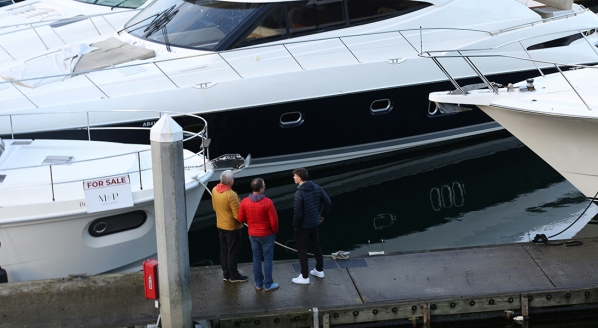
Along the pontoons, brokers and sales representatives stood in such numbers that approaching certain boats felt like entering a receiving line. Their presence was hard to ignore – so was the effort being devoted to securing the next serious conversation.
This was my strongest impression of Cannes: the intensity of the competition for a buyer’s attention.
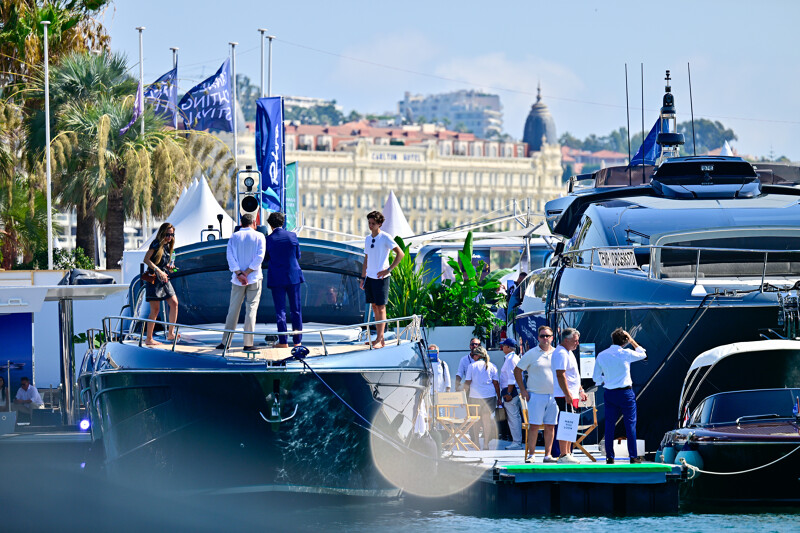
Image: © C. Charpin
The commercial pressure on the pontoons
A show concentrates costs as effectively as it concentrates products. Berths, stands, transport, accommodation, hospitality and staff all need to earn their place in the sales budget. The resulting pressure is understandable and its effect on the customer experience deserves scrutiny.
An experienced buyer may arrive with an adviser, a defined brief and a clear sense of price. Another may still be deciding whether ownership makes sense. Both deserve room to examine the product without having their curiosity treated as consent to negotiate.
A representative engaged to sell a particular yacht has an understandable commercial interest in that sale. Buyers need to know whose interests their adviser is appointed to protect.
Senior attention matters here. A prospective owner should have access to someone capable of discussing technical compromises, delivery commitments, commercial terms and responsibility for defects. Repeated introductions to people who must refer every substantive question elsewhere consume time and weaken confidence.
Good brokers contribute considerable value. They identify alternatives, challenge unrealistic expectations and manage difficult transactions. Their mandates, remuneration and loyalties should be clear. A representative engaged to sell a particular yacht has an understandable commercial interest in that sale. Buyers need to know whose interests their adviser is appointed to protect.
Our experience with the premature contract remains an individual observation. It cannot establish the financial position of the seller or measure demand across the show. It does illustrate how easily an expensive sales environment can encourage behaviour that makes a thoughtful buyer withdraw.
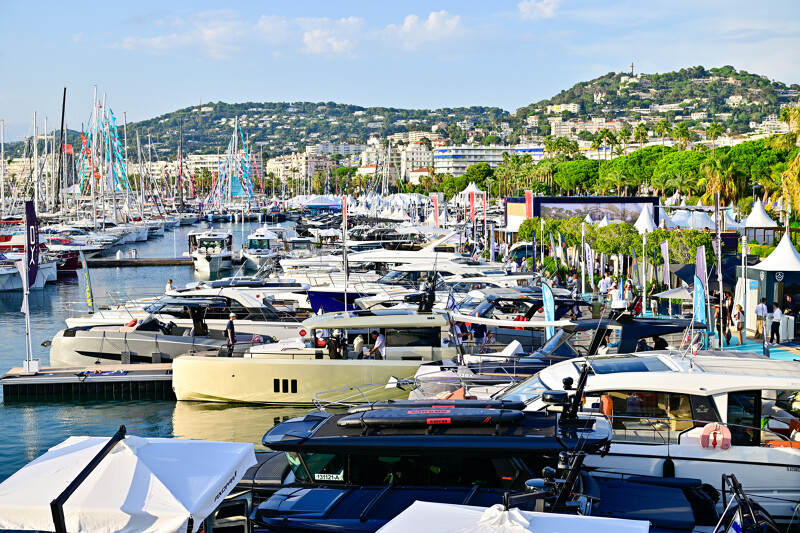
Image: © C. Charpin
Reading the closing coverage
The Festival’s published scale was substantial: more than 710 boats and over 680 exhibitors. Cannes offered an unusually concentrated opportunity to compare products and meet the businesses behind them.
The reporting available at the close was much less informative about commercial outcomes. Product announcements, awards and selected sales gave readers a succession of individual stories. A consolidated account of newly contracted business, with a usable definition of what constituted a sale, remained unavailable in the material reviewed for this article.
There are legitimate reasons for discretion – buyers expect privacy and negotiations continue after exhibitors leave. An agreement announced during the show may have taken months to reach.
These realities require restraint in drawing conclusions. A reported sale can be genuine while offering little evidence about wider demand. Its significance depends on the negotiated price, trade-in terms, payment schedule, outstanding conditions and the margin retained by the seller.
Attendance requires similar care. The figure of 56,600 visitors was already circulating in advance of the 2026 edition. Its appearance in promotional material therefore provides no basis for presenting it as a newly established closing total.
Sunday, 13 September, brought the exhibition to an end. The economic assessment will take longer. A useful follow-up would examine contracts secured, deposits received and orders still proceeding several months later. Aggregate reporting could protect client confidentiality while giving the industry a more credible measure of the event’s commercial contribution.
The present information gap leaves the outcome open. It supports neither a sweeping success claim nor a verdict of failure.
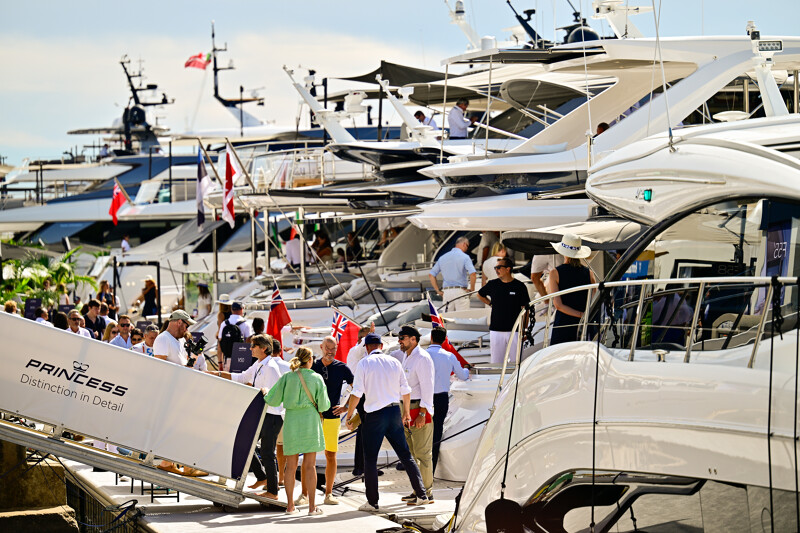
Image: © C. Charpin
The order books deserve closer reading
The financial disclosures published before Cannes provide firmer ground for assessing the market. Sanlorenzo reported first-half order intake of €496.4 million, up 18.3 per cent. Its order backlog stood at €1,498.9 million, with 89 per cent relating to yachts sold to final clients. The company also described aggressive pricing in the market below 24 metres.
The end-client share deserves attention. It indicates that most of the reported backlog is associated with an identified purchaser further down the distribution chain. That provides greater confidence in underlying demand than orders placed solely to replenish speculative dealer inventory.
The figure says little about individual cancellation rights, deposits or customer creditworthiness. Nor does it mean that 89 per cent of future revenue has already been collected. It is a useful measure of order quality, with a defined and limited meaning.
For anyone assessing a builder, backlog needs to be read alongside cash, remaining construction costs, delivery schedules and contractual commitments.
Ferretti reported first-half order intake of €341.4 million, down 26.9 per cent. Net backlog fell to €564.9 million from €760.8 million a year earlier. Its segment figures add important context: composite-yacht order intake increased by 6.1 per cent, while made-to-measure orders declined and no new orders were recorded in its superyachts segment during the period. Ferretti also reported €95 million of net cash and €37.9 million of net profit, alongside reduced full-year guidance.
Those disclosures describe a commercial replenishment challenge within a profitable group holding net cash. They warrant attention without inviting comparisons to insolvency cases.
Large contracts also make half-year comparisons volatile. A small number of delayed signatures can materially affect reported intake. Sustained weakness across successive periods would carry greater significance.
For anyone assessing a builder, backlog needs to be read alongside cash, remaining construction costs, delivery schedules and contractual commitments. A substantial order book creates work. Executing that work profitably requires adequate funding throughout the build.
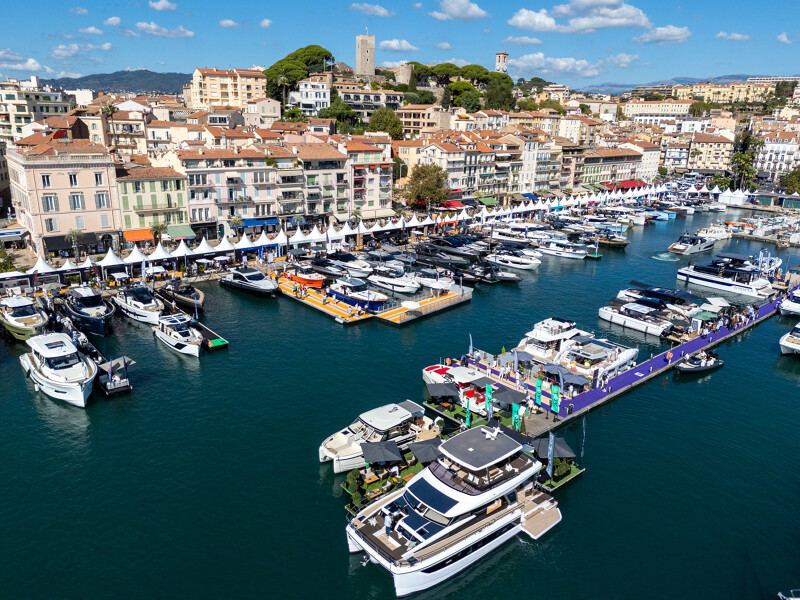
Image: © J. Kelagopian
The limits of the buyer’s-market label
My reading of Cannes is that buyers have gained leverage across significant parts of the market. The degree varies by product, availability and seller.
A completed stock boat creates immediate carrying costs. A bespoke project occupies a different commercial setting, with limited production capacity and extensive specification work. Brokerage introduces further variables: vessel condition, ownership costs, the seller’s timetable and the availability of comparable yachts.
These distinctions matter to anyone negotiating a purchase. A headline discount may be partly absorbed by an unfavourable trade-in valuation, costly options or weaker contractual protection. The full transaction needs to be priced.
The buyer’s strongest position comes from understanding alternatives and being able to walk away. A busy pontoon can make that discipline surprisingly difficult. An attractive boat, immediate availability and a persuasive salesperson can compress a decision that deserves weeks of examination.
The buyer’s strongest position comes from understanding alternatives and being able to walk away.
A busy pontoon can make that discipline surprisingly difficult.
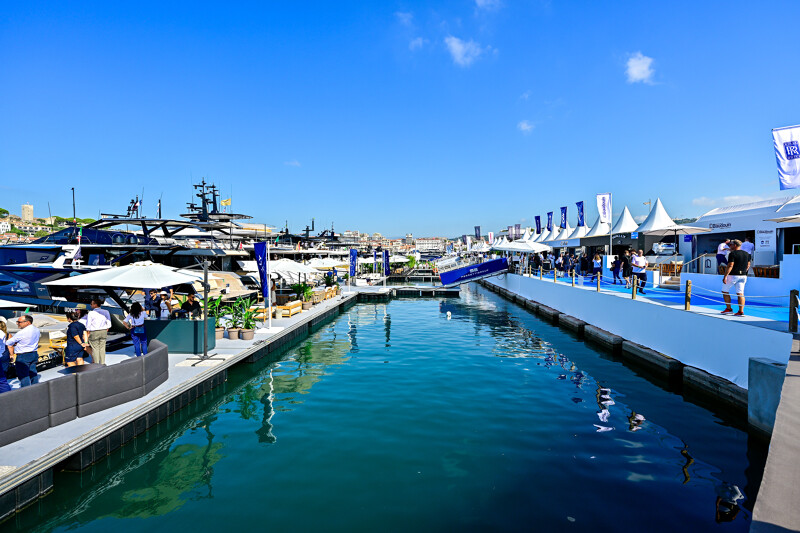
Image: © C. Charpin
A closer look at the premieres
Walking through the boats, I found many competent improvements. The cumulative effect was less dramatic than the language surrounding their introduction. Layouts had been revised, outdoor spaces had expanded, and familiar platforms carried fresh finishes, additional equipment and changes to the way owners might use the decks. Several developments could improve daily life aboard. The term “world premiere” offered little help in judging their significance.
Product renewal is normal industrial practice. Owners benefit from better ergonomics, accessible machinery and reduced noise. Those gains deserve precise explanation.
The more ambitious claims require evidence. A hybrid installation should be assessed against a stated operating profile, including hotel loads, generator use and charging arrangements. Fuel savings need comparable speed, displacement and sea conditions. Added batteries bring questions about weight, thermal management, replacement costs and service support.
Marine Industry News reported five Innovation Route winners selected from 47 projects. Their scope included mooring assistance, engine-component treatment and marine biodiversity, giving useful attention to specific operational and environmental problems.
For an owner, the next stage is evaluation in service. Reliability, maintenance access and support over the ownership period will determine much of the value. Some of the most worthwhile engineering improvements will attract very little attention at a launch reception.
Image: © C. Charpin
Lengers and the identity of the seller
The bankruptcy of Lengers Yachts B.V. brings the discussion directly to transaction risk. The published insolvency record states that the company was declared bankrupt on 28 July 2026 by the court in Midden-Nederland. The case concerns a particular legal entity. Claims about other group companies, customer losses or the fate of individual deposits require their own evidence.
For prospective owners, it raises a fundamental question: who is actually selling the yacht? The names used in conversation can obscure the answer. A broker may arrange a contract directly with the owner or shipyard. A dealer may purchase and resell in its own name. A sales representative may act for a separate company whose name appears only when the paperwork arrives.
That distinction determines where the buyer’s principal contractual claims lie. Under the EU consumer-sales framework, responsibility for conformity rests with the seller. A commercial guarantee may create additional obligations for its guarantor, according to its terms and the applicable law.
A manufacturer’s guarantee therefore needs careful reading. Its treatment of labour, travel, transport, consequential costs and remedies may differ substantially from the buyer’s rights under the sale contract. Dealer insolvency can expose those gaps.
Purchases through corporate ownership structures require particular care. A company purchaser generally falls outside consumer protection designed for natural persons. Contractual remedies, security and enforcement arrangements assume correspondingly greater importance.
Payment protection also needs substance. Escrow arrangements require clear release conditions. Refund guarantees require a creditworthy issuer and workable demand provisions. Ownership clauses for a yacht under construction need to operate under the relevant property and insolvency laws. A promise to transfer title can offer poor protection where its legal effect has never been examined.
These questions belong at the beginning of the transaction. By the time a supplier stops paying creditors, the buyer’s practical options may already have narrowed.
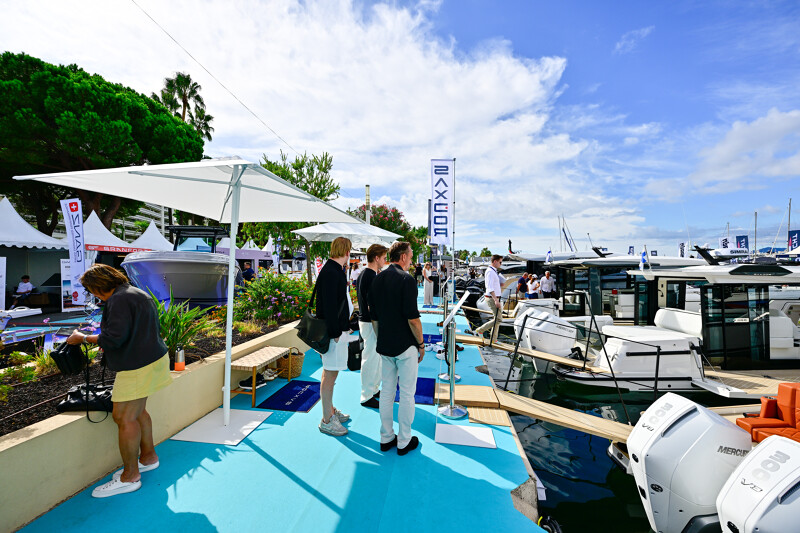
Image: © C. Charpin
Financial strain reaches the shipyard
A separate development arrived immediately after Cannes closed. On 14 September, The Italian Sea Group announced that the Court of Florence had granted a 60-day extension for filing its plan in proceedings under Article 44 of the Italian Crisis and Insolvency Code Company announcement
The announcement concerns the timetable of an ongoing process. It provides no basis for treating the restructuring as completed or assuming a particular outcome.
It does reinforce the need to assess financial execution alongside yacht design. Construction depends on timely payments to suppliers, labour availability and sufficient funds to absorb delays or cost overruns. Owners with substantial advance payments have a direct interest in those matters.
Lengers, Ferretti and The Italian Sea Group present different circumstances. Combining them into a single narrative of industry distress would conceal the distinctions that buyers and investors need to understand.
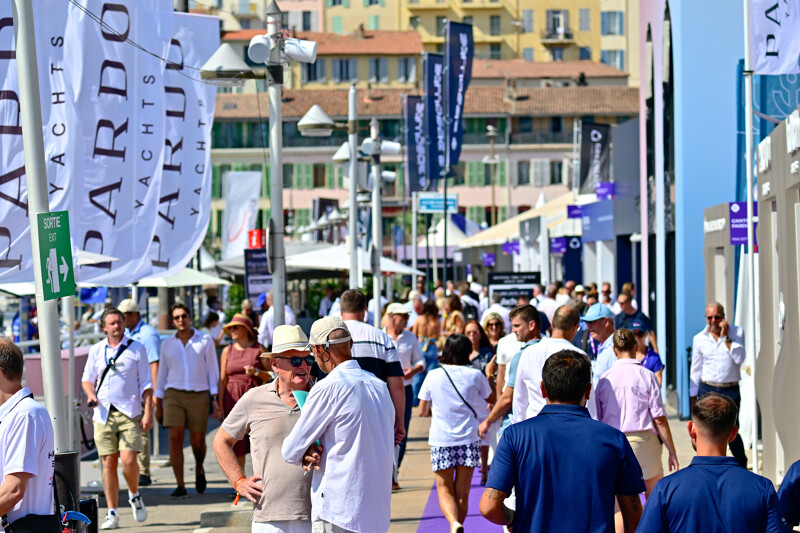
Image: © C. Charpin
My lasting concern lies with the purchasing experience. Cannes makes comparison unusually efficient – buyers can inspect competing boats, question technical teams and establish which businesses respond convincingly to scrutiny. The same concentration creates a powerful incentive to accelerate conversations towards a transaction.
What Cannes left with me
The revised layout made the larger yachts feel more closely connected. Some routes were easier to follow and previously peripheral berths seemed better integrated. I also heard criticism of the new arrangement. These are useful observations for the organiser to test through visitor and exhibitor feedback.
My lasting concern lies with the purchasing experience. Cannes makes comparison unusually efficient – buyers can inspect competing boats, question technical teams and establish which businesses respond convincingly to scrutiny. The same concentration creates a powerful incentive to accelerate conversations towards a transaction.
The industry would benefit from giving serious buyers more room. Clear specifications, transparent representation, defensible performance claims and accessible senior decision-makers would make that time productive. Financial disclosure and properly structured payment protection would make the resulting commitment more secure.
After six days, I would reserve judgement on the show’s final sales performance. The available evidence is sufficient to identify uneven demand and pressure on parts of the sales channel. It also shows businesses continuing to attract orders and generate profits.
The purchase contract remains the moment I remember most clearly. We needed information as the seller was already preparing a commitment. Closing that gap is a practical task for an industry selling products that take so much money, time and trust to own.
All images courtesy of Cannes Yachting Festival.
As an open-source platform we offer an industry-wide invitation to anyone and everyone in our sector to share their knowledge, experience and opinions. If you have an interesting and valuable contribution to make, and would like to join our growing community of guest columnists, share your ideas with us at newsdesk@thesuperyachtgroup.com
NEW: Sign up for SuperyachtNewsweek!
Get the latest weekly news, in-depth reports, intelligence, and strategic insights, delivered directly from The Superyacht Group's editors and market analysts.
Stay at the forefront of the superyacht industry with SuperyachtNewsweek
Click here to become part of The Superyacht Group community, and join us in our mission to make this industry accessible to all, and prosperous for the long-term. We are offering access to the superyacht industry’s most comprehensive and longstanding archive of business-critical information, as well as a comprehensive, real-time superyacht fleet database, for just £10 per month, because we are One Industry with One Mission. Sign up here.
Related news
A superyacht is still a ship
Why operational judgement matters more as yachts venture further – and some thoughts about what can be learned from the commercial sector
Opinion
The Monaco method and madness
Start charging your batteries now to get the most out of your pilgrimage to the mecca of superyachting
Opinion
French bill proposed for 50-metre-plus superyachts
A private member’s bill could ban superyachts over 50 metres from entering French ports, marinas or territorial waters
Opinion
The 3% case
What the residual value gap between a certified expedition yacht and an explorer-styled look-alike actually costs
Opinion
What a judge already told us about yacht valuation
Why length is a poor proxy for value on any individual hull – a judicial specification for how to value a yacht
Owner
Related news
A superyacht is still a ship
2 months ago
The Monaco method and madness
3 months ago
French bill proposed for 50-metre-plus superyachts
3 months ago
The 3% case
3 months ago
What a judge already told us about yacht valuation
3 months ago
NEW: Sign up for
SuperyachtNewsweek!
Get the latest weekly news, in-depth reports, intelligence, and strategic insights, delivered directly from The Superyacht Group's editors and market analysts.
Stay at the forefront of the superyacht industry with SuperyachtNewsweek