Avoiding the ‘con’ in consultancy
Two marina professionals advise clients do their research when it comes to employing bona fide consultants…
“A consultant is a person who gives expert advice to a person or organisation on a particular subject” (Collins Dictionary).
Consultants are considered the black beasts of any industry. In Latin cultures (like Spain), a consultant is (wrongly) considered a sort of intellectual thief who takes too much money without delivering a valuable result.
It’s true that well-established consultancy firms (Deloitte, Accenture, Kearney or Ernst & Young) charge serious money for their work ($1,000 to $5,000 a day). It’s also true that they move in high circles, provide serious, well-supported analysis, have 100,000 to 470,000 employees globally and their turnover can reach US$70 billion (2025). They are in the big league, and you probably do not need such a huge corporation to help you create a marina strategy for next summer or devise a superyacht upgrade programme.
Many of these firms do big multinational and governmental work and it’s precisely for this reason that any report by them has the added quality of being taken seriously. Their name adds value to the job and that must be taken into consideration when reports from such consultancies are presented at government office levels.
Let’s go to the other end of the consultancy business and find people whose qualification was to act as a project manager, crew or engineer in some of the industry disciplines and now feel capable of consulting on a similar job for other clients. Yes, those people can, perhaps, apply their knowledge and experience to settings similar to the one they succeeded in and become with time, and self-tuition, a consultant for such situations. A consultant for purchasing marina pedestals, however, is not a marina consultant but a marina-pedestal consultant. A wider-spectrum consultant, such as a marina consultant, must be comfortable analysing the boat market in the area, its rules and regulations, the prevailing winds and moments of extreme weather, the local culture, staff behaviour and the marina’s general presentation. A good consultant knows that a marina in Portugal is very different, in many ways, from a marina in Dubai.
A consultant must not have less than five years’ experience in their field of knowledge.
A consultant needs much more than a phone and a laptop. A consultant needs recognition from his/her colleagues, must be able to discuss issues with other industry players, must travel and be part of conferences (as both delegate and speaker) and attend events so as to expand experience and network. A consultant must be continually learning, self-educating and tailoring their working method to one that aligns with the times, trends, technical and regulatory changes. Part of the job – and a very important one – is to understand client expectations and possibilities, as unfeasible methods proposed to achieve the consultancy outcome will only result in client frustration.
Many people who introduce themselves as experts and consultants, and do so with the best of intentions, can only actually be qualified as input sources. A consultant must not have less than five years’ experience in their field of knowledge. Both a marina consultant and a superyacht consultant need a minimum of experience in most of the fields of study. For a superyacht consultant, at minimum I would say they must have advanced understanding of propulsion, navigational electronics, safety equipment, cold storage, waste handling, tenders, coating systems, decks, black and grey-water systems, stabilisers, galley set-up and air conditioning. A captain or an engineer with five years’ experience could do a decent job simply by knowing where to go for the necessary information and using their own experience and network, and maybe they would use specific consultants or other knowledgeable people as a source for some of the issues (like coating system, stabilisers or air con).
AI tools now let anyone produce a polished market analysis, a technically worded report
or a convincing proposal in a fraction of the time a real consultant would need and without
the years of field experience behind it.
A consultant must be extremely discreet and aware of the need for privacy and confidentiality, as consulting often digs into the deepest of the superyacht, the shipyard or the marina. The situation is similar to lawyer/client confidentiality. Superyacht agents are wide-subject consultants often engaging other consultants for specific situations or tasks to be dealt with. They have big primary sources of fresh information, such as the captain, engineer and crew, and they have that for every superyacht they manage. Again, such experience needs to be supported by a sound knowledge and the ability to identify all influences – technical or human – related to the subject being studied. A consultant may often discover sources of problems other than the original subject for which they are being contracted. Charges are specified per day or per week, plus the costs of external resources, data and quotations only estimate the amount of time the consultant will invoice for.
There is one more variable reshaping this picture and it is moving faster than any regulation or industry custom can keep up with: artificial intelligence. AI tools now let anyone produce a polished market analysis, a technically worded report or a convincing proposal in a fraction of the time a real consultant would need and without the years of field experience behind it. This does not make AI the enemy of consultancy – used well, it is simply a new instrument in the toolbox, the same way a captain uses electronic charts instead of paper ones. The problem is when AI becomes a disguise rather than a tool, letting someone with a phone, a laptop and a chatbot present themselves as having a depth of knowledge they have not earned. The client’s task, then as now, is to look past the polish of the document and ask the same old questions: how many years, how many similar jobs, which network, which references.
The format may look more convincing than ever; the fundamentals of vetting a consultant have not changed at all.
Consultants are an important part of the industry puzzle. Users contracting them must do their research (clients, works, popularity) and define their mutual expectations from the very beginning of the commercial relationship, usually meeting at least every two weeks for an update on the job in hand and the time/charges proceedings. Following these simple suggestions, a useful client-consultant satisfaction is guaranteed.
As an open-source platform we offer an industry-wide invitation to anyone and everyone in our sector to share their knowledge, experience and opinions. So if you have an interesting and valuable contribution to make, and would like to join our growing community of guest columnists, share your ideas with us at newsdesk@thesuperyachtgroup.com
NEW: Sign up for SuperyachtNewsweek!
Get the latest weekly news, in-depth reports, intelligence, and strategic insights, delivered directly from The Superyacht Group's editors and market analysts.
Stay at the forefront of the superyacht industry with SuperyachtNewsweek
Click here to become part of The Superyacht Group community, and join us in our mission to make this industry accessible to all, and prosperous for the long-term. We are offering access to the superyacht industry’s most comprehensive and longstanding archive of business-critical information, as well as a comprehensive, real-time superyacht fleet database, for just £10 per month, because we are One Industry with One Mission. Sign up here.
Related news

Between command and connection
A reflection on authority, connection and what the superyacht industry must confront to secure its future
Opinion

Who is really in command?
Andrew Roch asks how the power held by management companies can affect captains’ leadership and their sense of disempowerment and psychological safety
Opinion
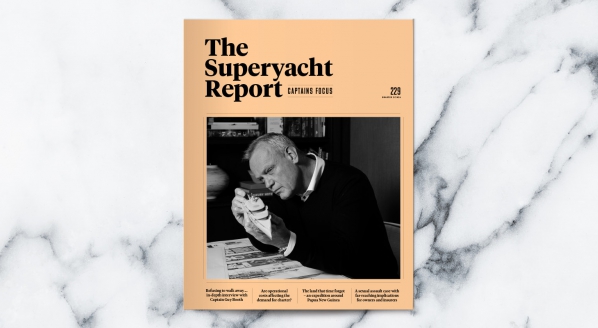
The Superyacht Report 229: Captains Focus - Out Now
513 whales in a day, a yacht arrested by US Marshals, Guy Booth on refusing to abandon Phi and so much more in TSR 229
Crew
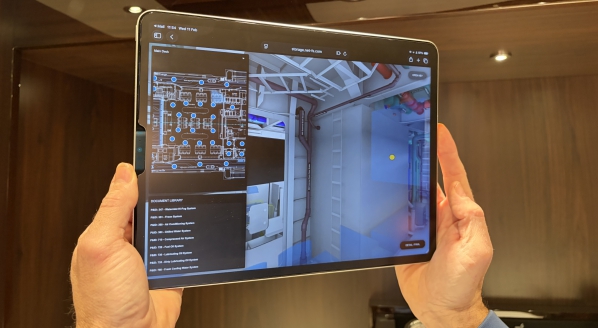
The asset you can’t see: why technical knowledge is the next frontier of superyacht value
Jonathan Lee, CEO of Sentini Marine, argues that the industry’s most overlooked asset is the operational knowledge embedded in the vessel itself
Opinion
Related news
Between command and connection
4 months ago
Who is really in command?
4 months ago
The Superyacht Report 229: Captains Focus - Out Now
4 months ago
NEW: Sign up for
SuperyachtNewsweek!
Get the latest weekly news, in-depth reports, intelligence, and strategic insights, delivered directly from The Superyacht Group's editors and market analysts.
Stay at the forefront of the superyacht industry with SuperyachtNewsweek