We didn’t start the fire … but are we fanning the flames?
After a spate of highly publicised fires, both on board yachts and in shipyards, is the industry doing enough to make the necessary improvements?
It’s beginning to feel a bit like Billy Joel’s 1989 smash hit We Didn’t Start the Fire. Just as the Piano Man chronicled decades of significant global moments, we, in yachting, seem to be stacking up major fire incidents with alarming frequency. Fires at sea, in construction sheds and marinas have made regular headlines. But instead of seeing these fires as a sensationalist outlet for the media, it should remind us that while we may not have (personally) started them, we’re certainly responsible for preventing the next one.
Over the past five years, a series of high-profile fires has rocked the yachting industry, both in shipyards and on board vessels, raising concerns about safety and fire-prevention measures. These incidents have caused significant damage, disrupted operations and, in some cases, resulted in the total loss of vessels.
In July 2024, a catastrophic fire at a northern European shipyard destroyed a large yacht under construction, echoing the Project Sassi fire in 2018, with firefighters working for more than 20 hours to bring the blaze under control. A facility in Turkey also suffered a major fire in May 2023, heavily damaging a building hall. Although no yachts were lost, the fire significantly impacted operations. Similarly, an Italian yard experienced a destructive fire in the same year.
Beyond shipyards, a series of notable fires on board superyachts has further drawn attention to the growing risks. To name but a few: A fire engulfed several yachts in Mosman marina, New South Wales, on 9 January 2026 and in August 2024, the 47-metre Atina caught fire off the coast of Sardinia, Italy. Despite the crew and passengers being safely evacuated, the yacht was completely destroyed and ultimately sank. In October 2023, 46-metre Navis One was similarly engulfed in flames near Koufonisia, Greece, while 59-metre Andiamo suffered the same fate in Sydney Harbour, Australia, after flames spread rapidly due to the large quantity of fuel on board.
Together, these fires have had a seismic impact on the industry, intensifying scrutiny around fire-safety protocols and driving up insurance premiums. But instead of focusing on the smouldering ashes of what was, we should instead be shifting the focus towards prevention. As superyachts continue to push the limits of design and technology, the demand for improved fire-prevention measures has never been more important. The key questions now are whether these incidents are becoming more frequent and how the industry can take proactive steps to prevent such disasters in the future.
“Shipyards are a place where the fire triangle of fuel, oxygen and heat thrives,
all in close quarters and near many sources of ignition.”
“While I am not involved in any of the recent shipyard fire events, I have, on behalf of owners, underwriters and others, dealt with fire-investigation and damage repairs necessary due to fires aboard ships and yachts,” says Dan Robsham, a hull and machinery surveyor and licensed chief engineer with a career that has spanned 42 years.
“Looking back without reference to underwriters’ statistical records, it doesn’t seem to me that there are more shipyard fires today than has historically been the case,” adds Robsham. “Shipyards are a place where the fire triangle of fuel, oxygen and heat thrives, all in close quarters and near many sources of ignition.
“During the past 40 years, the record shows many costly fires have occurred in yacht shipyards in Europe, Australia, Asia, the Middle East and North America. And over that time, I have dealt with shipyard fires caused by hot work, temporary lighting and causes we simply could not determine.”
The reality is that fire often strikes without warning, usually due to human error. Robsham recalls visiting a shipyard in the UAE to discuss safety protocols for a large yacht arriving from Europe. To his shock, he discovered a drydocked motoryacht fully engulfed in flames, right between the office door and his car. When he contacted the yard manager to report the fire, the initial response was disbelief, but it quickly became clear that work on that yacht had abruptly come
to an end.
In another case, Robsham recounts that a yacht over 50 metres in length, docked after post-sea trials, accidentally triggered the water mist sprinkler system when an unsecured access hatch struck a sprinkler head after hours. Although the system operated as intended, the resulting overnight flooding caused significant damage to the newly finished guest accommodation, leaving much of it in ruin.
Even when rigid precautions are in place, it takes only one moment of poor judgement to spark a disaster. “During one large refit, we organised best practices: joint inspections by the yard and crew before issuance of any hot-work permit, fire watches, charged fire hydrants, cleanliness and a rigorously enforced no-smoking policy. Signage was posted and access strictly controlled,” says Robsham.
Yachts today are far larger and more complex than ever before and are filled with flammable liquids, intricate hydraulic and HVAC systems, heated floors, glass walls and sprawling atriums. They’re also packed with personal electronics, petrol-powered tenders and lithium-ion-battery water toys...
“Hazards were evaluated and dealt with as they arose. All of this was well underway when one day we discovered a subcontractor had, unknown to us, been carrying out hot-work repairs inside the floating dock underneath the ship. While no disaster resulted, there was a failure to communicate on a ‘Cool Hand Luke’ scale that prompted a lot of hard feelings and sharp words.”
Times have certainly changed, as Robsham points out. Yachts today are far larger and more complex than ever before and are filled with flammable liquids, intricate hydraulic and HVAC systems, heated floors, glass walls and sprawling atriums. They’re also packed with personal electronics, petrol-powered tenders and lithium-ion-battery water toys, all crammed into every available space between the owner’s cabin and the pizza oven. It’s a hazardous environment and it’s beginning to impact the changes to code and insurance policies.
Michelle van der Merwe, superyacht account manager at Pantaenius Monaco, says, “While we’re not actively asking for detailed information about all new technology on yachts in build, except for specific cases, we’ll ask more questions to assess the risk for certain shipyards or yachts using newer technologies, especially if we know there are battery-powered toys on board.
“But as of now, we aren’t actively tracking that, though it could change in the future if these issues become more widespread. And given the number of fires this year, if battery-related causes are confirmed, we might see more regulations coming in. New clauses in insurance policies could start to appear as well.”
For Mike Wimbridge, director at Pantaenius, the rise in fire incidents across the sector is closely linked to the increasing presence of new technology, particularly on-board toys and gadgets. “Most people would agree that there’s simply more ‘stuff’ on pleasure craft now. Mobile phones, drones and various other devices,” says Wimbridge. “On superyachts, in particular, you’ve got all the toys and additional equipment.
While a major loss may not immediately affect yacht insurance, there’s likely to be a
ripple effect. Shipyard and construction premiums are expected to rise, and this could
potentially lead to a contraction in the market.
“Many of the current safety protocols focus on following the manufacturer’s instructions. There is, however, significant media coverage of boating, especially on social media, which is much higher now. You often see grainy mobile-phone footage of boats on fire. It’s becoming much more visible.”
The yacht insurance market is relatively small, and when it comes to fires at large shipyards these facilities are typically insured through the commercial marine market rather than the yacht-specific market, which is a subset of commercial marine. While a major loss may not immediately affect yacht insurance, there’s likely to be a ripple effect. Shipyard and construction premiums are expected to rise, and this could potentially lead to a contraction in the market.
For multinational firms, insuring yachts, whether in construction or on the water, may become less appealing, particularly given the heightened focus on the industry due to high-profile disasters. In the bigger picture, some insurers might decide it’s simply not worth the risk, which would push up premiums and limit the type of coverage available. Reputational risk is also a significant factor; large marine insurers might begin to view yachts as less attractive.
“It takes a strong person to go to the board and say ‘yes, we should still write this’, especially when they’ve already faced tens of millions in claims this year,” says Wimbridge. “Sometimes, the numbers just don’t add up compared to the income they’re generating.”
Van der Merwe adds, “These instances are going to have a knock-on effect on premiums. There will likely be some tightening of conditions and maybe some insurers won’t want to cover certain types of yachts. Higher-value sailing yachts or those using new technologies, like hybrids, might be affected. It really depends on what comes out of the investigations.
“That, in turn, leads to an increase in premiums and coverage changes for people. It’s pure supply and demand. Right now, there are around 20 companies you can go to to insure a big yacht. Next year, that number might drop to 15. It might stay at 20, but with fewer willing to take on the risk.”
On a human level, the reality is that if you’ve ever bought a lithium-ion-powered tool or gadget, you probably didn’t bother reading the manual. You just plug it in and go. Imagine that same scenario on a yacht, potentially in a high-pressure situation with the owner’s family on board. If a flight board or similar device stops working, the instinct might be to grab another battery or charger and plug it in without following proper safety protocols. However, when you’re putting employees or family members on these boats, it’s something that needs to be taken seriously. Unfortunately, there have been documented cases where this lack of attention to detail has led to catastrophic outcomes.
“A fire investigator I know once said that if you told any owner they had an open bucket of petrol sitting in their engine room, they’d be outraged. But, as he pointed out, a poorly maintained battery system poses a similar risk,” says Wimbridge. “In one instance, the issue was with a battery that the crew knew wasn’t charging or working properly. Instead of addressing it immediately, they just put it in a cupboard and thought, ‘We’ll deal with that after the charter season’. The correct response should have been to remove it from the yacht immediately or at least store it properly.
“It is not clear to me that the level of outfitting has somehow increased construction shipyard-related
fire risks in a meaningful way. However, I do believe that the risk of in-service fires has increased.
This is where on-board operating procedures must meet the challenges not dealt with
by physical arrangements.”
“I’m surprised that level of awareness isn’t more ingrained. If a young deckhand reports that a battery isn’t charging properly and is told ‘just stick it in the cupboard’, they’re unlikely to question it or act differently.”
Robsham agrees. “It is self-evident that the fire hazards have become more numerous and varied than in the past,” he says. “It is not clear to me that the level of outfitting has somehow increased construction shipyard-related fire risks in a meaningful way. However, I do believe that the risk of in-service fires has increased. This is where on-board operating procedures must meet the challenges not dealt with by physical arrangements.”
The human element plays a critical role in shaping insurance policies in the yachting industry, often more so than the fires themselves. It’s widely known that there’s a shortage of highly skilled crewmembers and this issue extends beyond captains to the entire crew. While there are certainly many high-quality yachts, the real problems arise when less competent or underqualified crews are involved. With a rise in incidents, both on board and in shipyards, these issues are becoming increasingly noticeable, highlighting the need for improvements. The key question remains: how can we prevent these incidents in the future?
Ensuring that both shipyards and superyachts are equipped with the right tools and safety measures is just one piece of the puzzle. Equally important is investing in crew and ensuring that those entrusted with these vessels have the skills and training to be proactive and handle high-pressure situations effectively. It’s not enough for a captain to simply have the right qualifications or be liked by the owner.
Long-standing relationships between owners and captains can sometimes obscure the reality that transitioning from a smaller vessel to a much larger yacht comes with significant risks. Owners may not realise that the captain they trust may not be fully prepared for such a leap in responsibility, and that’s where the dangers lie.
Leadership and teamwork are essential during emergencies such as fires but, unfortunately, new safety regulations tend to be introduced only after a disaster strikes. This reactive approach isn’t what the industry needs; there’s now an opportunity to take a more proactive stance, implementing the necessary improvements before another serious incident forces the issue.
Robsham says, “The September 2019 fire aboard the California-based dive boat Conception that killed 34 people exemplifies where poor design, outdated regulations and loose operating practices all played a part in a true maritime disaster. The root cause is still debated to this day. Yet it is known that the failure of the captain and crew to keep a roving fire watch resulted in needless fatalities.”
There’s also a large concern with privately owned yachts, which often operate outside the stricter safety regulations applied to commercial chartered vessels. There’s a clear split between private vessels and commercial charters where there’s a requirement for knowledge and adherence to fire-safety standards.
“Just because it’s a private yacht doesn’t mean the standards should be lower. If fires are increasing
for these reasons, surely, regulators need to step in and enforce stricter rules for private yachts too.
I feel like Flag states need to step up, especially with the way things are going.”
“Yachts need to have the same kind of regulations in place as commercial vessels do,” says Van der Merwe. “I know it’s difficult because they’re smaller, and some commercial regulations are tough to apply in terms of space and practicality. But in terms of safety standards, there should be a minimum requirement across the board.
“From a regulatory standpoint, it’s worrying. Just because it’s a private yacht doesn’t mean the standards should be lower. If fires are increasing for these reasons, surely, regulators need to step in and enforce stricter rules for private yachts too. I feel like Flag states need to step up, especially with the way things are going.”
In terms of improving fire safety in shipyards, one could hope that owners start asking builders, designers and managers the right questions and communicate efficiently. Rather than demanding a myriad of complex, intricate amenities on the yacht and potentially dangerous toys, perhaps they should ensure they are stored correctly, checked constantly and that all crew are properly trained in fire safety and how to use the equipment once on board.
However, balancing training with financial constraints and timing is always a challenge. With crew rotations, seasonal demands and maintenance schedules, there’s rarely an ideal moment to dedicate time to it. This becomes even more difficult when the cost of sacrificing potential charter revenue is factored in. The reality is that change will have to come from the high-end level – from the builders themselves.
“It is clear to me that a significant challenge in the shipbuilding and repair environment nowadays is meaningful communication about fire hazards with everyone working aboard and around a yacht,” says Robsham. “People must be informed, and understand, what the fire hazards really are. They must know where such hazards exist and how to minimise them through their own efforts. All of this is a mighty task in today’s commercially pressured and attention-span-challenged world. Trade supervisors and managers must step up to the task of continuous implementation of good fire-safety practices.”
The growing list of incidents simply highlights the broader issue within the industry, which is the need for stricter enforcement of safety protocols and more comprehensive training. It’s not enough to rely on regulations that may be outdated; the industry must take an active role in preventing similar tragedies through constant vigilance and adapting to modern safety standards.
There are plenty of valuable resources available to enhance fire-safety measures too. In the US, the National Fire Protection Association (NFPA), known for its expertise in electrical codes, has developed NFPA 312, which specifically addresses fire protection for vessels during construction, conversions, repairs and lay-up. In addition, the NFPA has issued more than a dozen other standards relevant to maritime operations and facilities.
The US Code of Federal Regulations also has a section dedicated to shipyard fire safety under 29 CFR 1915. These long-standing regulations emphasise the importance of communication and fire-hazard awareness among all personnel on site. Similar standards, based on the same principles, are widely adopted internationally.
“Accidents happen through an unfortunate combination of factors, which if they were not aligned just so would have caused no harm. It is everyone’s daily task to keep those hazards to a minimum.”
Furthermore, SOLAS Chapter II-2 Regulation 17 issues guidelines approving alternative fire-safety measures. As yachts continue to evolve in design and technology, this regulation is likely to play an increasingly crucial role in maintaining safety standards.
“But let it be said – common sense is just as important as any rulebook,” concludes Robsham. “On active vessels, the most common source of fires I have encountered is a pressurised oil or fuel leak, followed by lighting. My surveyor colleagues have in recent years dealt with numerous battery and electrical fires that occurred aboard active vessels.
“At this stage of my career, I am amazed at the ingenuity and innovation that exist in our industry. However, we all must remain mindful of the simplest and oldest of things when it comes to safety. Accidents happen through an unfortunate combination of factors, which if they were not aligned just so would have caused no harm. It is everyone’s daily task to keep those hazards to a minimum.”
So while yachting has seen incredible advancements in technology and design over the past decade, with this progress comes a heightened level of responsibility. Fires, whether at sea or in shipyards, continue to remind us of the fragility of life and the industry we work in. With more frequent incidents, insurers are tightening their policies, increasing premiums and reassessing their willingness to cover high-risk vessels.
For yacht owners and builders, it’s not just about complying with regulations, it’s about ensuring that every safeguard is in place to protect their investment and keep insurance coverage viable. As the industry faces increased scrutiny, insurers will play a pivotal role in shaping future safety standards.
The lesson should be clear: safety protocols, fire prevention and proper crew training must be held to the highest standards, with no room for complacency. While it’s easy to focus on innovation, we must also prioritise the fundamental aspects of safety. The industry’s proactive response, before the next disaster strikes, will be what defines its future.
By strengthening communication, enforcing tighter regulations and ensuring everyone on board understands their role in fire prevention we can avoid becoming part of another list of tragic incidents. The fires of yesterday should drive the safeguards of tomorrow.
This article first appeared in The Superyacht Report: Owners Focus. With our open-source policy, it is available to all by following this link, so read and download the latest issue and any of our previous issues in our library.
NEW: Sign up for SuperyachtNewsweek!
Get the latest weekly news, in-depth reports, intelligence, and strategic insights, delivered directly from The Superyacht Group's editors and market analysts.
Stay at the forefront of the superyacht industry with SuperyachtNewsweek
Click here to become part of The Superyacht Group community, and join us in our mission to make this industry accessible to all, and prosperous for the long-term. We are offering access to the superyacht industry’s most comprehensive and longstanding archive of business-critical information, as well as a comprehensive, real-time superyacht fleet database, for just £10 per month, because we are One Industry with One Mission. Sign up here.
Related news
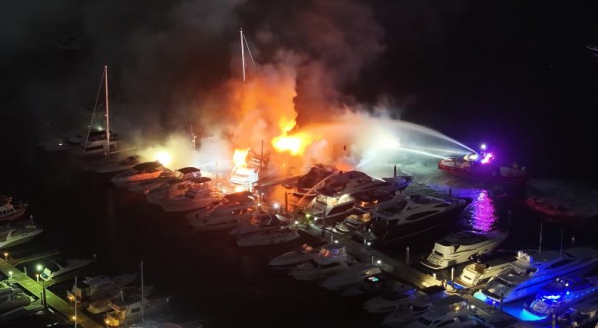
Fire sinks three yachts at Mosman marina
Local authorities are investigating a fire that engulfed several yachts in a New South Wales harbour before dawn broke on 9 January
Fleet
Future directions for crew-safety risk mitigation
A critical evaluation of Captain Rod Hatch’s article, “The professional yachting world – some inconvenient truths”...
Opinion
Keeping crew safer
How the industry can – and should – go above and beyond to ensure crew are not put at risk from insufficient vetting and background checks
Opinion
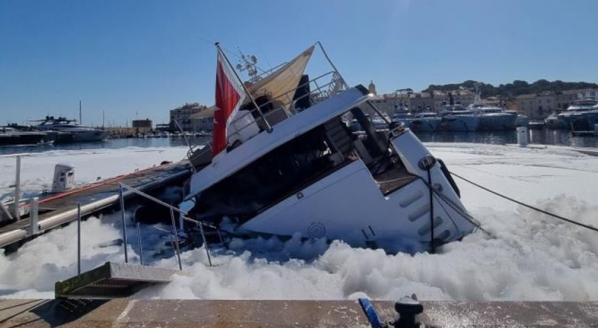
Sea Lady II ‘likely to sink’ after Saint-Tropez blaze
Authorities in Saint-Tropez are continuing recovery and pollution control operations following a fire aboard a 41-metre yacht last week
Fleet

CHIRP Report: Fire on board a large motoryacht at the end of dry-dock
Another engine-room fire illustrates how cutting corners on safety-management training endangers crew even on dry land
Crew
Related news
Fire sinks three yachts at Mosman marina
9 months ago
Future directions for crew-safety risk mitigation
10 months ago
Keeping crew safer
1 year ago
NEW: Sign up for
SuperyachtNewsweek!
Get the latest weekly news, in-depth reports, intelligence, and strategic insights, delivered directly from The Superyacht Group's editors and market analysts.
Stay at the forefront of the superyacht industry with SuperyachtNewsweek