Future directions for crew-safety risk mitigation
A critical evaluation of Captain Rod Hatch’s article, “The professional yachting world – some inconvenient truths”...…
The death of Paige Bell on board M/Y Far From It has cast a sobering light on the superyacht sector. Such tragedies must not fade into history; instead they should drive meaningful strategic, operational and cultural reform. This evaluation critically analyses Captain Rod Hatch’s commentary, identifying its strengths, limitations and underlying biases, and uses this moment to press for long-overdue improvements to crew safety and welfare.
Captain Hatch places Paige’s death within wider maritime culture, regulatory duties and the constraints of legislation. His experience brings authority, but his framing also reflects organisational defensiveness that risks obscuring valuable key lessons. If the industry is serious about protecting future crew, it must move beyond familiar narratives and address the deeper structural issues his article only partially acknowledges. This will require significant change – reforming policies, culture and expectations – to ensure psychological risks are reduced to the absolute lowest acceptable level as a mandatory standard, not a distant aspiration.
This evaluation is not a personal attack, but a structured evidence-based analysis – distinguishing culture from complacency and rhetoric from reality. Its purposes are straightforward: to generate real momentum for change and outline a credible pathway toward a safer, more resilient superyacht industry.

Andy ‘Ivy’ Brennan, MSc RN (ret'd)
1. Narrative and framing bias
1.1 Defensive framing around the industry’s reputation:
Captain Hatch’s article opens by highlighting crew professionalism, condemning inappropriate social-media reactions and warning against sensationalism or “lone voices”. While understandable, this builds a protective shield around the industry. At times it slips into reputation defence bias, where preserving the image of yachting outweighs addressing systemic vulnerabilities.
The rapid transition from acknowledging tragedy to dismissing calls for criminal record checks reinforces this bias. It reframes a safety incident as an unfair criticism of the industry, potential minimising legitimate concerns raised by crew and their advocates.
1.2 The “exceptionalism” narrative:
Captain Hatch repeatedly emphasises the rarity of violent crime on yachts, the privileged nature of crew life and the aspirational qualities of superyacht careers. Although true for many, this creates an implicit halo effect suggesting calls for change may be exaggerated. This framing risks obscuring key fundamental issues, such as:
• Under-reported harassment
• Power imbalances between junior crew and management
• Non-reporting through fear of dismissal or reputation damage
• And the closed, hierarchical nature of yacht operations.
1.3 A false dichotomy: “new legislation vs common sense”:
The article frames legislative reform as unrealistic or naïve, while at the same time calling for cultural and educational improvements. These ideas are not in conflict. In reality, a strong safety culture depends on:
• Clearer interpretation and enforcement of existing regulations by managers
• Voluntary best-practice standards
• Accessible, secure reporting pathways
• Measurable safety culture indicators that support real-time feedback loops
• Crew with strong moral standards who uphold statutory laws.
By framing the issue as a choice between legislation and “common sense”, the article oversimplifies a complex matter, ignoring practical improvements essential for building crew trust.
2. Organisational bias and conflicts of interest
A significant portion of Captain Hatch’s article focuses on the Professional Yachting Association’s (PYA) achievements – from yacht-specific CoCs to MLC equivalences and the GUEST programme. While these contributions are genuine, the heavily self-referencing introduces clear organisational self-promotion bias. This is amplified by dismissing emerging crew-advocacy comments as either “noise” or “lone voices”, implying legitimacy rests only with established bodies. Such framing reflects structural-power bias, where dominant organisations protect their authority at the expense of grassroots improvements in crew welfare.
The industry’s weak reporting structures mean many incidents remain undocumented.
3. Selective use of evidence
Captain Hatch makes several individually reasonable observations:
• Criminal checks would not have prevented this incident
• There is no evidence that the accused had a record
• Harassment is widespread across many industries
• Yachting provides significant financial rewards
• Crew-on-crew homicides are rare.
Collectively, however, these create a pattern of comparative minimisation, downplaying systemic vulnerabilities by compare yachts to worse environments. This shifts the reader’s attention away from yacht-specific challenges including:
• Cramped accommodation
• Contractual precarity
• Hierarchical command structure inhibiting reporting
• Owner influence in management decisions
• Alcohol-driven social dynamics
• Blurred personal boundaries.
Additionally, using “no reliable data exists” to imply that a problem is insignificant is data-absence fallacy. The industry’s weak reporting structures mean many incidents remain undocumented.
4. Simplification of crew-welfare issues
Captain Hatch suggests that calls for improved wages, safe manning, mental-health support and better crew accommodation are impractical, already met or left to owner discretion. This blurs the line between regulatory compliance and genuine functional safety, totally obscuring that minimum standards are not best practice. ISM mandates reporting but not culture; STCW ensures compliance but not welfare; MLC sets baselines not modern expectations. Presenting these issues as resolved – “the system works” – camouflages persistent safety gaps and reflects system-justification bias within the superyacht sector.
5. Limited engagement with human-factor realities
Although loneliness and cyber-isolation are acknowledged, the article underplays essential human-risk factors, such as:
• Fatigue and sleep disruption
• Long-term stress
• Gender imbalances
• Peer pressure within enclosed environments
• Alcohol-driven behaviour
• Barriers to reporting misconduct
• Low moral and professional standards among leaders.
By focusing heavily on yachting’s rewards, the article offers an incomplete portrayal of crew life and misses the opportunities to strengthen their wellbeing and safety.
Using external specialists removes on-board bias and gives crew a confidential,
secure way to raise concerns.
6. Charting the course ahead – strengthening superyacht crew safety
Despite its limitations, Captain Hatch’s article touches on important themes – education, cohesion and cultural development – together they provide a firm foundation for realistic safety improvements.
6.1 Building stronger safety cultures and reporting:
Many crew avoid reporting concerns for fear of reprisal, losing work, being judged or harming their reputation. The industry desperately needs one independent, secure reporting system, completely separated from owners, managers and flag states. This would:
• Reassure crew that concerns are being managed fairly
• Offer protection when speaking up
• Generate reliable safety data.
To be effective it must protect identities, meet legal requirements and prevent malicious reporting.
6.2 Normalising near-miss reporting:
Near misses – conflict that nearly escalated, avoided harassment, fatigue-driven mistakes or unsafe behaviour – should be documented with the seriousness of technical near misses. This helps detect risks early, improves culture and alerts management companies to emerging issues.
6.3 External cultural-safety audits:
Common in aviation and offshore energy sectors, independent audits can uncover toxic micro cultures, trust and communication breakdowns, weak leadership and interpersonal tensions on board. Using external specialists removes on-board bias and gives crew a confidential, secure way to raise concerns.
6.4 Strengthening human-factors training:
Training must go beyond hard, technical skills. HELM (human element leadership and management) could be strengthened through modules on conflict resolution, recognising manipulative behaviours, understanding isolation risks, trauma-informed awareness and bystander intervention. This equips crew to manage challenging on-board interpersonal situations more confidently.
6.5 Pre-season safety workshops:
Before each season, impartial safety workshops should align expectations across all crew. Topics include assertiveness, escalation pathways, leadership responsibilities, maintaining boundaries and recognising early signs of stress. This prevents conflict and clarifies shared values.
The superyacht world is an exceptional place; its next evolutionary step requires matching opportunity with safety, professionalism with respect and leadership with genuine accountability.
6.6 Improving cohesion and mental wellbeing:
Trust is essential in confined environments. Cohesion grows through social bonding, shared task rotation, mentorship and clear communications from senior crew in order to create a safe and supportive vessel. Senior officers must also recognise trauma-informed indicators during conflict or harassment to ensure timely, sensitive responses aligned with best-practice welfare standards.
6.7 Reducing cyber-silo isolation:
Excessive phone or social media use isolates crew and reduces awareness of on-board dynamics. Strongly encouraging communal activities and open interaction strengthens team cohesion and improves crew wellbeing.
6.8 Voluntary industry standards (VIS):
A voluntary “Hi-VIS” framework (pun is intended) that goes far beyond regulatory minimums could include welfare guidelines, conduct standards and leadership expectations. This would demonstrate a genuine commitment to crew safety and welfare that strengthens the vessel’s organisational reputation.
6.9 Safer recruitment practices:
Safety requires more than criminal record checks. Effective recruitment includes behavioural interviews, robust referencing, close oversight during the probationary period, and psychological safety briefings. These ensures new hires align with crew-welfare values.
6.10 Strengthening support networks:
Crew need easy access to support – through helplines like ISWAN, visible on-board resources and senior officers who discuss welfare openly and without stigma.
6.11 Peer support and buddy systems:
A buddy system – particularly for junior crew, women and newcomers – reduces isolation and strengthens interpersonal safety nets.
Conclusion
As the industry reflects on Paige Bell’s life and loss, it faces a defining choice: allow this moment to fade or use it as a catalyst to reshape strategic, operational and cultural norms. Captain Hatch’s article offers sincere and heartfelt reflections, yet its defensive framing, organisational bias and use of selective evidence urgently highlights the need for a more balanced, transparent and uncompromising conversation.
The superyacht world is an exceptional place; its next evolutionary step requires matching opportunity with safety, professionalism with respect and leadership with genuine accountability. Acting now to improve conditions honours those harmed, whilst protecting today’s crew and safeguarding tomorrows. Paige’s legacy must drive transformation, not remain a tragedy. RIP.
As an open-source platform we offer an industry-wide invitation to anyone and everyone in our sector to share their knowledge, experience and opinions. So if you have an interesting and valuable contribution to make, and would like to join our growing community of guest columnists, share your ideas with us at newsdesk@thesuperyachtgroup.com
NEW: Sign up for SuperyachtNewsweek!
Get the latest weekly news, in-depth reports, intelligence, and strategic insights, delivered directly from The Superyacht Group's editors and market analysts.
Stay at the forefront of the superyacht industry with SuperyachtNewsweek
Click here to become part of The Superyacht Group community, and join us in our mission to make this industry accessible to all, and prosperous for the long-term. We are offering access to the superyacht industry’s most comprehensive and longstanding archive of business-critical information, as well as a comprehensive, real-time superyacht fleet database, for just £10 per month, because we are One Industry with One Mission. Sign up here.
Related news
Another inconvenient truth
Adam Parnell, Director of CHIRP Maritime’s Superyacht programme, sets out why silence is the real danger in professional yachting
Opinion

Burst the bubble of hierarchical structure
Why a regulatory system that functions only in the wake of disasters is not a resilient one – by Dr Emma Gillett DC, CEO & Founder of SeaFeedback
Opinion

Yacht crew safety culture and well-being
Lloyd’s Register on why the industry needs to go beyond compliance and focus on human-centred safety.
Opinion
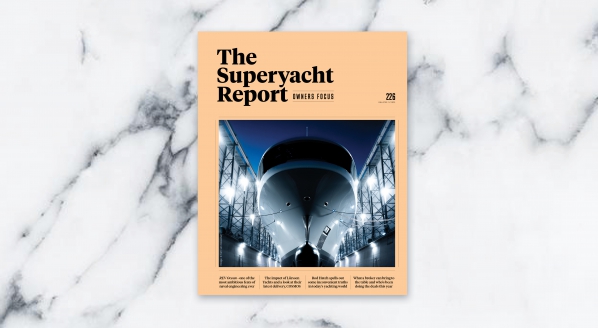
The Superyacht Report 226: Owners Focus – out now!
From Oceanco, the PYA to MYBA, read the inside stories of the leaders shaping the future of yachting. Read TSR 226: Owners Focus today
Opinion
PYA – the voice of yacht crew
A reminder from the CEO of PYA, Christophe Bourillon, of the fundamental behind-the-scenes role the organisation plays in yacht crew representation
Crew
Related news
Another inconvenient truth
11 months ago
Burst the bubble of hierarchical structure
11 months ago
Yacht crew safety culture and well-being
1 year ago
PYA – the voice of yacht crew
1 year ago
NEW: Sign up for
SuperyachtNewsweek!
Get the latest weekly news, in-depth reports, intelligence, and strategic insights, delivered directly from The Superyacht Group's editors and market analysts.
Stay at the forefront of the superyacht industry with SuperyachtNewsweek