Acting, leadership and the future of command
What acting classes taught me about yachting – by Captain Carsten Franik…

Understanding what drives us – and what we’re capable of – is a quiet search most people live with. At the core, we all want a bit of peace and a direction that makes sense.
Outside the standard nautical training, I have used opportunities to widen my world: travelling, talking to people who are nothing like me and learning from cultures with completely different ways of seeing life. The more I have stepped outside my bubble, the clearer I have seen that human experience is huge – and I’ve barely touched any of it.
At the same time, the job pressure often backed me into a corner. Fatigue, stress, responsibility, the moments I got it wrong; eventually you either face yourself or you crack. I decided to face it. And somewhere in that process I found the calm, the self-acceptance and a blunt understanding of what actually matters.
Did all this make me a better leader? Maybe. What I do know is that it made me a more awake human being – and that’s usually where better leadership starts.
This essay isn’t a sales pitch for acting classes. I’m not saying every captain, HOD, manager, owner’s rep or crew member needs to go to LA and stare into their own psyche. For me, the opportunity arose and I went to LA to take acting classes – certainly not to become an actor but because I opened to a new challenge – and this time, the challenge wasn’t the sea. It was myself.
What surprised me wasn’t that acting demanded presence, honesty and emotional awareness.
It was how much these qualities mirrored the very essence of leadership at sea.
What actually matters
Leadership is one of the most overused and under-examined concepts in the superyacht industry. We discuss it endlessly – in manuals, seminars, interviews – yet rarely do we explore the lived experience of it: the quiet tension on a bridge at 03:00, the subtle shift in a crew member’s face, the emotional climate of a yacht when pressure rises.
I thought I understood leadership deeply. Responsibility, presence, composure – these had long been my anchors. But I’ve always been someone who veers off the beaten track to challenge myself, explore new worlds and learn beyond the safe confines of our industry. That curiosity – that pull to stretch myself in unfamiliar territory – is what took me to Los Angeles in the first place. I expected adventure, challenge, discomfort. What I didn’t expect was how profoundly acting classes would reshape my understanding of leadership itself.
We talk a lot about leadership in the superyacht industry, sometimes too much, sometimes not nearly enough. It’s become a buzzword, a checkbox, a quality we all claim to value but rarely interrogate with real depth. And even with years of command experience behind me, I realised how much more there was to discover about what leadership actually means: responsibility, composure, resilience and the ability to make the people around you feel safe, capable and seen.
What surprised me wasn’t that acting demanded presence, honesty and emotional awareness. It was how much these qualities mirrored the very essence of leadership at sea – and how often, without realising it, I had been leading from habit instead of truth.
When leadership becomes a performance
One evening I stepped into a bare studio. No script, no role, no rank. Just a partner, a teacher and a single request: look at them. Really look. Let instinct speak before your mind does. My instinct was automatic. I slipped into “Captain Mode”: steady, calm, unreadable. It’s the armour we all learn to wear. But within seconds, the teacher stopped me: “You’re performing. I want you, not the captain.” The flash of embarrassment was instant. In that moment, the acting studio and the bridge overlapped so perfectly it felt almost unnerving. Acting revealed how often I had relied on emotional detachment, not as a strength, but as a shield.
In yachting, step into character long enough and you begin to believe the role more than yourself. You become the unshakeable captain, the endlessly patient mentor, the diplomat who never cracks – even when the truth beneath is more complex. Acting cut through that illusion. It taught me that people don’t follow your instructions; they respond to the emotional undercurrent behind them. Presence cannot be faked and performance eventually collapses under pressure.
Acting forced me to see how often I led half-present. Thinking strategically, managing politics, anticipating problems – all useful skills, but they pull your attention away
from the people right in front of you.
The mastery of presence
Presence is a word used so casually in leadership discussions that it’s lost much of its meaning. But in the studio, presence becomes unavoidable. A teacher watches every micro-expression, every breath, every hesitation. Under that level of scrutiny, you realise how rarely you are truly here. Not in your head, not behind armour, not two steps ahead of the moment, but fully landed in yourself.
Acting forced me to see how often I led half-present. Thinking strategically, managing politics, anticipating problems – all useful skills, but they pull your attention away from the people right in front of you. Presence is not confidence; it’s awareness. It’s the ability to monitor your inner critic, notice your impulses, and feel your emotional state without being overwhelmed by it.
On board, this is not a luxury, it’s a survival skill. A present leader notices the tension in a crew mess before it escalates, senses a guest’s emotional shift before it becomes verbal and feels the atmosphere change long before a problem becomes visible. Presence creates psychological safety. It’s the invisible stabiliser of a yacht’s culture.
Three schools, three reflections
Each acting school held up a different mirror. At one, repetition drills stripped away my facade of competence and exposed how easily I used professionalism as a hiding place. On board, that same facade can appear as distance or disapproval.
At another studio, emotional access work forced me to acknowledge what I habitually suppressed in the name of professionalism – frustration, tension, fear. Suppressed emotions don’t disappear; they leak into tone, posture and energy, and crew absorb them immediately. Physical and voice work revealed just how much tension I carried without noticing. On a yacht, tension spreads like static electricity; if the captain is tight, the whole team braces.
The next generation of crew is arriving with different expectations. They need mentorship,
emotional clarity, communication, purpose. They want leaders who know themselves,
not leaders who hide behind hierarchy.
But it was improvisation that shifted something deeper. Improv demands that you listen with your entire being. Not to respond strategically, not to control outcomes, but to meet the moment truthfully. Suddenly, I understood why certain on-board situations unravel and others resolve effortlessly. It’s not the content, it’s the connection. Improvisation taught me to stay responsive rather than reactive, open rather than defensive, human rather than role-bound.
Each school, in its own way, showed me that leadership without self-awareness becomes rigid. And rigid leadership breaks under pressure.
A human future for a high-pressure industry
The next generation of crew is arriving with different expectations. They need mentorship, emotional clarity, communication, purpose. They want leaders who know themselves, not leaders who hide behind hierarchy.
Acting taught me that connection is not a technique or a leadership trick. It is a way of being, a willingness to show up as yourself instead of the character the industry conditioned you to perform.
Authenticity doesn’t weaken authority; it deepens it. It creates teams who trust, who speak up, who grow and who stay.
This is not softer leadership. It is conscious leadership – leadership rooted in presence, humility and emotional intelligence.
The inner work we rarely invest in
We spend millions on refits, systems and innovation, yet almost nothing on the inner operating system of the people making the decisions. Acting stripped me of title, rank and the illusion of control. It gave me something far more valuable: clarity about who I am without the uniform.
For me, the most transformative work came from Anthony Meindl’s Actor Workshop in Los Angeles, in person and online classes where authenticity is not a concept but a practice, and presence is trained with the same precision we apply to ship-handling.
These experiences changed how I lead. They made me more aware, more grounded and, paradoxically, more effective. I realised that leadership is not the role you play , it’s the presence you bring into every moment.
And presence, like any skill worth having, must be trained.
As an open-source platform we offer an industry-wide invitation to anyone and everyone in our sector to share their knowledge, experience and opinions. So if you have an interesting and valuable contribution to make, and would like to join our growing community of guest columnists, share your ideas with us at newsdesk@thesuperyachtgroup.com
NEW: Sign up for SuperyachtNewsweek!
Get the latest weekly news, in-depth reports, intelligence, and strategic insights, delivered directly from The Superyacht Group's editors and market analysts.
Stay at the forefront of the superyacht industry with SuperyachtNewsweek
Click here to become part of The Superyacht Group community, and join us in our mission to make this industry accessible to all, and prosperous for the long-term. We are offering access to the superyacht industry’s most comprehensive and longstanding archive of business-critical information, as well as a comprehensive, real-time superyacht fleet database, for just £10 per month, because we are One Industry with One Mission. Sign up here.
Related news
Future directions for crew-safety risk mitigation
A critical evaluation of Captain Rod Hatch’s article, “The professional yachting world – some inconvenient truths”...
Opinion

Yacht crew safety culture and well-being
Lloyd’s Register on why the industry needs to go beyond compliance and focus on human-centred safety.
Opinion

Bridging the gap: The human side of superyacht operations
Marianne Danissen at Camper & Nicholsons explains how knowledge sharing can help alleviate the demands of crew life while raising industry standards
Crew
The value in crisis
In this interview, Brendan O’Shannassy calls for a values-based revolution to future-proof the industry and reclaim its potential
Crew
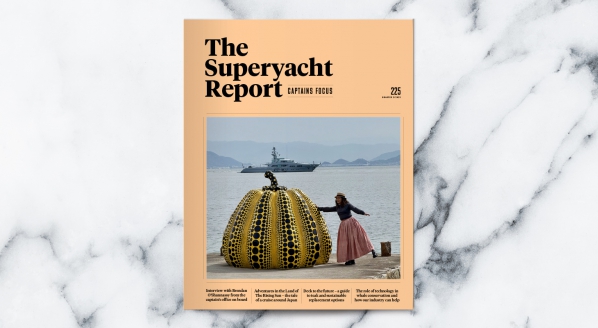
The Superyacht Report 225: Captains Focus – out now!
Real stories from the helm on leadership, operations, culture and life at sea hot off the press. Get your digital copy of TSR 225 here
Opinion
Related news
Future directions for crew-safety risk mitigation
10 months ago
Yacht crew safety culture and well-being
12 months ago
The value in crisis
1 year ago
NEW: Sign up for
SuperyachtNewsweek!
Get the latest weekly news, in-depth reports, intelligence, and strategic insights, delivered directly from The Superyacht Group's editors and market analysts.
Stay at the forefront of the superyacht industry with SuperyachtNewsweek