When wages become anchors
How owners and managers survive – and prevent – crew-wage arrests…
It rarely begins with a storm. Most days the sea is like glass, the season is mapped, yard slots are reserved and the table is set for the next charter guest. Then a fax, an email, a courier with a single sheet: arresto. The word drops into the ship like an anchor – sudden, heavy. A crewmember claims wages, leave, public holidays. In many European ports – especially in Italy – a judge’s hand reaches quickly, ex parte, and the yacht lies still before it speaks.
If you answer only with indignation, you lose time. If you answer only with principles, you lose money. If you understand the grammar of these crises, you find a voice that judges, lawyers and insurers respond to – and you lead the vessel back to open water.
The mechanics of leverage
Crew claims are not ordinary invoices, they carry the scent of bread and work, and the law gives them a special wind. Wages are privileged; they follow the vessel, whoever the owner is, and their reach is long. Arrest orders come fast – faster than any sober debate about notice clauses. This is not a moral verdict on owners, it’s a systems description: protecting seafarers by accelerating process.
In this asymmetry lies the temptation to turn a modest discrepancy into a grand narrative – and in its shadow to pry loose a rapid payment. Not every claim is chicanery, but every procedure knows the logic of levers. Read that logic without being swallowed by it.
Crew contracts deserve the same care as an engine rebuild – meticulous, professional and verified...
Lessons that stay
First lesson: “Release-ready” is a posture, not an event
Like a bridge crew at night on quiet standby, ownership needs invisible preparations: valid financial security for wage claims, crisp powers of attorney, sign-ready security instruments (Club LOU, bank guarantee, court cash) and a shortlist of counsel in the ports you actually use. If you start hunting these tools after the chain is already rattling, you pay twice – in money and time.
Second lesson: Employment contracts are geography as much as text
You can print a choice of law, but you work in places. If services were rendered in one country, its mandatory rules will step aboard, therefore ensure precise mechanics for notice, leave accounting, public-holiday work; daily, countersigned records; no gaps for disputes to grow into. Contracts that can count the everyday are the ones that rarely see a judge.
Third lesson: Documents are quiet witnesses
Not the loudest email, but the quiet routines – payslips, leave ledgers, confirmations of garden-leave – carry the room. Those who tend the small things regularly disarm the big assertions.
Fourth lesson: Honour is not a liability regime
“On principle we won’t pay” sounds gallant on the quay and expensive in the arrest court. You can contest liability and still post security, you can seek peace without confessing and you can close with dignity and still hold your line.
Treat the Seafarers’ Employment Agreement as a living instrument. Audit it annually and align it with flag and Rome I realities.
Contracts, law and payroll: where many storms begin
Crew contracts deserve the same care as an engine rebuild – meticulous, professional and verified against the chart, not memory. Two choices shape everything that follows: governing law and jurisdiction. Make them explicit, coherent with vessel flag and management structure, and workable in the ports you actually call. And remember the current beneath the text: Article 6 of the Rome I Regulation. For individual employment contracts, the law of the country where the crew member habitually carries out their work often asserts itself – even if a different law is chosen on paper. If a deckhand works in Italy week after week, Italian mandatory labour rules may board your contract uninvited.
The second reef is more prosaic and far deadlier to cashflow: payroll compliance. Holidays must be accrued correctly, granted correctly, and – if not taken – paid out correctly. Public holidays need a position and worked holidays need proof. Too often the ledger is superficial: rough spreadsheets, unsigned leave slips, incomplete references on bank transfers. Then one day a €3,000 disagreement becomes a chain around a superyacht. The legal fees, court costs, reputational drag and missed charters dwarf the original delta. A single arrest can eat a yard slot, sour a broker’s confidence and cost the season’s best week – all because numbers that should have been quiet and exact were noisy and vague.
Treat the Seafarers’ Employment Agreement (SEA) as a living instrument. Audit it annually and align it with flag and Rome I realities. Bake in unambiguous notice mechanics, leave arithmetic the crew understands and record-keeping the judge will trust. It is cheaper than the first day of a badly timed arrest.
Forty-eight hours of tactics
Hour 0–2: Stabilise, consolidate, breathe
Name one decision-maker. Captain: log service, promise nothing, say nothing in public. Engage local counsel who knows the court’s cadence. In parallel, identify the undisputed wage elements. Voluntarily wiring the undisputed part blunts the sharpest edge of the other side’s story.
Hour 2–8: Security first
Across Europe, arrests usually dissolve in suitable security. Offer, don’t plead. Start with a solid P&I Club LOU; if the court or opponent hesitates, move cleanly to a bank guarantee or court deposit. Keep the wording “without admission of liability”. The yacht should sail; the dispute should remain testable.
Hour 8–24: Slim the dispute
The stage is narrow now: notice period, leave, public holidays – three threads you can untangle. Pay what is evident. For the rest: a tight settlement horizon or an early judicial indication. No novels – judges will free ships faster when the file is thin and the arithmetic adds up.
Hour 24–48: Paper that moves
Release order, harbour notification, agent – one checklist, all signed. Secure pilotage and fuel windows. Internally: a two-page “Lessons Learned” to HR, payroll and management. Lock it into process within a week. If you return to old habits after release, you’ve already invited the next arrest.
Negotiating without losing face
De-personalise. Not “your lawyer is overreaching” but “we will pay the recognised wages today and escrow the rest for a short, binding process.”
Trade time for money – deliberately. A yacht under arrest doesn’t just lose charter days, it loses rhythm, yard slots and crew cohesion. A moderate premium on undisputed items is often the wisest toll back to schedule.
Show the frame – MLC compliance, insurer readiness, orderly payroll. This isn't pathos, it is structure and structure persuades.
Crew-wage arrests aren’t morality plays, they are instruments. Treat them as such and you will lose fewer nerves, fewer euros and – above all – less time.
A word on Italy – and beyond
In Italy the ex parte reflex is very much alive. Courts move fast to arrest – and just as fast to release when security is in place and the dispute is kept in a manageable shape. The melody is familiar around the Med, the key changes by port but the music is the same: haste in arrest, pragmatism in release. This is not an invitation to capitulate; it is a call to clarity: post security, preserve position, then do the maths.
Prevention is the better fuel
SEA hygiene: Annual dust-off of contracts; pressure-test the leave logic; define holiday work; align law/jurisdiction with Rome I realities.
Payroll discipline: Automated payslips, acknowledged and archived – for crew and owner; correct accruals and payouts, every time.
Evidence routine: Every garden-leave in writing; every leave confirmation signed; every transfer with a future-proof reference.
Manager KPIs: Measure not just miles and movements, but compliance: zero late pays, zero missing certificates.
Pre-season drill: A one-hour arrest tabletop with master, purser, manager, counsel before you cast off. The first serious rehearsal reveals the real gaps.
Closing
Crew-wage arrests aren’t morality plays, they are instruments. Treat them as such and you will lose fewer nerves, fewer euros and – above all – less time. The smartest line in this choreography isn’t “We fight to the last” but “We free today and choose carefully what is worth fighting tomorrow.”
The sea forgives stubbornness less readily than prudence. A yacht that is free earns, delights and keeps her people, but a yacht under arrest is only a beautiful hull at the wrong quay. And the true cost is rarely the disputed €3,000, it's the legal spend, the reputational haze and the charter that sails without you.
The good news: both release and prevention are crafts. And craft can be learned – step by step, document by document, decision by decision – until the anchor drops again where it belongs: freely, at the end of a long, successful day under way.
NEW: Sign up for SuperyachtNewsweek!
Get the latest weekly news, in-depth reports, intelligence, and strategic insights, delivered directly from The Superyacht Group's editors and market analysts.
Stay at the forefront of the superyacht industry with SuperyachtNewsweek
Click here to become part of The Superyacht Group community, and join us in our mission to make this industry accessible to all, and prosperous for the long-term. We are offering access to the superyacht industry’s most comprehensive and longstanding archive of business-critical information, as well as a comprehensive, real-time superyacht fleet database, for just £10 per month, because we are One Industry with One Mission. Sign up here.
Related news
The Crew Conundrum: what do crew really think?
Low investment, low loyalty. Superyacht Intelligence’s latest crew survey reveals a self-perpetuating cycle driven by erosion of trust
Crew

Acting, leadership and the future of command
What acting classes taught me about yachting – by Captain Carsten Franik
Opinion

Gratuities and the legalities
A contributor who wishes to remain anonymous highlights how lack of clarity around the distribution of gratuities can have a serious impact on those servin
Opinion

Yacht crew safety culture and well-being
Lloyd’s Register on why the industry needs to go beyond compliance and focus on human-centred safety.
Opinion
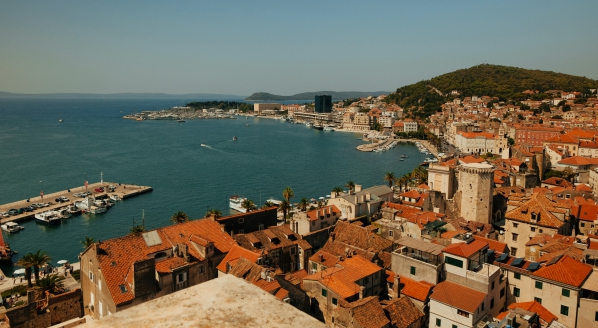
Arrest in the Med: when the harbour writes the headline
Deepening the Croatia playbook, and how it compares across key Mediterranean forums – with a sanctions twist
Crew
Related news
The Crew Conundrum: what do crew really think?
9 months ago
Acting, leadership and the future of command
11 months ago
Gratuities and the legalities
11 months ago
Yacht crew safety culture and well-being
1 year ago
NEW: Sign up for
SuperyachtNewsweek!
Get the latest weekly news, in-depth reports, intelligence, and strategic insights, delivered directly from The Superyacht Group's editors and market analysts.
Stay at the forefront of the superyacht industry with SuperyachtNewsweek