The Crew Conundrum: what do crew really think?
Low investment, low loyalty. Superyacht Intelligence’s latest crew survey reveals a self-perpetuating cycle driven by erosion of trust…

Crew are the custodians of our entire professional ecosystem. Owner-facing, service-providing and narrative-defining in a manner that ultimately dictates how the market is perceived and received. A gleaming 100-metre vessel with a helideck, a wellness centre and every gadget imaginable, paired with a poor crew experience, is still a poor yacht. It’s that simple.
So, knowing this, why is the industry finding it increasingly difficult to retain the crew it already has, let alone attract and develop new entrants? Yachts today are bigger, more operationally demanding and the services expected on board are changing, but the employment reality hasn’t kept pace.
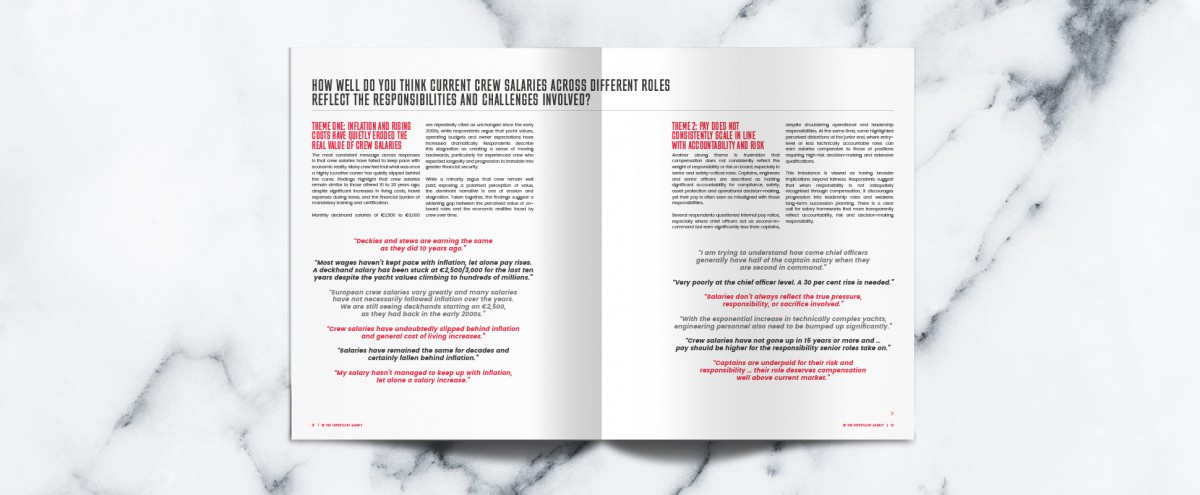
According to the latest findings from Superyacht Intelligence’s The Crew Conundrum Survey Report: Training & Retention, the industry is trapped in a self-perpetuating cycle where low investment drives low loyalty and low loyalty discourages investment. It’s a damning sentiment, but one that demands closer examination, because while loyalty hasn’t disappeared, it has become conditional.
The report draws on qualitative insights from senior crew and captains. And while respondents consistently describe a capable, motivated on-board workforce, they also highlight an employment model that remains largely fragmented, inconsistent and heavily dependent on the individual, rather than shared industry standards. The latter sits firmly at the centre of the findings.
You can download and read the full report here.
“Crew are treated as a cost line rather than professionals delivering a service.”
It’s an unfortunately familiar tension we’ve become accustomed to in conversations about how the industry approaches investment, rather than scathing calls for a lack of ambition or motivation. Training is widely considered essential, but support remains lacking, especially at the junior stage, where financial burdens are felt more profoundly. And when development is largely self-funded, moving yachts becomes the most dependable and rational strategy for career advancement.
The report also highlights simmering frustration with recruitment standards. Respondents repeatedly describe an oversaturated market, with too many agencies operating under inconsistent standards. Concerns centre on insufficient verification, exaggerated CVs and a volume-over-quality approach to placements, creating a concoction many believe has left the hiring landscape broken. Notably, several respondents call for more rigorous background checks, stronger reference verification and clearer accountability from recruiters.
Training standards come under similar scrutiny. Many respondents question whether current courses genuinely prove competence or simply certify attendance. One respondent described training as “a factory for printing money, as many students in and out as possible per week, regardless of competency levels”. In actuality, there is a sharp call for development that demonstrates real capability, rather than box-ticking exercises that do little to prepare crew for the realities of the role.
Obviously, the money matters too, with respondents citing no pay increase for over a decade, financial pressures caused by wages not keeping pace with inflation, and demoralising disparities in senior crew salaries. But the survey revealed that retention is driven much more by the quality of daily life on board than by benefits packages alone. Stable leadership, predictable rotation, respectful communication and genuine progression opportunities, rather than simply higher salaries or bonuses on their own.
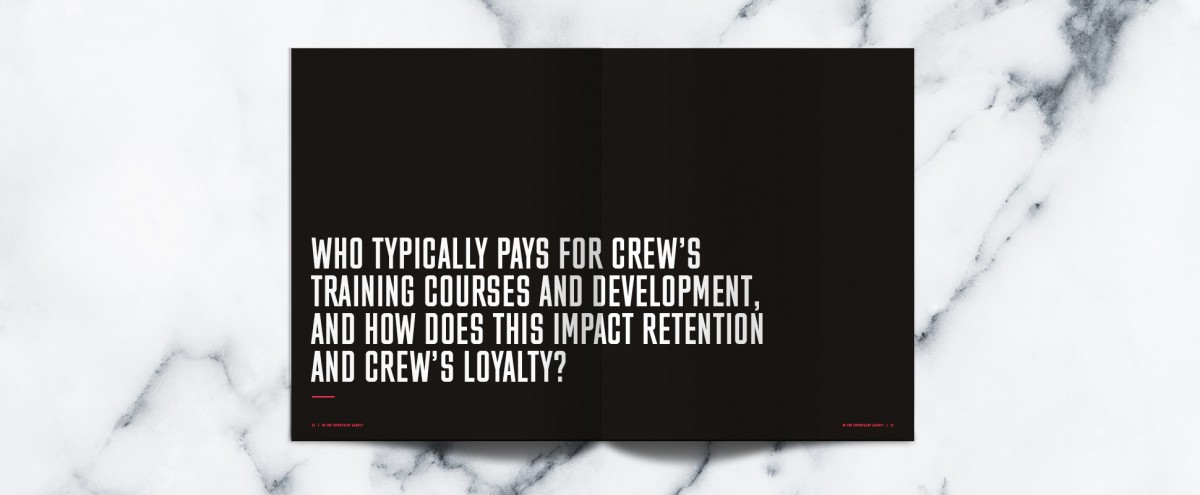
“Broken training promises damage more than morale. They undermine confidence in the entire employment package.”
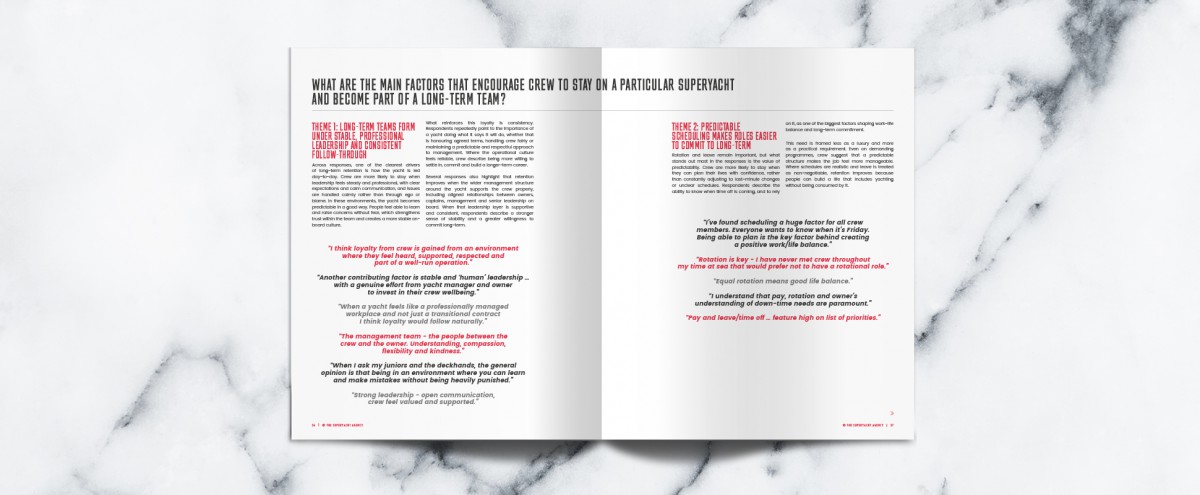
The overarching sentiment is that a large share of the fleet still treats these factors as optional extras rather than core employment conditions. When crew can’t plan their lives with any confidence, when rotation exists on paper but not in practice and when training commitments evaporate without explanation, it is no surprise that loyalty rapidly dissipates.
All this, and more, is explored in the full report. It’s a candid reflection of the lived experiences, directly from those the industry arguably depends on the most. And if the sector is willing to listen, the reality is that the challenge lies in creating an employment model that makes working in this industry genuinely viable in the long term. The professionals the market so desperately needs to stay want to upskill, have financial security and work under respectful leadership in an environment that supports career progression, not paid for in perks.
You can download and read the full report here.
NEW: Sign up for SuperyachtNewsweek!
Get the latest weekly news, in-depth reports, intelligence, and strategic insights, delivered directly from The Superyacht Group's editors and market analysts.
Stay at the forefront of the superyacht industry with SuperyachtNewsweek
Click here to become part of The Superyacht Group community, and join us in our mission to make this industry accessible to all, and prosperous for the long-term. We are offering access to the superyacht industry’s most comprehensive and longstanding archive of business-critical information, as well as a comprehensive, real-time superyacht fleet database, for just £10 per month, because we are One Industry with One Mission. Sign up here.
Related news

The Superyacht Report 227: Refit Focus – out now!
From people and paint capacity, to project control and insurance, we asked the refit market what really matters to them. Read TSR: Refit Focus today…
Crew

Choosing the right shipyard for refit
TSR: Terry Allen explains why choosing the right yard is not about finding ‘the best’, it’s about finding the right fit for the specific scope
Crew

Acting, leadership and the future of command
What acting classes taught me about yachting – by Captain Carsten Franik
Opinion

Future directions for crew-safety risk mitigation
A critical evaluation of Captain Rod Hatch’s article, “The professional yachting world – some inconvenient truths”...
Opinion
The state of superyacht marketing and the return of Make Your Mark
Budget disparity, social media literacy and boat show returns are among some of the key discussion points in our latest market report ahead of MYM in 2026
Event

Burst the bubble of hierarchical structure
Why a regulatory system that functions only in the wake of disasters is not a resilient one – by Dr Emma Gillett DC, CEO & Founder of SeaFeedback
Opinion
Related news
The Superyacht Report 227: Refit Focus – out now!
9 months ago
Choosing the right shipyard for refit
9 months ago
Acting, leadership and the future of command
11 months ago
Future directions for crew-safety risk mitigation
11 months ago
Burst the bubble of hierarchical structure
11 months ago
Gratuities and the legalities
11 months ago
CHIRP Report: Pilot welfare when boarding
12 months ago
Yacht crew safety culture and well-being
12 months ago
NEW: Sign up for
SuperyachtNewsweek!
Get the latest weekly news, in-depth reports, intelligence, and strategic insights, delivered directly from The Superyacht Group's editors and market analysts.
Stay at the forefront of the superyacht industry with SuperyachtNewsweek