The warranty gap
Why superyachts need operator-ready documentation before something goes wrong…

A yacht can leave the yard with every required file in place and still leave its crew without a clear account of how the vessel actually operates. During the warranty period, that difference can become expensive.
A few months after delivery, a piece of machinery fails. The crew believe it has been operated correctly, while the warranty team needs to establish whether the problem lies with the equipment, its installation or the way it has been used.
The original equipment manual describes the component, although it says little about how it interacts with the rest of the yacht. The drawing on board reflects an earlier stage of the build. An operating note exists, written during commissioning, but nobody is certain whether it was ever updated after the final changes were made.
By this point, the problem has grown beyond the failed equipment. Several parties are working from different information and trying to reconstruct what happened after the event.
Anyone involved in a new build or major refit will recognise some version of this situation. It rarely begins with bad intentions or poor workmanship. More often, it starts with a gap between the information produced during a project and the information the yacht’s crew need once they take responsibility for operating it.
That gap becomes especially visible during warranty.
When a complete handover still leaves questions
The handover of a superyacht is a significant undertaking. Shipyards, subcontractors, equipment manufacturers and project teams generate an enormous volume of information throughout the build. By delivery, the folders may be in place, the OEM manuals supplied and the drawings transferred.
On paper, the information package can appear complete. Life on board may reveal a different picture.
An OEM manual is designed to explain an individual product. It will rarely describe every vessel-specific connection, control arrangement or dependency related to that equipment. Builder drawings are essential during construction, but the level of detail that makes them useful to a shipyard can make them difficult for an operator to navigate. Late changes during commissioning may also leave the crew with drawings that no longer represent the yacht as delivered.
Good documentation forms a shared technical record rather than leaving each party to assemble its
own version of events.
Crews often bridge the remaining gaps themselves. Chief engineers create notes, save procedures in departmental folders and pass knowledge from one person to another. This can work well while the same people remain on board. The weakness appears when key crew members leave and their replacements inherit the files without the context that once sat behind them.
A yacht can therefore meet the documentary requirements of handover while still being operationally difficult to understand. The files exist, but there is no single, reliable account of how the vessel’s systems work together.
This is the warranty gap: the space among technical delivery and operator readiness.
Why documentation changes the warranty conversation
The quality of information on board shapes what happens when a fault occurs.
If the crew have clear operating instructions that reflect the yacht’s final configuration, they can establish what should have happened and compare it with what actually occurred. This results in the shipyard receiving up-to-date information about the fault, the circumstances surrounding it and any actions already taken, enabling the engineers to work with a clearer picture, saving time that might otherwise be spent working backwards through drawings, emails and recollections.
However, when that information is fragmented, even a straightforward issue can become difficult to untangle. The crew may struggle to explain which procedure was followed because no vessel-specific procedure was supplied. A shipyard may need to determine whether equipment has been used outside its intended limits, yet have no clear evidence of what operating guidance was available onboard. Changes made during commissioning or early operation may add another layer of uncertainty.
The question of responsibility then becomes harder to answer. Was there a fault in the equipment? Did the installation create the problem? Was maintenance carried out correctly? Had the crew been given enough information to operate the system as intended?
It is essential to capture that knowledge while the people who designed, installed and commissioned
the system are still closely involved.
Good documentation will not prevent every disagreement, but it gives everyone a firmer place from which to begin. It forms a shared technical record rather than leaving each party to assemble its own version of events.
The relevance of this issue was reflected in the programme for the Superyacht UK Technical Seminar 2026. Alongside regulatory change, cyber security and emerging technology, the seminar included a panel dedicated to post-build and refit warranty works and their possible risks. The panel brought together experience from owner representation, law, insurance, project management and shipyards, showing how widely the consequences of warranty problems can spread.
Jonathan Lee, Founder of Sentini Marine, believes the industry has an opportunity to make the transition from build to operation much smoother.
“Warranty issues frequently become more complicated because the people involved are trying to put together the story after something has gone wrong. If the crew and the shipyard are working from the same verified, vessel-specific information from the beginning, the conversation is much clearer. It becomes easier to understand the fault, decide what needs to happen and get the yacht operating again.”
Documentation written for the people operating the yacht
Operator-ready documentation fulfils a different purpose from the collection of files produced during construction.
It draws the relevant information together and explains the yacht as a complete vessel. Rather than describing equipment in isolation, it records how systems have been installed, how they interact and how they should be operated safely. It gives the crew practical guidance that reflects the yacht they have received, including the changes made during the build and commissioning.
This is especially important for custom equipment. A bespoke passerelle, tender handling system or hydraulic installation may be unique to the yacht. The manufacturer’s technical information is still valuable, but the crew also need to understand the complete onboard arrangement and the correct sequence for operating, isolating and maintaining it.
It is essential to capture that knowledge while the people who designed, installed and commissioned the system are still closely involved. Waiting until the yacht is in service makes the task much harder. Project teams move on, subcontractors disperse, and the reasoning behind individual decisions becomes more difficult to recover.
The same applies following a refit. Systems may be altered, equipment replaced and spaces reconfigured, yet the existing documentation does not always move forward with the vessel. The discrepancy between the drawings and the physical yacht can become considerable over several refit periods.
Keeping an accurate operational record reduces reliance upon memory and inherited knowledge. When a new captain or chief engineer joins, they receive more than a collection of historical files. They have a dependable starting point to understand the vessel and continue the relationship with the yard, management company and technical partners.
The best time to close the warranty gap is while the yacht is still being built or refitted, when the knowledge exists and the people who hold it are still at the table.
A benefit for both sides of the handover
Operator-ready documentation is sometimes viewed as an additional delivery cost. The warranty period offers a useful reason to view that calculation differently.
For owners and management companies, better information can reduce downtime, support maintenance and make crew changes easier to manage. It also helps protect an asset whose technical complexity may bear little resemblance to the accompanying paperwork.
For captains and engineering teams, it provides confidence that the information being used on board reflects the vessel in front of them. When help is needed, they can communicate with the yard more precisely and give shore-based teams a clearer account of the situation.
Shipyards benefit as well. Clear instructions reduce the likelihood of equipment damage from misunderstandings, while an accurate operational record can help distinguish a genuine warranty fault from an issue arising elsewhere. When a claim is valid, better information may shorten the investigation and allow the yard to respond more efficiently.
There is a reputational benefit too. The documentation handed to an owner forms part of the delivery experience. On a yacht defined by the quality of its design, engineering and finish, the information supplied to operate it should meet the same standard.
The warranty period will eventually end, but the value of that information continues. It supports future maintenance, refits, fault finding and crew familiarisation, maintaining knowledge that might otherwise disappear each time somebody leaves the vessel.
A successful handover should give the operator more than possession of the yacht and access to its files. It should give the people onboard a clear understanding of what they have been asked to manage.
The best time to close the warranty gap is while the yacht is still being built or refitted, when the knowledge exists and the people who hold it are still at the table. Documentation can only tell the full story if it was recorded in the first place.
As an open-source platform we offer an industry-wide invitation to anyone and everyone in our sector to share their knowledge, experience and opinions. If you have an interesting and valuable contribution to make, and would like to join our growing community of guest columnists, share your ideas with us at newsdesk@thesuperyachtgroup.com
NEW: Sign up for SuperyachtNewsweek!
Get the latest weekly news, in-depth reports, intelligence, and strategic insights, delivered directly from The Superyacht Group's editors and market analysts.
Stay at the forefront of the superyacht industry with SuperyachtNewsweek
Click here to become part of The Superyacht Group community, and join us in our mission to make this industry accessible to all, and prosperous for the long-term. We are offering access to the superyacht industry’s most comprehensive and longstanding archive of business-critical information, as well as a comprehensive, real-time superyacht fleet database, for just £10 per month, because we are One Industry with One Mission. Sign up here.
Related news
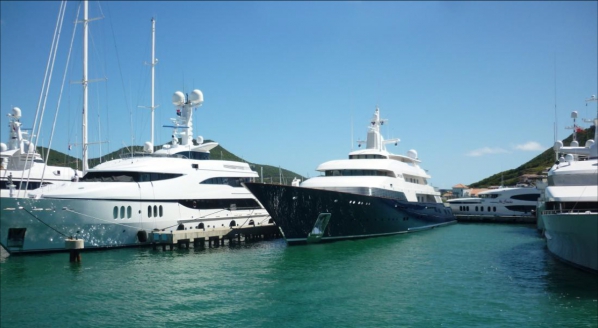
When yacht instructions conflict, start with the authority file
Who has authority over the yacht? Presented here is a logical solution to give clarity and avoid escalation should disputes arise
Opinion

Why crews still build their own spreadsheets
Looking at the spreadsheets crews keep alongside their software has taught me a fair amount about what yacht software gets wrong
Opinion
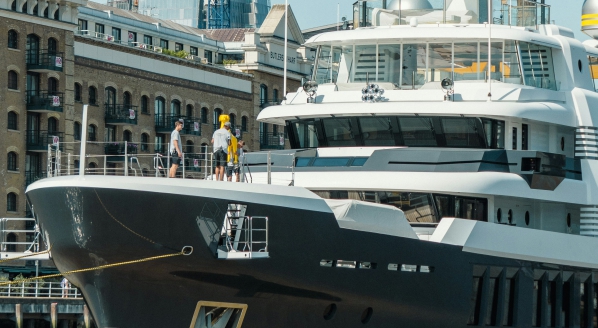
The crew management conundrum
Deep Blue Software’s recently upgraded Crew Management Package joins up all of the admin that comes with hiring and managing a team on board
Crew
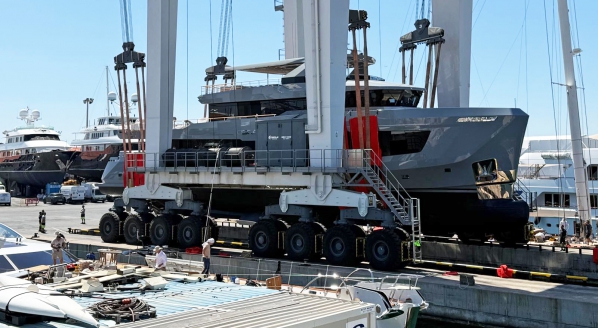
Command on the hard
A single word, “refit”, describes projects that differ from one another by a factor of 50 and are rarely resourced properly
Opinion

Compliance, governance and the value of certainty
Jo Assael, Yachts Commercial Director of IRI | The Marshall Islands Registry, explains how conformance is integral to asset credibility and value
Opinion
Related news
Why crews still build their own spreadsheets
2 weeks ago
The crew management conundrum
1 month ago
Command on the hard
3 months ago
Compliance, governance and the value of certainty
3 months ago
NEW: Sign up for
SuperyachtNewsweek!
Get the latest weekly news, in-depth reports, intelligence, and strategic insights, delivered directly from The Superyacht Group's editors and market analysts.
Stay at the forefront of the superyacht industry with SuperyachtNewsweek