The culture of inflating value
With marina group transactions reaching headline-hitting sums, marina consultant Oscar Siches clarifies the valuations with a down-to-earth view…
I am not an expert in valuing mergers, takeovers or any type of big-money transactions, but I understand how to value a marina and the factors that can alter that value.
When the purchase of IGY by MarineMax was finalised in 2023, it sent shockwaves across the marina industry; never before had a transaction of such importance been made in the marina world. Mr Andrew Farkas, the financial genius and owner of IGY, part of Island Capital Properties (worth 13B, the biggest real estate company in the world), had worked his magic – making a huge profit on what had started as a smaller project in Dubai, back in 2005.
In the Caribbean, Yacht Haven Grande (YHG) in St Thomas, US Virgin Islands, was inaugurated at the highest level, with well-known members of USA entertainment, economy and politics invited. YHG became the first large-yacht IGY marina of the Americas and was followed by takeovers and development in other locations across the USA, St Maarten, Mexico and, later, France, Italy and Spain. Alongside their many smaller berths, they marketed themselves as superyacht marinas and set new standards for the welcome and service provided to superyachts. Their brand was strong, and they were an outstanding group of people led by Tom Mukamal and Kenny Jones who incentivise the whole team to put their expertise to work and created an efficient system that could be applied to many different marinas by making small operational adjustments. Yes, I liked IGY in those times, I admired the operation, I knew some of their management and marina directors, and I learned from them.
An important difference in value is the time granted to operate the marina, or the concession period. In the USA, few marinas are built on freehold land where ownership is yours until you sell. In most other countries, marinas are granted a concession by governments – a period for the marina to be developed and operated – and berth transactions are leases for a determined length of time. At the end of such period the grant for the concession must be renewed for the business to continue. Sometimes it happens, sometimes it doesn’t.
This IGY growth analysis concession-length dependency helps us understand the factors by which marinas can be evaluated. Let’s take three marinas in the Mediterranean: Sète (F), under concession 2020-2035, Cuarentena Palma (E) 2025-2031 and Portisco (I) 2021-2049.
The core value of marinas under concession must be the profit calculated by square metres of berths to lease and days the berths can be rented (in many concessions days or weeks must be given back for government-supported events). To that, one must then add the various facilities, food and beverage amenities and boatyard services, etc. Of course, the upland value is very important, along with the business it can generate, but any valuation must include the remaining time the coastal marinas have left to operate by a permit granted by local or federal politicians, turning past investments to a remanent value of zero when withdrawn or cancelled, and in the case of freehold land, an agreed period of time to consider the calculations (such as 50 years). EU concessions law makes it obligatory to bid for renewals or new concessions.
This is when, ignoring the wisdom and secrets of high finances, it is difficult for me to understand how a group of marinas in the EU and other concession-bound territories can multiply the business value so dramatically as in the USA – as Safe Harbour, Suntex, MarineMax and the pioneers of the industry do – when the basic property value assumptions are so far from each other. I see a serious component of wishful thinking.
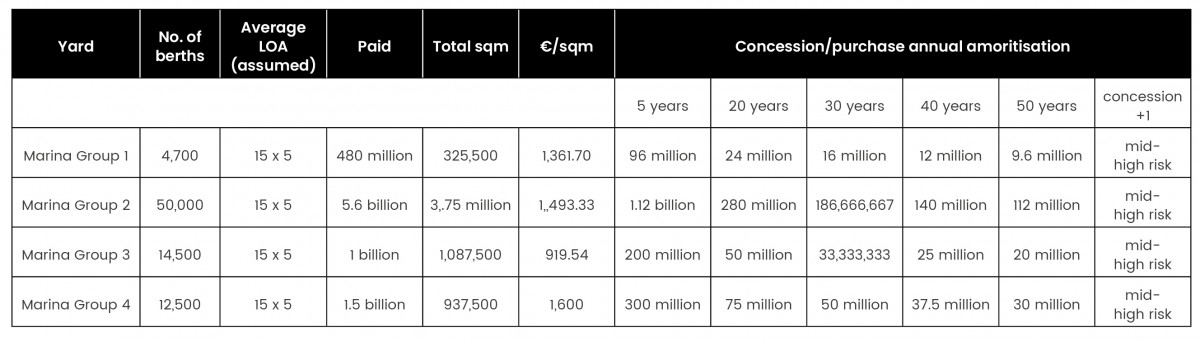
What about the sizes of the boats/berths? I assume an average LOA of 15 metres at these high-level marinas (they do not cater for small craft but have a good occupation of boats 12 to 25 metres). Making a more detailed study of marina occupation, these figures must be revised, but for the moment they serve the purpose. The mentioned core of a marina business is the water occupation and water occupation is measured (and must be valued) by surface. The table shows some values (berths quantity and transaction value taken from Internet media, including groups’ websites).
Let’s look at a valuation comparison in another industry. Petrus is a Denomination d’Origine in the Bordeaux region of France. The small (11-hectare) vineyard has existed for more than 200 years. Very good quality wine, Petrus was never granted a Grand Cru level, the universal reference. After WW2, exclusive selling rights were given to a local wine distributor, Mr Moueix, who teamed up with the owner Mme Loubat. The pair started an international promotional campaign targeting their high-level social and business contacts to boost the brand.
Petrus was served at Queen Elizabeth II’s wedding banquet and subsequently became a favorite wine of the Kennedys. The production was as small in quantity as it was high in quality and drinking or merely possessing a bottle of Petrus was a sign of class and distinction.
Prices soared fuelled by demand and opportunity, and a wine that would sell for around the equivalent of 200 euros before the war sold at 1,300 euros in the late 1940s. Image, prestige, scarcity and being a very good wine catapulted Petrus to among the five most expensive wines on earth. Is the price dishonest? No, the market accepts it and supports it, the quality is there.
Many years ago, I was having dinner in Monaco and enjoyed a Pomerol red wine from the vineyards adjacent to Petrus. It was an excellent wine, priced at 100 euros. Did I miss the Petrus 1,200-euro difference in my glass? No, because I am not a wine connoisseur. Possibly, other more discerning palates would have, but I would challenge most of them to do so without seeing the bottle. Does every boater/yachtsman need a top-of-the-line, luxurious, unique destination marina? Or to drink Petrus, wear a Patek Philippe or to give his wife a 15,000-euro Hermès Kelly bag?
Where do I want to go with this? With reasonable time and resources, you can upgrade a marina and bring it to a very high level, a really high level, matched by quality, because those high-level users immediately recognise it; mostly they are the ones dictating what quality is. Not all marinas must follow. It is also possible to be a marina with fewer luxury needs, lower operational costs and lower prices more in line with what the community needs and can afford.
And the other fact: big marina deals are led by experts in merges and acquisitions, not by marina experts. The facts are seen from a completely different point of view which is external to a marina’s day-to-day life, tradition and involvement with the community. There is where the danger is, a deal is cooked by finance people, and afterwards the whole responsibility for it to work falls again to the marina staff, dockhand to director. Our trade is too rich in emotional, historical and natural issues to become a plain serial money-maker machine like Carrefour, Tesco or Wallmart. The marina model is and must keep being much more flexible than that.

Does every boater/yachtsman need a top-of-the-line, luxurious, unique destination marina? Or to drink Petrus, wear a Patek Philippe or to give his wife a 15,000-euro Hermès Kelly bag?
I heard some time ago that “There is nothing more dangerous than a finance guy with an Excel sheet”. Nothing wrong with the Excel sheet, but in our case, it should be supported by a feet-on-the-ground assessment in partnership with a marina expert – someone with international experience and the respect of the industry. Such a character will keep reality where reality belongs, will not give the expected answers but the accurate ones, even if they are not the desired ones.
Price and occupation guide the strategy of the marina value (to a future investor). Examples of such marinas are Yacht Haven Grande, where Phil Blake CMM (certified marina manager) and his wife transformed a struggling set-up into an excellent superyacht marina with harmonic uplands; this well-lubricated operation was achieved within just five years. Marina Cala del Forte in Ventimiglia was transformed from an abandoned operation to one of the best marinas on the Italian Riviera thanks to an impeccable upgrade managed and operated by Ports de Monaco. Flisvos Marina in Athens, under Stavros Hatzikadis and Despina Psichari, has set a path many other marinas should follow, and for me they are the closest example to excellence. But not every marina is apt for such transformation, because sometimes the figures do not add up: the market study indicates lack of the right clients, or the local surroundings/culture/charm does not help. Again, such big differences should be analysed and evaluated on a one-by-one basis, not only by the square metreage of money-making berth surface plus boatyard results plus F&B earnings.
We, the industry, have already tried for many years to be accepted by governments as a non-elitist business, easy to say if we talk of boats up to 10 metres (33 feet) but more difficult when our clients are 30 metres (100 feet)-plus. And for that elite to grace our immaculate, efficient and logically priced marina, we must make it attractive, which includes good value for money. Wealth does not mean wasting money. Everybody, especially wealthy people, has very clear red lines they will not cross. If they feel they are being taken for a ride, they pull out. Nobody cries out for huge villas, castles, extremely expensive cars, private planes, top-of-the- line watches or real jewellery. Yes, we, the 30-metre-plus LOA industry, belong to that group. We serve that top of the cast. Instead of decrying that marinas belong not only to the wealthy classes, let’s do our trade, provide what is expected from us to the people that expects it, execute sustainability practices where and when possible and engage the community, when possible, to neutralise possible politicians’ attacks. In modern politics we are an easy target for cheap blame.
Last year a presentation was made at one of the discussion tables during the M3 ‘Smart and Sustainable Marinas’ event. It demonstrated the similarities between the evaluation of an opera and a marina. Most people, when imagining an opera, envision a woman of typically solid stature screaming lyrics (with higher or lower artistry) to music. In a marina, due diligence is performed, standard business valuation. But opera is a lot more than a singer and music, it is the dressing of the characters, it is the orchestra, the set design, the stage performance, the acoustics, the theatre.
We marina people know that the bad-weather season, financial crises, political turmoil or international conflicts affect the whole pyramid, from the boat builder to the broker and onto the user to the marina, triggering the expressions of hope heard everywhere, voicing the quick recuperation of the market. Last year we were riding high. This year we witness large superyacht building groups go down and traditional, solid yards not meeting the order forecasts.
In the same way, we must learn to evaluate a marina, looking beyond the usual Excel-generated statements. Are there activities in the winter? Can one feel pride among the personnel? Which and when is the bad season weather? Is the marina noisy? Is landscaping contributing to a pleasant visual effect? Is the marina a safe environment? Is the marina manager making rounds and establishing contact with users? Are there spaces for small children to play? Is the community proud of the marina? Acting on this type of subject can change (for good) the fame and acceptation of a marina, when details like those mentioned become part of the fundaments of a marina operation.
Results could be better or not, but the personality of that marina will be much stronger: the users will feel more allegiance to a facility that constantly improves the environment they like to visit and feel part of. That is something I would include in the valuation of a marina, but it is not what a valuator is requested to include. Wealthy people appreciate improvements and changes, a constant evolution of a marina, and we marina designers and operators must keep working to provide it. They do not have to be major changes, but subtle ones that can trigger that appreciation comment like ‘watch that, it is new’.
Oliver Doerschuck, the CEO of D-Marin, has published an excellent post on his LinkedIn account. He explains how they arrived to run a very well-lubricated marina operation that permitted their purchase by a French fund and why D-Marin people are the company’s best asset. I agree with his view, but when you value a group like that, landownership or concession lease makes a huge difference and should be taken into consideration, especially now that politics have a such a strong say in Mediterranean-concessioned marinas and nautical regulations.
Just remember Port Vauban a few years ago and the present intention of France to forbid yachts of more than 50 metres (165 feet) from their waters. We know that such bill will probably not being implemented, but it proves how vulnerable we are to government acts and how little control we really have.
Concessioned marinas have different end dates and on those end dates their remaining value is zero. Renewals have a high component of wishful thinking. And in marinas run on concessions, such improvements can make all the difference in obtaining the concession extension or not. We marina people know that the bad-weather season, financial crises, political turmoil or international conflicts affect the whole pyramid, from the boat builder to the broker and onto the user to the marina, triggering the expressions of hope heard everywhere, voicing the quick recuperation of the market. Last year we were riding high. This year we witness large superyacht building groups go down and traditional, solid yards not meeting the order forecasts.
Let the marina industry keep making business but encourage it to run it with realistic figures. An overpriced transaction means that marinas will need to hike prices and reduce costs to survive, and costs mean service. Before you know it, you are in a negative whirlwind.
Marinas: keep developing, there is a lot we can do, as adapting to the new generation of boaters. We have trailed behind in many ways for too long. If you use something that “worked well for the last 40 years”, keep it, but think how you could make it better by design, by materials or by operation. We must look at the future with a more open and educated mind. We have the obligation to keep being better, not only in making money but in our social, tradition and sustainable responsibilities. We owe it to the marina industry of the future.
As an open-source platform we offer an industry-wide invitation to anyone and everyone in our sector to share their knowledge, experience and opinions. If you have an interesting and valuable contribution to make, and would like to join our growing community of guest columnists, share your ideas with us at newsdesk@thesuperyachtgroup.com
NEW: Sign up for SuperyachtNewsweek!
Get the latest weekly news, in-depth reports, intelligence, and strategic insights, delivered directly from The Superyacht Group's editors and market analysts.
Stay at the forefront of the superyacht industry with SuperyachtNewsweek
Click here to become part of The Superyacht Group community, and join us in our mission to make this industry accessible to all, and prosperous for the long-term. We are offering access to the superyacht industry’s most comprehensive and longstanding archive of business-critical information, as well as a comprehensive, real-time superyacht fleet database, for just £10 per month, because we are One Industry with One Mission. Sign up here.
Related news
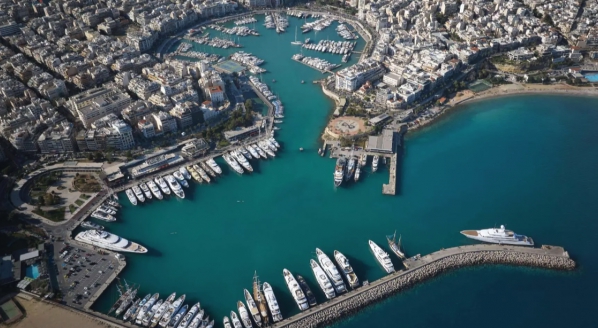
D-Marin sold to InfraVia in €1 billion-plus PE exit deal
The sale of one of the largest marina operators to a French investor caps a six-year hold for CVC as private equity’s conviction in yachting deepens
Business
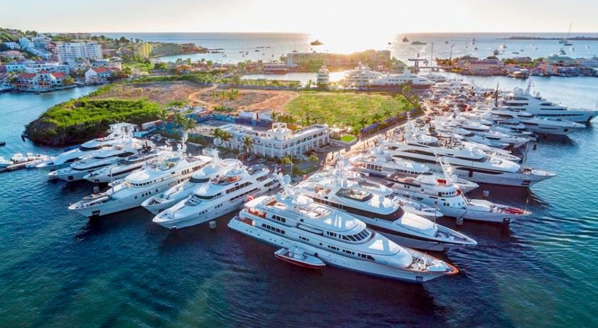
MarineMax refinances $1.5 billion credit facilities amid sale reports
The boat and yacht retailing conglomerate has pushed its debt maturities out to 2031 as the board actively explores a sale
Business
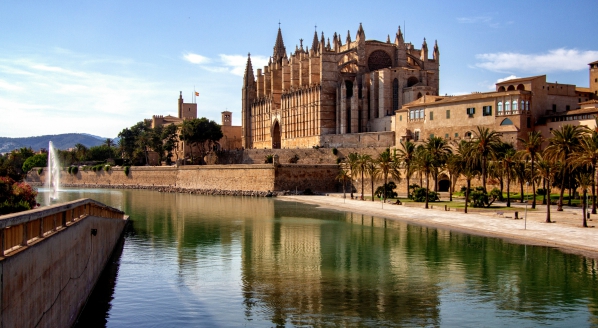
Bigger isn’t always better
After last week’s gatherings in Palma, a personal reflection on what conference organisers need to consider to bring value to attendees and participants
Opinion
NEW: Sign up for
SuperyachtNewsweek!
Get the latest weekly news, in-depth reports, intelligence, and strategic insights, delivered directly from The Superyacht Group's editors and market analysts.
Stay at the forefront of the superyacht industry with SuperyachtNewsweek