
Bigger isn’t always better
After last week’s gatherings in Palma, a personal reflection on what conference organisers need to consider to bring value to attendees and participants…
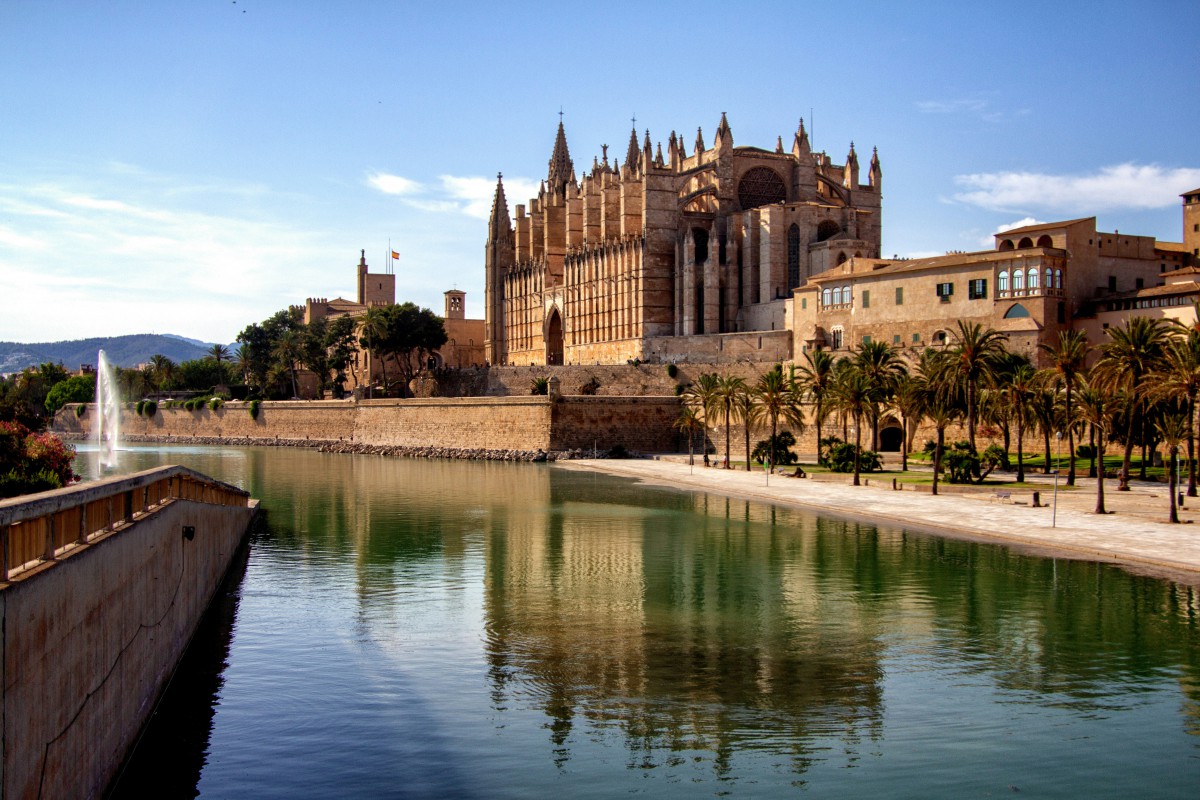
One of the first superyacht industry conferences of the year is the recently baptised Mediterranean Superyacht Forum (MSF, formerly Balearics Superyacht Forum) in Palma de Mallorca. This young event held its third edition this year and had an important number and quality of participants. That made me think about the many other conferences, forums, symposiums and similar gatherings that are organised with the aim of discussing our superyacht industry, from design through shipyards to marinas.
The subject is not new nor has it been overlooked, but we are still missing a deep analysis of this part of our industry. MSF runs before the Palma Boat Show, a timing model similar to The Superyacht Forum before METSTRADE. Being late April, well communicated and with lodging facilities at affordable prices, these conditions play a big role in the decision of many to attend. Every conference organiser should consider these aspects and do effective work for the comfort of the participants, not only for the quality of the presenters.
Yes, the price of entrance, travel and accommodation is already a filter that many use to avoid the saturation of limited space and resources – like the Monaco Yacht Show, but Monaco works because there are 30 years of experience, records and discussions about how the Show should be. It is a very dynamic organisation with a clear focus of how they want to be seen and what the results should be. Certainly, there are people who want just to be seen at MYS, where “being everywhere” is a strategy that works in many cases. You participate in the most serious conferences, actively ask questions or give opinions at the Q&A, and one day you are invited to speak and you just land at a new level.
The number of conferences (like boat shows) has often been criticised. I have been one of those critics but lately changed my mind a little. Why? Because I’ve found that not all conferences must be large per se. I’ve discovered that many small conferences provide very good discussion grounds for people of a certain area, making the content rich because the participants know their reality very well – it’s a gathering of locals.
Two years ago I participated (spoke) at a small conference/exhibition about marinas in Alghero, Sardinia. Organised by the solid ASSONAT, an association with more than 100 federated marinas, we were some 50 people and about 10 speakers – a small number but all the right guys were there: Porto Cervo, Porto Rotondo, La Maddalena, Olbia, Sant’Antíoco. Everybody knew the local reality, problems, possible solutions and where they wanted to go. There was no international open invitation and it was not needed. A similar situation was in Marina Genova Aeroporto last year discussing the reality of alternative fuels.
A serious conference must be flexible in timing (and embedded in the programme) and have enough room for Q&A.
Small conferences are feasible, if they are sized by reality and discuss valid subjects. It’s a mistake to pretend that the speakers and subjects can be finalised in a couple of hours. For a good conference, and especially one aiming to attract an international public, the preparation and research work are fundamental (and sometimes tedious and complicated). Another mistake we see more and more often is when the main sponsors get a chunk of the marketing and almost define the conference with their brand while participating in almost every session of the programme; not good, as it leads to a saturation of the subjects and speakers. At the Palma Boat Show there was a one-hour-plus forum with good quality speakers (some repeated from MSF), good subjects, only 20 places in the open air, but entrance was free and quite well attended. It complemented the higher-level MSF in a harmless way. Why not? I hope they are there next year.
Local gatherings open to participants (even if a reasonable fee is requested) are good. A bigger conference cannot shrink to discuss very local situations, as it needs to find subjects interesting to the majority of participants. It also needs to attract valid talent, not to fall into that element of the participants who just “want to be there”, to be rubbing up against the industry like the public who hang around a Hollywood red carpet. The participants are a rich part of the conference and must play their part and network. And the work of the conference starts one year before, because the organisers need to visit other conferences and events and promote their conference in a soft way, knowing that many of the attendees of the other conferences will be attending yours … if you do a good and complete preparation job.
Sharing information is something we emphasise as one of the practices needed by the industry. We mention it, but we do not actively implement it. A serious conference must be flexible in timing (and embedded in the programme) and have enough room for Q&A. This aspect was fantastic at MSF: participation from the attendees was very active, and there was room for exchanging ideas and healthy discussions.
Conferences fulfil two major components of sharing information: to be informed and to network. Let small conferences (with a practical meaning) be, give them a hand if possible; in so far as they know their influence and meaning, they are useful. There are too many conferences aiming to be bigger and more important than they really are. Too many times you will find a programme full of speakers allowed 15 or 20 minutes for their participation, with topics that are packed in and mostly repeated in other conference or articles. Those events are a mirage that will leave you empty and without any wish to return.
As an open-source platform we offer an industry-wide invitation to anyone and everyone in our sector to share their knowledge, experience and opinions. So if you have an interesting and valuable contribution to make, and would like to join our growing community of guest columnists, share your ideas with us at newsdesk@thesuperyachtgroup.com
NEW: Sign up for SuperyachtNewsweek!
Get the latest weekly news, in-depth reports, intelligence, and strategic insights, delivered directly from The Superyacht Group's editors and market analysts.
Stay at the forefront of the superyacht industry with SuperyachtNewsweek
Click here to become part of The Superyacht Group community, and join us in our mission to make this industry accessible to all, and prosperous for the long-term. We are offering access to the superyacht industry’s most comprehensive and longstanding archive of business-critical information, as well as a comprehensive, real-time superyacht fleet database, for just £10 per month, because we are One Industry with One Mission. Sign up here.
Related news
The Innorvation 26 Countdown Begins
With 50 exclusive and complimentary seats available for this year’s iteration of INNORVATION, now is the time to register your interest
Crew
Superyacht OpEx Survey: Captains and First Officers have your say
How much do superyachts really spend – and where does that money go?
Crew
Croatia resets near-shore operations
Prof. Dr Christoph Ph. Schließmann explains the strict 500-metre tender rule introduced recently
Crew
Related news
The Innorvation 26 Countdown Begins
7 months ago
Croatia resets near-shore operations
11 months ago
NEW: Sign up for
SuperyachtNewsweek!
Get the latest weekly news, in-depth reports, intelligence, and strategic insights, delivered directly from The Superyacht Group's editors and market analysts.
Stay at the forefront of the superyacht industry with SuperyachtNewsweek