
Shipyard CEOs on the state of the market – an interview with İsmail Şengün
Market-leading shipyard executives offer a collective diagnosis and a clear barometer of the current new-build landscape…
There is no shortage of people willing to tell you where the market is heading. Brokers, project managers, owners’ reps, consultants and journalists all have a view, but the perspective that tends to be least heard in public and arguably the one that matters most belongs to the people who actually run the yards. So we asked nine of the market-leading shipyard executives the important questions to get a true understanding of where the market is and where it is heading. Their answers amount to a collective diagnosis and a clear barometer of the current new-build landscape.
The yards represented here span the full competitive range of the European market, from Royal Huisman, Damen Yachting and Feadship in the Netherlands to Palumbo, Sanlorenzo, Azimut Benetti and Ferretti in Italy, from Abeking and Rasmussen in Germany to Bilgin in Türkiye. Of course, they don’t agree on everything, but the convergence on certain themes is inescapably evident.
It is a near-united front on how they build. The past two to three years have brought a genuine step change in how these yards organise and deliver: facility redesigns, digital tools, closer integration between engineering and production and a concerted push to eliminate the late-stage revisions that have historically plagued new builds feature in almost every response. Obviously, skilled labour is the constraint that no investment in facilities can fully resolve. Finding the right people, training, keeping and ensuring the craft knowledge that makes these yachts exceptional is passed to the next generation is the essential thread that runs beneath everything else these leaders say. Supply chains have stabilised but remain brittle for specialist components. And in cost management, the ability to maintain quality without haemorrhaging margin is repeatedly cited as the factor most likely to define who thrives.
Yes, order books are strong, but the nature of what is being ordered has shifted. Owners are more considered, more experience-driven and increasingly motivated by how they spend their time on board. Purpose, sustainability and genuine adventure are genuine design drivers here. And when probed on the future, not one of these leaders talks about explosive growth. What they describe instead is a market that will be defined by the quality of what is delivered, the credibility of the yards delivering it and the ability to remain relevant to a generation of owners whose expectations extend well beyond the vessel itself.
What follows is an interview by News Editor Conor Feasey with İsmail Şengün, the CEO Bilgin, taken from The Superyacht Report: New Build Focus. Interviews with a further eight shipyard CEOs will be published over the coming days.
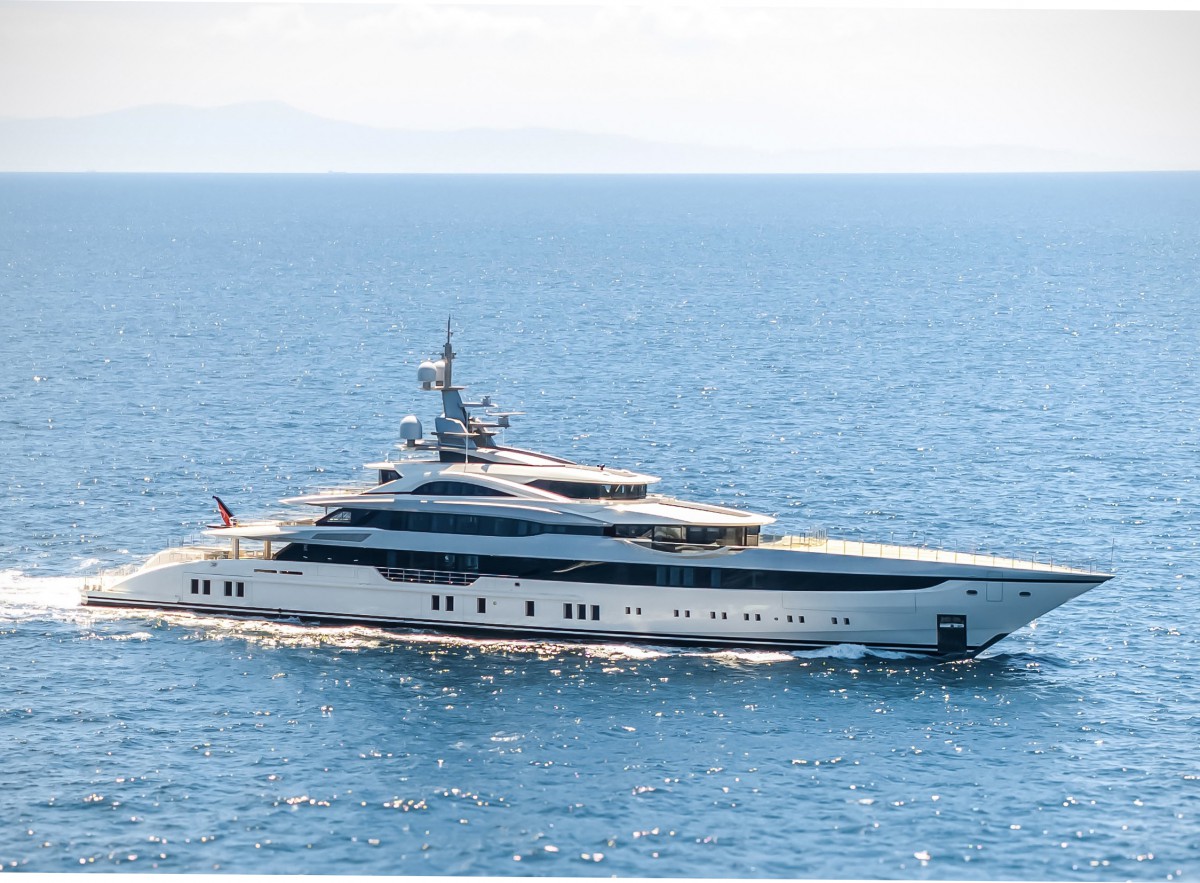
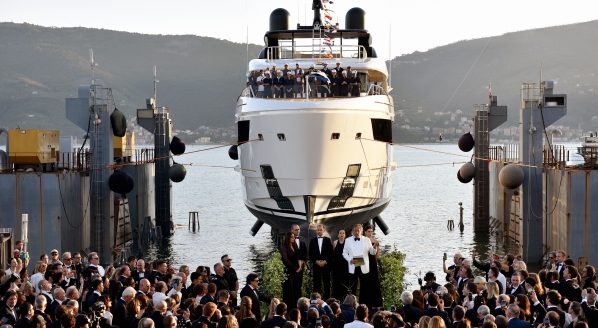
80-metre motoryacht Al Reem, delivered in 2024
What changes have you made across your yards over the past two or three years that have genuinely helped construction and what has improved as a result?
Over the past few years, our main focus has been refinement rather than expansion for its own sake. At the same time, we have strengthened our physical infrastructure to support that refinement properly and we have also created a clear competitive advantage in terms of delivery reliability and timing.
Alongside the evolution of the Bilgin 170 platform, particularly through projects such as NB82 and NB83, we deepened the integration between design, engineering and on-site production. One of the most important shifts has been resolving more technical detail earlier in the process, reducing late-stage revisions and increasing build stability.
Where solutions proved operationally successful, they were not treated as isolated requests but carefully evaluated and, when meaningful, standardised across the series. This approach has allowed us to improve efficiency and coordination without compromising the individuality of each yacht.
Operationally, we have also expanded and optimised our facilities. The extension of our Yalova shipyard has strengthened our capacity for hull construction and early-stage structural works, while a greater strategic focus on our Antalya facility has enhanced outfitting, finishing precision and final delivery control. This distribution of workload across locations has significantly improved scheduling flexibility and workflow continuity.
In parallel, we have implemented stricter milestone tracking, earlier supplier engagement and more integrated project management oversight to safeguard timelines from the outset. By aligning engineering freeze dates, procure-ment schedules and production sequencing more precisely, we have significantly reinforced our ability to achieve reliable, on-time deliveries across multiple concurrent builds.
Crucially, our strong in-house engineering capability including control over hull form development and technical platforms continues to provide both design freedom and structural reliability. As a result, we are seeing smoother build cycles, fewer late-stage modifications and stronger delivery predictability across multiple concurrent projects.
The real strain is visible in skilled labour availability, specialist subcontractor reliability and the synchronisation of increasingly complex technical systems.
Where is the pressure really building today? What has not worked as well as expected and where do you see the greatest risk to the market?
Order books across the industry remain strong, particularly in the 50 to 100-metre range. However, as capacity has expanded globally, maintaining consistent build quality and delivery discipline has become more challenging. The real strain is visible in skilled labour availability, specialist subcontractor reliability and the synchronisation of increasingly complex technical systems.
Supply chains have stabilised compared to previous years, but they are not fully predictable. Certain high-spec components – particularly in advanced AV/IT systems, hybrid propulsion tech-nologies and bespoke interior elements – still carry extended lead times.
Looking at different specs, designs and size segments, where are you seeing strength in demand and where are you seeing a softening? What is driving it?
Demand remains solid across several segments, but the dynamics are more nuanced than the headline order books suggest. In the 50 to 70-metre range, we continue to see consistent strength, particularly for well-developed platforms that combine proven engineering with strong exterior volumes and intelligent deck layouts. Owners in this segment are often experienced and value efficiency, delivery certainty and operational practicality. They are looking for yachts that feel like larger vessels in terms of lifestyle, but without unnecessary gross tonnage or complexity. Platform maturity and delivery credibility are major decision drivers. The 70 to 100-metre segment is steady and increasingly sophisticated. Clients here are more technically engaged than before. Hybrid readiness, optimised hull efficiency, noise reduction, crew circulation logic and long-term operational costs are central topics in early discussions.
Buyers are more analytical and less driven by momentum than in previous peaks. Rising build costs, macroeconomic caution and longer delivery timelines encourage more deliberate decision-making.
Where we see some softening is not necessarily tied to size but to speculative or opportunistic projects. Buyers are more analytical and less driven by momentum than in previous peaks. Rising build costs, macroeconomic caution and longer delivery timelines encourage more deliberate decision-making.
In short, demand remains healthy, but it is more disciplined, more technical and more experience-driven. Owners are prioritising execution reliability and lifecycle value over novelty.
Finally, on a more personal note, how do you see the market developing over the next decade? Where does the future of the new-build sector rise and fall? What does the future look like in reality?
The sector’s future will rise where there is structural strength: yards with genuine in-house capability, engineering depth and realistic production capacity will continue to perform well. Technical autonomy, especially in hull development, energy systems and integrated platform design, will increasingly define competitive advantage.
Sustainability will also mature. Rather than being a marketing narrative, it will become measurable and regulated. Hybrid propulsion, energy management systems, material efficiency and operational emissions will shape new-build briefs. Clients will expect practical solutions, not conceptual statements. In reality, the next decade will not necessarily bring explosive expansion. It will bring consolidation, refinement and higher standards.
Profile links
NEW: Sign up for SuperyachtNewsweek!
Get the latest weekly news, in-depth reports, intelligence, and strategic insights, delivered directly from The Superyacht Group's editors and market analysts.
Stay at the forefront of the superyacht industry with SuperyachtNewsweek
Click here to become part of The Superyacht Group community, and join us in our mission to make this industry accessible to all, and prosperous for the long-term. We are offering access to the superyacht industry’s most comprehensive and longstanding archive of business-critical information, as well as a comprehensive, real-time superyacht fleet database, for just £10 per month, because we are One Industry with One Mission. Sign up here.
Related news
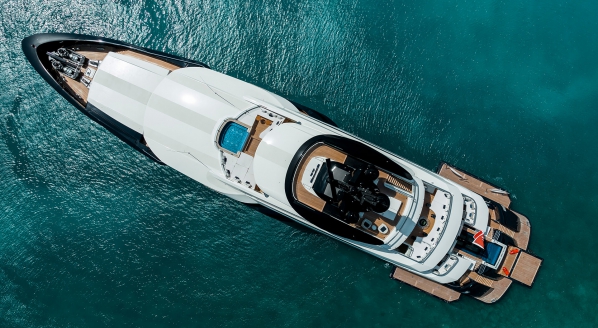
Palumbo Superyachts expands in the Adriatic
The acquistion of a new Italian facility comes at a time of expansion for the shipyards with 22 yachts above 30 metres in build
Business
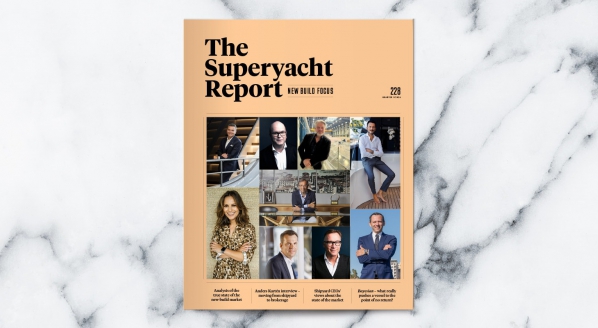
The Superyacht Report 228: New Build Focus - Out Now
Shipyard performance data, CEO forecasts, Bayesian findings and a case for building with purpose all feature in the latest TSR
Opinion
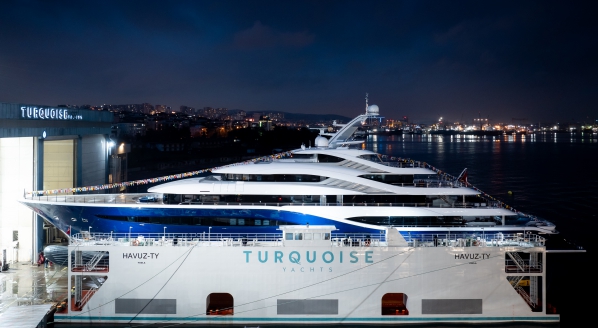
Largest yacht ever built in Turkey launches
Turquoise Yachts launches 87-metre flagship Project Vento
Fleet
The 30 to 50-metre market performance
Martin H. Redmayne highlights how intelligent analysis tells a different story
Fleet
Related news
Palumbo Superyachts expands in the Adriatic
7 months ago
The Superyacht Report 228: New Build Focus - Out Now
8 months ago
Largest yacht ever built in Turkey launches
9 months ago
The 30 to 50-metre market performance
1 year ago
NEW: Sign up for
SuperyachtNewsweek!
Get the latest weekly news, in-depth reports, intelligence, and strategic insights, delivered directly from The Superyacht Group's editors and market analysts.
Stay at the forefront of the superyacht industry with SuperyachtNewsweek