First the concept, then the yacht!
Our regular legal contributor explains how the most expensive mistake in yachting is often made before the first contract is signed…
In my previous article for Superyacht News, I argued that standard foreign yacht-holding structures often fail not because they are invalid locally but because they do not survive scrutiny in the owner’s home jurisdiction. The decisive weakness, I suggested, is frequently not incorporation but governance reality. A structure that looks foreign on paper may still be treated very differently once the tax authority follows management, benefit and control back to the owner’s home state.
That is only the first half of the problem; the second half begins even earlier. Many owners make the fundamental mistake of choosing the yacht first and only afterwards beginning to think about financing, operational model, flag, jurisdiction, VAT, charterability and legal use profile. In practice, this is the wrong sequence. By the time those questions are asked, the owner may already be facing restrictions that could and should have been identified before the purchase agreement is signed or the build specification is finalised. The real strategic order should be the opposite: first the concept, then the yacht.
This distinction matters because not every yacht fits every ownership logic.
An owner who acquires a yacht privately, with already taxed funds, and intends to use it privately without reliance on financing or charter revenue is, in relative terms, highly free. Such an owner may still need to think carefully about flag, VAT-paid status, operation and compliance, but they are not normally constrained by lender economics, charter-market expectations or the requirement to generate a commercial contribution. Industry guidance aimed at owners notes that a yacht that has been properly purchased or imported in the EU can achieve VAT-paid status, allowing free movement in EU waters, provided the relevant documentary conditions are maintained. That kind of owner starts from choice.
Once the build must be financed, the yacht is no longer only an object of desire, it becomes part of a structured financial process. This is where emotional ownership often meets commercial reality.
Financing
The moment financing enters the picture, freedom narrows. Mainstream private-bank guidance for superyacht lending openly frames yacht finance around liquidity planning, cash flow requirements, tax position and lifestyle needs. That is revealing. Finance is not simply a tool applied after acquisition, it shapes the acquisition. Once external funding is involved, the yacht becomes not only a passion asset but a financed asset. That means the ownership model must now respond to collateral logic, debt servicing, documentation discipline and, often, questions about whether the yacht will generate revenue or preserve liquidity elsewhere in the owner’s balance sheet.
The same is true in a build scenario. Construction-stage finance introduces staged payments, security concerns, title issues and pre-delivery risk. Owners who assume they can first design the dream yacht and only later determine how to fund it are often surprised by how much financing assumptions influence the project. Once the build must be financed, the yacht is no longer only an object of desire, it becomes part of a structured financial process. This is where emotional ownership often meets commercial reality.
Charter
If an owner knows from the outset that the yacht must generate at least a contribution margin through charter or must support operating costs or must materially improve the economics of ownership, then the yacht can no longer be selected only because it reflects a personal fantasy. It must also work in the market. Charter market commentary continues to show strong guest preference for features such as flexible accommodation, generous deck spaces, wellness amenities and family- or group-friendly layouts. In practical terms, that means charterability is not an afterthought, it is a design criterion. This is a hard truth for many would-be owners.
A yacht that is perfect as a personal dream vessel may be commercially weak. A highly individual layout, an eccentric design language, unusual technical choices or a deeply owner-centric specification may be entirely justified in a purely private project. But once charter income becomes part of the economic equation, some of those same choices may become disadvantages. The charter market does not primarily reward the owner’s dream; it rewards the guest’s willingness to book.
This is why ownership becomes progressively more rational the more it depends on financing or commercial use. The yacht must not only be desirable, it must also be fundable, certifiable, flag-compatible, VAT-manageable, marketable and operationally coherent. At that point, the project is no longer simply about which yacht to buy or build, it’s about which use universe the owner is actually entering.
VAT adds another layer that must be addressed before acquisition, not after.
Flag
Flag and jurisdiction then become strategic, not administrative. Owners still too often treat flag as a late-stage badge. In reality, flag defines operational consequences. Malta is currently one of the clearest European examples of this logic. Transport Malta has a dedicated commercial yacht framework and formally distinguishes between pleasure use, commercial yacht use and passenger yacht use. It also issues specific guidance for changes between pleasure and commercial status. Malta’s published changeover guidance states that, for Malta-registered yachts, there is no limit on the number of changes or their duration, while the Commercial Yacht Code 2025 sets out the compliance architecture for commercially operated yachts. In other words, hybrid use is possible, but not casual. It has to be designed, documented and managed. That is the wider point.
There is indeed a complex matrix between the two extremes. On one end sits the fully private, fully taxed, debt-free yacht used without commercial pressure. On the other sits the commercially operated or commercially relevant yacht that must satisfy lender expectations, charter economics and compliance requirements. Between those poles are many hybrid variants: taxed private ownership under certain EU flags, switch models between pleasure and charter operation, owner use within market parameters, and jurisdiction-flag combinations chosen for flexibility. Malta is an example of a system where those hybrid possibilities can be structured, but its official rules make clear that this flexibility is procedural and regulated, not merely conceptual.
VAT
VAT adds another layer that must be addressed before acquisition, not after. Within the EU, place-of-taxation rules are central to yacht chartering and related services. The European Commission’s VAT framework sets out how the place of taxation is determined under the VAT Directive, and in practical yachting terms this affects charter treatment, the place where a yacht is put at the disposal of the client and the fiscal logic of the relevant operation. Even market-facing advisory material aimed at yacht owners and operators confirms that short-term charters departing from an EU Member State are generally taxed where the yacht is made available at the start of the contract.
Croatia is a useful example of how early these issues become commercially decisive. Croatian market material and professional guidance continue to point to a reduced 13 per cent VAT rate for yacht charter fees, and industry sources describe Croatia as fiscally attractive for charter activity on that basis. At the same time, operating there in a compliant way means local tax and administrative infrastructure, and in practice often local VAT registration, local identifiers and local operational support. So even where the market appears attractive, the tax benefit only exists inside a properly designed operating model. It cannot be bolted on afterwards.
The better the owner understands their intended financing and use model, the more carefully they can design for home-state scrutiny from the start rather than trying to repair the position later.
Meeting the real ownership concept
This is why I regard the purchase-first mindset as structurally flawed. By the time an owner has signed for a yacht or fixed a build around highly personal specifications, they may already have eliminated the very options they later want: financeability, charter viability, hybrid-use flexibility, a workable VAT path or a defensible flag-and-jurisdiction structure. Put simply, they may already have chosen the wrong yacht for their real ownership concept.
And there is still one more layer. As I argued in my previous SuperyachtNews piece, local legality is never enough. Even if the yacht is correctly flagged, correctly coded, correctly VAT-registered and correctly operated in the source jurisdiction, the owner’s home-state tax authority may still ask the most difficult questions: who controls the business, who benefits from the asset, where effective management sits, whether pricing is arm’s length and whether the corporate wrapper reflects the lived reality. That point does not disappear in a more sophisticated purchase-planning model, it becomes more important. The better the owner understands their intended financing and use model, the more carefully they can design for home-state scrutiny from the start rather than trying to repair the position later.
That is why concept must come first.
If the owner is truly free to buy privately, hold privately and use privately, their range of choice is broad. They may buy almost entirely by desire, ut the moment the yacht must be financed, must earn a charter contribution, must preserve VAT or import efficiency, must remain switch-capable between private and commercial use or must fit a defensible cross-border governance model, the project becomes far more constrained. The yacht then has to fit not only the owner’s dream, but the owner’s legal, tax and economic universe. That is not a limitation, it is simply reality.
The superyacht world has become extremely sophisticated in design, brokerage, build and operation. Ownership planning still too often remains dangerously sequential: first emotion, then asset, then lawyers, then tax, then flag, then VAT, then repairs. That sequence is backwards. The serious owner does not begin with the yacht, they begin with the model.
So the real first question is not, “Which yacht do I want?”, it’s “What ownership and use concept do I actually need?” Only after that should the purchase or build begin.
NEW: Sign up for SuperyachtNewsweek!
Get the latest weekly news, in-depth reports, intelligence, and strategic insights, delivered directly from The Superyacht Group's editors and market analysts.
Stay at the forefront of the superyacht industry with SuperyachtNewsweek
Click here to become part of The Superyacht Group community, and join us in our mission to make this industry accessible to all, and prosperous for the long-term. We are offering access to the superyacht industry’s most comprehensive and longstanding archive of business-critical information, as well as a comprehensive, real-time superyacht fleet database, for just £10 per month, because we are One Industry with One Mission. Sign up here.
Related news
Why standard yacht-holding structures fail German scrutiny
The case for the CPS-Croatia-Yacht-Charter-Model® in cross-border charter operations
Opinion
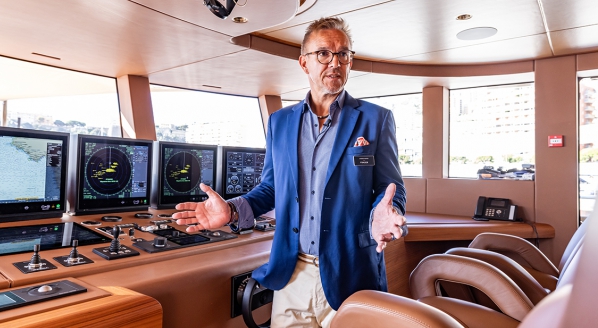
Trust and serendipity - Anders Kurtén talks Fraser
Moving from shipyard to brokerage isn’t quite the cosmic career jump some might think
Business
Charter, VAT and its accrual in international waters
Tax advisor Miguel Ángel Serra explains how VAT regulations could tip the balance in favour of Spain as a charter destination
Opinion

The silent threat on the water
Sarah Willis, founder of digital-privacy and online-reputation consultancy SABLR, spells out how AI is rewriting risk for superyacht owners
Owner
Related news
Trust and serendipity - Anders Kurtén talks Fraser
7 months ago
Charter, VAT and its accrual in international waters
9 months ago
The silent threat on the water
11 months ago
NEW: Sign up for
SuperyachtNewsweek!
Get the latest weekly news, in-depth reports, intelligence, and strategic insights, delivered directly from The Superyacht Group's editors and market analysts.
Stay at the forefront of the superyacht industry with SuperyachtNewsweek