
Why standard yacht-holding structures fail German scrutiny
The case for the CPS-Croatia-Yacht-Charter-Model® in cross-border charter operations…
In European yacht ownership, one of the most persistent commercial illusions is that a vessel can be placed into a local company structure in one jurisdiction while the real entrepreneurial control remains elsewhere without material tax consequences. In practice, that assumption is increasingly unsafe. The decisive issue is rarely the incorporation itself, the decisive issue is whether the structure, as actually lived and managed, can withstand scrutiny in the home jurisdiction of the beneficial principals.
That is particularly true where German-resident entrepreneurs, family principals or internationally active owner-managers are involved.
From a German perspective, the register extract is never the end of the inquiry, it’s the beginning. Tax authorities and courts will look beyond the incorporation wrapper and ask more difficult questions: who really makes the decisions, where commercial strategy is actually formed, where the key risks are controlled, and whether the operational and governance reality matches the legal narrative. In cross-border yacht ownership and charter, that is often the point at which otherwise elegant structures begin to fail.
The problem is not limited to abusive cases – it arises even in commercially genuine charter businesses. A vessel may be properly operated, actively marketed, chartered on arm’s-length terms and fully embedded in the leisure marine economy, yet if the entrepreneurial centre of gravity remains with individuals who act, decide and control from Germany, the legal and tax consequences may follow the management reality rather than the foreign wrapper.
This is why serious cross-border yacht structuring cannot be reduced to the question of where the vehicle is incorporated. It is fundamentally a question of design discipline.
A central risk in the market today is that owners underestimate management location risk. They assume that if the yacht trades in one country, if the accounts are kept there or if local service providers are engaged there, then the structure’s tax position is secured there as well. That is too simplistic ...
In our experience, many standard holding models were never built for this level of scrutiny. They were built for convenience, cost efficiency or local market familiarity. That may be enough in purely domestic situations, but it is frequently not enough where German principals, cross-border income streams, charter operations and international reporting obligations intersect. In those settings, what is required is not a generic holding company but a specially designed shipping structure with governance logic robust enough to survive in multiple tax environments at once.
That is the thinking behind the CPS-Croatia-Yacht-Charter-Model®. The model is not based on cosmetic offshore layering. Nor is it driven by the simplistic idea that a foreign company automatically produces foreign tax treatment. Its rationale is the opposite: the more cross-border and commercially active the structure becomes, the more carefully the legal, managerial and tax position has to be synchronised. A yacht business that is meant to operate internationally must be documented, governed and run as an international business. Anything less creates a gap between form and fact, and that gap is precisely where tax exposure grows.
A central risk in the market today is that owners underestimate management location risk. They assume that if the yacht trades in one country, if the accounts are kept there or if local service providers are engaged there, then the structure’s tax position is secured there as well. That is too simplistic. In reality, tax systems increasingly focus on effective management, actual decision-making and the real entrepreneurial command chain. If pricing, strategy, financing, contract approval, dispute handling, technical oversight and commercial policy are directed elsewhere, the risk analysis moves with them.
For yacht and charter businesses, this matters even more because they are inherently fact-sensitive. The sector combines mobile assets, multiple jurisdictions, variable operational footprints and a constant overlap between commercial logic and lifestyle suspicion. Even where there is no abusive conduct, structures are often examined through a sceptical lens. That means owners cannot afford governance by habit; they need governance by design.
For the superyacht sector ... ownership structuring still too often suffers from a dangerous mismatch between commercial ambition and legal architecture.
This is also where many ‘good enough’ local solutions prove inadequate. A structure that works well from the standpoint of one national legal system may still be vulnerable once assessed through the tax lens of another. The challenge is therefore not merely incorporation, it is interoperability. The structure must function coherently across legal cultures, tax methodologies and regulatory expectations. That is precisely why a proprietary charter architecture can add value where a standard market vehicle cannot.
The CPS-Croatia-Yacht-Charter-Model® was conceived for that reality. It is a bespoke, governance-led owner-operator concept for international yacht charter activity. Its purpose is not to multiply entities for appearance’s sake, but to create a legally disciplined commercial framework capable of supporting cross-border charter operations without collapsing under foreign tax requalification or management-based challenge. In other words, it is designed not only for the operating jurisdiction, but for the home-state scrutiny of internationally active owners.
This distinction is essential. A robust structure is not one that looks foreign, it is one that behaves consistently with the tax and legal claims made for it.
For the superyacht sector, the wider lesson is clear. The industry has become highly sophisticated in acquisition, registration, operation and branding. But ownership structuring still too often suffers from a dangerous mismatch between commercial ambition and legal architecture. As authorities become more attentive to effective management, beneficial control and cross-border attribution, that mismatch will become more expensive.
The future does not belong to generic wrappers, it belongs to properly engineered structures. And in cross-border charter, especially where German principals are involved, that engineering must begin from a hard truth: the question is never merely where the yacht is, the question is where the business truly lives.
NEW: Sign up for SuperyachtNewsweek!
Get the latest weekly news, in-depth reports, intelligence, and strategic insights, delivered directly from The Superyacht Group's editors and market analysts.
Stay at the forefront of the superyacht industry with SuperyachtNewsweek
Click here to become part of The Superyacht Group community, and join us in our mission to make this industry accessible to all, and prosperous for the long-term. We are offering access to the superyacht industry’s most comprehensive and longstanding archive of business-critical information, as well as a comprehensive, real-time superyacht fleet database, for just £10 per month, because we are One Industry with One Mission. Sign up here.
Related news
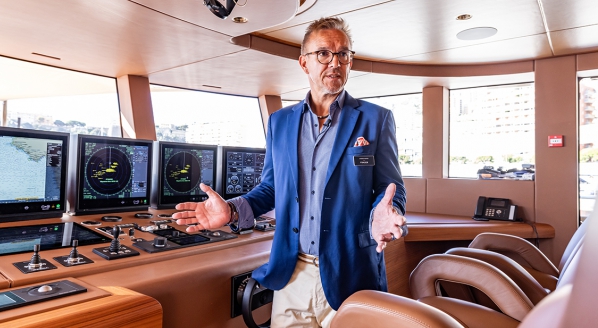
Trust and serendipity - Anders Kurtén talks Fraser
Moving from shipyard to brokerage isn’t quite the cosmic career jump some might think
Business

TISG’s corporate chaos continues
A share price plummet, an executive exodus, one viral dressing down and now a competing legal narrative paint a rather grim picture for The Italian Sea Group
Business
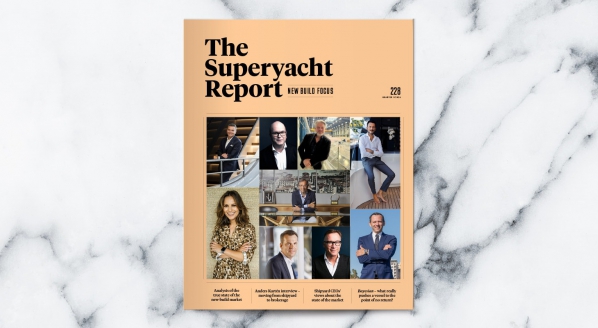
The Superyacht Report 228: New Build Focus - Out Now
Shipyard performance data, CEO forecasts, Bayesian findings and a case for building with purpose all feature in the latest TSR
Opinion
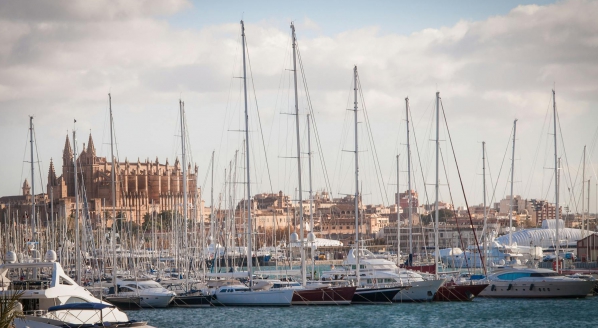
Charter, VAT and its accrual in international waters
Tax advisor Miguel Ángel Serra explains how VAT regulations could tip the balance in favour of Spain as a charter destination
Opinion

The silent threat on the water
Sarah Willis, founder of digital-privacy and online-reputation consultancy SABLR, spells out how AI is rewriting risk for superyacht owners
Owner
Related news
Trust and serendipity - Anders Kurtén talks Fraser
7 months ago
TISG’s corporate chaos continues
7 months ago
The Superyacht Report 228: New Build Focus - Out Now
8 months ago
Charter, VAT and its accrual in international waters
9 months ago
The silent threat on the water
11 months ago
NEW: Sign up for
SuperyachtNewsweek!
Get the latest weekly news, in-depth reports, intelligence, and strategic insights, delivered directly from The Superyacht Group's editors and market analysts.
Stay at the forefront of the superyacht industry with SuperyachtNewsweek