Was Bayesian’s sinking “inevitable”?
Were the crew caught in a catastrophically inescapable catch-22? And as extreme weather becomes commonplace, is Bayesian indicative of more instances to follow?
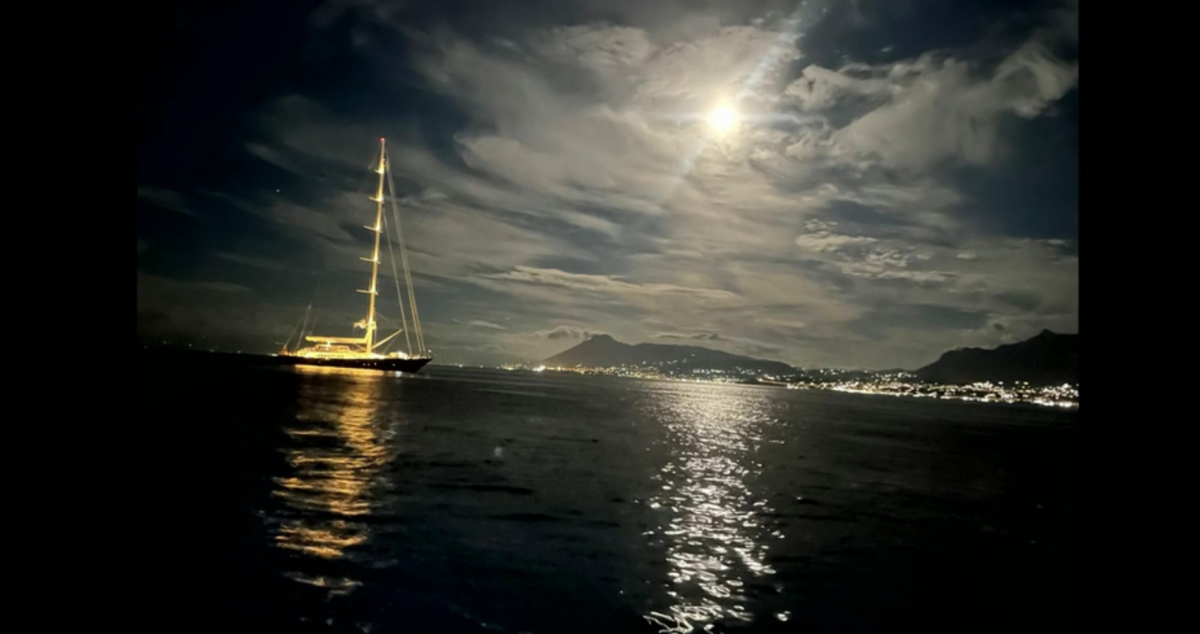
In a recently aired BBC documentary Millionaire Superyacht: Why Ships Sink, we are poignantly reminded in vivid detail of the human loss of the accident. It is important to remember that this is a very personal tragedy.
“Bayesian was a family boat,” says Stephen Edwards, Captain of Bayesian 2015-2020. “We did a lot of things together with the boat. She had a lot of happy memories and so this was a very sad moment for a lot of people involved.”
Almost two years after Bayesian went down off Porticello, Sicily, the two investigations into how the vessel sank have still not been reconciled, with a gap apparently widening between the respective preliminary findings. Earlier this year, Italian media reported that meteorologists appointed by the Termini Imerese prosecutors had concluded the weather that night was not severe enough, on its own, to have sunk the 56-metre Perini Navi.
The interim findings of the UK Marine Accident Investigation Branch, on the other hand, identified vulnerabilities in stability that were absent from the yacht’s own paperwork and therefore unknown to the people aboard. But what is valuably pertinent to the market are the advances the documentary makes on the dramatic changes to maritime weather conditions and the exposure of the downflooding angles that potentially doomed the vessel from the start.
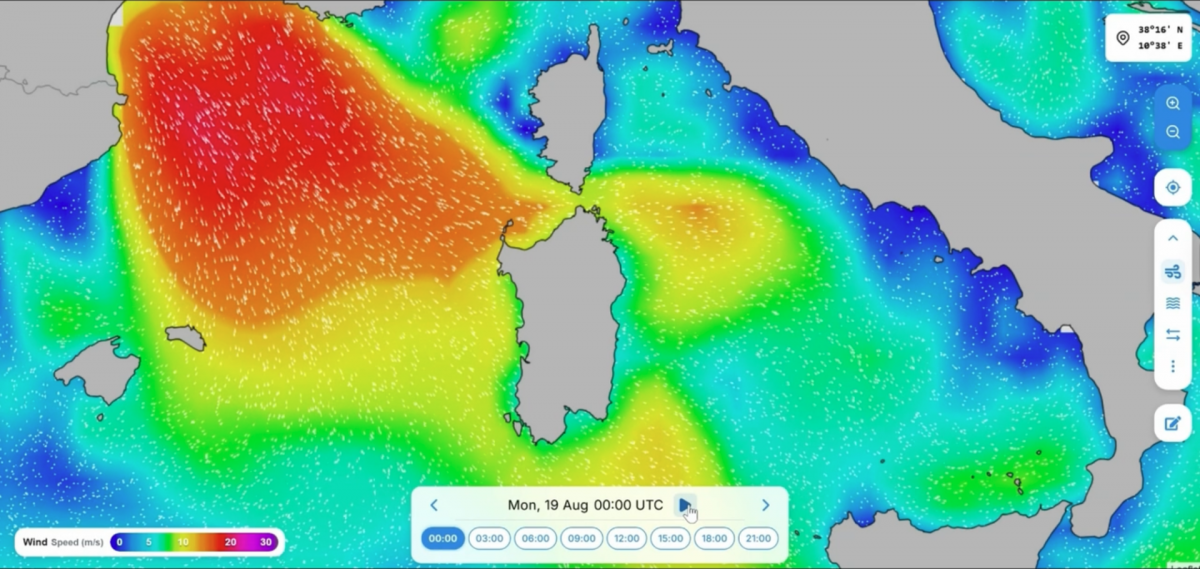
The theories and evidence surrounding the weather conditions are major developments and have broad implications for the entire market. That evening in a sleepy Sicilian fishing village was relatively unremarkable, with a gale warning issued for Sardinia and Corsica, with isolated thunderstorms and gusts predicted for Sicily - a typical forecast for that time of year in that area of the Med.
“Thunderstorms are very common in the summer and in early autumn,” says Dr Zoe Jacobs, Senior Research Scientist in Biogeochemical Modelling, NOC. “And that’s because you have the warmest sea temperatures and the beginning of the kind of cooler air that’s going over the ocean, which is the perfect recipe for thunderstorms.”
But Dr Georgia Kalantzi, Oceanographer and the CEO, Co-Founder of AlongRoute, adds that although we may have always had summer storms, now they get bigger and stronger. “Now we see that these phenomena are happening more frequently. This is an effect of climate change,” she says. “The forecast that night was showing that there was a big system coming from the northwest, so vessels were expecting bad weather.”
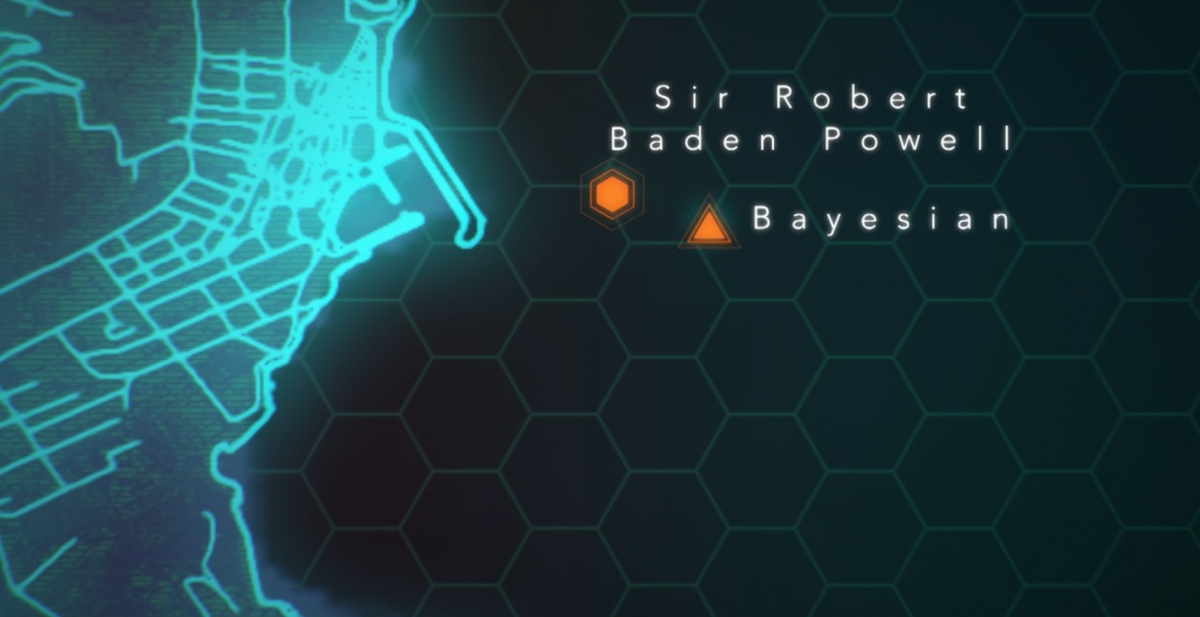
Both Bayesian and the nearby sailing vessel, Sir Robert Baden-Powell, chose Porticello for the same reasons of shelter from the wind and an easy disembarkation for guests the following morning. Karsten Börner, the Baden-Powell’s skipper, made the call any master would.
“You always [look for] a place that you don’t have waves because of the comfort of the passengers,” he says, “but because the forecast was west and northwest, I was thinking Porticello was a protected place.” On paper, it was. The mountains of Capo Zafferano to the north and Monte Catalfano to the west stand between the anchorage and any wind from the forecast quarter.
The last guest on the yacht turned in at half past midnight and footage from the yacht’s own cameras shows no list or distress. The seas were calm and there was very little wind before the passengers went to bed. And when there was lightning visible on the horizon, the crews prepared. At 03.55, the deckhand on watch filmed the approaching storm and posted it to social media. Minutes later, the weather broke and both vessels began dragging their anchors.
“Maybe a quarter to four, we decided to start the engine,” Börner recalls. “We started drifting,” Börner says, “and because the Bayesian was anchored behind us, every now and then we turned around because we were afraid to drift onto them.”
The vessel was caught in a vicious torrent that saw it lose stability and sink in minutes, but much of the public argument over Bayesian has turned on whether it was watertight. Of course, the yacht had watertight compartments on board, but a watertight compartment is only thus if the doors are shut.
So is it actually possible that an open shell door caused Bayesian to sink so quickly? There is a criminal investigation progressing in Sicily, where local prosecutors have placed Bayesian’s captain, the ship’s chief engineer, and the deckhand who was on watch under investigation for manslaughter.
This notion has been weaponised by Giovanni Costantino, chief executive of The Italian Sea Group (TISG), whose Perini Navi built the sloop-rigged sailing yacht. The CEO has alleged publicly that the port side shell door must have been left open. Costantino has since lodged a multi-million-euro lawsuit against Bayesian’s owner.
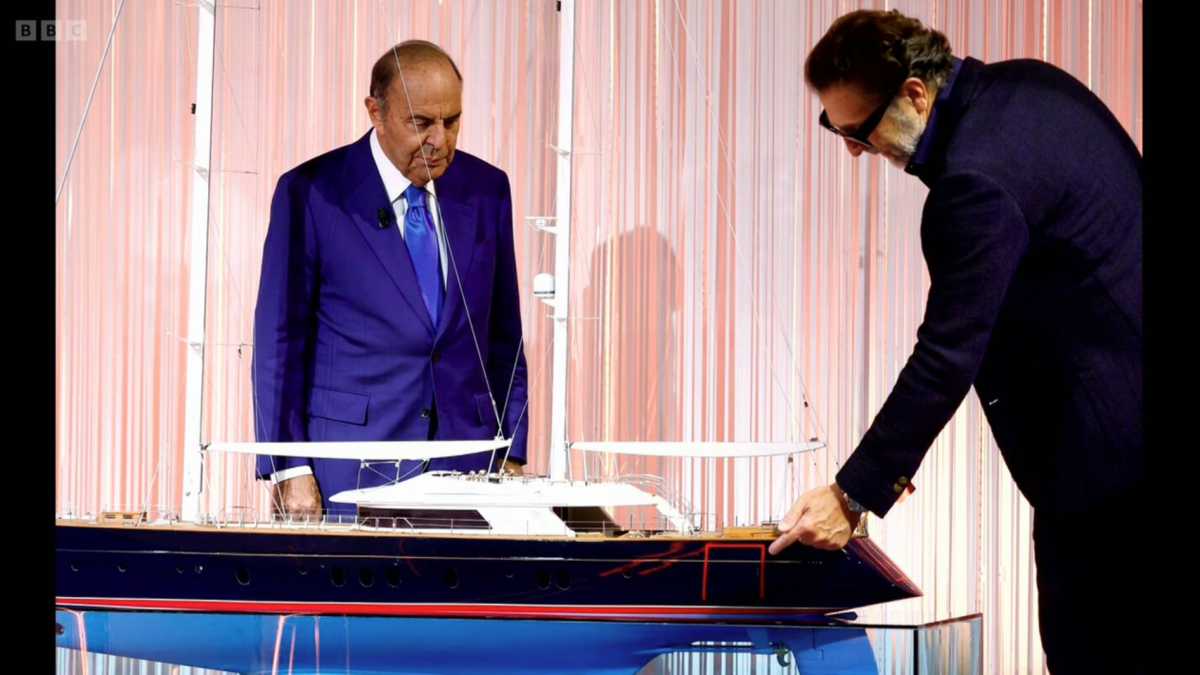
Earlier in the evening, Börner and his guests had circled the Perini Navi in their tender as they made for the Baden-Powell, admiring its glossy paint reflecting the moonlight. But on hearing the accusations cast by the TISG chief exec, the skipper searched for evidence of the claims.
“I found it ridiculous to destroy people without any knowledge of what happened, so I asked all my clients from that night to send me the photos, and we could prove that that’s not true. We could prove that the shell doors were closed,” says Börner.
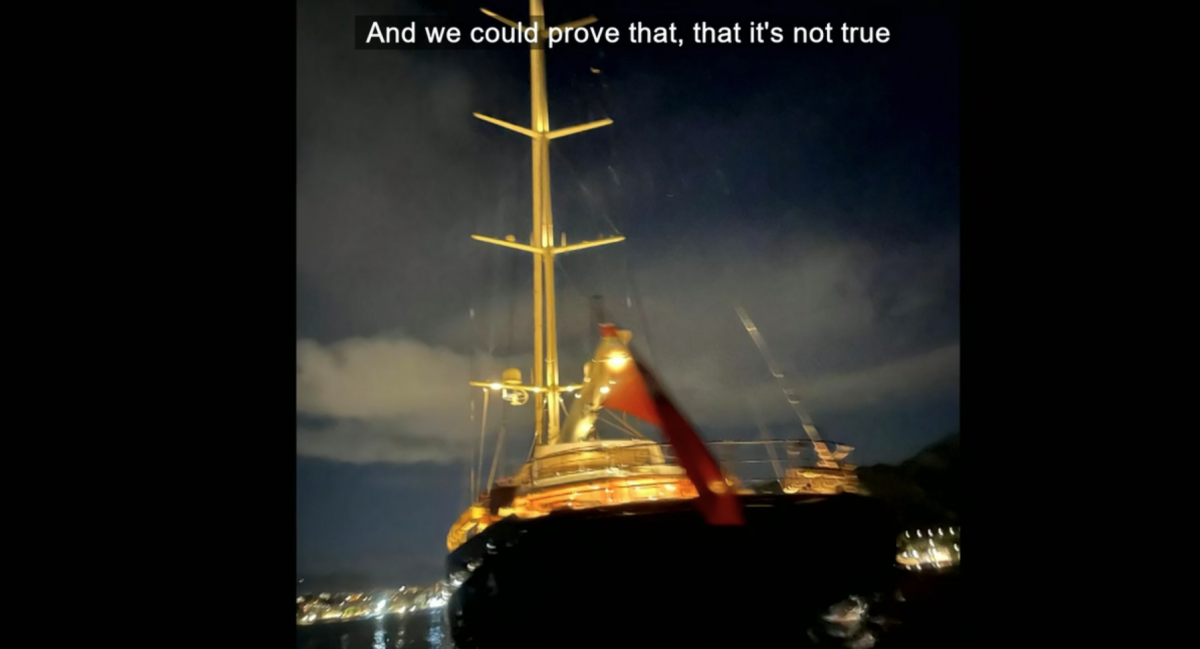
So why was the weather so much worse than the forecast? Kalantzi’s central argument is that the event which knocked Bayesian down was not the forecast storm at all. “What we’ve seen is that yes, there was a storm coming. It was very close, but it wasn’t there at the timing of the incident,” she says.
The system that began off the coast of France, built strong winds and big waves and tracked towards Italy, fully evolved over the night of the 19th and then dissipated. “I don’t believe it was the storm itself that sank the Bayesian. You might have seen the storm in the distance, but suddenly something very strong would have knocked the ship over.”
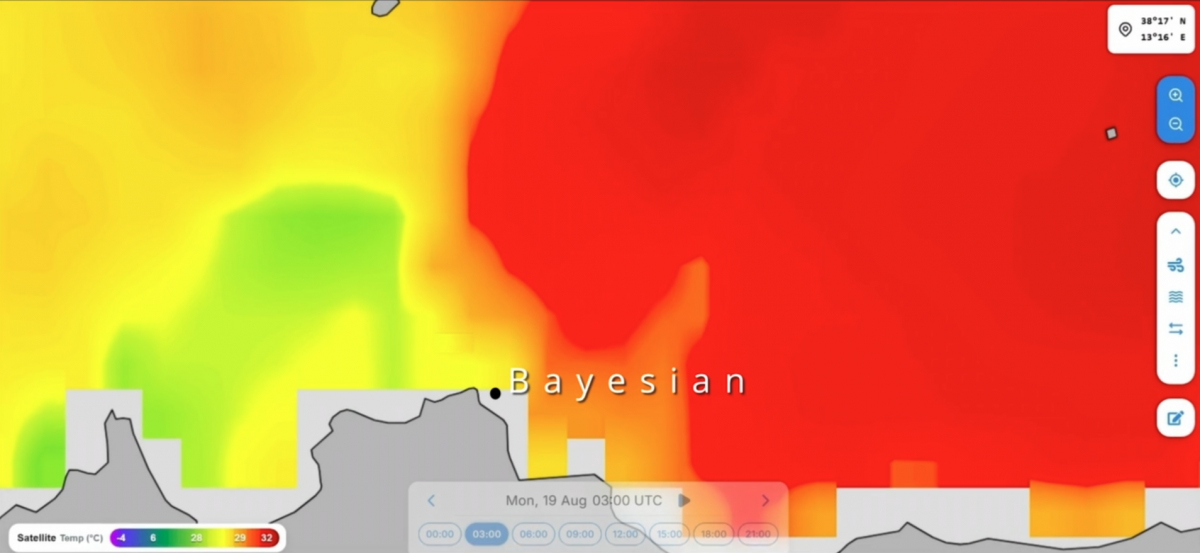
Analysing the data from that night, Kalantzi’s team identified a sharp boundary in sea surface temperature sitting directly beneath the yacht. “At the exact location of the event, there was a big difference in the sea surface temperature,” she says. “We had cooler water neighbouring with warmer water and the wall of difference was exactly coinciding with the location of Bayesian that night.”
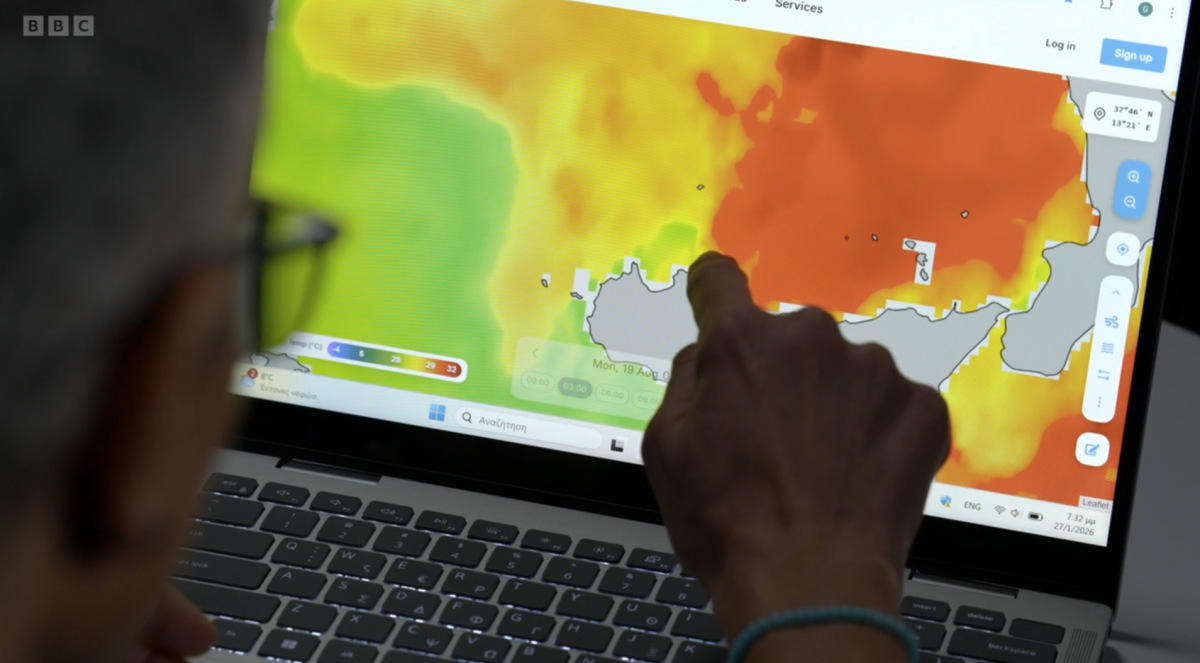
It is the cold air pushed ahead of the advancing storm that met the unusually warm water inside the bay, driving rapid evaporation and a column of warm, moist air upwards, fuel for a violent and highly localised event such as a downburst or waterspout.
“Weather phenomena like downdrafts or tornadic waterspouts are extremely isolated events, about 50 up to maybe a couple of 100 metres wide,” explains Jacobs. “A tornadic waterspout is a narrow column of rotating air, very fast wind speeds kind of around a vertical axis that stem down from thunderstorms. If one of these phenomena hit Bayesian, the sudden intensity, when you had very calm seas a minute ago, to suddenly 100 mile per hour winds, are going to be incredibly violent.”
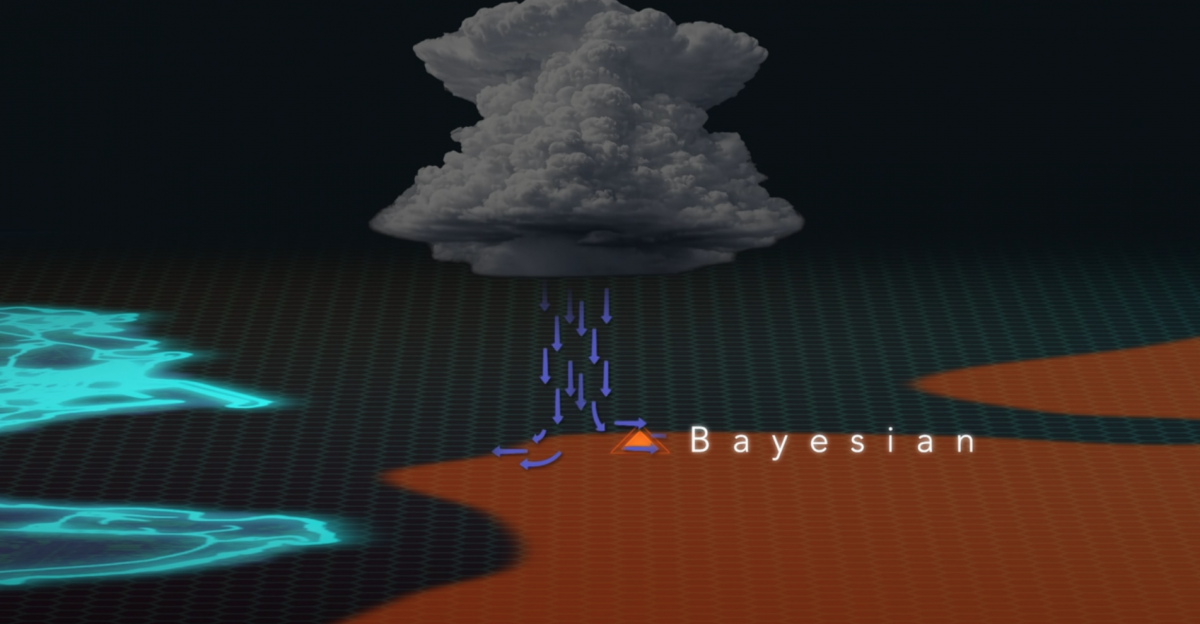
If the event formed inside the bay itself, the sheltering mountains were irrelevant, which could explain both why Bayesian was caught and why the Baden-Powell, anchored a few hundred metres off, came through it. “It seems the Bayesian was in the wrong place at the wrong time,” Kalantzi concludes.
The mast, the kite and the keel
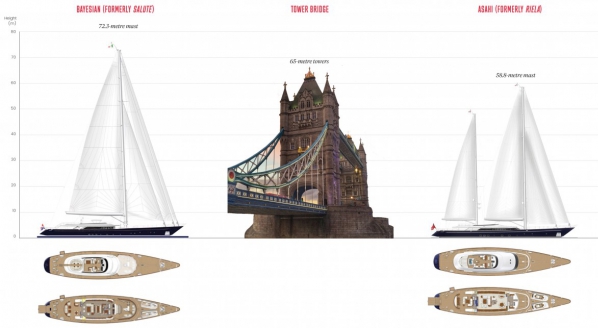
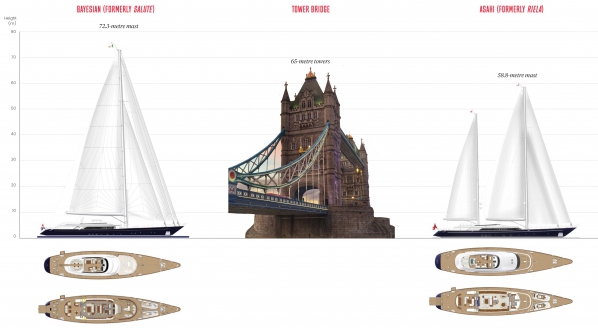
That a single weather event could capsize one yacht and spare another a short distance away always returns the inquiry to Bayesian’s own design with its record-breaking mast. A weight high up or raised within the vessel means that it raises the centre of gravity up with it. And as the yacht heels, the yacht reaches an angle of vanishing stability beyond which it can no longer return upright, which, for the Bayesian, is around 70 degrees.
The moveable keel provides the ability to lower the centre of gravity and improve the overall stability, and this is what Bayesian lacked. Andy King, naval architect and Yachting Technical Director at Foreship, whose analysis of the disaster was published in The Superyacht Report, uses the analogy that understanding the stability of a mast is akin to riding a bike with a dumbbell.
“The higher you raise up the dumbbell, then the more unstable you will feel on the bike and the same physics apply to a vessel. Generally, we want weight low down in the ship,” he explains, adding Bayesian carried just over 40 tonnes of ballast and a weighted keel of just over 52 tonnes.
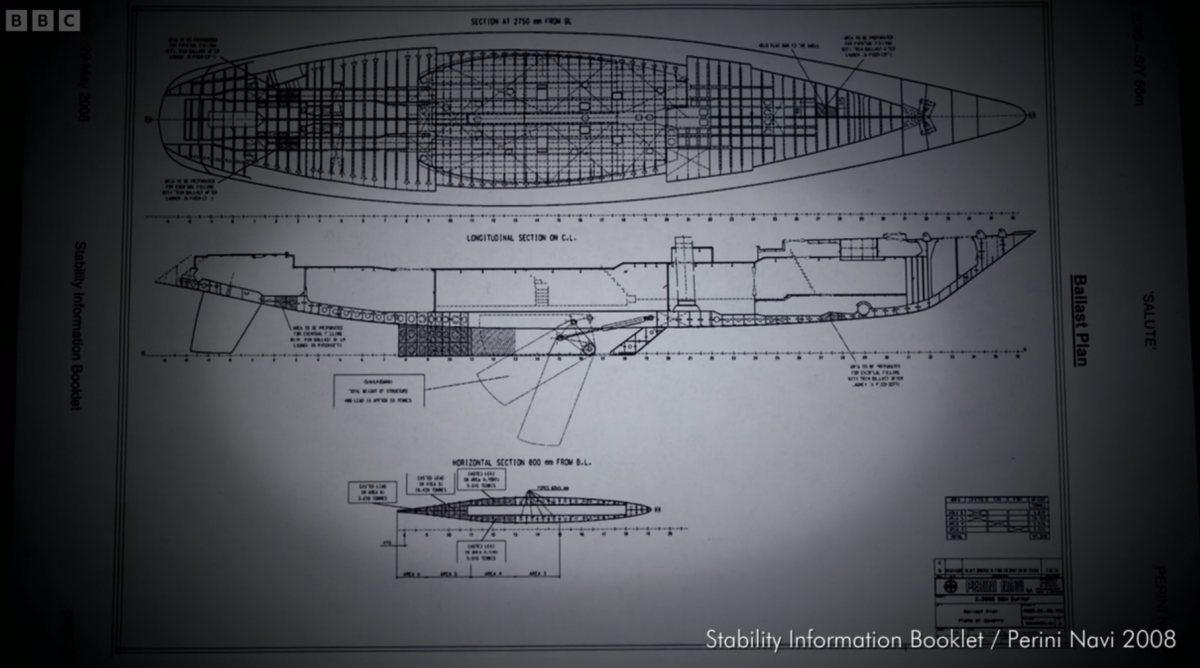
“It can operate in two raised or lowered positions,” King continues, “the difference in stability for the yacht between those two positions was about 10 to 15 degrees in terms of the angle of vanishing stability. So, the position of the keel would have been absolutely fundamental to the Bayesian.”
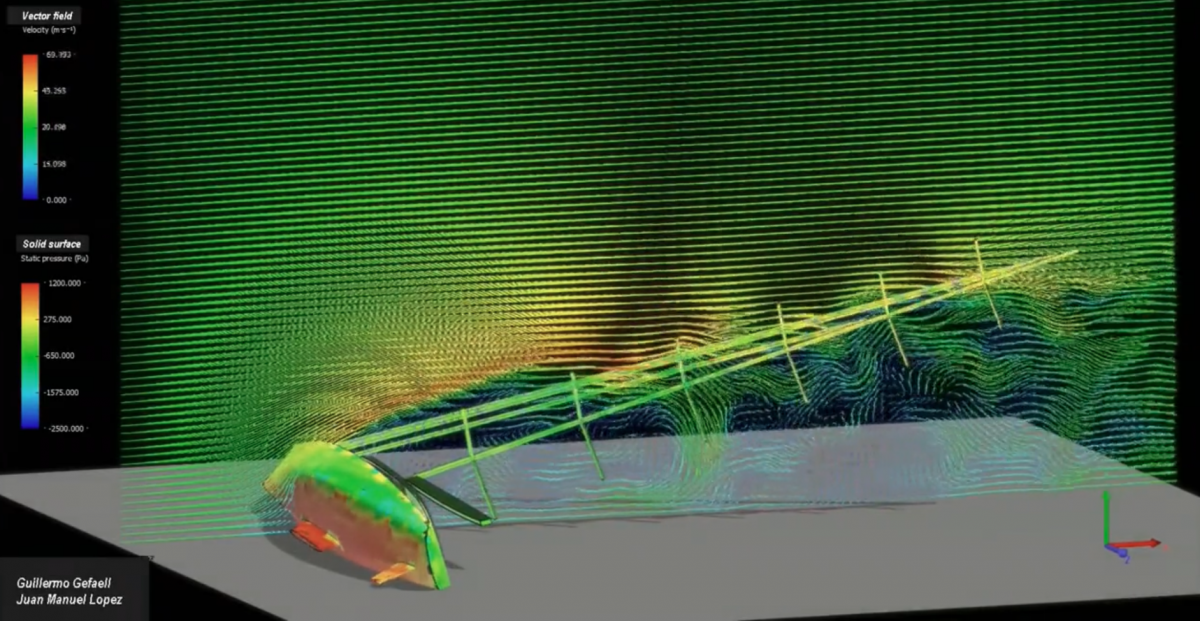
The keel appears to have been raised when the vessel sank, which actively worsened the boat’s vulnerabilities. “Not only can the vessel be pushed over by the wind, but the mast and the spreaders and the air swirling off those can act like a kite and that would have acted to intensify the heeling behaviour of the yacht,” adds King.
Wind striking the mast and rigging from the port side did not simply push the spar to starboard; it pulled the rigging and dragged the yacht further over. Computer modelling found that a horizontal wind of around 72 miles per hour onto the mast would tip Bayesian past its vanishing-stability angle.
None of this, though, explains why a hull with no obvious damage went under so completely, especially considering the shell doors were closed. With the mast in the water, it should have floated. Mike Travis, chief inspector at the MAIB from 2001-2025, notes that the stability booklet dealt thoroughly with one mode and not another.
“Maximum lean angles that had to be maintained when sailing were written in the stability information book,” he says, “but it carried no figure for the angle of vanishing stability with the sails stowed and the keel up.”
This meant there was no information available to the crew as to what the impact of the wind would be on the vessel with the dagger board raised. But this isn’t a failing peculiar to Bayesian as booklets are not required to cover the keel-up, sails-down case, because in that configuration the vessel is not sailing.
The down-flooding openings, the vents that cannot be closed weathertight, sit at known angles. “We’re able to see the down-flooding openings and see where they are positioned,” Travis says. “The angles at which they were immersed range from about 35 degrees through to about 45 degrees.”
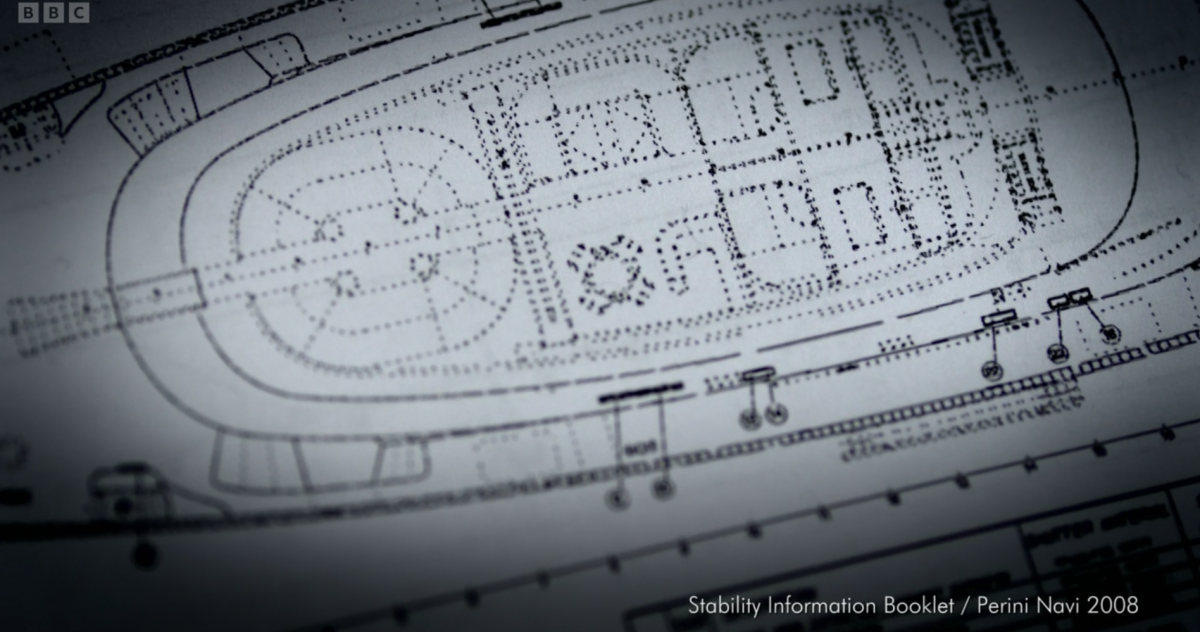
According to the booklet, past roughly 35 degrees of starboard heel, water reaches the galley extraction vents, past 40, it reaches the engine room vents and past 43, the two large upper-deck engine extraction vents begin to take water. The booklet restricts the rear engine vents to good weather only.
The crew are then in a double bind, as the vents that flood the vessel are the vents it needs open to run. “With those vents closed, then the engines and the generators cannot run,” former captain Edwards explains, “so for the boat to manoeuvre to pull an anchor up, all that ventilation system needs to be open for the vessel to operate.” Close them against the weather and it cannot move. Open them to move and the vessel is exposed the moment it lists.
Once water starts entering, the inflow begins through the engine vents as the yacht lists past 40 degrees, the stern settling lower, the rate accelerating to an estimated tonne of water a second as the vents submerge. When the gust knocks the hull to 90 degrees, the staircase set slightly to starboard channels the water along the now-horizontal stairwell and into the cabins.
“Bayesian was inevitably going to sink,” says Travis. “However, as a part of their examination of the wreck, the MAIB inspectors will be seeking to establish the status of all of the hatches and other openings in the hull, so they can see where the water came in.”
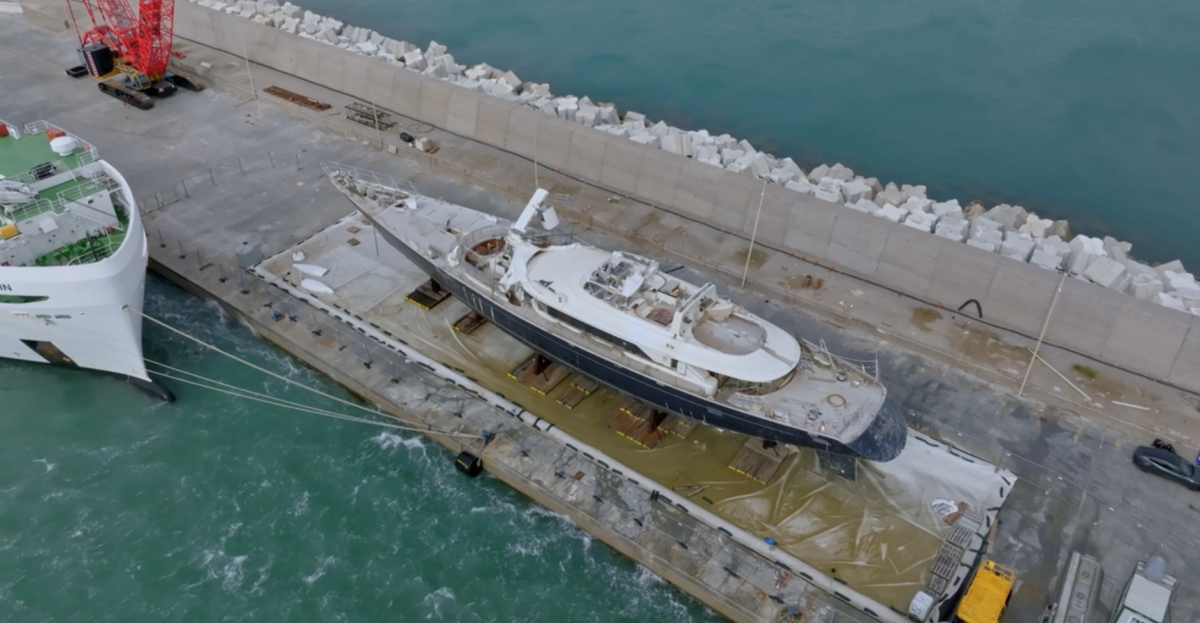
Bayesian met the regulations, was classed by the American Bureau of Shipping and its booklet was signed off by the Maritime and Coastguard Agency. The configuration of being at anchor with the keel up when extreme weather arrives, simply is not covered by the criteria and potentially was its undoing.
“From what I read of the orders that were given to the crew and where the boat was located, I’m sad to say that had I been the master on board the boat, I expect she’d be in the same place,” Edwards admits.
Almost two years on, the criminal investigation in Sicily is unresolved and the three crew members named as persons of interest have not been charged. The prosecutors leaked meteorology holds that the weather alone was survivable and the MAIB’s investigation, in which Italy’s DiGIFeMa now sits as the lead investigating state, has yet to deliver its final report.
As the world gets warmer, the events in Porticello brought home the fact that marine weather conditions are becoming increasingly extreme. These disastrous thunderstorms can pop within minutes and are often difficult to forecast weather events over the ocean, with fewer data services operating over the ocean. If we want to see fewer of these accidents at sea, weather predictions must become more accurate.
But if the weather alone was survivable, any competent crew operating by the book could have kept it afloat once it did, but the stability booklet did not give them the numbers to know how. And the one page that addressed the vents told them to keep shut, in bad weather, are the openings the yacht needed to open to move. Those same vents are the ones that would fill with water once compromised.
56.00m 11.52m 9.83m 473
Perini Navi
Remi TessierRon Holland Design
Ron Holland Design
NEW: Sign up for SuperyachtNewsweek!
Get the latest weekly news, in-depth reports, intelligence, and strategic insights, delivered directly from The Superyacht Group's editors and market analysts.
Stay at the forefront of the superyacht industry with SuperyachtNewsweek
Click here to become part of The Superyacht Group community, and join us in our mission to make this industry accessible to all, and prosperous for the long-term. We are offering access to the superyacht industry’s most comprehensive and longstanding archive of business-critical information, as well as a comprehensive, real-time superyacht fleet database, for just £10 per month, because we are One Industry with One Mission. Sign up here.
Related news
TISG capital losses force shareholder showdown
Losses have driven the builder’s share capital below the legal minimum, instigating a July meeting at which shareholders will decide the firm’s fate
Business
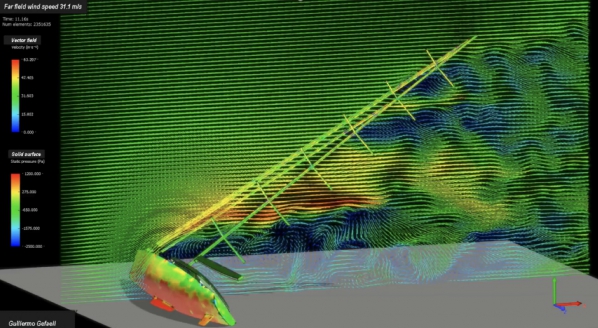
Bayesian – the seconds after knockdown
What really pushes a vessel to the point of no return? World-leading stability expert Andy King presents an academic study of the Bayesian disaster
Owner
TISG’s corporate chaos continues
A share price plummet, an executive exodus, one viral dressing down and now a competing legal narrative paint a rather grim picture for The Italian Sea Group
Business
The Italian Sea Group files nine-figure Bayesian lawsuit
Bayesian’s builder is reportedly citing reputational damage, a collapse in demand and share-price losses. But do the numbers really add up?
Opinion
Bayesian: a canary in a coal mine
Was the Bayesian tragedy a perfect storm of design ambition, regulatory blind spots and operational margins tested to failure?
Opinion

Related news
TISG capital losses force shareholder showdown
2 months ago
Bayesian – the seconds after knockdown
4 months ago
TISG’s corporate chaos continues
5 months ago
Bayesian: a canary in a coal mine
1 year ago
Lessons from nature
2 years ago
The Bayesian disaster
2 years ago
NEW: Sign up for
SuperyachtNewsweek!
Get the latest weekly news, in-depth reports, intelligence, and strategic insights, delivered directly from The Superyacht Group's editors and market analysts.
Stay at the forefront of the superyacht industry with SuperyachtNewsweek