
Bayesian – the seconds after knockdown
What really pushes a vessel to the point of no return? World-leading stability expert Andy King presents an academic study of the Bayesian disaster…
We are all aware of the tragic events surrounding the sinking of the sailing yacht Bayesian on 19 August 2024 off the coast of Porticello, Sicilly. We are extremely mindful of the ongoing investigations and proceedings, which must be allowed to run their course. For that reason, this article will not comment further on any speculation or outcomes from these nor on the terrible loss of life.
That being said, we do have a duty to consider the technical aspects of what occurred. Here we have a sailing yacht that was seemingly struck by a weather event, knocked down and then subsequently sank. The yacht was at anchor, with its keel raised and without any sails up.
As an industry, we can ask technical questions as we reflect on what happened and, crucially, on what we can do now to safeguard against similar accidents in the future. We can do this in advance of official investigation reports because we are able to apply modern computing techniques to a very complex and dynamic problem.
MAIB Interim Report
Before we consider industry analysis of sailing yacht behaviour, a brief word on what has been officially released so far. The safety investigation undertaken by the Marine Accident Investigation Branch (MAIB) into the sinking of Bayesian published an interim report in May 2025. The MAIB is a UK government organisation that investigates marine accidents involving UK-registered vessels worldwide. According to The United Kingdom Merchant Shipping (Accident Reporting and Investigation) Regulations 2012, Regulation55, the “sole objective of a safety investigation into an accident… shall be the prevention of future accidents” by looking into the “causes and circumstances”. Furthermore, “it shall not be the purpose of such an investigation to determine liability nor… to apportion blame”.
The interim report into the sinking of Bayesian is intended to provide an update to the investigation up until that point. The report provides a narrative of the accident and details of the likely environmental conditions that were experienced.
In due course, the MAIB will be publishing their final report, and this will include additional details that will be available after examining the salvaged wreck of the yacht. It is worth noting that the contents of the final report may change beyond the details presented in the interim report as more information and details come to light.
MAIB Interim Stability Investigation summary
As part of their interim report, the MAIB presented some initial findings from a stability and windage study. This study was commissioned by the MAIB and took place at the Wolfson Unit for Marine Technology and Industrial Aerodynamics at the University of Southampton.
The summary of the stability investigation describes the content and requirements for Bayesian’s stability information booklet. The report sum-marises the stability requirements for sailing yachts which are all based on the properties of what are called righting lever curves. A righting lever curve is a graph that shows the transverse separation between the downwards gravity force and the upwards buoyancy force. They are a fundamental measure of stability for any vessel, and their shape and points of interest are defined by regulation and of great interest to naval architects.
The MAIB report presented the findings of the Wolfson Unit’s computational study which analysed the yacht's behaviour at the time of the accident. The loading condition of the yacht at the time of the accident is currently unknown and so an assumed loading condition was used. This assumed the yacht as being in the most onerous loading condition presented in the approved stability information booklet. This was taken to be the light-loaded condition (with 10 per cent consumables on board) and with the keel raised. The study then analysed the yacht’s stability and behaviour as winds of varying speeds and from different directions were applied.
We want to be able to ask ourselves how we can do better, how we can improve safety and how we can make a start on this question while waiting for reports and investigations to conclude.
While the history and details of the sailing yacht stability criteria can be summarised in more detail elsewhere, it is worth noting some high-level details for our understanding:
1. There is a key stability criteria distinction for a yacht such as Bayesian with a moveable keel. When the keel is lowered, the loading conditions in the Stability Information Booklet are analysed against the sailing yacht stability criteria. When the keel is raised, the loading conditions are analysed against the motoryacht stability criteria.
2. The sailing yacht stability criteria are dependent on the shape of the righting lever curve (itself a function of the shape of the yacht, its buoyancy and the loading of the yacht, its centre of gravity) and what is called the downflooding angle. It should be noted that the sailing yacht stability criteria do not consider the exposed windage area.
3. For information, the downflooding angle is the heeling angle at which the first opening, which cannot be closed weathertight or watertight, is immersed. All vessels have downflooding openings because they are needed for engine room intakes, exhausts and similar systems. These are the types of openings we are discussing here, rather than large shell doors or central staircases.
4. Lastly, it is also worth noting that the approved Stability Information Booklet for Bayesian refers to the moveable keel as the ‘Board’, but we shall stick with the wording of ‘keel’ for ease of terminology and understanding. The position of the keel is critical to any stability analysis because its function is to lower the yacht’s centre of gravity when it’s lowered, thereby improving the stability characteristics of the vessel.
MAIB Interim Stability Investigation findings
The Wolfson Unit’s study identified several key findings:
1. That the angle of vanishing stability (the angle at which the yacht has no ability to return to the upright) for the assumed loss condition was just over 70 degrees.
2. That the 72-metre-tall mast accounted for 50 per cent of the total wind heeling moment when the wind was on the beam
3. That the profile of the mast also produced a degree of effective lift, increasing the heeling effect applied by the wind.
4. When in the assumed loss condition and with wind on the beam, a wind speed of just over 63 knots (73mph) would probably result in capsize of the yacht.
We know the general details and findings of the study from the Wolfson Unit. However, we do not yet know any further details about how the investigation was carried out and the methods used. Their work was a ‘desktop’ study, meaning it was carried out on computers using specialist software.
As curious and technical minds, naval architects and engineers are always striving to make safer designs and to ensure that accidents are not repeated. We want to be able to ask ourselves how we can do better, how we can improve safety and how we can make a start on this question while waiting for reports and investigations to conclude.
The Spanish study produced a computer model of a yacht which is akin to Bayesian, using very similar dimensions and as much information as could be gleaned from available technical drawings.
Spanish Stability Investigation summary
With this approach to finding out more firmly in mind, we can now look at another industry study on the sinking of a sailing yacht. The work has been undertaken by Guillermo Gefaell Chamochín and Juan Manuel López, both naval architects working in Spain.
The study was initially presented at the 64th International Congress of Naval Architecture and Maritime Industry in Gijón, Spain, in March 2025. The subsequent technical reports were produced and shared in English at around the same time. This work was produced and made publicly available just prior to the MAIB interim report. And while independent of the official investigation, their analysis nevertheless indicates a broadly comparable sensi-tivity to beam-wind knockdown in a keel-up condition.
Their analysis was carried out using computational fluid dynamics (CFD), a modern approach to computer simulation of fluid motion. It is used for problems such as analysing the air over an aeroplane wing, the downforce from a racing car or for studying how water moves around a hull. The computer breaks the fluid down into very tiny particles, or cells, and then solves complex equations for how each cell moves and behaves. The results can show a wide range of properties of the air or water, such as speed, pressure, turbulence and so on.
Naturally, the study conducted in Spain was not privy to the same technical details as the study commissioned by the MAIB at the Wolfson Unit. As such, the Spanish study produced a computer model of a yacht which is akin to Bayesian, using very similar dimensions and as much information as could be gleaned from available technical drawings. The assumed loading condition for the yacht was also slightly different from that of the MAIB. The MAIB assumed a light-load condition with the keel up, whereas the Spanish study considered a slightly deeper condition with a displacement of 543 tonnes. Again, the keel was assumed to be up in the Spanish study.
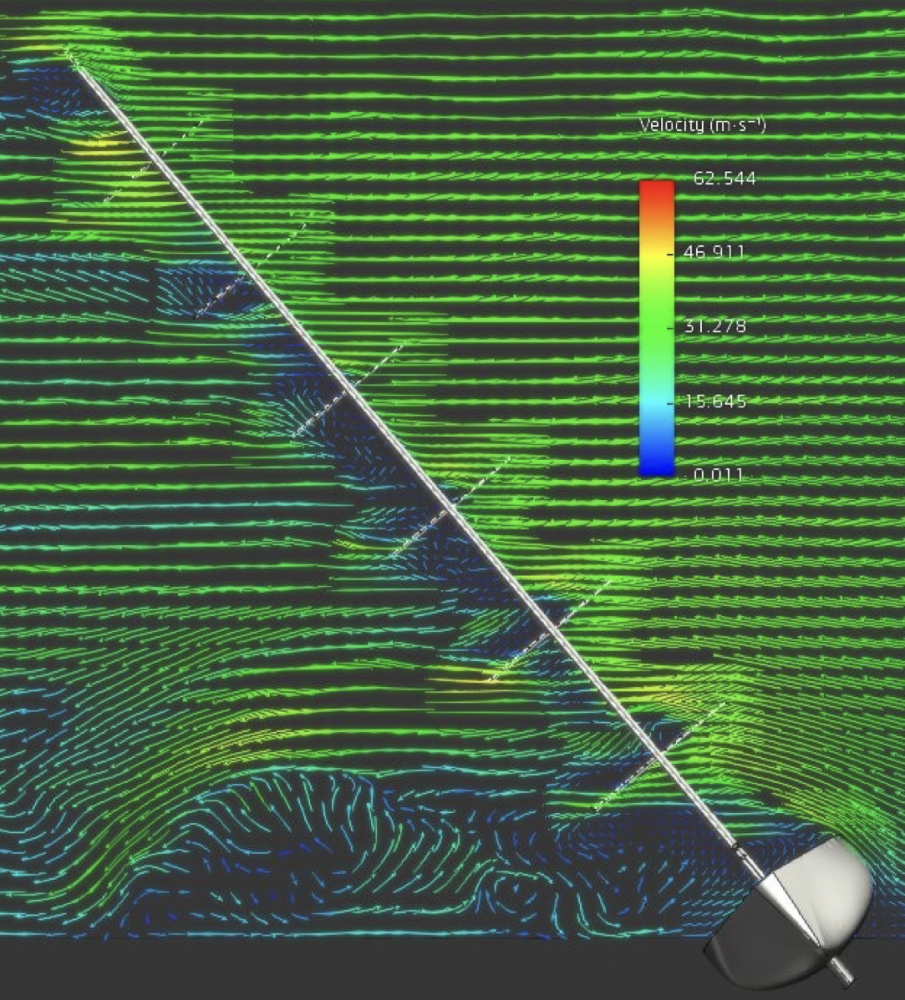
Showing the yacht model and flow patterns for the computational fluid dynamics (CFD) study.
Spanish Stability Investigation findings
The Spanish study assumed the yacht to be floating, with the keel up and then to be subjected to a sideways wind force. The wind force was assumed to be exactly on the beam and to be acting in the same plane as the mast. The CFD calculations were performed to work out how the air moved over the mast, the spreaders and the hull and to analyse how the yacht responded.
The first observation was that the CFD calculation effort was extremely intensive – it takes time for the computer to solve the complex calculations describing how each fluid cell is moving and behaving and this slows down the analysis process. It was also found that the computer time increased as the heel angle of the yacht increased and the flow around the yacht became more complex.
The key finding from the analysis was that a wind speed of 60.5 knots (70mph) gave a dynamic heel angle of over 65 degrees, and beyond this angle, the yacht model could not right itself. The investigation also identified the key distinction between the static steady heel caused by beam wind and the maximum dynamic heel. The static steady heel angle is the heel angle a yacht assumes as the wind is gradually ramped up. The dynamic heel angle, on the other hand, is the heel angle the yacht attains when the wind hits it instantly. To extend these analogies further, think about your ability to stay standing upright if someone slowly and progressively leans on you, versus your ability to do the same if the other person suddenly bumps into you and unsettles you.
The other key finding from the study was that not only is the mast extremely important in terms of the exposed wind area, but the spreaders are important as well. In other words, in analysing the complex air and heeling behaviour of the wind hitting a sailing yacht, the analysis of the mast alone is not sufficient, and the spreaders and other key items should be considered as well.
This is explained by the fact that the spreaders behave in the same manner as that identified for the mast by the MAIB. The exposure of the spreaders to the airflow causes them to act like a kite, generating an element of lift. This lift effect acts like a pulling force, which, when combined with the pushing force from the wind, makes the overall heeling effect at a given wind speed more pronounced. The spreaders were found to have much more impact as the heel angles increased and this is due to them becoming more vertically exposed at greater angles.
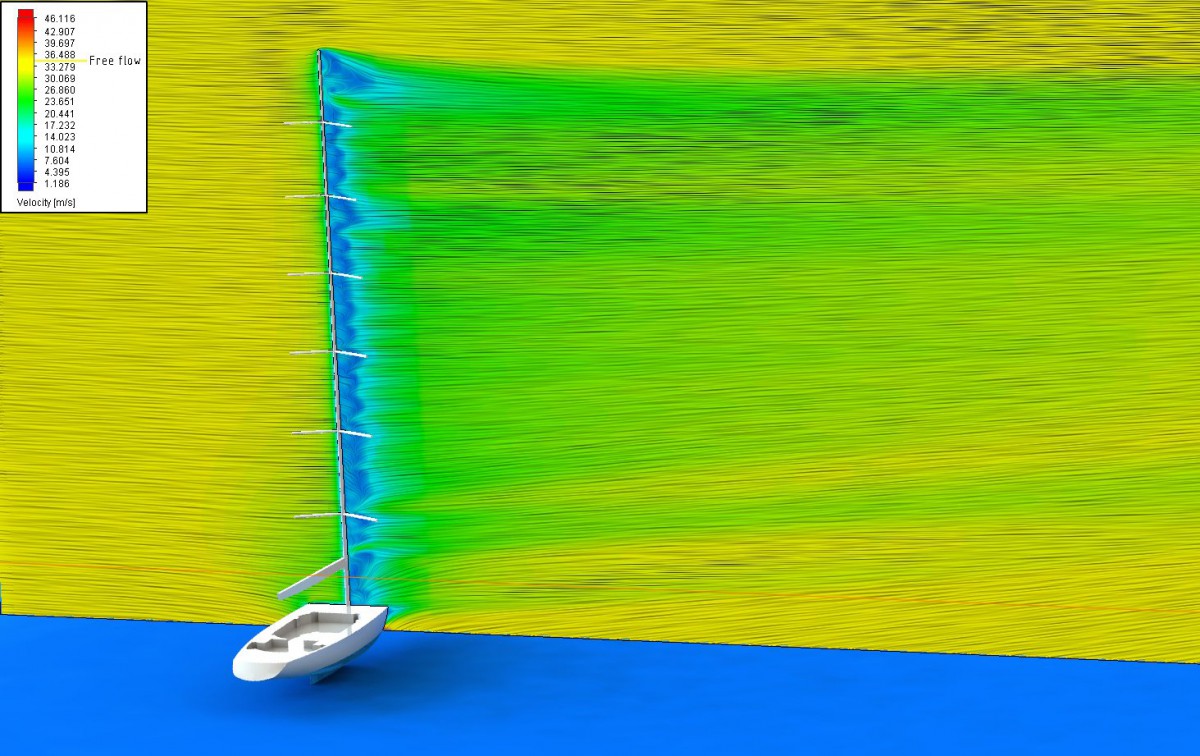
Analysis image with wind at 60.5kt and 0 deg of heel.
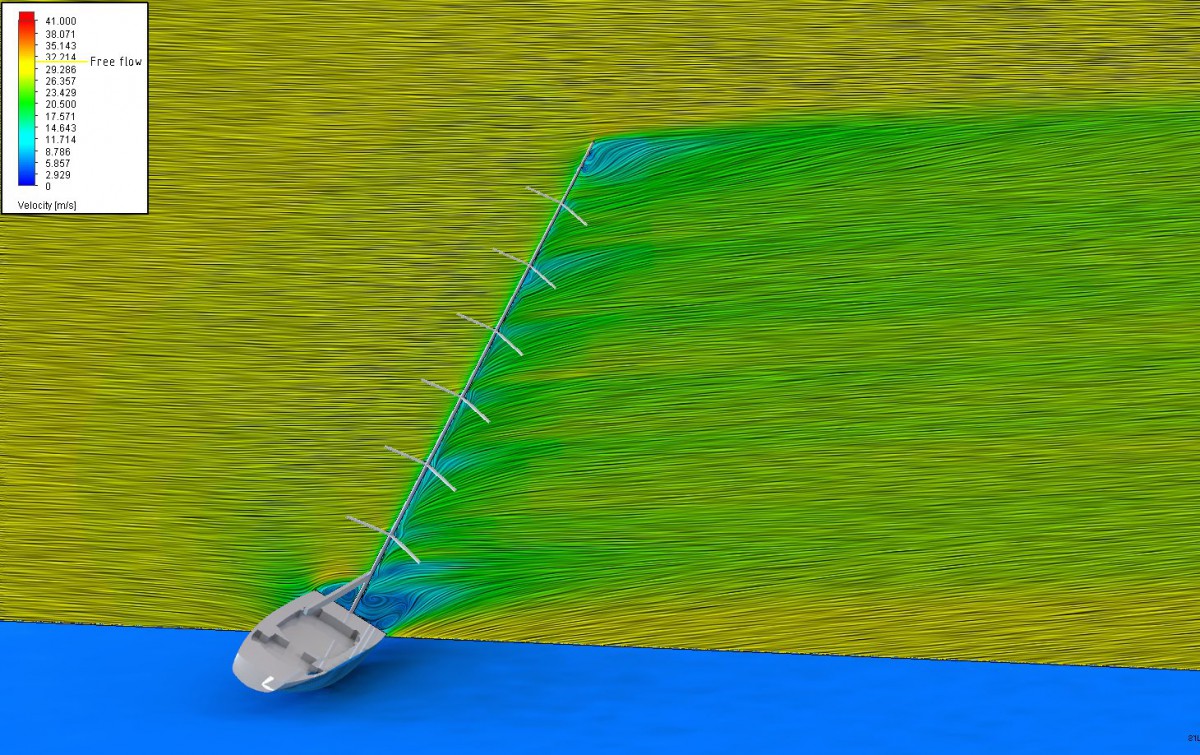
Analysis image with wind at 60.5kt and 30 deg of heel.
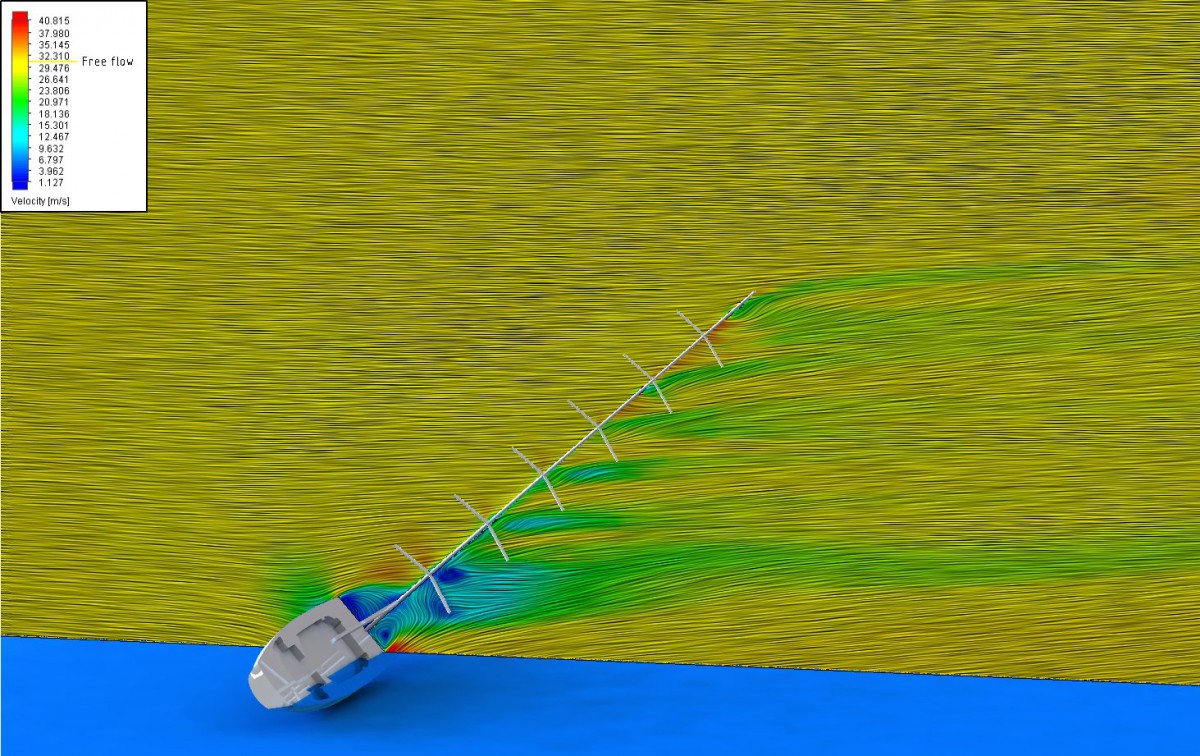
Analysis image with wind at 60.5kt and 50 deg of heel.
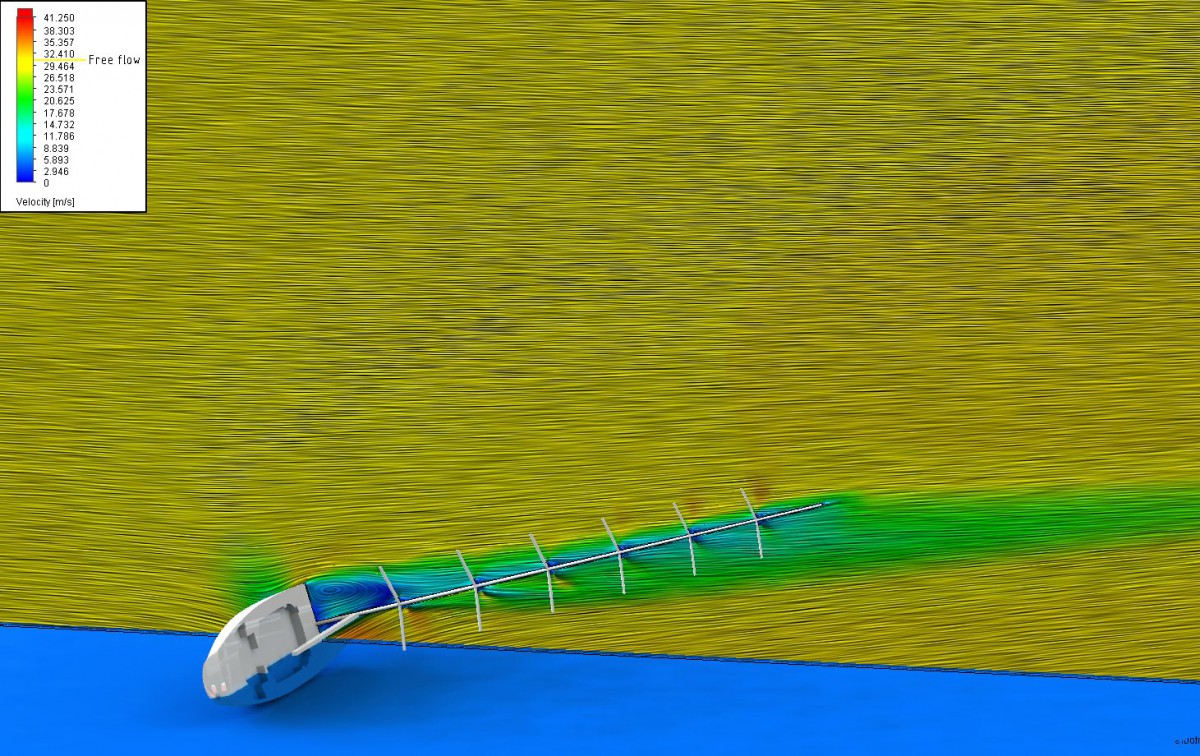
Analysis image with wind at 60.5kt and 75 deg of heel.
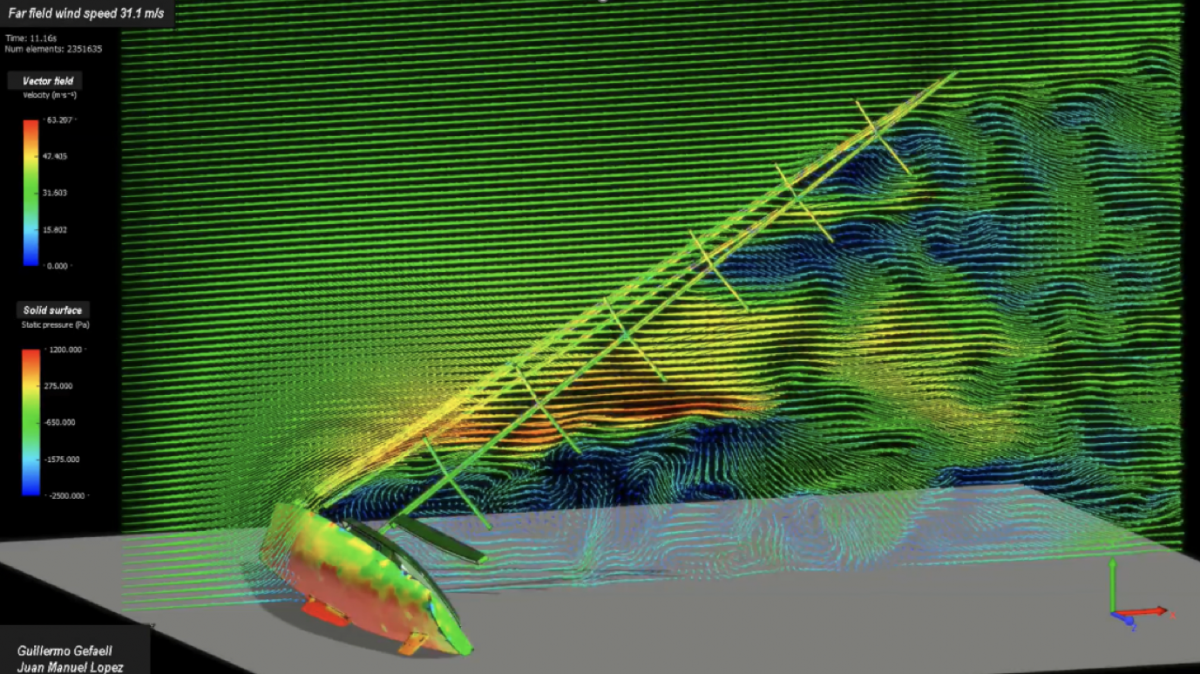
Analysis image with wind at 60.5kt and showing complex flow patterns.
Spanish investigation extended to consider flooding
At the time of writing, we have yet to receive any official information from the MAIB about the downflooding openings on Bayesian. However, it is evident that once a sailing yacht has been heeling far enough for downflooding openings (which cannot be closed weathertight or watertight) to become immersed, water will be able to enter the buoyant hull and eventually cause the yacht to sink. This was well understood during the development of the large yacht sailing stability criteria when, nearly 40 years ago, it was noted that wind-induced capsize and downflooding are possible stability failure events for such a vessel. It was described at the time as the event that would knock a sailing yacht down to 90 degrees, at which point the heel angle is arrested when the entire rig is immersed. Then, if the yacht stays in that position and is unable to right itself, downflooding can occur and eventually overcome the yacht.
The stability investigation that was conducted in Spain was extended to consider the subsequent flooding scenario. Again, without Bayesian-specific information, this was performed using assumed downflooding opening positions and, critically, with an assumed internal general arrangement. In a similar method to the CFD analysis of the wind, the flooding has been modelled as tiny particles that move and behave like water.
The study found that the flooding commenced through aft openings before equalising along the yacht’s length as the heel angle increased and more openings are immersed. To be clear again, we are talking about openings for the yacht’s normal operation (vents and intakes), not large shell doors or staircases. The flooding study found that the sailing yacht model took 9 seconds to be heeled to an angle where the first unprotected opening became immersed.
The study also calculated that the yacht model reached 90 degrees in just over 23 seconds. Then, looking at the expected size and immersion of the openings, an estimate was made of the rate of intake of the flood water. The study concluded that it took 2.5 minutes for the sailing yacht model to take on sufficient flood water to overcome and sink the model. This corresponds closely with an anecdotal observation from
The New York Times in October 2024, which said that Bayesian had “sunk in two minutes”.
It should be stated that this is an idealised computer flooding simulation and real results can always differ with variables such as air entrapment, internal boundaries and other openings.
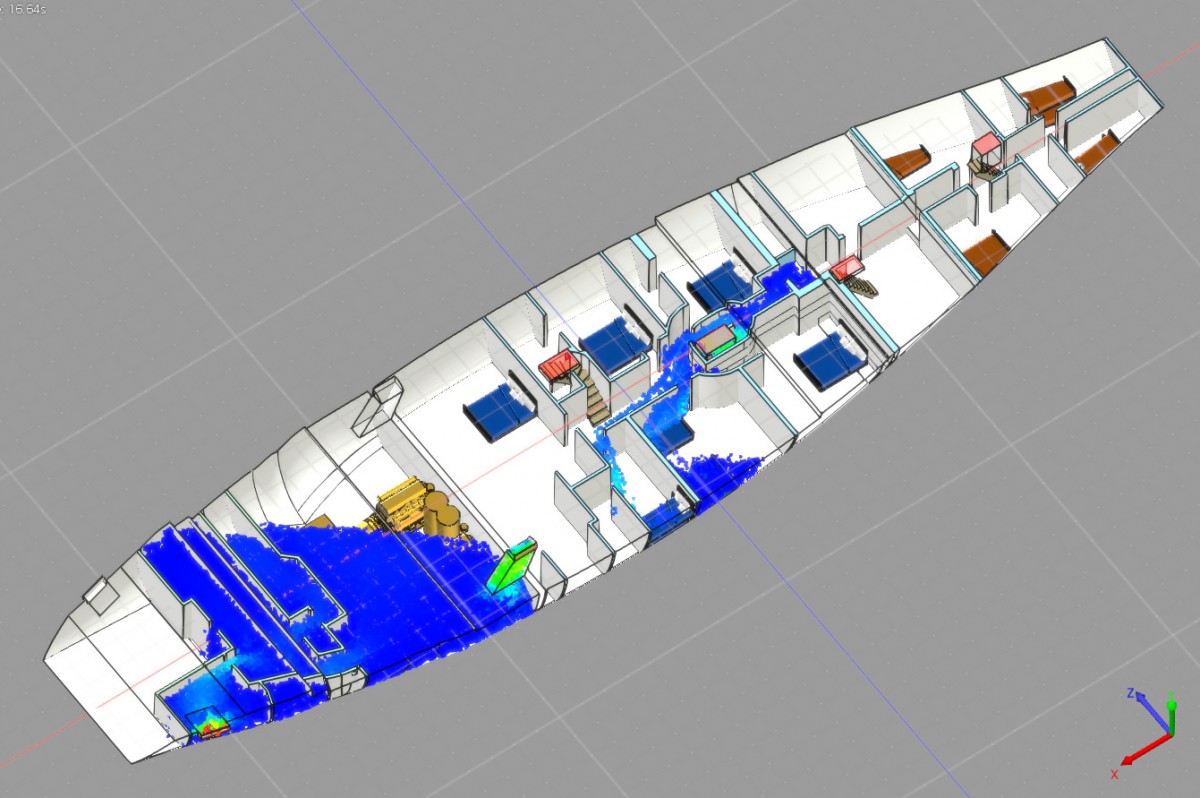
Analysis image showing inflow of flood water through openings.
MAIB and Spanish study general comparison
At this time, it is not possible to know the extent or method of the stability investigation carried out by the Wolfson Unit for the MAIB. However, the study conducted in Spain on a sailing yacht model of very similar dimensions to Bayesian has given very similar results.
Both studies have identified that knockdown is possible in the mast-only mode with the keel raised, despite slightly different approaches to the assumed loading condition. Using their exact Bayesian model, the MAIB calculated a wind speed of 63 knots before the yacht is unable to right itself – assuming the keel is in the raised position.
The separate study conducted in Spain found that a wind speed of 60.5 knots was required. It is interesting to note that the two yachts and loading conditions are not identical but that the wind speeds are very similar. Both studies have also highlighted the complex behaviour and interaction of the mast, rigging and hull when being heeled over by a wind force.
Both studies concluded that there was no possibility of the sailing yacht righting itself beyond a heeling angle of 70 degrees. As can be seen from the flooding investigation conducted in Spain, it was also found that downflooding openings can be immersed before that heel angle is reached and that internal flooding can commence.
But importantly, what this academic study reveals is how rapidly the consequences may unfold once stability is lost. Under beam wind conditions of around 60.5 knots, the modelled yacht develops a dynamic heel exceeding 65 degrees, beyond recovery, with additional aerodynamic lift from the spreaders further increasing the heeling moment. From that point, it’s a rapid progressive sequence – immersion of the first unprotected opening in around nine seconds, heel to 90 degrees in just over 20 seconds and flooding sufficient to sink the vessel in around two and a half minutes within the idealised scenario.
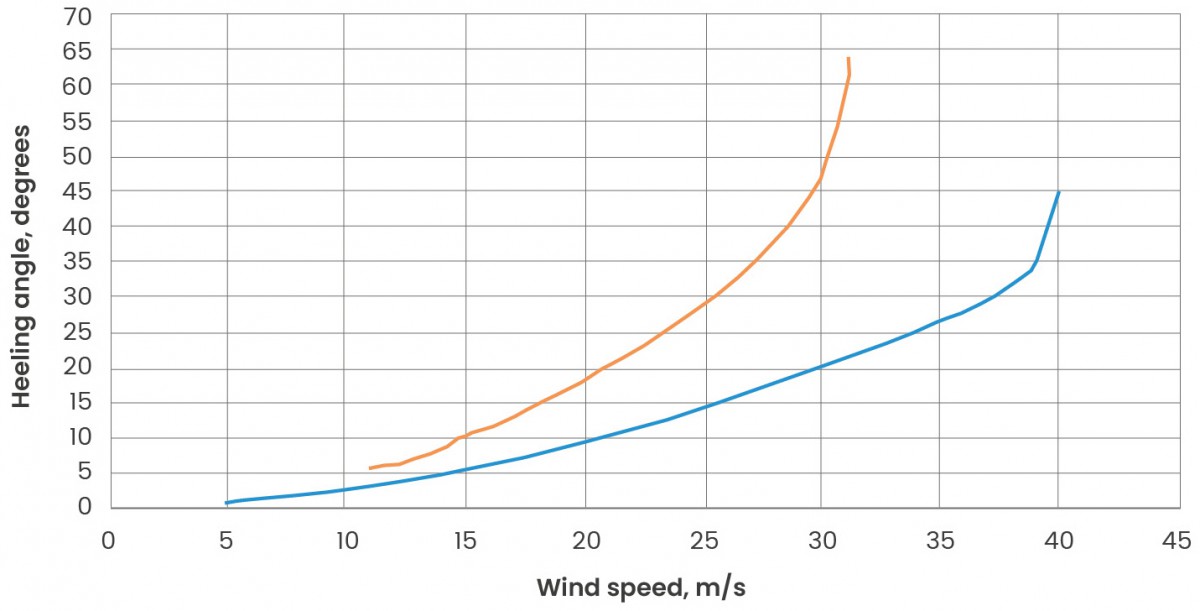
Possible operator guidance graph showing a yacht’s possible static heel angle (blue), dynamic heel angle (orange) for any wind speed (note that the wind speed here is shown in metres per second). For comparison, 31m/s is approximately 60 knots and 40m/s is approximately 78mph.
So what next?
There are still plenty of technical questions and aspects that will need answering with respect to the loss of Bayesian. We will have the final MAIB report to review and then we will have to look at what changes need to be made to avoid the same accident happening again. There will also, no doubt, be other technical and complex investigations undertaken.
Of particular interest, we have yet to determine and analyse how the same sailing yacht used in the Spanish study would behave with the keel in the lowered position. We have also yet to consider even more complex and dynamic effects. For example, effects such as hydrodynamics of the hull and keel, the possible force exerted by being anchored, the assumption that the yacht is always upright when struck by wind exactly on the beam and other key dynamic aspects.
We can act now
In this article, we have presented an independent investigation into the behaviour of sailing yachts under beam wind. In doing so, we are not pre-judging any outcomes from a sensitive and critical investigation. Rather, we can think of safety improvement as always our number one technical priority.
In doing so, for existing and prospective sailing yacht owners, we can ask key questions, such as:
1. When was the yacht’s lightweight last assessed?
2. What is in the yacht’s stability booklet?
3. Does the approved stability booklet match how the yacht is operating?
4. What is the yacht’s extreme weather behaviour?
The answer to the last question will not be found in the yacht’s stability booklet. It needs complex computational analysis, like the CFD study that has been shown here. This requires specialist computer software and skilled, knowledgeable engineers. With the goal of improving safety and making decision-making information available to those on board, it is worth considering what kinds of operator guidance can be generated from these computer simulations.
For example, perhaps the answer is to generate something like the figure above where the complex computer analysis can be distilled down into a simple graph. In this example from the study conducted in Spain, the steady heel and dynamic heel angles are plotted against the wind speed. The blue and orange curves end when the yacht has no ability to right itself, so we can immediately see a limiting wind speed. It is worth thinking about whether this would be a useful safety consideration for those on board and inform decision-making accordingly.
In reflecting on both the MAIB’s interim findings and the independent Spanish CFD study, it is clear that the loss of Bayesian highlights the complex interplay of wind speed, aerodynamics, keel position and downflooding angles for modern sailing yachts. While many technical questions remain unresolved pending the final investigation report, the consistency between the two studies underscores a critical need for deeper industry understanding of stability and extreme‑weather behaviour. As an industry, we have an opportunity now to engage proactively with advanced analysis methods and improve the guidance available to crew. Ultimately, enhancing the clarity, accessibility and relevance of stability information – supported by modern computational tools – will be essential in helping to reduce the likelihood of similar tragedies in future.
About the author
Andy King is a naval architect who works for a UK-based marine consultancy. Andy spent a large part of his career at a major Classification Society, where he led on large yacht stability approvals, covering both existing and new build yacht projects. Andy has contributed to stability regulatory development through his work with the Red Ensign Group technical working group and through the United Kingdom delegation at the International Maritime Organization. Andy also teaches yacht stability to future yacht Masters on the Isle of Wight.
This article first appeared in The Superyacht Report: New Build Focus. With our open-source policy, it is available to all by following this link, so read and download the latest issue and any of our previous issues in our library.
NEW: Sign up for SuperyachtNewsweek!
Get the latest weekly news, in-depth reports, intelligence, and strategic insights, delivered directly from The Superyacht Group's editors and market analysts.
Stay at the forefront of the superyacht industry with SuperyachtNewsweek
Click here to become part of The Superyacht Group community, and join us in our mission to make this industry accessible to all, and prosperous for the long-term. We are offering access to the superyacht industry’s most comprehensive and longstanding archive of business-critical information, as well as a comprehensive, real-time superyacht fleet database, for just £10 per month, because we are One Industry with One Mission. Sign up here.
Related news
The Italian Sea Group files nine-figure Bayesian lawsuit
Bayesian’s builder is reportedly citing reputational damage, a collapse in demand and share-price losses. But do the numbers really add up?
Opinion
Keeping crew safer
How the industry can – and should – go above and beyond to ensure crew are not put at risk from insufficient vetting and background checks
Opinion
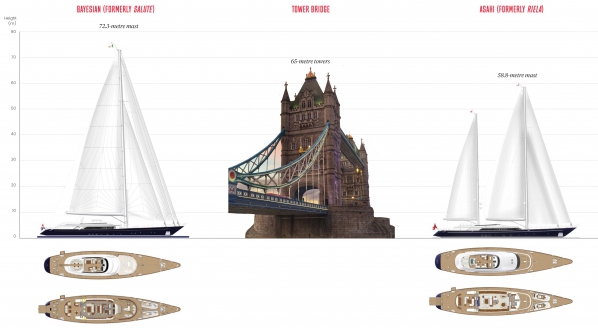
Bayesian: a canary in a coal mine
Was the Bayesian tragedy a perfect storm of design ambition, regulatory blind spots and operational margins tested to failure?
Opinion
The ultimate guide to what floats your boat
Andy King, naval architect and director of stability & statutory for Houlder Ltd, sets out the key considerations that yachts must comply with to keep safe
Crew
Related news
Keeping crew safer
1 year ago
Where safety meets style
1 year ago
Bayesian: a canary in a coal mine
1 year ago
The ultimate guide to what floats your boat
2 years ago
NEW: Sign up for
SuperyachtNewsweek!
Get the latest weekly news, in-depth reports, intelligence, and strategic insights, delivered directly from The Superyacht Group's editors and market analysts.
Stay at the forefront of the superyacht industry with SuperyachtNewsweek