CHIRP Report: Unsafe working over the side – use of fender hook
Despite a fatality in 2015, the lesson that working over the side is a high-risk activity requiring robust controls hasn't been learnt by all in the industry…
The following case study is from CHIRP Maritime’s Superyacht Feedback. It is the first superyacht-specific programme and publication dedicated to improving safety in the maritime industry through vital knowledge sharing, anonymous reporting, analysis and feedback via the Superyacht Maritime Advisory Board.
Initial report
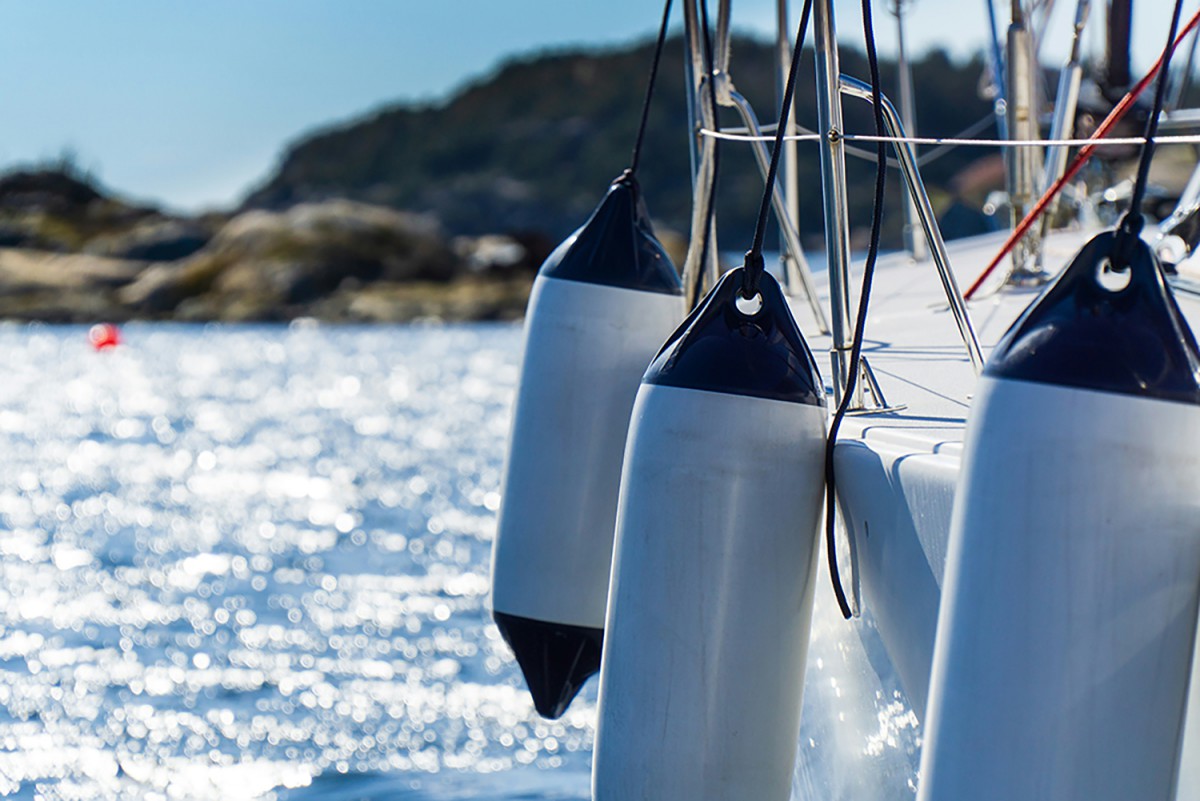
A social media group posted a photograph of a crew member working over the side while straddling a fender connected to a fender hook and carrying out washing routines. The crew member was not wearing a harness and appeared to be relying solely on the fender hook for support while working alone.
CHIRP would like to highlight a fatal accident in 2015 following a similar arrangement. In that case, the fender hook detached while the crew member was working over the side, causing him to fall into the water and sustain severe injuries. He subsequently died from complications arising from those injuries.
The investigation identified important lessons about using a fender hook for support and the absence of an independent safety line.
CHIRP comment
Unsuitable equipment can develop through expediency and the gradual acceptance of unsafe practices. Once an improvised method has been used several times successfully, it can become accepted as the normal way of working, even though the underlying risk remains unchanged. This is a classic example of the normalisation of deviance.
Also concerning are the apparent absence of supervision and the fact that the task was reportedly being carried out alone. Working over the side requires suitable equipment, planning, communication, supervision and the ability to effect an immediate rescue. These safeguards should be addressed through a permit-to-work process and task-specific risk assessment.
Leaders have a vital role in challenging unsafe practices before they become routine. Safe working depends not only on having procedures, but also on asking whether the equipment being used is designed and suitable for the task.
The 2015 Kibo investigation shows how a convenient arrangement can have catastrophic consequences when a single component fails. Eleven years after that tragedy, and with high turnover among seafarers entering the superyacht industry, this report is a timely reminder.
Key issues relating to this report
Factors relating to this report
Over-confidence: Previous successful use of an improvised method can create a false sense of safety.
Lack of communication: The absence of any apparent challenge suggests that safety concerns may not have been openly communicated.
Lack of teamwork: Working over the side requires coordination, supervision, communication and an immediate rescue capability.
Lack of capability: Those planning the work need to understand the hazards and limitations of the equipment. Unsuitable equipment should never be used as a personnel attachment point.
Norms: An unsafe arrangement appears to have become accepted as normal. Repeated use without challenge can gradually make an unacceptable practice
appear acceptable.
Key takeaways
Regulators: “A harness does not make an unsafe system safe; the whole system must protect the person.” Working over the side is a high-risk activity requiring robust controls, not simply PPE.
Managers: “If the plan depends on luck, it is not a plan.” Procedures should define acceptable methods, suitable anchor points, supervision, communication and rescue arrangements. Unsafe practices must be challenged before they become normal.
Seafarers: “The strongest safety device on board is the person who says: ‘This is not safe’.” A fender hook, handrail or other unsuitable fitting is not a lifesaving attachment point.
To register to CHIRP or submit your feedback, please click here.
NEW: Sign up for SuperyachtNewsweek!
Get the latest weekly news, in-depth reports, intelligence, and strategic insights, delivered directly from The Superyacht Group's editors and market analysts.
Stay at the forefront of the superyacht industry with SuperyachtNewsweek
Click here to become part of The Superyacht Group community, and join us in our mission to make this industry accessible to all, and prosperous for the long-term. We are offering access to the superyacht industry’s most comprehensive and longstanding archive of business-critical information, as well as a comprehensive, real-time superyacht fleet database, for just £10 per month, because we are One Industry with One Mission. Sign up here.
Related news

What happens on board after the guests go to bed?
A perspective from the crew side of the superyacht industry on professionalism, silence, welfare and the culture created on board
Opinion
Guidance for non-Schengen nationals
Guidance from the PYA to avoid being caught off guard by the new Schengen Entry/Exit System instituted earlier this year
Crew
What yacht crew are telling ISWAN
The YachtCrewHelp 2025 Annual Review brings together insights from confidential conversations with yacht crew and their families throughout 2025
Crew

The rotation problem
Why does yachting struggle to attract commercial masters? An argument for the industry to align its employment model with the realities of professional maritime
Opinion
Related news
Guidance for non-Schengen nationals
1 week ago
What yacht crew are telling ISWAN
2 weeks ago
The rotation problem
1 month ago
NEW: Sign up for
SuperyachtNewsweek!
Get the latest weekly news, in-depth reports, intelligence, and strategic insights, delivered directly from The Superyacht Group's editors and market analysts.
Stay at the forefront of the superyacht industry with SuperyachtNewsweek