CHIRP Report: Unmanned survey vessel capsizes
An incident which highlights the need to revise STCW and related regulatory frameworks to reflect the operational realities of USVs and MASS…
The following case study is from CHIRP Maritime’s Superyacht Feedback. It is the first superyacht-specific programme and publication dedicated to improving safety in the maritime industry through vital knowledge sharing, anonymous reporting, analysis and feedback via the Superyacht Maritime Advisory Board.
Initial report
An unmanned survey vessel (USV) capsized while returning to its home port. Despite concerns from the marine team about worsening weather, the mission at sea was extended due to commercial pressure. This extension pushed the operation beyond the vessel’s planned limits and while returning to port the USV capsized in a busy area of navigable water. The USV was eventually recovered.
CHIRP comment
This capsize highlights the dangers of operational decisions that override environmental limits, particularly under commercial pressure. Weather risks were known, but the operation was continued despite this, pushing the vessel beyond safe operating parameters.
As USVs and maritime autonomous surface ships (MASS) become more common, there must be clear lines of responsibility. It is essential to identify who has ultimate authority over their deployment and recovery. Without this clarity, confusion or misjudgement could have serious consequences.
Both the owner and operator are legally responsible for the safety of their vessel and any other vessels nearby. Going beyond documented operational limits could make them legally liable. Moreover, a recent IMO decision confirms that state-funded rescue services are not required to recover unmanned vessels. This raises important questions about the environmental damage and navigational risks posed by disabled or capsized USVs left adrift.
Damaged USVs may also present a physical hazard. They can behave unpredictably, may have moving parts, or contain active electrical systems. Without specific knowledge of the vessel, approaching it could be dangerous. This incident also raises the question of whether the owners and decision-makers accepted a higher risk of an incident simply because the vessel was uncrewed. While there may be no immediate human risk, the broader operational, legal, and environmental consequences remain significant.
Current training and certification standards are struggling to keep pace with technological advancements. Remote operations teams often consist of highly experienced professionals with qualifications such as OOW Unlimited, Chief Mate, Master and Yachtmaster. However, there is an urgent need to revise STCW and related regulatory frameworks to reflect the operational realities of USVs and MASS. Regulations also vary considerably between countries, which adds further complexity when these vessels operate across borders or in international waters.
This event acts as a warning to the maritime industry: as autonomy advances, so must foresight, training and responsibility. Commercial pressure must never outweigh safety. The maritime community, regulators and operators must collaborate to ensure that safety standards evolve in tandem with innovation.
Key issues relating to this report
Pressure – The decision to extend the mission, despite known weather risks, was driven by commercial considerations rather than operational safety.
Situational awareness – Going beyond the USV’s operational limits exposed the vessel to unnecessary risks. This was understood by the operations team but not by the commercial team.
Communications – Transmitting to the entire team the risks associated with this operation should have made the dangers apparent to everyone.
Key takeaways
Seafarers – Speak up, even when no one is on board. This incident shows the value of professional judgement, even in remote operations. Seafarers and marine teams must remain confident in raising concerns, especially about weather and risk. The absence of crew does not mean the absence of responsibility.
Managers – Commercial pressure sinks safety. Management’s decision to extend operations beyond safe limits – despite the marine team’s input – was a direct contributor to the capsize. Safety decisions must be based on risk, not revenue, with operational teams empowered to act without interference.
Regulators – Remote vessels still need rules. The growing use of USVs and MASS demands a clear legal framework and updated training requirements. STCW must evolve to include remote operations, and accountability for the safety of these vessels must be unambiguous and enforceable.
To register to CHIRP or submit your feedback, please click here.
NEW: Sign up for SuperyachtNewsweek!
Get the latest weekly news, in-depth reports, intelligence, and strategic insights, delivered directly from The Superyacht Group's editors and market analysts.
Stay at the forefront of the superyacht industry with SuperyachtNewsweek
Click here to become part of The Superyacht Group community, and join us in our mission to make this industry accessible to all, and prosperous for the long-term. We are offering access to the superyacht industry’s most comprehensive and longstanding archive of business-critical information, as well as a comprehensive, real-time superyacht fleet database, for just £10 per month, because we are One Industry with One Mission. Sign up here.
Related news
CHIRP Report: Near miss – escape route blocked
Why systems must be physically checked after the design phase to confirm they work together in real-life conditions
Crew
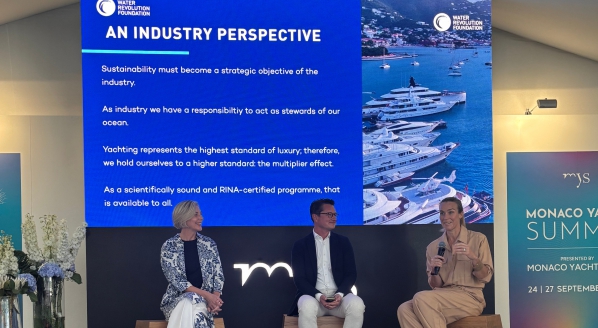
Water Revolution Foundation launches Ocean Assist Programme
Following its debut at the UN Ocean Conference (UNOC3), Water Revolution Foundation has now officially launched Ocean Assist at Monaco
Technology
The right to reply
Nautilus International responds to the recent post by the Professional Yachting Association
Opinion
Bridging the gap: The human side of superyacht operations
Marianne Danissen at Camper & Nicholsons explains how knowledge sharing can help alleviate the demands of crew life while raising industry standards
Crew
The value in crisis
In this interview, Brendan O’Shannassy calls for a values-based revolution to future-proof the industry and reclaim its potential
Crew
Polar safety code revised
Maritime and Coastguard Agency update on widening of special standards for safe travel in harsh conditions to protect people as well as the environment
Crew
Related news
The right to reply
1 year ago
The value in crisis
1 year ago
Polar safety code revised
1 year ago
NEW: Sign up for
SuperyachtNewsweek!
Get the latest weekly news, in-depth reports, intelligence, and strategic insights, delivered directly from The Superyacht Group's editors and market analysts.
Stay at the forefront of the superyacht industry with SuperyachtNewsweek