
Designing with glass
Viraver Technology on how glazing systems can unlock performance and innovation in new-build superyachts…
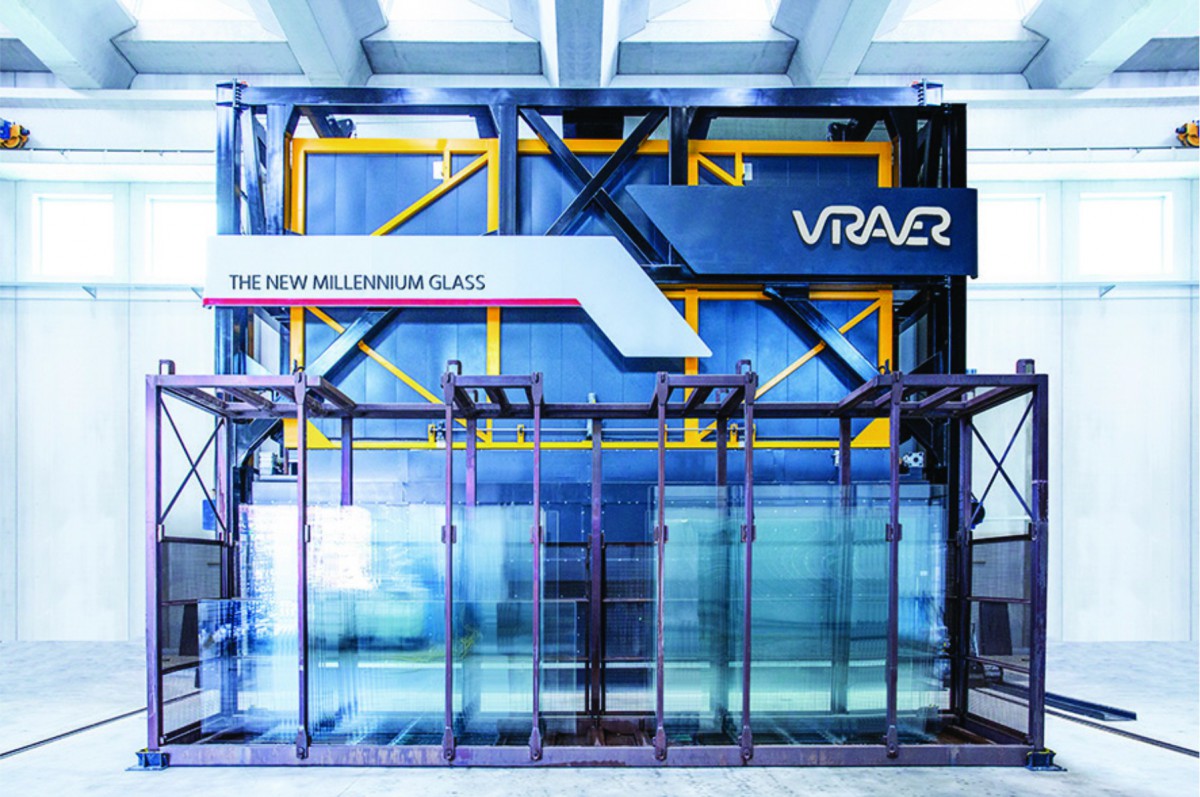
In new-build superyacht projects, glass is no longer a passive envelope component defined late in the design process. Instead, it has become a key architectural and engineering element, capable of shaping the identity, performance and comfort of a vessel from its earliest conceptual stages.
Unlike refit scenarios, where constraints imposed by existing structures often dictate design choices, new-build projects offer a unique opportunity: the freedom to engineer glazing systems as an integral part of the yacht’s architecture. This shift has opened the door to new technologies, larger surfaces and advanced configurations that redefine what yacht glazing can achieve.
Glass as a design driver
In modern superyacht design, trans-parency and continuity between interior and exterior spaces are increasingly central themes. Large panoramic windows, curved façades, skylights and uninterrupted glass surfaces are now common features, often defining the visual language of a project.
In a new-build context, glass eng-ineering can be integrated from the very beginning, allowing designers and shipyards to align aesthetic ambitions with structural and regulatory requirements. Early involvement enables accurate definition of glass geometry, curvature, thickness and bonding interfaces, ensuring that glazing solutions enhance – rather than constrain – the overall design.
This approach transforms glass into a design driver, not a technical compromise.
Engineering freedom through advanced technologies
New-build projects allow the full exploitation of modern glazing technologies that are difficult or impossible to implement in refit scenarios. Among these, chemically strengthened glass, structural interlayers and optimised insulating glazing units (IGUs) play a fundamental role.
Chemically strengthened glass offers flexural strength values up to twice those of thermally tempered glass, enabling thinner sections, larger spans and improved resistance to surface damage. When combined with high-performance structural interlayers, these solutions provide the rigidity required for large bonded panels subjected to dynamic marine loads.
The use of IGUs further enhances thermal performance, allowing designers to achieve low U-values while carefully managing solar gain through selective interlayers or coatings. In new builds, these parameters can be optimised in parallel with HVAC design, supporting energy-efficient systems without com-promising optical quality.
Unlike architectural applications, yacht glazing demands minimal distortion, controlled reflectivity and consistent colour perception across large surfaces – requirements that must be engineered specifically for the marine environment.
Performance-driven design from day one
One of the key advantages of new-build glazing is the possibility to define performance targets from the earliest design stages. Thermal insulation, solar control, acoustic comfort and optical quality can be engineered together through careful material selection and glass build-up design, rather than being addressed as separate constraints later in the project.
By defining U-value and g-value requirements early on, glazing becomes a strategic contributor to on-board comfort and energy management. Reduced solar loads and improved insulation help achieve more stable interior conditions, particularly in high-exposure areas such as main deck lounges or owner suites.
At the same time, optical quality remains paramount in the yachting sector. Unlike architectural applications, yacht glazing demands minimal distortion, controlled reflectivity and consistent colour perception across large surfaces – requirements that must be engineered specifically for the marine environment.

Glazed deadlights: A new frontier
Among the most discussed innovations in recent years is the development of glazed deadlights. Traditionally, deadlights have been opaque metal elements designed solely for safety and regulatory compliance, requiring manual installation when needed. These solutions not only interrupted natural light but also introduced practical drawbacks: heavy components to handle, time-consuming installation procedures and the need to dedicate valuable on-bard space to their storage.
Advances in glass technology and structural engineering are now enabling transparent solutions that combine protection with visual continuity. Glazed deadlights eliminate the need for removable metallic panels, freeing up storage space and simplifying on-board operations, while maintaining the required level of safety.
Their integration requires careful consideration of load cases, redundancy and bonding strategies, as well as close coordination with class societies. In new-build projects, however, these systems can be seamlessly incorporated into the vessel’s architecture from the outset, contributing to a more open, efficient and connected on-board environment.
Close collaboration between designers, shipyards, classification societies and the glazing manufacturer is essential. Structural calculations, material testing and interface definition must all align within the applicable regulatory framework, ensuring both compliance and feasibility.
Integrated development and class compliance
In new-build scenarios, the development of glazing systems evolves in parallel with hull structure, interior layout and installation strategy. This integrated approach allows potential conflicts to be identified and resolved early, reducing the risk of late-stage redesigns.
Close collaboration between designers, shipyards, classification societies and the glazing manufacturer is essential. Structural calculations, material testing and interface definition must all align within the applicable regulatory framework, ensuring both compliance and feasibility.
Viraver’s in-house engineering team supports this process from concept design through final approval, con-tributing to effective integration within the project timeline and ensuring that performance targets are met without compromising feasibility and installation requirements.
Conclusion
New-build superyachts represent the highest level of freedom in design – and glass is one of the materials that most clearly reflects this potential. When engineered as part of the initial design process, glazing becomes a powerful tool to enhance comfort, performance and architectural expression.
Through advanced materials, co-ordinated development and emerging solutions such as glazed deadlights, modern yacht glazing continues to evolve beyond its traditional role. In doing so, it enables designers and shipyards to create vessels that are not only visually striking but also technically refined and future-ready.
Profile links
NEW: Sign up for SuperyachtNewsweek!
Get the latest weekly news, in-depth reports, intelligence, and strategic insights, delivered directly from The Superyacht Group's editors and market analysts.
Stay at the forefront of the superyacht industry with SuperyachtNewsweek
Click here to become part of The Superyacht Group community, and join us in our mission to make this industry accessible to all, and prosperous for the long-term. We are offering access to the superyacht industry’s most comprehensive and longstanding archive of business-critical information, as well as a comprehensive, real-time superyacht fleet database, for just £10 per month, because we are One Industry with One Mission. Sign up here.
Related news

Looking beneath the surface
Captains of the paint industry reveal the role technology plays – and will play in the future – in increasing efficiencies
Crew
Upgrading yacht glazing
Viraver Technology quantify the benefits of making energy efficiency a core value of refit projects
Technology
Oceanco – going against the grain
From laminated plantation wood to cork and solar-integrated surfaces, the Dutch yard is redefining the boundaries of what decking can be
Technology
Build it and they will come
An interview with Richard Strauss, CEO of Teakdecking Systems, on ethical and sustainable teak alternatives that offer all the properties owners
Fleet

Cracking the glass ceiling
As glazing projects in superyacht design become increasingly ambitious, will the industry meet the demand or is the situation approaching a breaking point?
Fleet
Related news
Looking beneath the surface
9 months ago
Upgrading yacht glazing
9 months ago
Oceanco – going against the grain
11 months ago
Build it and they will come
1 year ago
Cracking the glass ceiling
2 years ago
NEW: Sign up for
SuperyachtNewsweek!
Get the latest weekly news, in-depth reports, intelligence, and strategic insights, delivered directly from The Superyacht Group's editors and market analysts.
Stay at the forefront of the superyacht industry with SuperyachtNewsweek