Bayesian crew officially exponerated
The Professional Yachting Association summarises the recently released final MAIB report on the Bayesian sinking…
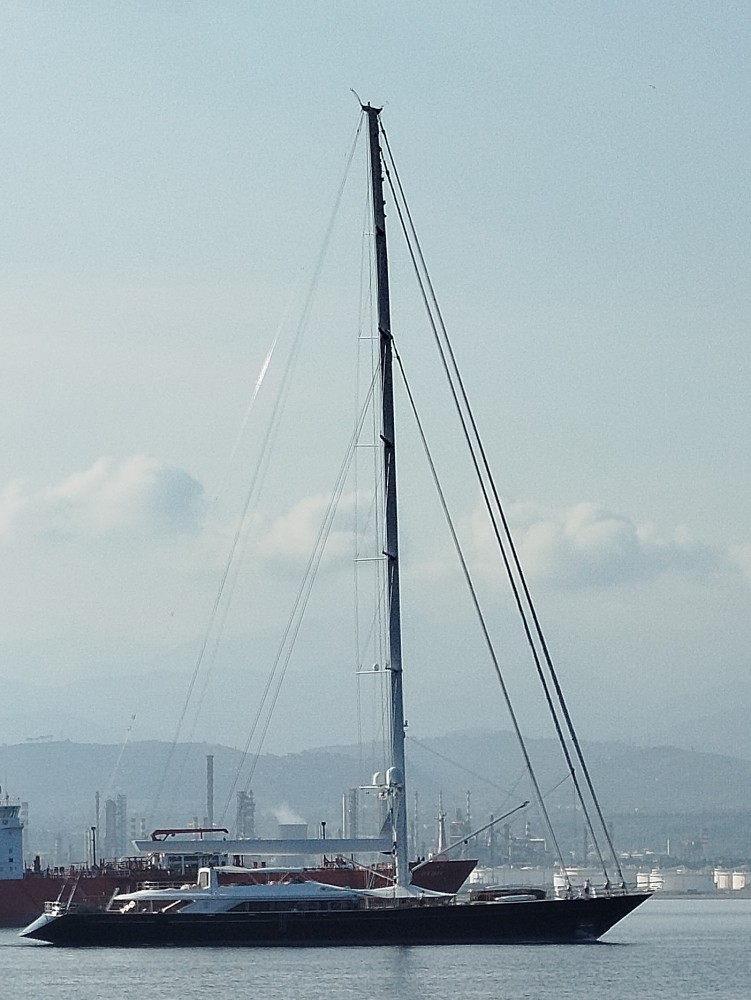
Image credit: Sfischer, CC BY-SA 4.0, via Wikimedia Commons
Many in the yachting industry will remember the video interview of Giovanni Costantino, Italian Sea Group’s CEO, where he strongly defended the yacht’s construction – claiming it was unsinkable – while blaming the sinking on crew errors. Well, the final MAIB report was recently released, and its conclusions could not be further from Costantino’s claims.
Summary of the 145-page report
On the night of 19 August 2024, the 55.9-metre British-flagged luxury sailing yacht Bayesian was at anchor 0.5 nautical miles off Porticello, Sicily, carrying 10 crew members and 12 guests. At 04:06 UTC+2, a sudden, violent meteorological downburst generating hurricane-force wind gusts in excess of 70 knots struck the vessel. Within less than 15 seconds, Bayesian was knocked flat onto its starboard side, far exceeding its angle of vanishing stability. Incapable of righting itself, the superyacht rapidly flooded and sank in 50 metres of water, resulting in seven fatalities, including six guests and one crew member.
The official safety investigation conducted by the United Kingdom Marine Accident Investigation Branch (MAIB) provides a definitive technical reconstruction of the event. Beyond establishing the physical timeline of the capsize, the MAIB report thoroughly evaluates operational decisions, statutory stability standards, weather forecasting limitations, and crew conduct.
Crucially, the investigation demonstrates that the loss of the vessel was driven by unassessed aerodynamic vulnerabilities and unforecast extreme weather, explicitly clearing the crew of any responsibility for the catastrophe.
Technical causes and aerodynamic vulnerabilities
The MAIB investigation, supported by advanced aerodynamic and hydrodynamic modelling conducted by the University of Southampton’s Wolfson Unit, identified a combination of severe meteorological forcing and hidden design vulnerabilities as the direct causes of the knockdown.
The aerodynamic heeling impact of the rig
While Bayesian was anchored with all sails fully furled, its physical profile presented immense aerodynamic resistance to beam winds. The vessel featured a hollow aluminium mast standing 72.25 metres above the waterline – the tallest single aluminium mast ever constructed – accompanied by six pairs of rear-raked spreaders and a 22-metre boom.
As documented in the Wolfson Unit aerodynamic study annexed to the investigation, the mast tube alone generated over 56 per cent of the total wind heeling moment acting on the vessel, while the furled sails and standing rigging contributed an additional 20 per cent. Combined with the aerodynamic side-force produced by the mast profile, beam-on wind gusts of 60 to 68 knots were sufficient to create a heeling moment that completely overwhelmed the yacht's righting lever.
The crew was never informed that the yacht possessed a vulnerability to knockdown from severe wind gusts while at anchor without sails set.
Stability deficiencies and regulatory blind spots
Bayesian was constructed in 2008 under the UK Large Commercial Yacht Code (LY2). Under LY2, monohull sailing vessels were required to maintain a positive range of statical stability up to 90 degrees, though relaxations were permitted for vessels over 45 metres subject to operational criteria under sail.
When under sail with its deployable centreboard lowered, Bayesian relied on an automated monitoring system to ease sheets and shed sail loads.
However, in the motoring or anchored condition – with no sails set and the centreboard raised – the yacht's angle of vanishing stability dropped to 73 degrees. The MAIB revealed a critical regulatory and informational blind spot:
• The approved Stability Information Book (SIB) provided to the master contained no guidance or wind-heeling calculations for the vessel in the motoring or anchored condition with the centreboard raised.
• The crew was never informed that the yacht possessed a vulnerability to knockdown from severe wind gusts while at anchor without sails set.
• Lowering the centreboard at anchor was intentionally avoided because it caused severe vessel yawing and dramatically increased the risk of anchor dragging. The crew managed the known, documented risk of anchor drag, unaware that keeping the centreboard raised heightened knockdown vulnerability.
The actions of Bayesian’s crew throughout the night reflected diligent watchkeeping, swift emergency mobilisation and heroic rescue efforts under extreme physical duress.
Mechanics of downflooding
Contrary to early media speculation alleging that open hull doors or unclosed hatches caused the vessel to sink, the MAIB confirmed that downflooding played no role in initiating the knockdown. At the initial heel angles of 10 to 20 degrees experienced as the wind rapidly escalated, no downflooding openings were submerged. Downflooding commenced only after the wind violently forced the vessel past 47.5 degrees of heel, by which point the yacht had already crossed into an irrecoverable capsize trajectory. Seawater ingress through stairwells and deck openings accelerated the final foundering, but the vessel was already lost once it exceeded its 73-degree angle of vanishing stability.
The role and actions of the crew
Far from exhibiting negligence, the actions of Bayesian’s crew throughout the night reflected diligent watchkeeping, swift emergency mobilisation and heroic rescue efforts under extreme physical duress.
Pre-squall mobilisation
During the overnight watch, deckhand DH2 continuously monitored the weather. As rain began falling around 03:44, DH2 secured forward deck hatches and cockpit windows to protect the interior. When the wind suddenly increased to 30 knots at 03:55 and the anchor began dragging, the crew acted immediately:
• The watchkeeper immediately went below and alerted the master.
• The Chief Engineer woke up, recognised the severe motion and proceeded directly to the engine control room and wheelhouse to start the generators, steering pumps and controllable-pitch propeller hydraulics.
• The Chief Officer briefed the crew, instructing deckhands to stow loose items and stand by for maneuvering orders as the master prepared to steer the vessel into the wind.
Fifteen of the twenty-two occupants survived, an outcome directly attributable to the decisive initiative, seamanship and bravery of the crew.
Crisis response and heroic rescue efforts
When the 70-knot wind gust struck at 04:06, turning the yacht onto its side in less than 15 seconds, internal stairwells were transformed into vertical shafts filled with cascading water. Despite personal injuries and extreme disorientation:
• The Chief Officer and Master physically pushed and hauled guests – including an infant and her mother – out of the flooding saloon and up to the exposed flying bridge.
• Crew members reached back down into the flooded wheelhouse to pull trapped guests and fellow crew to safety.
• The Chief Engineer navigated to the main deck quarter to manually deploy the Emergency Position-Indicating Radio Beacon (EPIRB).
• As the vessel sank, the Chief Officer swam to the stowed port forward liferaft, manually released it from its cradle, towed the canister to the survivors treading water,and inflated it.
• In the liferaft, the Chief Steward counted survivors and organised emergency supplies, deckhands constructed an improvised tourniquet for a severely injured guest and the crew launched red parachute flares to summon help from the nearby sailing vessel Sir Robert Baden Powell.
Fifteen of the twenty-two occupants survived, an outcome directly attributable to the decisive initiative, seamanship and bravery of the crew.
Even if all external doors and hatches had been sealed prior to the event, downflooding was not the cause of the capsize; the wind force alone exceeded the vessel's static righting capability.
Officiale exoneration: Why the crew was not responsible
The MAIB investigation unequivocally establishes that the crew was not responsible for the loss of Bayesian or the resulting loss of life. Their complete exoneration rests on three principal findings documented in the official report:
1. Complete absence of motoring atability guidance: The approved stability documentation provided by the shipbuilder and regulatory classification societies contained zero information indicating that the yacht was vulnerable to capsize in high winds while motoring or at anchor with sails down. The crew had no operational reason or technical basis to anticipate a knockdown.
2. Unforecast meteorological extremes: Official marine weather bulletins issued by Météo-France and Italian meteorological services forecast force 5 winds with general thunderstorm activity, but failed to communicate any risk of violent downbursts or hurricane-force wind squalls. Local weather remained benign until just 11 minutes before the capsize, leaving no lead time for defensive re-anchoring or offshore manoeuvring.
3. Physical impossibility of prevention: The knockdown developed in under 15 seconds once the extreme wind gust struck. Even if all external doors and hatches had been sealed prior to the event, downflooding was not the cause of the capsize; the wind force alone exceeded the vessel's static righting capability.
Industry safety recommendations
To prevent future tragedies involving large sailing yachts, the MAIB issued safety recommendations targeting regulatory bodies and maritime training institutions:
• Red Ensign Group: Recommended to revise the REG Yacht Code to mandate stability and wind-heeling assessments for monohull sailing yachts in the motoring/sails-furled condition, and to re-evaluate liferaft float-free stowage requirements to ensure automatic release during severe knockdowns.
• Maritime and Coastguard Agency (MCA): Recommended to update the Master of Yachts training syllabus to incorporate advanced meteorology, specifically addressing the mechanics and hazards of convective downbursts and severe wind squalls.
• UK Hydrographic Office and Met Office: Recommended to enhance mariner guidance regarding localised high-impact weather hazards in Admiralty publications and international meteorological data services.
The MAIB report can be read in full here.
NEW: Sign up for SuperyachtNewsweek!
Get the latest weekly news, in-depth reports, intelligence, and strategic insights, delivered directly from The Superyacht Group's editors and market analysts.
Stay at the forefront of the superyacht industry with SuperyachtNewsweek
Click here to become part of The Superyacht Group community, and join us in our mission to make this industry accessible to all, and prosperous for the long-term. We are offering access to the superyacht industry’s most comprehensive and longstanding archive of business-critical information, as well as a comprehensive, real-time superyacht fleet database, for just £10 per month, because we are One Industry with One Mission. Sign up here.
Related news
Weather windows and El Nino
With extreme weather hitting some hotspots across typical charter hubs, has the time has come to review our peak season and extend cruising patterns?
Owner
The Italian Sea Consortium
Martin H. Redmayne looks at the possible suitors poised to make a bid for TISG
Opinion
Bayesian – the seconds after knockdown
What really pushes a vessel to the point of no return? World-leading stability expert Andy King presents an academic study of the Bayesian disaster
Owner
The ultimate guide to what floats your boat
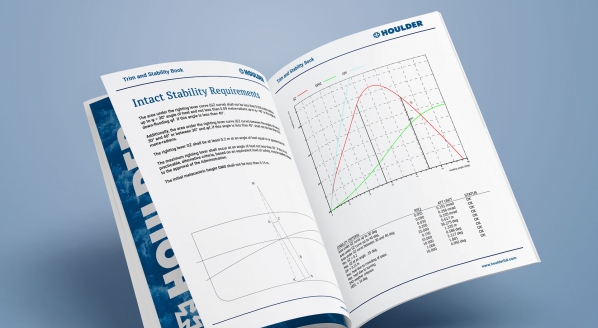
Andy King, naval architect and director of stability & statutory for Houlder Ltd, sets out the key considerations that yachts must comply with to keep safe
Crew
Related news
Weather windows and El Nino
3 months ago
The Italian Sea Consortium
4 months ago
Bayesian – the seconds after knockdown
7 months ago
Where safety meets style
1 year ago
The ultimate guide to what floats your boat
2 years ago
NEW: Sign up for
SuperyachtNewsweek!
Get the latest weekly news, in-depth reports, intelligence, and strategic insights, delivered directly from The Superyacht Group's editors and market analysts.
Stay at the forefront of the superyacht industry with SuperyachtNewsweek