
Shipyard CEOs on the state of the market – an interview with Giordano Pellacani
Market-leading shipyard executives offer a collective diagnosis and a clear barometer of the current new-build landscape…
There is no shortage of people willing to tell you where the market is heading. Brokers, project managers, owners’ reps, consultants and journalists all have a view, but the perspective that tends to be least heard in public and arguably the one that matters most belongs to the people who actually run the yards. So we asked nine of the market-leading shipyard executives the important questions to get a true understanding of where the market is and where it is heading. Their answers amount to a collective diagnosis and a clear barometer of the current new-build landscape.
The yards represented here span the full competitive range of the European market, from Royal Huisman, Damen Yachting and Feadship in the Netherlands to Palumbo, Sanlorenzo, Azimut Benetti and Ferretti in Italy, from Abeking and Rasmussen in Germany to Bilgin in Türkiye. Of course, they don’t agree on everything, but the convergence on certain themes is inescapably evident.
It is a near-united front on how they build. The past two to three years have brought a genuine step change in how these yards organise and deliver: facility redesigns, digital tools, closer integration between engineering and production and a concerted push to eliminate the late-stage revisions that have historically plagued new builds feature in almost every response. Obviously, skilled labour is the constraint that no investment in facilities can fully resolve. Finding the right people, training, keeping and ensuring the craft knowledge that makes these yachts exceptional is passed to the next generation is the essential thread that runs beneath everything else these leaders say. Supply chains have stabilised but remain brittle for specialist components. And in cost management, the ability to maintain quality without haemorrhaging margin is repeatedly cited as the factor most likely to define who thrives.
Yes, order books are strong, but the nature of what is being ordered has shifted. Owners are more considered, more experience-driven and increasingly motivated by how they spend their time on board. Purpose, sustainability and genuine adventure are genuine design drivers here. And when probed on the future, not one of these leaders talks about explosive growth. What they describe instead is a market that will be defined by the quality of what is delivered, the credibility of the yards delivering it and the ability to remain relevant to a generation of owners whose expectations extend well beyond the vessel itself.
What follows is an interview by News Editor Conor Feasey with Giordano Pellacani, Chief Commercial Officer at Ferretti Group, taken from The Superyacht Report: New Build Focus. Interviews with a further eight shipyard CEOs will be published over the coming days.
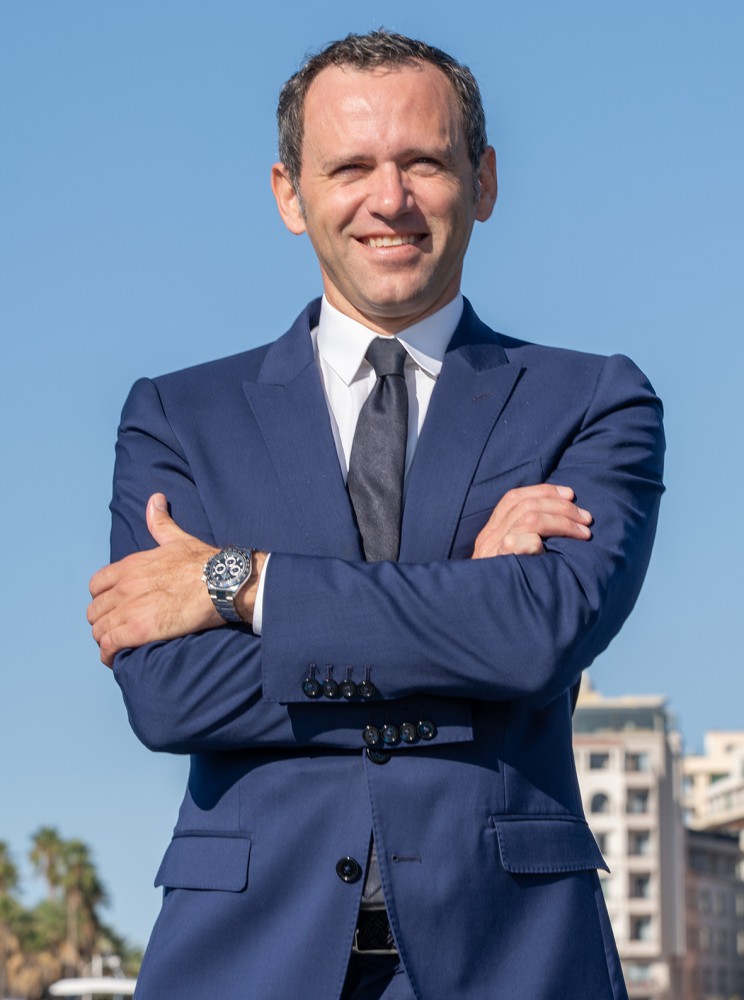
What changes have you implemented in your shipyards over the past two or three years that have genuinely supported the construction process and what improvements have resulted from them?
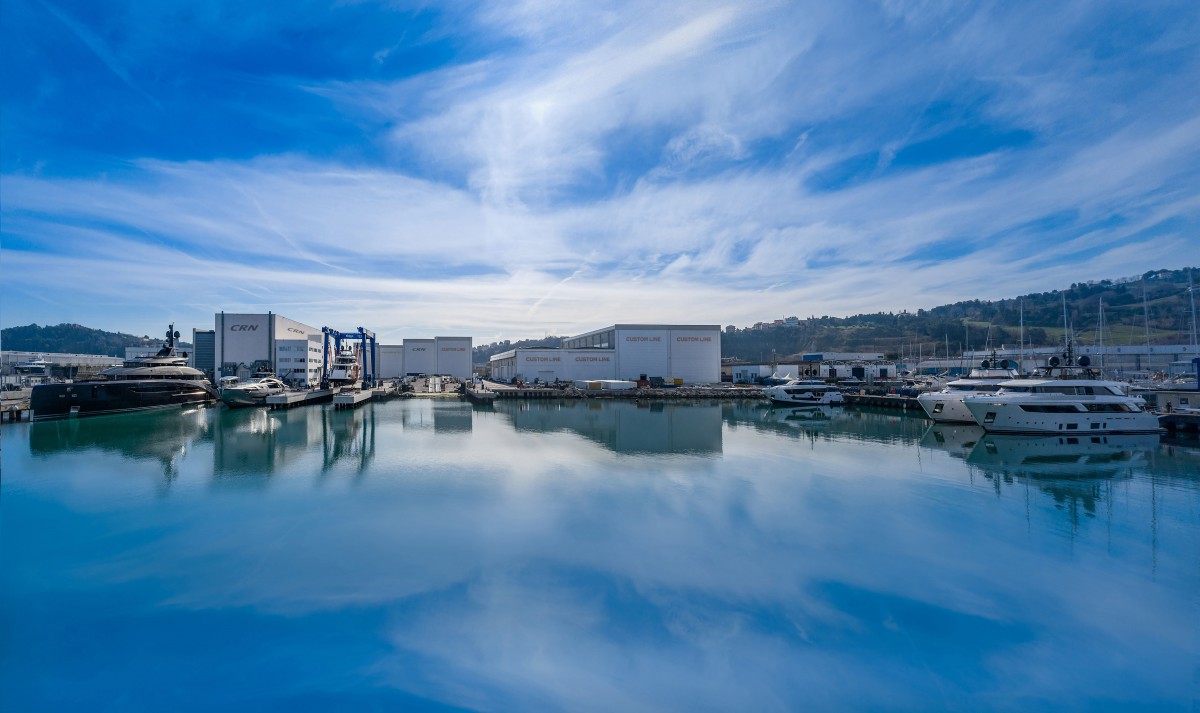
In recent years, particularly at the Ferretti Group Superyacht Yard in Ancona, the construction process has been strengthened through the evolution of integrated design systems and a greater focus on in-house engineering and naval architecture expertise. This approach now enables more precise quality control, a reduction in critical issues during the production phase, and improved coordination between design and production.
At the same time, the enhancement of shipyard organisation and project management – through dedicated teams and continuous collaboration with owners, surveyors and designers – has led to quicker decision-making processes and closer alignment with the owner’s vision.
Energy efficiency and sustainability have also been key areas of development. The adoption of trigeneration systems, photovoltaic installations, LED lighting and advanced climate control systems has resulted in a significant reduction in energy consumption, greater stability of environmental conditions within production areas, and more sustainable processes. In particular, these systems ensure constant temperature levels and controlled humidity throughout the production facilities.
Specifically, the shipyard is equipped with a trigeneration plant that reduces electrical energy consumption by up to 79 per cent and thermal energy consumption for the climate control of production areas by 32 per cent. A photovoltaic system has also been installed across the yard to generate electricity, while all lighting systems have been converted to LED technology, contributing to ongoing improvements in energy efficiency and sustainability. The facilities comprise nine modern, high-tech sheds, all fully heated, air-conditioned and equipped with state-of-the-art machinery.
Demand remains particularly strong for yachts offering generous spaces, flexible layouts and an increasingly seamless connection between interiors and exteriors, with an on-board experience conceived as an extension of one’s home.
Where is pressure really building today? What has not worked as expected and where do you see the greatest risk for the market?
Today, the greatest pressure is con-centrated on the supply chain and the overall customer experience, both
of which are affected by a highly fragmented market. The lack of inte-gration among the various players along the value chain leads to inefficiencies and delays, with the risk of eroding the value perceived by the end customer.
To remain competitive, it is therefore essential to adopt a more integrated, end-to-end approach across the entire value chain, ensuring greater consistency, a higher-quality customer experience and stronger loyalty, while avoiding a loss of market share to more structured operators.
Considering different specifications, models and sizes, where do you see strong demand and where do you see a slowdown? What factors are driving these trends?
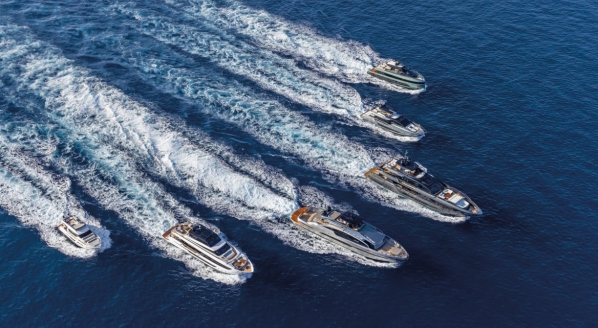
Ferretti Group operates through seven highly complementary brands, spanning from 8 to 95 metres in length, each designed to respond in a targeted way to the needs of owners with different sailing styles, sizes, usage profiles and product visions. This structure allows the Group to address a broad and diversified demand that, overall, remains solid, albeit with varying dynamics across segments.
Within individual brands, the presence of clearly defined ranges enables owners to choose not only a specific size or performance level, but a true interpretation of life at sea. The different lines on offer provide solutions tailored to distinct ways of using a yacht, always combined with very high levels of customisation.
A common factor emerging across all segments is the desire to spend quality time on board, in an environment that brings together comfort, privacy and freedom. Demand therefore remains particularly strong for yachts offering generous spaces, flexible layouts and an increasingly seamless connection between interiors and exteriors, with an on-board experience conceived as an extension of one’s home. In this context, customisation continues to be one of the key drivers of choice, outweighing any clear distinction between growing and declining segments, and rewarding the ability to deliver bespoke solutions, strong product identities and an authentic on-board experience.
Finally, on a more personal level, how do you see the market evolving over the next decade? What will the future look like in real terms?
Over the next decade, the high-end yachting industry will be driven by technological innovation, sustainability and international expansion. The true competitive advantage will lie in the ability to anticipate market changes and to build a direct, continuous dialogue with an increasingly demanding global clientele, offering highly personalised services and tailor-made experiences.
Profile links
NEW: Sign up for SuperyachtNewsweek!
Get the latest weekly news, in-depth reports, intelligence, and strategic insights, delivered directly from The Superyacht Group's editors and market analysts.
Stay at the forefront of the superyacht industry with SuperyachtNewsweek
Click here to become part of The Superyacht Group community, and join us in our mission to make this industry accessible to all, and prosperous for the long-term. We are offering access to the superyacht industry’s most comprehensive and longstanding archive of business-critical information, as well as a comprehensive, real-time superyacht fleet database, for just £10 per month, because we are One Industry with One Mission. Sign up here.
Related news
Ferretti’s board recommends shareholders reject KKCG’s partial offer
KKCG’s offer is deemed “not fair and not reasonable” as Ferretti’s board concludes the €3.50 price falls short of market value
Business
The Superyacht Report 228: New Build Focus - Out Now
Shipyard performance data, CEO forecasts, Bayesian findings and a case for building with purpose all feature in the latest TSR
Opinion
Unlocking the hidden potential of the legacy superyacht fleet
Simon Brealey at Lateral Naval Architects on how owners can modernise their yachts to align with contemporary environmental and technical standards
Technology
Yachting deliberately
Aino Grapin sets out how she believes the industry is on the cusp of change in embracing sustainability, where shipyards and visionary owners can work together
Fleet
Related news
The Superyacht Report 228: New Build Focus - Out Now
8 months ago
Yachting deliberately
1 year ago
NEW: Sign up for
SuperyachtNewsweek!
Get the latest weekly news, in-depth reports, intelligence, and strategic insights, delivered directly from The Superyacht Group's editors and market analysts.
Stay at the forefront of the superyacht industry with SuperyachtNewsweek